
Pitched roof faults
Common pitched roof problems and how each is put right
A pitched roof gives warning before it leaks. Each sign you can spot from the garden or the loft is lined up here with what it points to and the likely verdict.
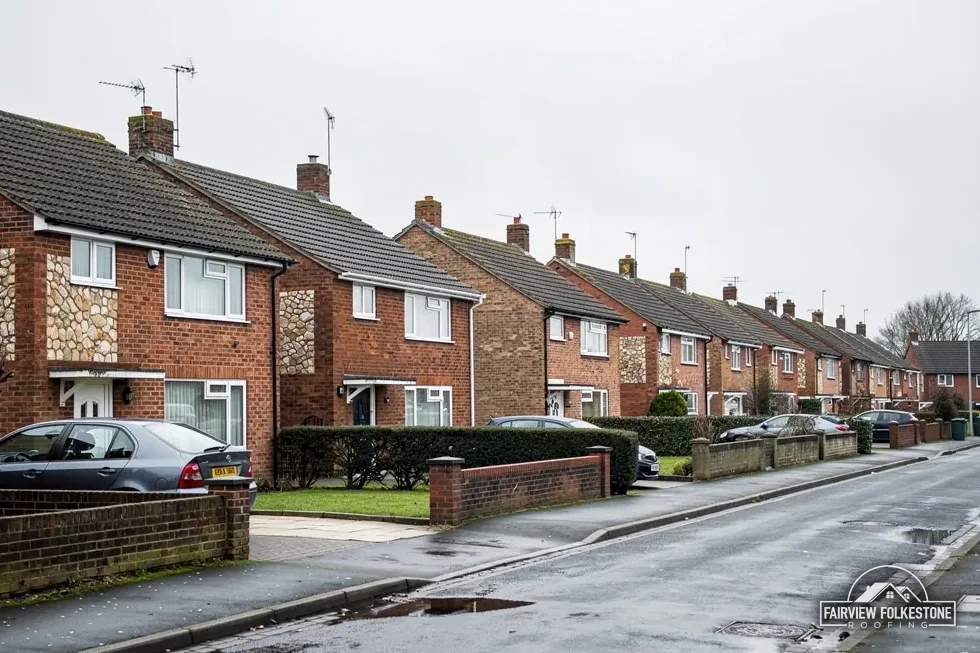
A pitched roof sheds rain by slope: tiles or slates overlap down the slope, the underlay behind them catches what gets past, and the timber beneath holds the whole thing up. Because the layers overlap, a fault in one place may show up somewhere else entirely, so a stain high on a bedroom wall can be metres from the damage that caused it.
The signs below are the ones a roofer reads on a survey. Some can be seen from the pavement with binoculars, others only from inside the loft with a torch. Each is paired with what it points to and what the fair response is, because the right answer to a slipped tile is not the same as the right answer to a covering that has worn out.
The aim is a roof you look at twice a year and understand, so a small fault is a planned repair and not a call at night with a bucket under the ceiling.
01Side by side
Signs you can see from the ground
Stand across the road, or in the garden, and look along each slope. The things to notice are whether each slope lies flat and even, and whether the ridge, the gable edges and the eaves run in clean straight lines.
The table pairs each visible sign with what it points to and our usual verdict.
A dip in the ridge deserves a separate mention. A roof that sags is carrying a load its structure is not handling, and no amount of tile repair changes that. It is a check for a surveyor or a structural engineer, not something to patch over, and we will say so on the roof instead of quoting for work that does not solve it.
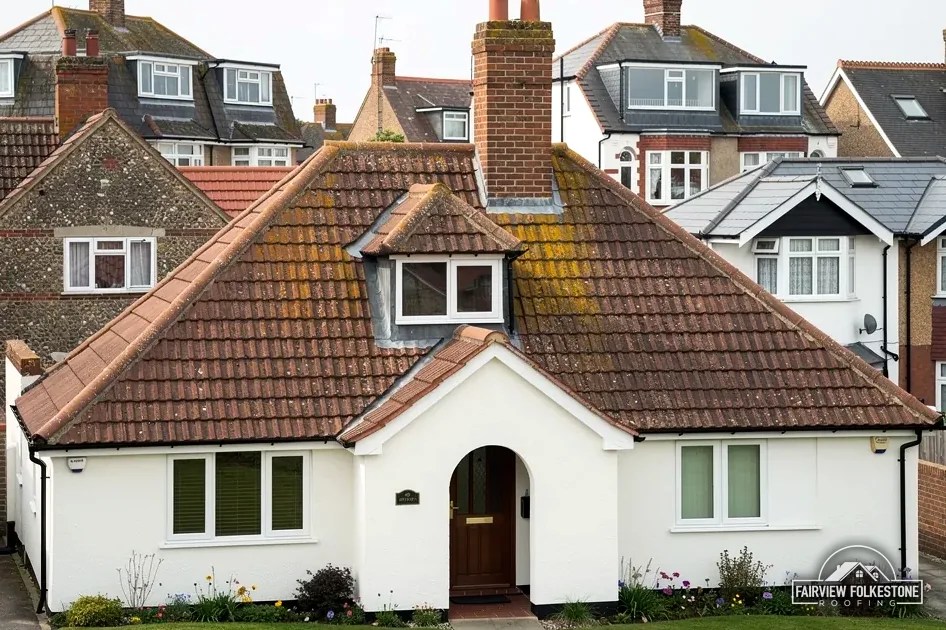
Moss and lichen, the green and grey patches on tiles, are a surface matter. Marley warns against powerful jet washes on a roof, because the force can harm slate or tile faces and shorten their life. Cleaning therefore needs a gentler method, or none at all, and the roofer will say which suits the covering. A roof that is green but tight and dry can simply be left.
| Sign | Points to | Verdict |
|---|---|---|
| One or two slipped tiles | A failed nail or clip | Repair |
| Cracked or missing tiles | Impact, frost or age | Repair |
| Dipping ridge line | Timber or support problem | Check |
| Crumbling ridge or verge mortar | Failing bedding | Repair |
| Flaking, gritty or soft tile faces | Covering near the end | Check |
| Tiles slipping across a whole slope | Fixing or batten failure | Replace |
02Key points
Signs inside the house and loft
Some faults hide from the ground and show only inside. A torch and a careful walk along the joists inside the loft shows more than any outside view, because the back of the covering and the battens are exposed to you.
Roof faults: your questions
Is that damp patch condensation or a leak?
A leak follows rain and shows near a fault such as a flashing or a gap in the covering. Condensation shows as damp on the underside of the roof or on timber without any outside gap, and it comes from warm moist air meeting a cold surface. Checking the eaves ventilation and the loft insulation tells the two apart.
- Daylight pinpricks in the roof covering mean a gap, a split tile or a lifted flashing.
- Dark, damp or crumbling timber near the eaves or a chimney means water has been arriving for a while.
- Rust on nail tips, drips on insulation or a musty smell mean moisture is moving through the loft.
- Stains on a ceiling tell you a leak exists but not where it enters.
That last point trips people up. Rainwater can travel along a rafter, down a batten or over the back of the plasterboard before it drips, so the mark on the ceiling and the hole in the roof need not be in the same place. Tracing a leak means working back up the slope from the stain, and checking every junction on the way: a chimney, a valley, a wall abutment, a roof window.
Condensation looks like a leak and is not one, and it needs a different cure. BS 5250 deals with moisture in buildings. For an unheated loft with HR underlay, Marley sets the eaves opening at 25 mm for pitches of 15 degrees or less and 10 mm above that. That sort of underlay does not let moist air pass through it, so blocked eaves or insulation stuffed into the gap can leave the roof space damp without any hole in the covering.
03Ridges · Verges
Ridge, verge and hip faults
The ridge runs along the apex of the roof, the hips run down its angled corners and the verges finish the gable edges. All three are held with mortar or with dry-fix fittings. Mortar cracks as the roof moves and weathers, and a loose ridge tile is a hazard in a gale, since it can come down onto the path below. The loose ones are the ones to look for, and a ridge tile that rocks when a roofer taps it has already failed as a fixing. Check too that the end caps and the tiles beside a chimney are tight, since the bedding is cut around at those points.
Under Marley's reading of the 2015 amendments to BS 5534, a bed of mortar cannot be the sole fixing for the covering any more. A ridge held only by crumbling mortar is therefore fixed mechanically when it is re-bedded, or swapped for a dry-fix system of the kind BS 8612 specifies.
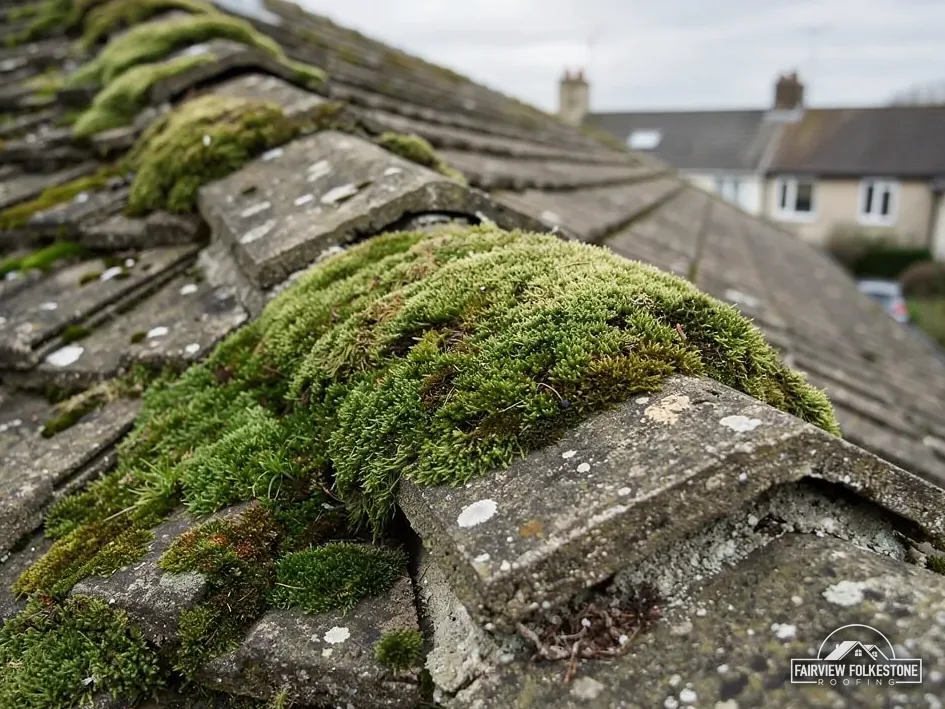
A repair in this area comes in three forms:
- Re-pointing where the mortar is cracked but the tiles are tight and fixed.
- Re-bedding the ridge with proper fixings where tiles are loose.
- Replacing the ridge with a dry-fix system where the old bedding has failed along its length.
Published figures give a feel for scale. Which? Trusted Traders put a new ridge tile at £80 to £300. MyJobQuote says the average ridge tile replacement costs between £225 and £550 in 2026. Checkatrade's repair rate is £50 to £70 per metre for ridge tile repairs. The sources differ, and a quote after a survey is the only price that applies to your roof.
Our answers on dry ridge against mortar and ridge tile repointing go further into the choice.
04Flashings · Valleys
Flashings, valleys and where the roof meets a wall
Wherever a roof meets a chimney, a wall or another roof, a strip of metal bridges the gap. That strip is a flashing, and where two slopes meet in a v it forms a valley. These junctions take the full flow of rain from a large area, so a small defect shows up fast.
Lead is the traditional metal for the job. MyJobQuote says correctly installed lead flashing can last for over 80 years, a lifespan that depends on the lead being fitted properly and left alone. Lifted edges, splits at the folds and gaps where mortar has fallen out are the faults to look for.
Lead comes in codes, which are thicknesses. In the Royston Lead brochure, Code 3 is for soakers only, while Code 4 and Code 5 both appear against flashings, pitched valley gutters and dormers, and Code 5 also against parapets. The specification, not the roofer's habit, sets which code goes where.
Is moss on my tiles a sign the roof is failing?
Not by itself. Moss and lichen are growth on the surface, and the tile can be sound beneath. They can hold moisture against the covering and block gutters when they fall, so they are worth removing carefully. Marley does not recommend using a jet wash on roof tiles or slate, so a gentler method suits the roof.
| Fault | Fix | Verdict |
|---|---|---|
| Lifted lead edge | Dress back, secure | Repair |
| Cracked mortar fillet | Remove, re-form in lead | Repair |
| Split valley lining | Replace the valley | Replace |
| Open joint at a chimney | Check the whole flashing | Check |
MyJobQuote's figures are around £200 for a chimney lead flashing patch repair and around £570 for a full replacement on average. Our pitched roofing page sets these junction repairs in the context of the whole roof.
05Underlay · Battens
Underlay, battens and the layers you cannot see
Under the tiles, two layers do most of the quiet work. The underlay is the sheet that catches wind-driven rain and condensation, and the battens are the thin timbers that hold the tiles at the right spacing. Neither shows from outside, and both age.
Underlay can perish and split, especially along the ridge line and at the laps where sheets overlap. Battens can rot where water has repeatedly sat on them. A loft check for dark, soft timber or visible light through the underlay tells you which of the two is affected.
This is where a repair stops being the fair answer. If the underlay is failing across the roof, tiles put back over it will not make the roof sound for long, and we show you what we found before suggesting more. Our answer on how long roofing felt lasts covers the layer itself.
Roof coverings carry published lifespans. HomeBuilding gives approximate ranges of 100 years or more for Welsh slate, 60 to 80 years for clay tiles and 40 to 50 years for plain concrete tiles. These are guides to how long a covering might serve, not promises, and the underlay beneath often has a shorter life than the covering above it.
The repair choice is the one that decides the cost.
- Localised damage can be patched: new underlay under the affected tiles, with the batten replaced in short lengths.
- Widespread perishing means the covering is lifted and the roof is stripped back to the rafters, a re-roof.
- Rot that has reached the rafters is a structural repair first, with a new covering after it.
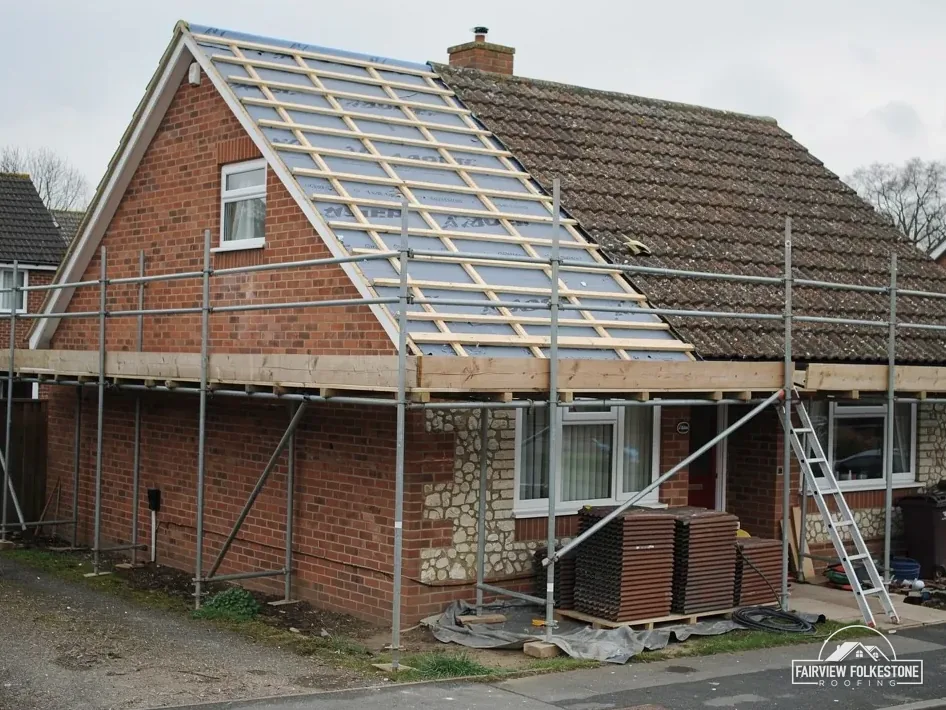
06Repairs
Repair, replace or check: how the verdict is reached
Once the signs have been read, the question is what the roof fairly needs. A few plain tests settle it, and the order matters because the early ones can end the discussion.
- Is the fault local? A slipped tile, a lifted flashing or a crumbling ridge on an otherwise tight roof is a repair.
- Is the fault spread? Cracking, slipping or perishing across a slope or the whole roof points to the covering or its fixings giving out.
- Is the structure involved? A dip, a rotten rafter or a wet wallplate needs a structural look before anything else.
- Is it cost-effective to keep patching? When the repairs add up to more than a fair share of a new covering, the sound advice changes.
Approvals follow the size of the job. The Planning Portal sets out when re-roofing does not normally need a building regulations application: when the work affects less than 25 per cent of the building envelope and less than 50 per cent of the roof. It also flags a heavier covering, 15 per cent or more, as needing approval.
Exposure also matters to the verdict. Cupa's slate guidance reads: "Buildings positioned on slopes, hills or coastal areas as well as tall buildings will be graded with higher exposure." BS 5534 then supplies a way to work out the fixing specification for a given site. On a roof that has lost tiles in several gales, the first question is whether the fixings suit the exposure.
The quote we write comes as a single total, after the survey, and says whether VAT and scaffold sit inside it, so the verdict and the price arrive together.
Should I repair a roof with several faults or replace it?
It depends on whether the faults are local or spread. A few tiles, a flashing and a ridge on an otherwise tight roof can be repaired one by one. Wide cracking, failed underlay or rotten battens point to a re-cover. We tell you which applies after a survey and give one total price.


Tell us what's wrong with the roof.
You'll get one written total price.