
Roofline care
Soffit and fascia maintenance: cleaning and checks that keep them sound
Fascias and soffits are the boards along the edge of the roof. Cleaning them is easy; the value is in the checks that come with it, which catch rot and leaks while they are small.
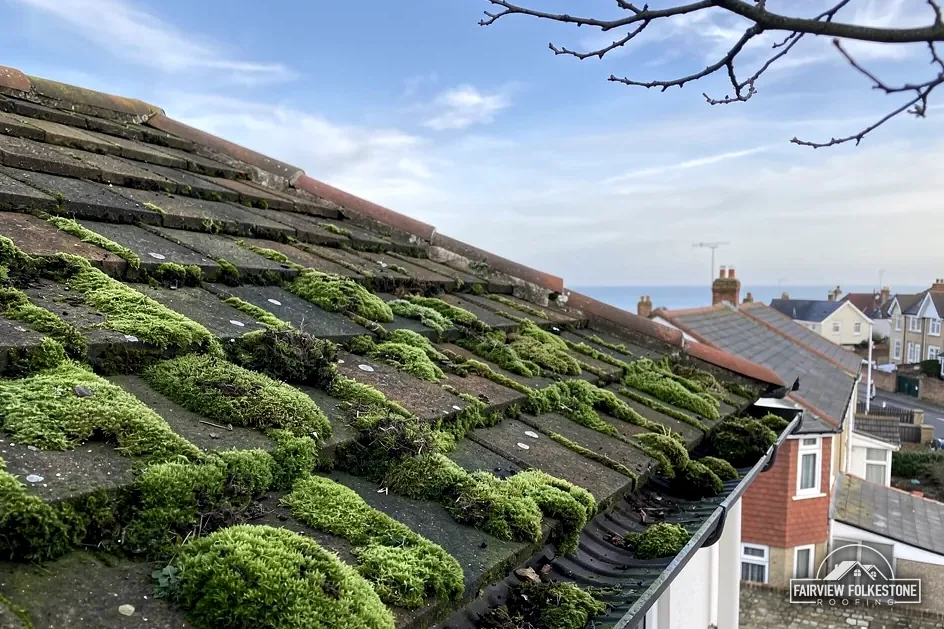
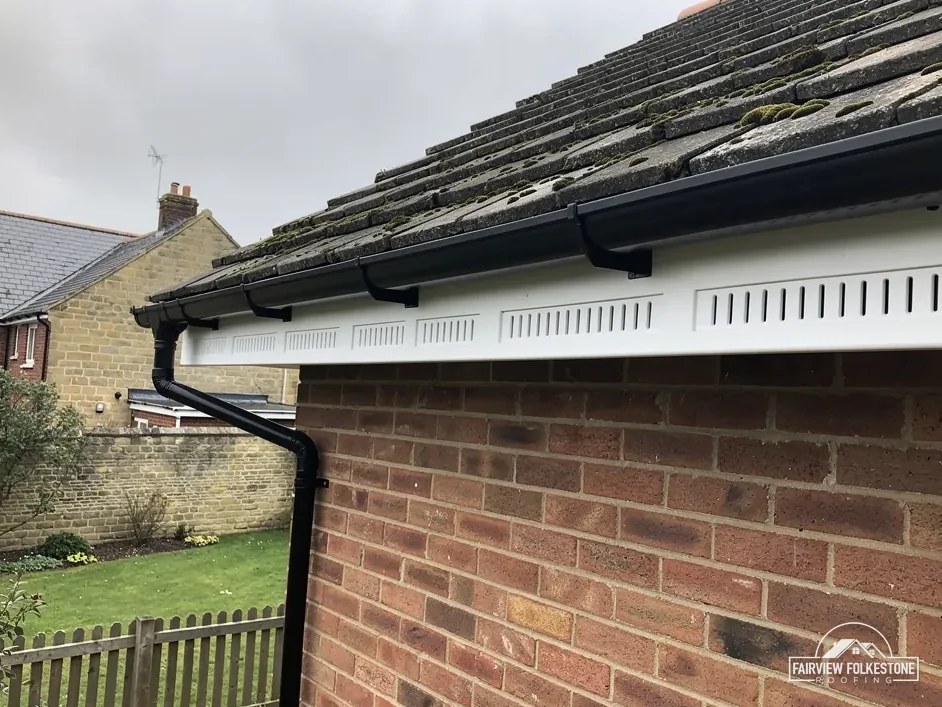
Look up at the edge of your roof and you will see two sets of boards. The fascia is the vertical one, facing the garden, with the gutter fixed to it. The soffit is the horizontal one tucked underneath, sealing the underside of the overhang. Together they make the roofline, and they do quiet work: they hold the gutter, shield the roof void from rain and animals and, in many designs, let air in.
Because they sit so high, they are easy to ignore. The first sign of trouble is often a stain, a flake of paint or a gutter that has started to lean. By then the board behind has probably been damp for some time.
This page covers what the roofline is doing, how to clean each material without harming it, a list of checks, why the eaves need air, what to do about old asbestos insulating board, and how to judge between repair, capping and replacement. The roof above is dealt with on our roof cleaning and moss removal page, and the two jobs fit well together.
01Key points
What each board does
Knowing the job of each part makes it clear what to look for. A roofer reads the roofline from the ground, and so can you.
- The fascia carries the weight of the gutter and the water in it, and finishes the ends of the rafters.
- The soffit covers the underside of the overhang, so the roof void is closed off from the weather and from birds and insects.
- A vented soffit, or a vent strip set into it, lets air move into the roof space.
- The bottom edge of the roof covering, and the underlay, usually run to or into the gutter just above the fascia.
That arrangement is why trouble spreads. A fascia that is wet because a gutter leaks can pass the damp to the rafter ends behind it. A soffit that has come loose gives a way in for rain, and a gap behind it can become a nesting place.
Materials vary. Timber is painted or stained and needs its finish kept up. uPVC is plastic that does not rot but can warp, crack or discolour. Older houses may have boards of other materials, and one of them needs special handling, which is covered later on this page.
Whichever you have, check the fixings as you go: a board that is held by rusted nails or loose clips will move under a cloth. One practical point before any cleaning: work out what you have. Tap a board gently; timber sounds solid, and plastic sounds hollow and light. If you are unsure, ask a roofer, because the right method depends on it.
02Side by side
Cleaning each material safely
Cleaning the roofline is mostly about being gentle and keeping out of trouble on a ladder. Dirt, spiders' webs and a film of green growth come off with very little effort, and anything harsher risks the finish.
For every material, set the ladder so that its top rests on the wall, never on the gutter, and never lean out past your own width. Plastic gutters crack under a ladder, and a fall from the eaves is a serious one. Anything higher than the ground floor should go to someone with scaffold or a platform.
Keep water off the vents. A hose pointed up into a soffit can wash dirt into the roof space, and a wet loft is a poor reward for a tidy board.
Where growth on the boards comes from the roof above, it is better to deal with the cause. Our page on black streaks on a roof sorts out what is washing down, and it is worth a look before you pick up a brush.
| Material | Clean with | Avoid |
|---|---|---|
| uPVC | Warm soapy water and a soft cloth | Scouring pads and solvents |
| Painted timber | Soft brush and mild detergent | Scraping flaking paint on a damp board |
| Stained timber | Soft brush and clean water | Strong cleaners that strip the stain |
| Vented soffit | Dry brush over the vent slots | A flood of water into the vents |
Soffit and fascia questions
How do I clean fascias and soffits without damaging them?
Use warm soapy water and a soft cloth on plastic, or a soft brush and mild detergent on painted timber. Keep water out of the vent slots, avoid scouring pads and strong cleaners, and rest the ladder on the wall instead of the gutter. Beyond the ground floor, leave it to a roofer.
03In brief
A checklist for what to look for
Cleaning is the chance to look closely. A few minutes at each section of the roofline tells you far more than a glance from the lawn.
Look at the underside as well as the face. Rot can start at the lower edge of a fascia, where water sits, and in the corners of a soffit.
Do the same after strong winds and after the leaves come down. No set interval suits every house, so the better test is whether anything has changed. Take a photograph of each side of the house, so that a stain or a gap that grows is plain to see next time.
Not everything on the list is urgent. A little flaking paint is a decorating job. Soft timber behind a leaking gutter is a repair, and it is better done sooner. Our post on keeping gutters clean covers the water side of the story.
- Soft or crumbling timber, which you can test with the tip of a screwdriver pushed lightly into the board.
- Paint that has blistered, flaked or peeled, with bare wood showing underneath.
- Gaps along the joints between boards, or between the soffit and the wall.
- Stains that run down from a joint, which show water getting in.
- Cracks, warping or a sag in plastic boards, especially near the corner joints.
- Gutter brackets that are loose, or a gutter that has pulled away from the fascia.
- Any hole, which could be a bird or an animal getting in.
04The short list
Why the eaves need to breathe
A soffit with a vent is not a decoration. In a cold roof, air entering at the eaves moves through the roof space and carries moisture out, and Marley gives figures for how much opening is needed. With a high-resistance underlay, it says, the eaves need an opening of 25 mm for pitches of 15 degrees or less and 10 mm for steeper ones, measured along their length. Vapour cannot pass through that kind of underlay, which is why it depends on the airflow.
Marley adds a different case: where the underlay is a breather type, the ceiling below is well sealed and the roof covering lets air through, the 3 mm that ordinary eaves construction gives is enough, provided the certification terms are met. So the right opening depends on what is above the soffit, and that is a matter for the roofer, not a guess.
Might the soffits on an older house be asbestos board?
They could. HSE lists asbestos insulating board soffit panels among the places it turns up, and for a home built or refurbished before 2000 it advises presuming asbestos is there. Do not drill, cut or scrub them, and have the material identified before any work begins.
What you can do is keep the openings from being blocked.
- Do not paint or seal over vent slots.
- Do not let loft insulation or stored items be pushed into the eaves so that the air path closes.
- Clear cobwebs and dust from the vents with a dry brush.
- Tell a roofer if a soffit has been replaced with a plain board where there was a vent.
A mistake that is easy to make on replacement is to fit a plain, unvented board because it looks neat. If your soffit once had a vent, the new one should keep the air path, and a roofer should check this against the roof construction before closing it up.
05Roofline · Asbestos
Old soffits and asbestos insulating board
Some older soffits are not timber or plastic. HSE's list of places where asbestos can be found includes "AIB white soffit panels to underside of roof eaves" and "Damaged AIB soffit", where AIB means asbestos insulating board. HSE tells owners of any home built or refurbished before 2000 to presume that asbestos is there.
Because boards of this kind were fitted into the underside of the eaves, a loose panel is not something to pull down for a look, and that has a practical consequence for how you proceed. The material is stable when left alone and a hazard when broken, so the plan is always to disturb as little as possible.
The rules differ by material. Asbestos cement can be removed as non-licensed work if it is carefully handled and not broken up. Insulating board is stricter: most work on it is licensed, with short-duration removal in a refurbishment project falling into the notifiable non-licensed category.
If your house falls in that age range and the soffits are flat, pale panels, take these steps.
- Do not drill, cut, sand or scrub the boards.
- Do not pull a damaged soffit down to see behind it.
- Leave a loose panel where it is, and keep the area beneath clear of people and pets.
- Have the board's make-up confirmed before any work, and its waste handled by someone who knows the rules.
A roofer who cannot tell you what a board is made of, and who plans to rip it off with a bar, is one to avoid. The safe route starts with a survey, and a lab test if the board's make-up is in doubt.
Waste from such work is trade waste, handled by whoever does the work, and it never goes in an ordinary skip. Where a soffit proves to be insulating board, that work goes to a specialist contractor, and we tell you plainly when that is the case.
06Repairs · Replacement
Repair, capping or replacement
Once the boards are clean and the checks are done, you will have an idea of which of three routes fits. Repair comes first wherever the board is sound enough to hold a fixing and the fault is local.
Is it worth capping over old fascias?
Only when the boards underneath are sound. MyJobQuote gives an average of around £800 for capping fascias and soffits. If the timber behind is soft or wet, capping hides the problem, so a roofer should check the boards and any leak above before a cap goes on.
| What you found | Route |
|---|---|
| Flaking paint, sound timber | Prepare and repaint |
| One soft section or a split board | Repair or replace that length |
| Sound boards, tired face | Consider capping over |
| Rot behind a leaking gutter | Replace, and fix the leak |
Capping means fitting new plastic over the existing boards. It suits a sound base, and it is a mistake on rotten timber because it hides the damp. MyJobQuote's UK average for capping over a roofline is around £800, which is a national average, not a quote for your house.
For plastic boards, one retailer gives a typical life of 20 to 40 years, with the hedge that they can typically hold up that long when installed correctly. Treat it as a range, not a promise: a board is only as sound as the fixing behind it.
A roofline job runs the full length of the eaves, so access is a big part of it. The written quote includes the scaffold, and if the poles stand on the public road we arrange the licence with our scaffolder.
Our figure is one written total after a look at the boards, with our view of which route fits and why.

Tell us what's wrong with the roof.
You'll get one written total price.