Lead pros and cons
Lead roofing pros and cons: what to weigh up
Lead can serve a roof for generations, and it can also be heavy, costly, a target for thieves and unforgiving of poor workmanship. This post sets both columns out and says who each suits.
A fair look at lead has to start with a plain admission: nobody should be sold it, or talked out of it, without hearing both sides. It is one of the oldest roofing metals in use, and its reputation rests on how long a well-fitted job can last. It is also the metal that thieves go after, that turns up on quotes at a higher price than its rivals, and that goes wrong quickly in unskilled hands.
The pros are mostly about time and shape. The cons are mostly about weight, money and risk. Neither list settles the question for your house, because the right answer depends on what part of the roof you mean, how long you plan to stay and whether the building is listed.
What follows is a column-by-column comparison, then a short section on each of the five points that come up most: weight, cost, theft, staining below the lead and the skill needed to lay it. At the end is a rule of thumb for deciding.
01Leadwork
The case for lead in one table
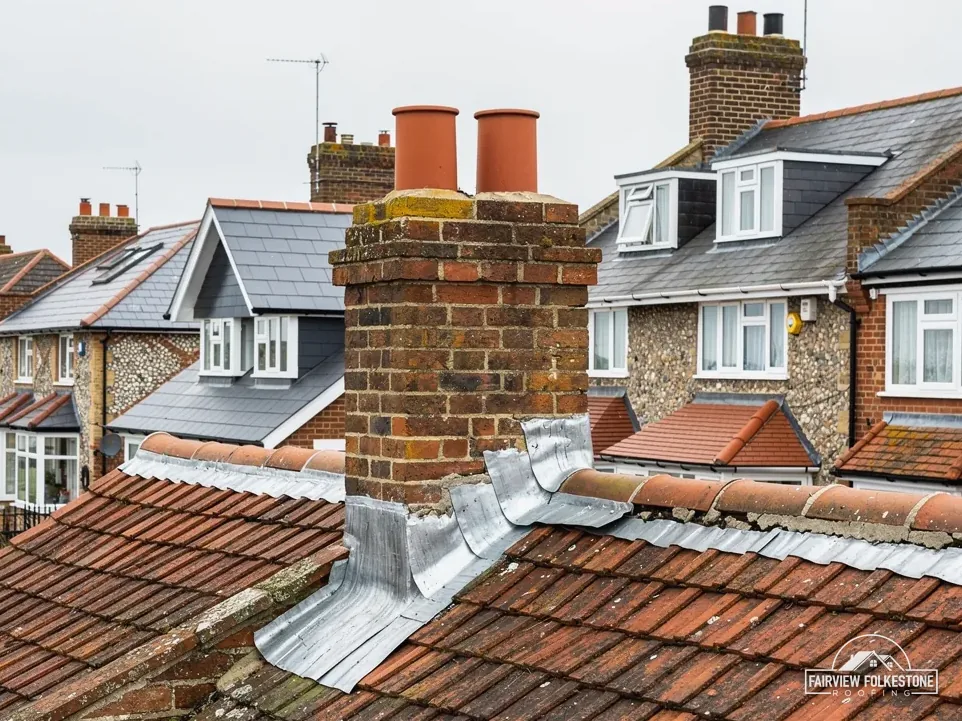
Here are the main advantages, each with the evidence behind it, followed by the disadvantages we cover in the rest of the post.
| Strength | Evidence | The catch |
|---|---|---|
| Long life | MyJobQuote: correctly installed flashing can last for over 80 years | Depends on installation |
| Shapes to the roof | Soft enough to dress by hand into angles | Needs a skilled fitter |
| Wide use | Listed for soakers, flashings, valleys, gutters and dormers by Royston Lead | Code must suit the detail |
| Suits old buildings | Often the expected covering on older roofs | Consent may apply |
On the pros side, the long-life claim is the one worth reading closely. HomeBuilding's range for a lead flat roof is 60-100 years, against 50 to 100 years from Less, so the sources agree that lead outlasts membranes by a wide margin. They also agree that the figures are ranges.
None of that cancels the cons. It does explain why lead keeps being chosen despite them: when the roof is meant to last, a higher price spread over decades can make sense.
A fair reading is that lead's strengths are about time and shape, and its weaknesses are about weight, money and the people involved, whether fitters or thieves. The rest of the post takes the weaknesses one at a time.
Where an option has a catch, the catch is not always a reason to walk away. A skilled fitter, a sensible code and a survey that looks at the roof structure answer most of the catches in the right-hand column. Theft and staining take more thought, and they get a section each below.
02Key points
Con one: weight and what the roof has to carry
Lead is heavy, and the heavier the code, the more it weighs. Royston Lead's figures give 20.41 kg per square metre for Code 4, 25.40 for Code 5 and 30.05 for Code 6. Ten square metres of Code 5 is therefore around 254 kg of metal, and that weight has to be carried by the structure under it.
For small details such as flashings and soakers this hardly matters. It starts to matter when a whole roof or a large flat area is covered, because the structure beneath must be able to take it.
Lead pros and cons answered
Is lead roofing worth the extra cost?
It can be where the roof is meant to last. HomeBuilding's range for a lead flat roof is 60-100 years and MyJobQuote says correctly installed flashing can last for over 80 years. A cheaper material that needs replacing sooner can cost more over that span, but a survey should decide.
- In Approved Document A, more than a 15% rise in roof load counts as a significant change, which brings Building Regulations approval and a structural check for a covering that much heavier.
- The Planning Portal puts the same trigger as a new covering 15 per cent or more heavier.
- A like-for-like replacement of lead with lead does not change the load, but replacing a lighter covering with lead might.
So the con of weight is mostly a question for a re-cover, not for a flashing or a gutter repair. A survey looks at the roof structure before a heavier material goes on it.
The same weight that makes lead a nuisance for the structure also helps it stay where it is put. It is not a light sheet that a gust can easily lift once it has been fixed correctly.
If the plan is to change a whole roof covering, ask for the structure to be checked first, since a much heavier covering brings a structural check and Building Regulations approval.
03Costs
Con two: cost
Lead costs more than most of the materials it competes with, and the third-party figures show how the money works out at small scale.
- MyJobQuote: a full leadwork replacement comes to between £350 and £920, and scaffold is the factor that moves a job most within that range.
- MyJobQuote: patching one chimney flashing is around £200 and replacing it in full averages around £570.
- Checkatrade: lead flashing repairs run from £50 to £70 per metre.
These are published ranges for typical jobs, not our prices, and they are not additive. A per-metre repair rate says nothing about the total for a roof with several details at different heights.
What pushes a lead quote up or down is much the same as for any roof job: how much sheet is needed, how many details there are, whether the old lead can be kept, and how the work is reached. Scaffold in particular can be the difference between the bottom and the top of a published range.
On the other side of the sum, lead is the material with the longest published lifespans. Spread over decades, a higher outlay can come out well, and a cheaper option that has to be replaced twice does not. That is not a reason to buy lead for every roof, but it is the reason to look at the whole life of the roof and not just the first quote.
Ask whether any quote you receive covers scaffold and VAT, since a quote that leaves either out cannot be set fairly beside one that includes it.
04In order
Con three: theft
Lead has a resale value that other roofing materials lack, and that makes it a target. A roof that has lost its lead needs more than a new sheet: the joints are open, the water gets in, and the insurer has to be told.
Insurance disputes are a matter for the Financial Ombudsman Service, on 0800 023 4567, if a claim is turned down. Keep the evidence together: the ombudsman will usually look at photographs and expert reports. Our page on lead stolen from your roof covers the practical side.
If it happens to you, the plain steps are these:
- Take photos of the roof and any damage inside before anything is moved.
- Tell your insurer and hold on to the bills for any temporary repair.
- Report the theft to the police and ask for a reference number.
- Have the exposed joint made weathertight as soon as it is safe to do so.
Does theft make lead a bad choice? Not on its own. It makes the position of the roof worth thinking about. A roof that is easy to reach from a garage or an alley is a bigger risk than one at the top of a three-storey house, and a roofer should discuss options with you rather than assume.
Where theft is a real concern, one option is to price a lead substitute alongside new lead and decide on both numbers.
A roof that has been stripped once is also a roof that has been disturbed, so check the neighbouring flashings and the gutter when the repair is done, in case the thieves left damage that is not obvious from the ground.
What should I do if lead is stolen from my roof?
Photograph the damage, tell your insurer, keep receipts for any temporary repair and report the theft to the police. Have the exposed joint made weathertight quickly, because the roof is open to rain. A roofer can then advise on replacing it in lead or pricing a substitute.
05In brief
Con four: staining and appearance
The look of lead can count as a pro or a con, depending on the house and the owner. New lead is bright and darkens as it weathers, which is why patination oil is sometimes used to even out the early appearance. Our answer on patination oil explains what it does.
The other appearance point is run-off. Water that has crossed a lead surface can leave a mark on the wall or roof covering below it, and the concern is more visible on a light-coloured surface. It is a fair thing to raise with a roofer before the job, along with how the detail is designed to carry water away from the face of the wall.
Appearance questions to settle before the lead goes on:
- Is the surface below the lead light or dark, and will a mark show?
- Do you want the lead to look new for the first months, or weather in naturally?
- Is the building listed, where the council may care about the finish?
These do not rule lead out. They are reasons to ask the questions at the survey, when the answers are cheap, rather than a year later, when the answer is a cleaning job or a repair.
For listed buildings and conservation areas, the colour and finish of leadwork can also be part of what the council considers, so ask the planning team first.
When the lead is part of a wider roof job, ask for the leadwork to be described separately in the written specification, even though the price is one total. That way, if the details change on site, you can see what has changed.
06The short list
Con five: the skill it takes, and how to decide
Lead is forgiving in one way, because it can be shaped, and unforgiving in another, because it has to be fitted correctly. MyJobQuote's lifespan figure is for lead that is correctly installed, which is exactly where cheap jobs fall down. Poor joints, no allowance for movement and flashings fixed too tightly are the faults that shorten its life.
Does lead stain the wall below it?
Run-off from a lead surface can mark the wall or covering beneath, and it shows most on light colours. How the detail is designed to shed water matters. Raise it at the survey, and ask how the roofer plans to keep the face of the wall clear.
You cannot judge workmanship from a photograph, but you can ask a few questions:
- What code is proposed for each detail, and why?
- How will the joints and fixings allow the lead to move?
- How does the flashing meet the wall or chimney?
Our post on fitting lead flashing on a pitched roof shows what a good detail involves.
To decide, weigh your own situation against these points:
- Choose lead where the roof is old, listed or visible, where shapes are awkward and where you intend to stay.
- Look at alternatives where the roof is plain, theft is a worry or the budget is tight.
- Get a survey before choosing either way, so the price is one total and the code, the details and the access are written down.
Our lead work page covers the jobs we do.
Lead suits some roofs very well and others poorly, and its cost makes the wrong choice an expensive one to put right. Where we are asked to look at a roof, we say which it is.
Tell us what's wrong with the roof.
You'll get one written total price.