Morehall and Foord · part of Folkestone
Roofers in Morehall and Foord
A conservation area on one side, a listed church and Broadmead Manor on the other: we survey each roof before anything else, mark every fault with its stamp and the reason for it, and send the price as one written total.
- Folkestone conservation area
- Close to Foord's streets; the council's own map says whether an address is inside it
- Listed close by
- Church of St Saviour, Broadmead Manor and the barn to its north, all Grade II
- Environment Agency flood zone
- Mapped Flood Zone 3 land a short way from Morehall's centre
- What highway scaffolding costs
- Kent County Council, £52 a week for 2026 to 2027
From Morehall to Foord: what each fault fairly needs
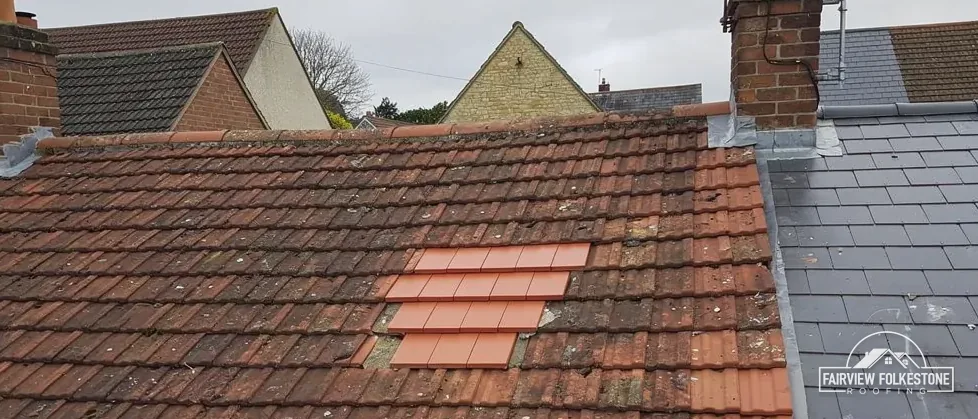
What we found
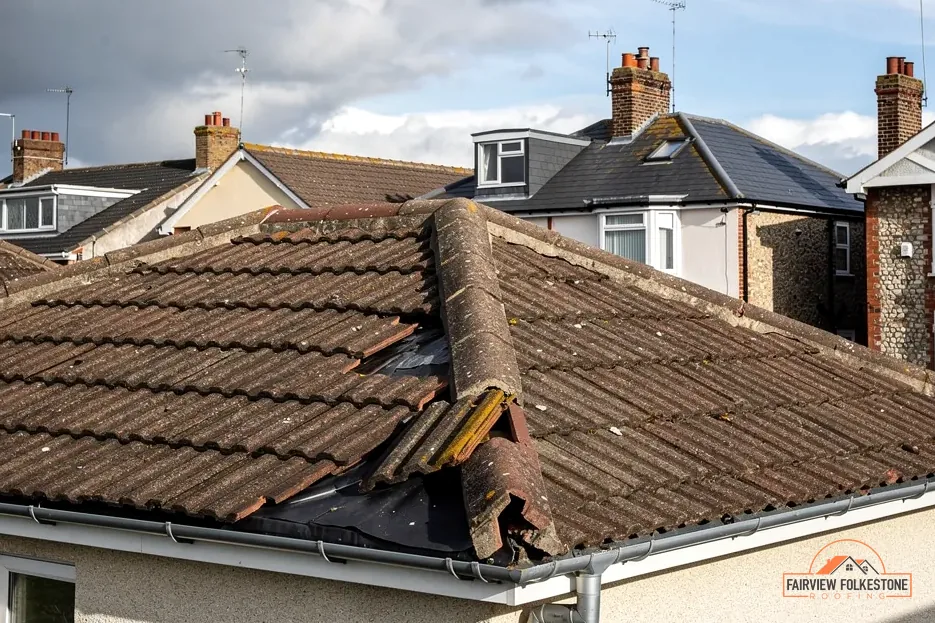
Tiles slipped above a back bedroom, two clips snapped
What it fairly needs
Refix the tiles, renew the clips that let go, and leave the rest.
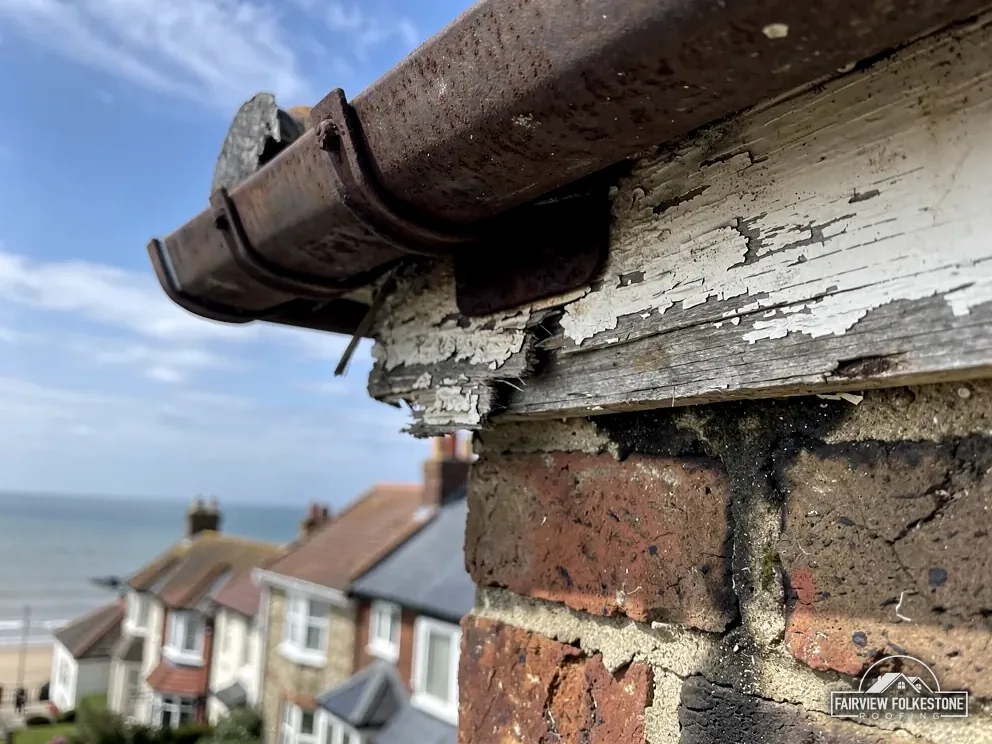
What we found
Gutter sagging at the middle, joints dripping down the wall
What it fairly needs
A new run, set to a fall towards the outlet, with sound boards kept.
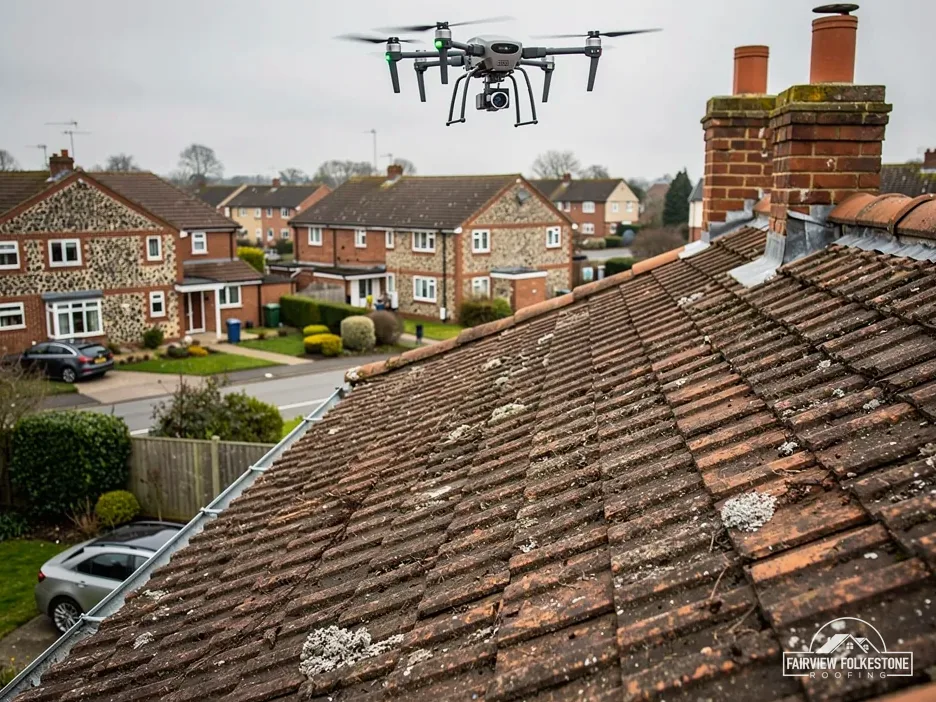
What we found
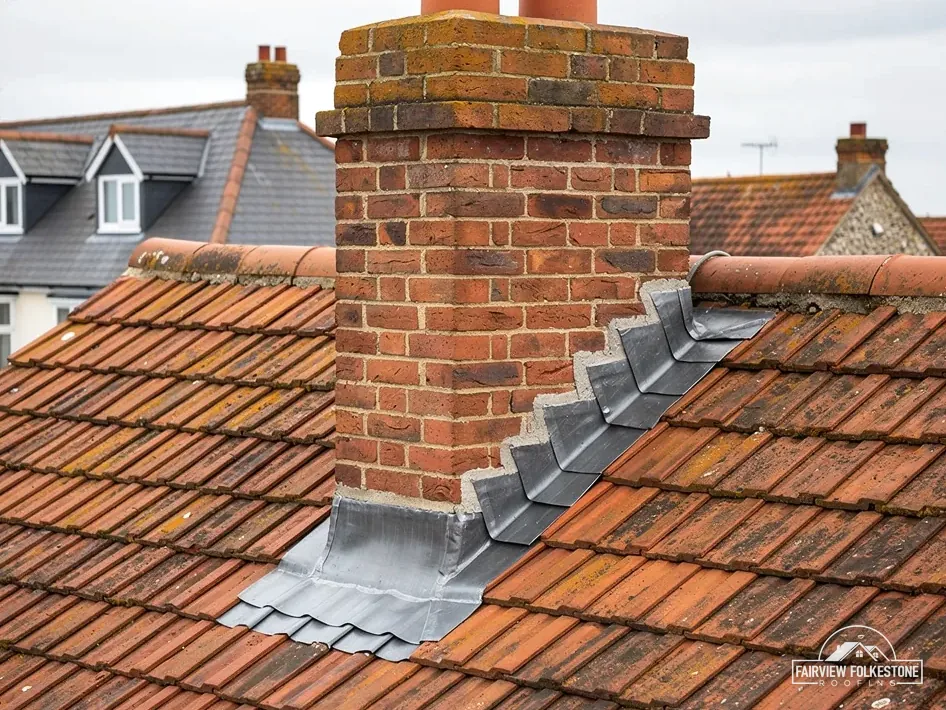
Damp stain on the ceiling beside a chimney breast
What it fairly needs
Look at the flashing and the stack first; the price follows that.
Send us a photo and the address of your Morehall or Foord roof
The fair ledger
What a boundary, a church and a manor change on one roof
Folkestone's conservation area, a listed church and Broadmead Manor all sit close by, and each one changes what gets checked first. The three entries below each finish on a stamp.
Entry 01Boundary map
Streets by Folkestone's conservation area: the boundary sets the checks
The Folkestone conservation area lies a short distance from Foord, so some addresses here may sit inside it and others will not.
Which addresses the boundary touches
The map decides it, not the postcode. Folkestone & Hythe District Council publishes an interactive conservation area map, and we look your address up on it before a price is written. The council's guidance asks for traditional natural materials in new development there, so on an address inside the boundary a like-for-like repair is the natural place to begin.
Re-covering a house in the same kind of covering normally counts as permitted development, conservation area or not, but an Article 4 direction can withdraw further rights. From the street we cannot tell whether one applies to your road, so we ask Folkestone & Hythe District Council instead of guessing. Our planning permission guide sets out which roof changes need an application and which do not.
Trees are the other thing to check. Tree work inside a conservation area is notified to the council on a section 211 notice, and the council wants that notice a minimum of six weeks ahead, so if a branch has to come back to let us reach the eaves, that notice goes in first and the date for the roof work follows it. We agree a start date with you after that answer, not before it. If your address is inside the boundary, the written quote says so and sets out what the council confirmed, so the price and the council's answer sit together.
Does a re-cover near the boundary need an application?
A straight swap of one covering for the same kind is normally permitted development, even where a conservation area applies. We still look your address up on the council's map and ask about Article 4 first, because a direction can remove rights your roof would otherwise have. The council has the final word, and its answer goes in writing before any scaffold is built.
Myth: A conservation area means roof work is banned.
Fact: Repairs go ahead there all the time; the map and any Article 4 direction decide what needs an application before the work starts.
Entry 02Listed roofs
A Grade II church and manor: consent before the scaffold
The Church of St Saviour, Broadmead Manor and the barn to its north are each listed Grade II, and a roof repair on any listed building starts with the paperwork, before anyone climbs a ladder.
What listing changes for roof work
Historic England lists all three at Grade II (list entries 1251151, 1061240 and 1061241). Being listed does not rule out repairs. Listing leaves a house its permitted development rights for roof work, although work that changes the building's character also needs listed building consent, and a new roof covering can do exactly that.
Churches add a second question, because the consent route depends on the church and on how it is held and used. For St Saviour that route is for Folkestone & Hythe District Council to confirm, and we do not price roof work on a church until the answer is in writing. That answer is settled before any scaffold date is booked.
On any listed roof we photograph the fault, note what is there now, and write the repair as a like-for-like job, so that any application describes exactly what will change, and the photographs stay with the quote, showing a reviewer what was on the roof before we started. Our pitched roofing work covers repairs of this kind, and a roof inspection is the sensible first step when a listed roof is not yet leaking but you want to know where it stands.
Listed or not, the verdict differs
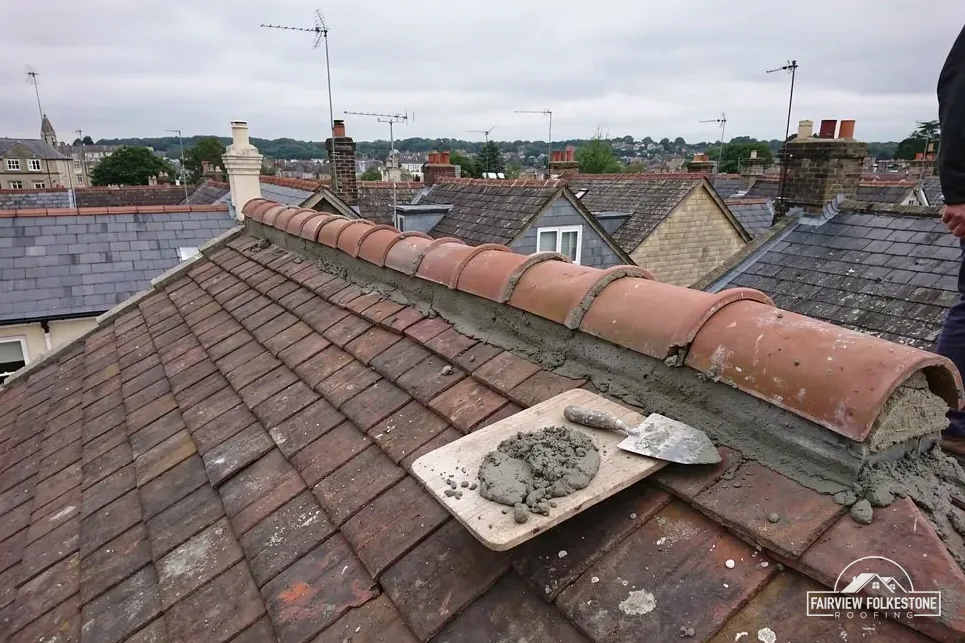
Leak at a listed barn's ridge
Consent route first, then the repair
Loose ridge, unlisted house nearby
Refix it
Roof coverings worn out, listed manor wing
Consent, then like for like
Who decides the route for works to St Saviour's roof?
Folkestone & Hythe District Council can say which consent route applies to a given church, so that is where we ask. The answer depends on how the church is held and used, and nobody should start work on a listed church roof before it is clear, so the route is confirmed in writing before any work is planned or priced.
Fall, brackets and joints
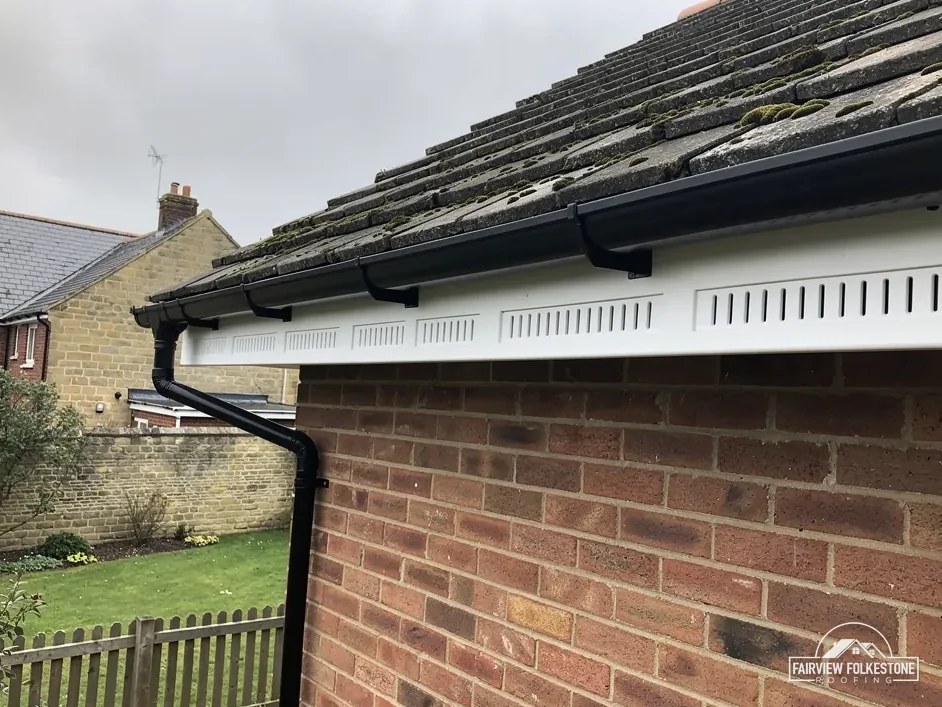
Gutter maker Brett Martin recommends that the run slopes 1 mm for every 600 mm towards the outlet, so a six-metre run sits 10 mm lower at the outlet end than at the far end. When a bracket has slipped or the run has sagged, the water stands, spills over the front, or drips from the joints down the wall below.
A sagging gutter that is otherwise sound is a refix: new brackets, the run set back to its fall, the joints re-sealed. A gutter that has split, or that has been patched until the patches outnumber the sound sections, is a replacement, and we tell you which and show you the photographs of each failed joint and bracket. The fascia and soffit boards behind it get checked at the same time, because a gutter that has been spilling onto them can leave them soft.
Where only a short length has failed, a repair of that length is the fair verdict, and nobody needs to pay for a whole new run. Where the same joint has been sealed three times, the next sealant will fail as well, and a new run is the kinder choice for your money, because every extra patch adds a joint that can fail. Our gutters, soffits and fascias page covers the range of work.
Entry 03Gutters
A sagging gutter run: reset it or renew it
A gutter only works if the water runs to the outlet. When the run has sagged, it stands, spills over the front or drips from the joints.
Myth: A dripping joint only needs more sealant.
Fact: If the run has dropped at that joint, sealant treats the symptom; the fall to the outlet has to be reset first, then the joint re-sealed.
Where a gutter run goes wrong
- Bracket holding the run
- Joint that has dropped
- Outlet the run falls to
The fall only works when all three are right together, not one by one.
Not sure which side of the boundary your roof falls?
Give us your street and a picture of the roof. The council's map gets checked, every fault is stamped repair, replace or check, and one written price for the whole job follows the visit.
Morehall and Foord, inside Folkestone
Both districts are part of Folkestone: about 0.8 road miles and 3 minutes by road from our starting point, so a visit here is a short drive, and the survey and the scaffold are arranged around your street and your neighbours' access.
Morehall and Foord roof questions
Answers for the streets around the boundary, the church, the manor and its barn.
Does a roof near the conservation area in Morehall and Foord need extra checks?
Yes, one extra step. The Folkestone conservation area lies close to Morehall and Foord, so before we quote, your address is checked on Folkestone & Hythe District Council's interactive map, and the council is asked whether an Article 4 direction applies to your road. A plain re-cover in the same kind of covering is normally permitted development either way, and that is confirmed before the quote is written. Changes beyond that are set out in our planning permission guide, and the council has the last word on all of it.
Does the scaffold for a Morehall roof need a licence, and from whom?
Under Kent County Council's licence guidance, the scaffolding company should lodge the application for the householder. Scaffolding on the highway in Morehall and Foord falls under Kent County Council, whose fee for 2026 to 2027 is £52 per week for a 7-day permit. We arrange it with our scaffolder. Kent County Council also asks for applications, renewals included, 5 working days before the licence is meant to start.
Does re-roofing in Foord need Building Regulations approval?
Folkestone & Hythe District Council's Building Control team is on 01303 853538 and its pages say most repairs, replacements and maintenance do not need approval, while its list of alterations you may also need approval for includes replacing roof coverings. The Planning Portal puts the test at less than 25 per cent of the building envelope and less than 50 per cent of the roof; below both, no application is normally needed for a re-roof; a covering heavier by 15 per cent or more needs approval whatever those two figures say.
What does Flood Zone 3 mean for a roof in Morehall and Foord?
Mapped Flood Zone 3 land, as the Environment Agency draws it, sits a short way from Morehall's centre. The map is about flood risk, which is a different subject from roofing, so the zone leaves untouched how a roof covering or a gutter is fixed. What our survey covers is the roof itself. If you are planning ground-floor work, such as an extension or an outbuilding, ask Folkestone & Hythe District Council what the zone means at your address.
Does a listed barn or house near Broadmead Manor need consent for roof repairs?
Broadmead Manor and the barn to its north are both listed Grade II. Listing leaves both their permitted development rights for roof work, while anything touching their character needs listed building consent as well. The list entry is checked and the council is asked before we price the work, then write the repair to match what is on the roof now, so the written price and any application describe the same job.
What does the survey of a Morehall or Foord roof actually check?
We start at the top and work along the roof from the ridge down: the ridge and any hips, the covering on each slope, flashings at chimneys and walls, valleys, then the gutters and the fascia boards that carry them. We photograph every fault and mark each one repair, replace or check on the written sheet. Inside the loft, if we can get to it safely, the covering is also checked from beneath. The price then arrives as one written total that covers the whole job, scaffold included.
Roof trouble in Morehall or Foord? Start here.
You'll get one written total price.