Roofers in Folkestone, Kent
Roofers in Folkestone
We tell you whether your roof needs a repair or a new roof, and why. Then one written total price.
10-year workmanship guarantee, in writing
The fair job: repairs first where they're sound, one written total price.
Repair or replace? Here's how we decide.
What we found
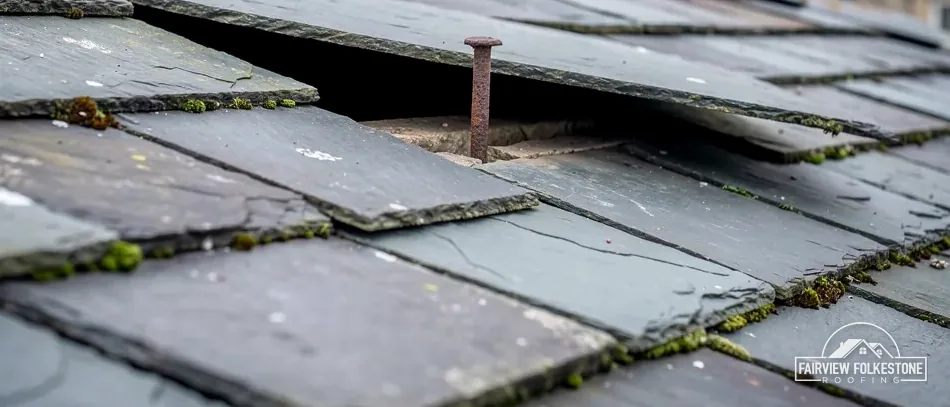
A few slipped slates, battens sound
What it fairly needs
Refix the slates. No new roof.
What we found
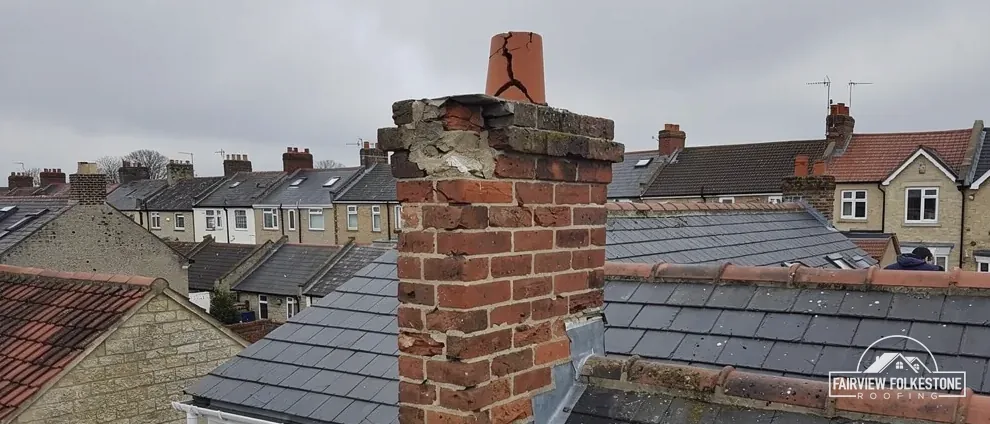
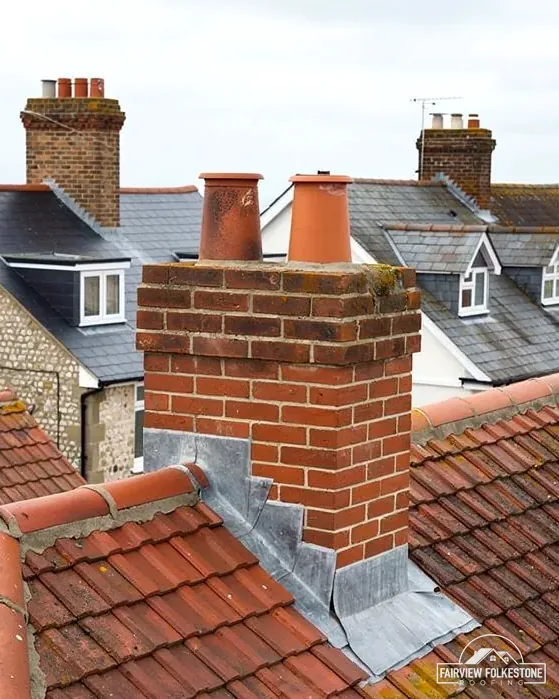
Cracked lead flashing at the chimney
What it fairly needs
New lead flashing. Chimney left alone.
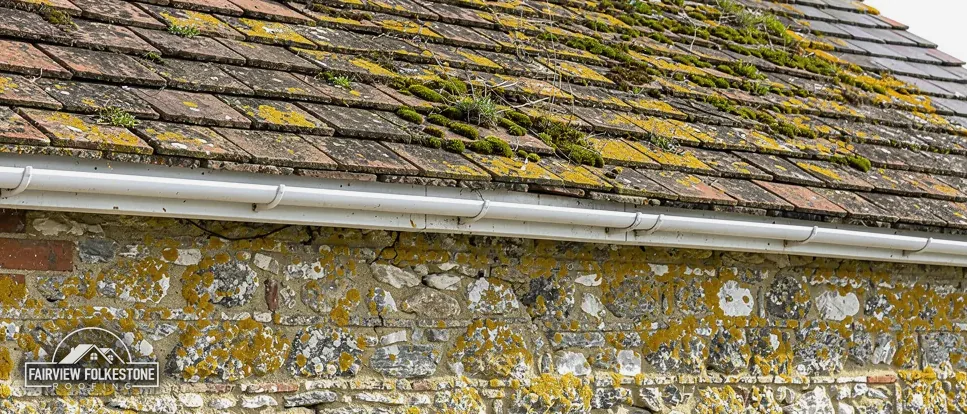
What we found
Tiles failing across the whole slope
What it fairly needs
Re-roof the slope, one written price.
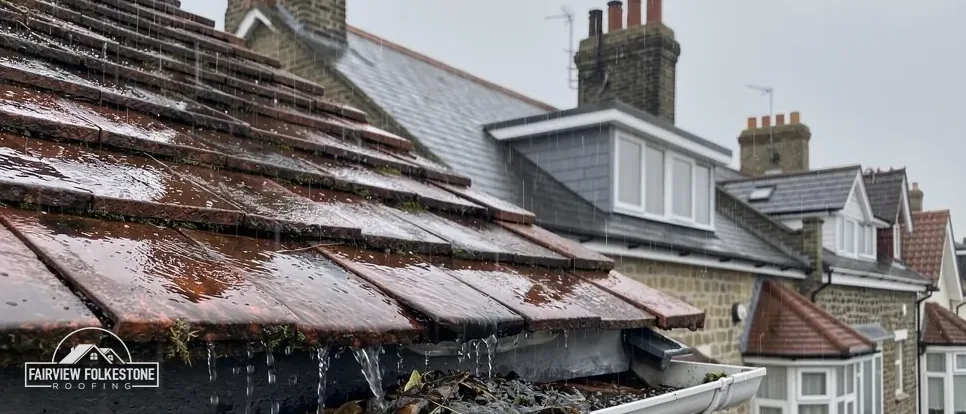
What we found
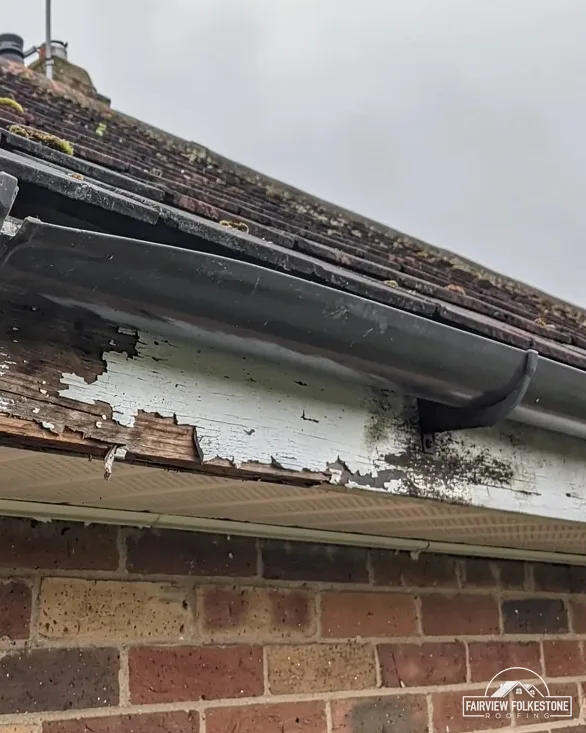
Gutter blocked and dropped at one joint
What it fairly needs
Clear, re-align and re-seal.
Roofing services in Folkestone
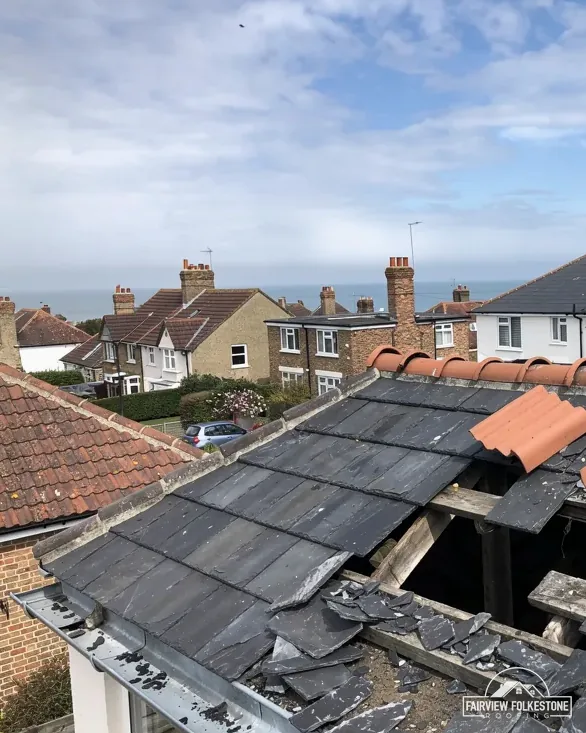
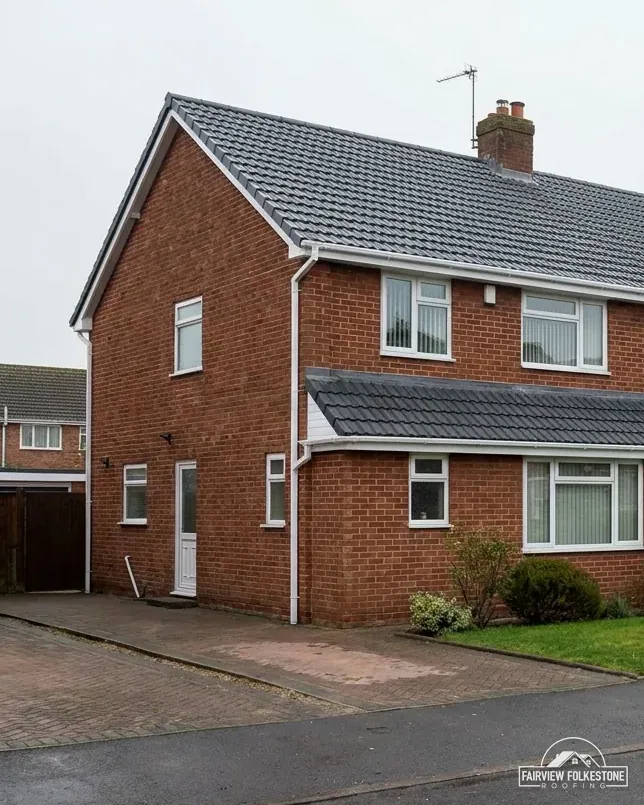
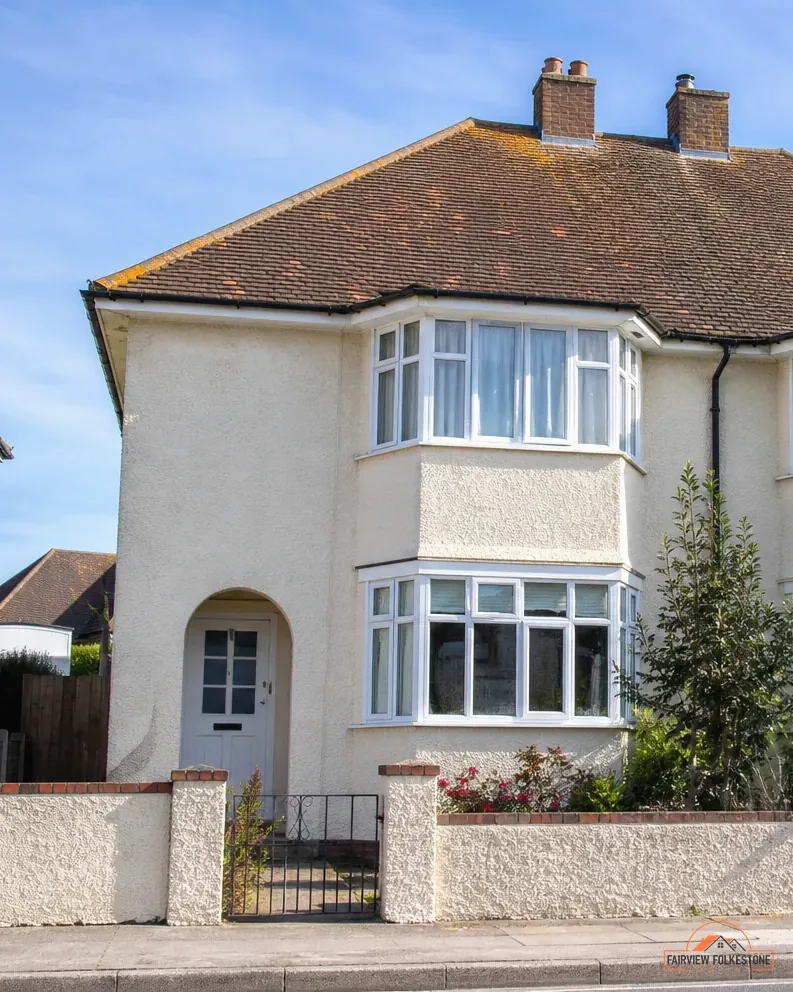
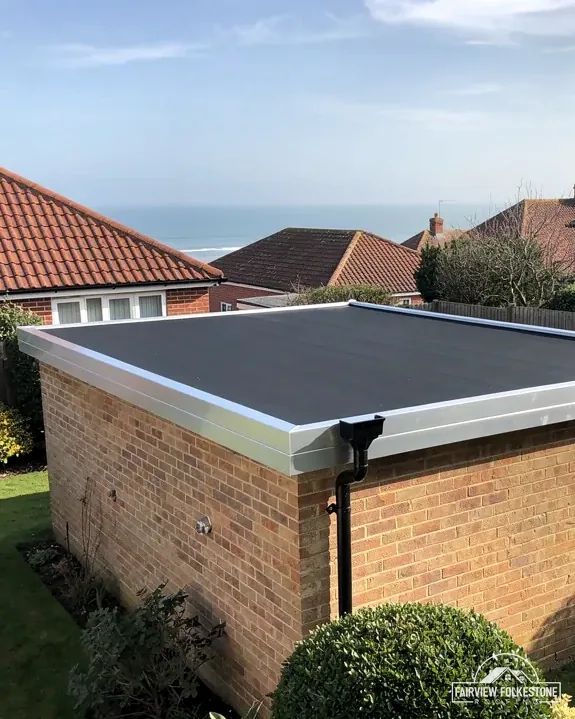
A fair price looks like this.

Your written quote
The job
Strip and re-slate the rear slope, new lead flashing at the chimney, scaffold up and down, and the site cleared each day.
One total price, in writing
From your call to a clean drive
- You call or WhatsAppSend a photo if you can.
- We look at the roofWe find the cause.
- You get one written priceRepair or replace, and why.
- The work, then a tidy siteSwept and cleared each day.

The fair ledger
Six roof decisions and how we reach each verdict
Slipped slates, storm damage, chimneys, flat roofs, gutters and full re-roofs: for each one, what we check on the roof, when a repair is enough and what moves the price.
Entry 01Slates and tiles
A slipped slate or a failing slope: telling the two apart
A gap in the roof looks alarming from the pavement. What sets the work, and the price, is the state of everything around it.
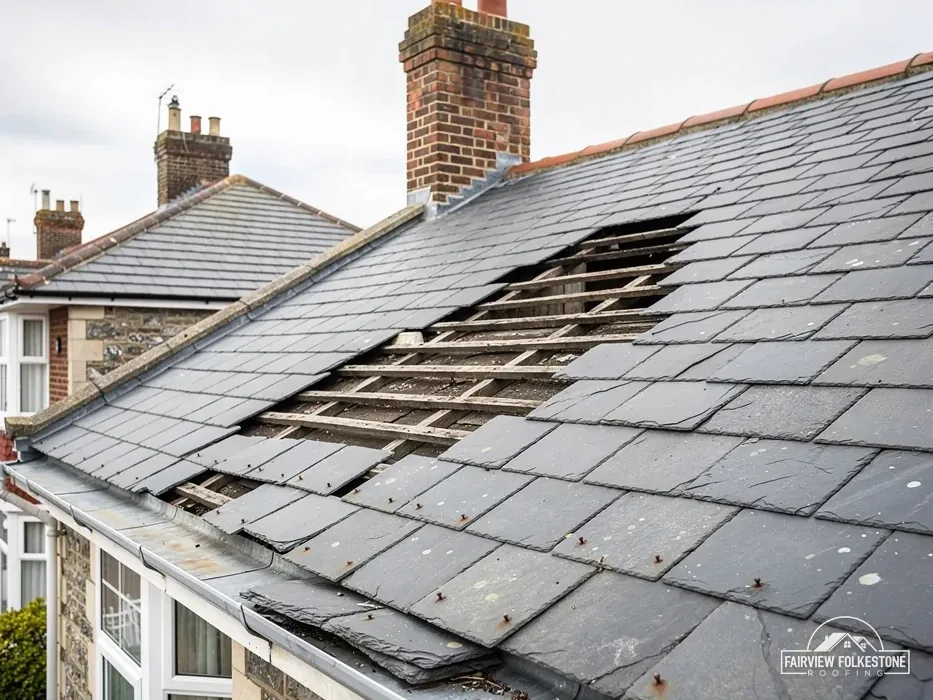
What we check around the gap
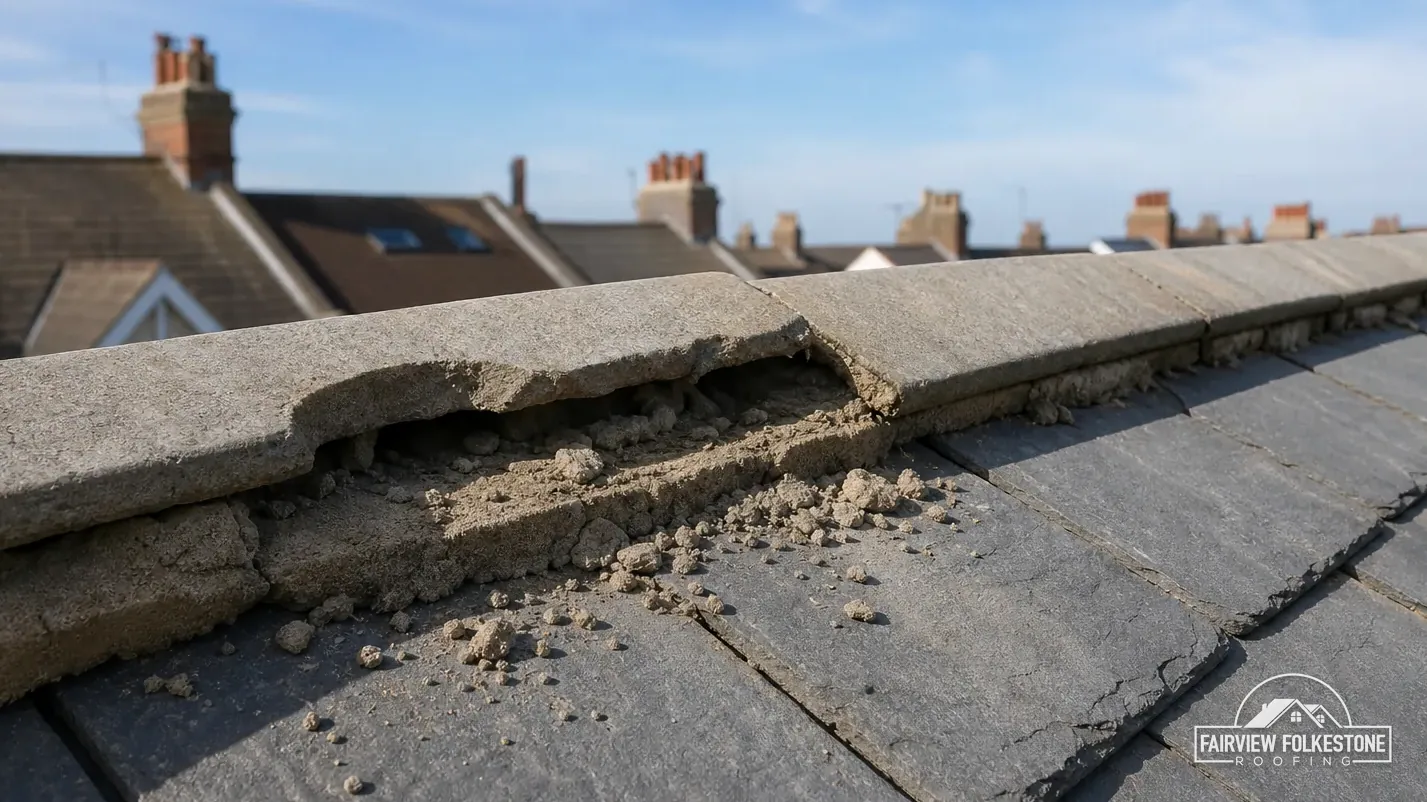
A slipped slate or a cracked tile stays a roof repair until the roof around it says otherwise. So we look at the neighbours first: the slates or tiles either side, the batten they hang from, the nails on the course above and the underlay showing through the hole. Where the batten is firm and the nearby slates hold, the slipped one goes back on a clip hooked over the batten, and the rest of the slope is left as it is. A cracked tile is lifted out and a matching one slid in under the course above, so the repair stays out of sight from the street. Natural slate comes under our slate roofing work; clay and concrete tiles go through the same test under pitched roofing.
The answer changes when slates are slipping in several places, when battens bend under a hand, or when the underlay behind them has gone brittle and torn. Then the fixings across the slope are giving out together, and one more refix just moves the next leak a metre along. We take photos from the roof, show you what we saw, and tell you which side of that line your roof is on before a price is mentioned.
- The slate that slipped
- Batten behind it, still firm
- Clip hooked over the batten
Myth: One slipped slate means the whole roof needs replacing.
Fact: Where the battens and the neighbouring slates are sound, a clip refix puts it right and the slope stays.
BS 5534
The code of practice for slating and tiling, current as BS 5534:2014+A2:2018
Marley notes installing to it isn't required by law
What sets the price
- How many slates or tiles have moved
- Whether battens and underlay are sound
- How we reach that part of the roof
- Matching the existing slate or tile
One written total price
Wind, height and the fixing specification
Folkestone is a coastal town, and its roofs run from the seafront up to the slopes of the Downs. Buildings on slopes, hills or the coast are graded for higher exposure, so on a re-slate or re-tile the fixing specification is calculated for that particular site under BS 5534 rather than copied from the last job. The same code no longer relies on mortar alone to hold the roof covering, which is why a ridge or verge we rebuild also gets a mechanical fixing.
Where a slope does need re-covering, the new slate or tile is chosen for the roof in front of us. Natural slate, clay tiles and concrete tiles differ in weight, in the lowest pitch each maker allows and in how they are fixed, so the survey records the pitch of every slope and the state of the timbers under it. A covering 15 per cent or more heavier than the one coming off needs Building Regulations approval and a structural check before work starts. On an older house, reclaimed slate can match the existing roof on one slope while the others stay, so a repair reads as part of the house rather than a patch.
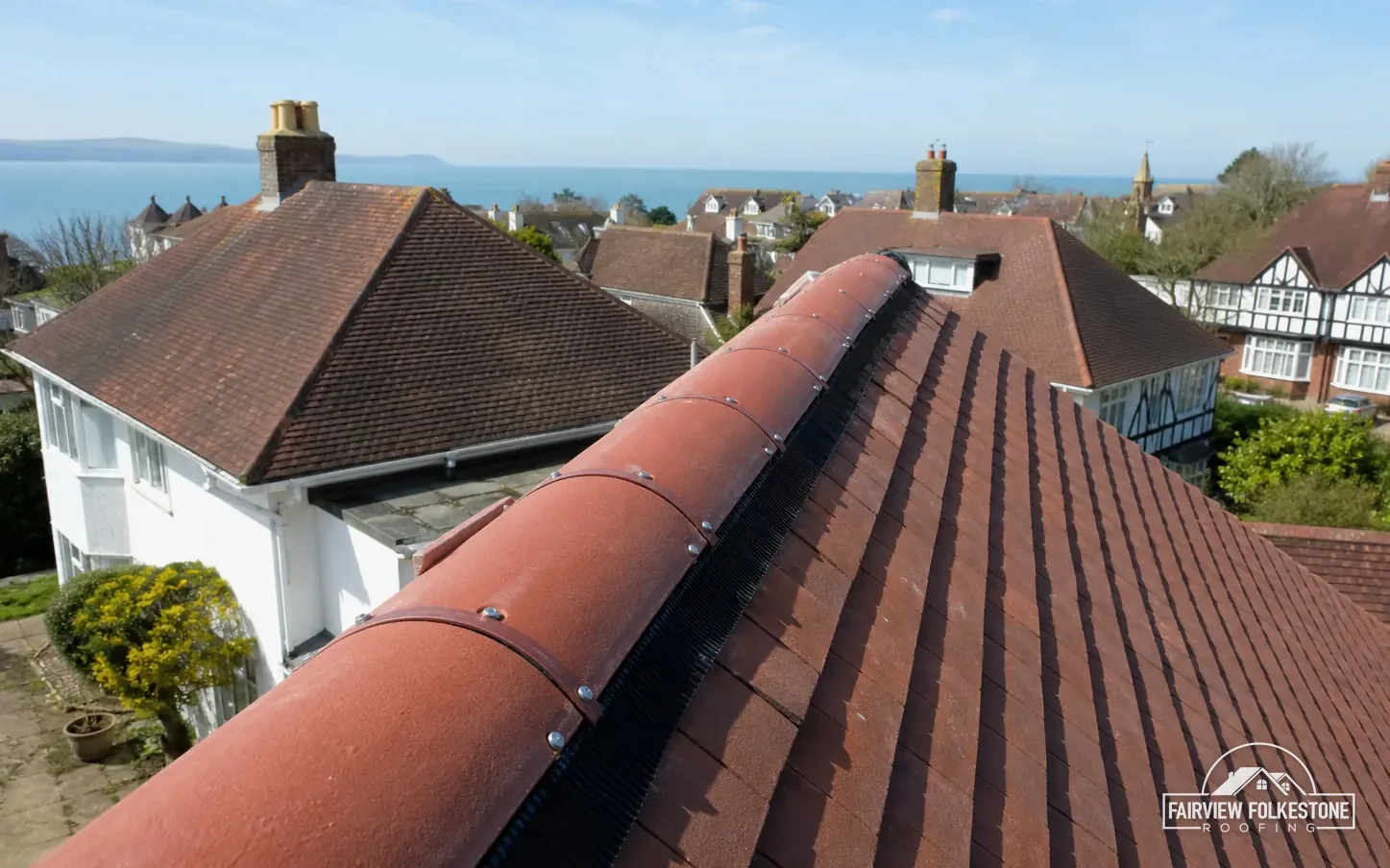
- Ridge tile along the top
- Mortar bed beneath it
- Dry-fix clip and screw
Entry 02Storm damage
After a storm: make it safe first, decide the repair second
A storm leaves two jobs: keeping the weather out tonight, and working out what the roof fairly needs once it is dry and can be seen.
Should I climb up and look at the roof after a storm?
No. A wet, wind-damaged roof is where falls happen, and loose tiles can slide under your weight. Look from the ground or an upstairs window, photograph what you can see, check the loft with a torch for wet patches, and put a bucket under any drip. Then ring us on 01303 476263 and we will come and make it safe.
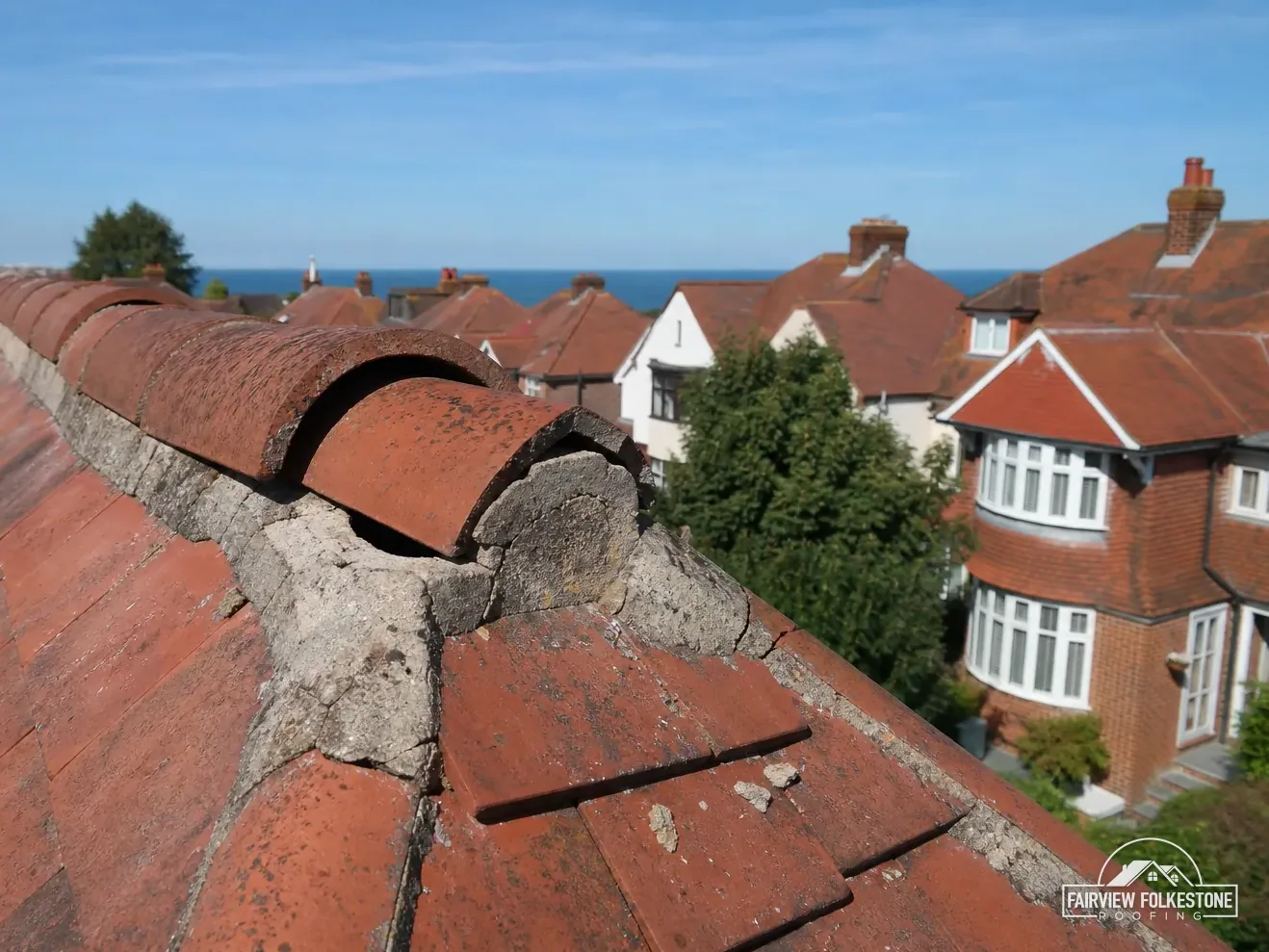
Ridge tiles loose, mortar bed cracked
Re-bed or dry-fix the ridge
A few slates lifted along one edge
Refix those slates
Ceiling stain, nothing visible outside
Trace the leak to its entry
The first visit after high winds
After a storm the first visit is about making the roof safe: a sheet over the opening, loose ridge tiles taken down before they fall, debris cleared from gutters and valleys. That is temporary work, and we tell you it is temporary. The decision about the proper repair waits until the whole roof can be seen in daylight, from a ladder or a scaffold.
A leak can show up well away from its cause. A stain on a bedroom ceiling can start at a cracked ridge two metres higher, a lifted flashing at the chimney, or a blocked valley that overflows in heavy rain. Our emergency and general roof repairs, from a single slipped tile to a run of lifted ridge, start by tracing the route back to where the rain got in, so the repair goes there and not under the stain.
Verges, hips and valleys get the same look. A dry verge with a cracked cap, or a hip tile that has lost its bedding, lets wind under the edge of the roof, and the next gust can lift more. Those edge repairs are priced as what they are, so one bad night does not turn into a re-roof by default.
Send us a photo of the damage
Get a verdictBefore you ring your insurer
Wind on this stretch of coast is real enough: the Met Office's account of the Great Storm of 1987 records a Channel ferry blown ashore near Folkestone, with Force 11 winds in many coastal regions of south-east England. If a tree or a chimney has come down onto the roof, the structure is checked before anyone walks on it.
Take photos of the damage, inside and out, before anything is moved, and keep receipts for any emergency work. Tell your insurer early. The Financial Ombudsman Service says it will usually look at expert reports and photos when it reviews a storm complaint, so a clear record helps you either way. The claim is between you and your insurer; our part is a written account of what we found and what it needs: which parts moved, what was made safe on the day, and what the permanent repair involves, with the photos attached.
If you want the whole roof looked over after a hard winter rather than one leak chased, a roof inspection gives you a written condition report with photos of each slope.
Entry 03Chimney and lead
Damp by the chimney: look at the lead before the brickwork
A damp patch on a chimney breast points at the stack, but the cause can sit lower down, where the lead meets the brick and the slates around it.
Where the stack meets the slope
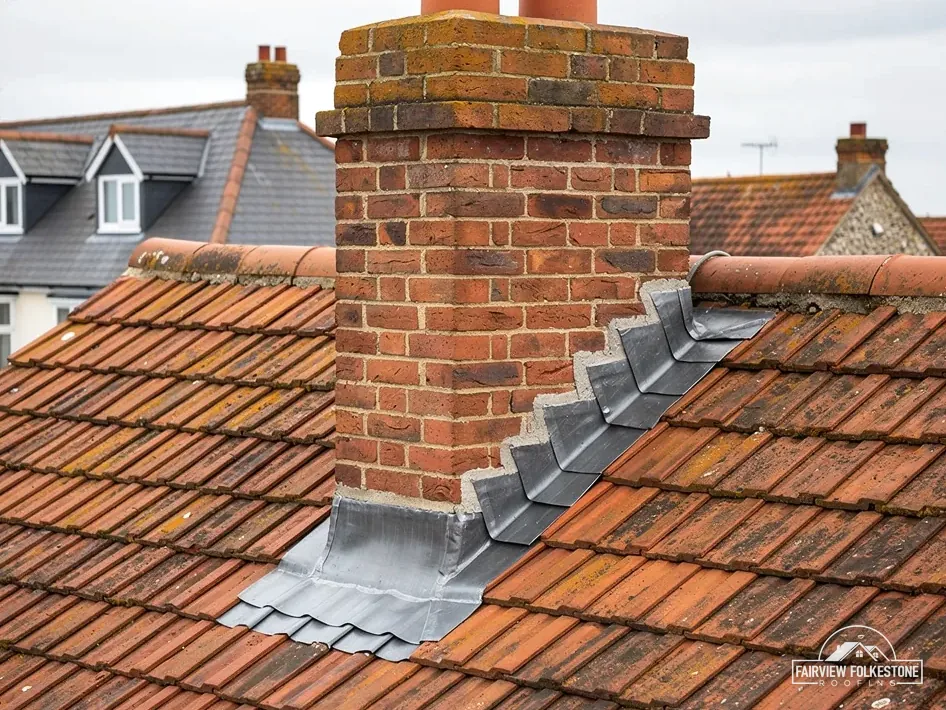
Lead seals the joint between a chimney stack and the roof around it. Stepped flashings are tucked into the mortar joints up each side and dressed over the slates or tiles, soakers sit under each course beneath them, an apron runs across the front and a back gutter behind. When the pointing that holds the flashing crumbles, the lead lifts away from the brick and rain runs in behind it. Fresh pointing on those joints, or new lead dressed to the same details, can be the whole job, with the stack left untouched. We test the lead by hand as well as by eye, because a flashing can look flat from the garden and still lift at a touch.
The stack itself is a separate question. Cracked flaunching around the pots, open joints in the brickwork, a pot that has shifted: those are chimney repairs, and we price them once we have seen them from a ladder or a scaffold.
The back gutter behind a wide stack is the part you cannot see from the ground, and a split there can drip down inside the breast long before a stain shows on the wallpaper. A stack that no longer serves a fire can be capped with a vent so the flue stays dry and aired.
- Stepped flashing up the side
- Mortar joint holding each step
- Soakers under each course
- Flaunching round the pots
Myth: A damp chimney breast always means rebuilding the stack.
Fact: Failed flashing, or the pointing that holds it, can let rain in on a sound stack, so the lead is checked first.
Code 4
Lead sheet for soakers, flashings, pitched valleys and dormers
Royston Lead cast-lead brochure
Lead sized for each detail
Lead sheet comes in codes, and the thicker codes go where the lead has more work to do. Code 4 suits soakers, flashings, pitched valleys and dormers, while parapet and box gutters start at Code 5. Code 3, the thinnest, is recommended for lead soakers only. Each code is identified by its own colour, so the lead on site can be checked against the code on paper before a piece is cut. Valleys, dormer cheeks, bay roofs and the abutment where an extension meets the house all come under our lead work, and the code for each detail is written into the quote so you can see what you are paying for.
Sealant smeared over a lifted flashing can buy time in a storm, but it is a stopgap, and we tell you if it is all that is holding a joint. Where the flashing has to be cut into a neighbour's wall, as on a semi or a terrace where the stacks sit side by side, the Party Wall etc. Act 1996 applies: the building owner serves a party structure notice at least two months ahead, unless the neighbour agrees in writing to an earlier start.
What sets the price
- Size of the roof
- Whether the deck and joists are sound
- Covering chosen: rubber, fibreglass or felt
- Edges, upstands and outlets
One written total price
Entry 04Flat roofs
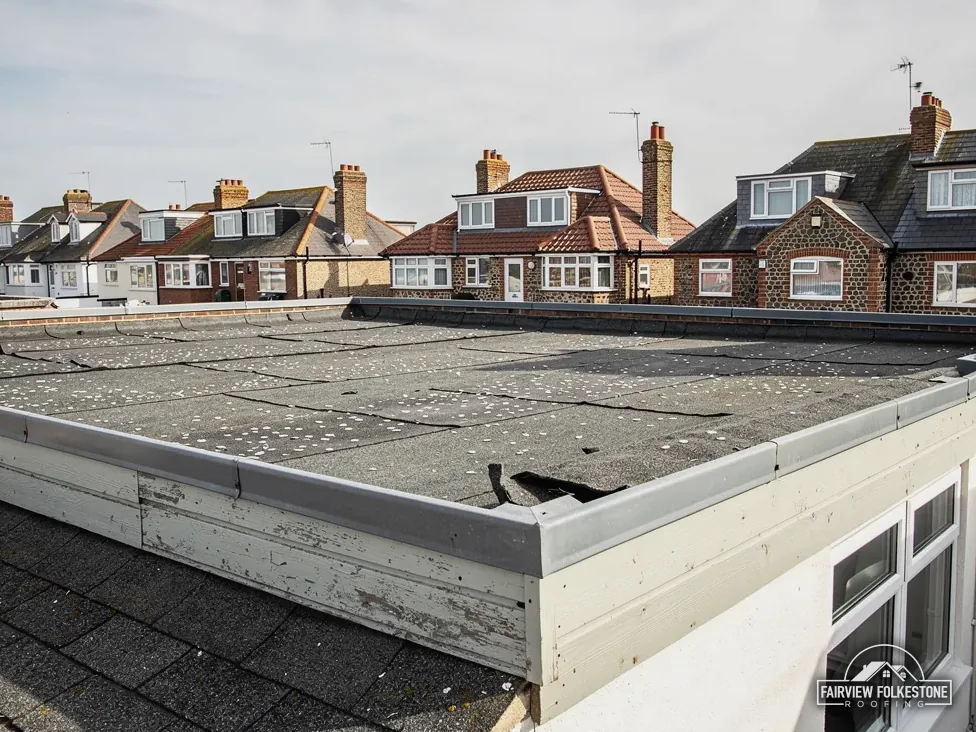
Flat roofs and garages: when patching stops paying its way
Blisters, splits and standing water on an old covering say the roof has run its course, but the deck underneath decides how big the job is and what it costs.
Why the fall beneath the covering matters
No flat roof is truly flat. BS 6229:2025 sets a minimum finished fall of 1:80 for membrane flat roofs, so the deck is designed to a steeper fall to leave room for building tolerances. Where puddles sit for days after rain, that fall has gone, from a sagging joist, a soft deck board or firrings cut wrong in the first place. A new covering on the same deck ponds in the same place. That is why our flat roofing surveys start at the deck: we press, lift a corner where we can and check the edges, upstands and outlets before talking about EPDM rubber, GRP fibreglass or torch-on felt. EPDM goes down as one rubber sheet, GRP is laid wet over a board deck and felt goes on in layers, and the quote names the covering and why it suits your roof.
Replacing the membrane on a flat roof counts as renovation under Part L, so a full re-cover over a heated room can mean adding insulation at the same time. One split in an otherwise dry roof is a patch. Ponding across the area, soft boards and blisters over much of the surface point to a new deck and covering.
One split, deck dry and firm
Patch the split
Ponding right across the roof
New falls, deck and covering
Cement sheets on a garage, age unknown
Asbestos check before work
- Deck laid on firrings
- Membrane covering
- Upstand at the wall
- Drip trim at the edge
Garage roofs and cement sheets
Garage, shed and outbuilding roofs need one check before anyone lifts a sheet. HSE advises that if a building was built or refurbished before 2000, you should assume there is asbestos in it, and corrugated cement sheets are one place it turns up. Sheets taken off whole, without breaking, count as non-licensed work; sheets that are broken up or badly damaged become notifiable non-licensed work. HSE's guidance also treats asbestos cement roofs as always fragile, so nobody stands on the sheets. They leave in a lockable skip, never an open one, and household asbestos is not covered by the consignment-note exemption, so it travels with the paperwork a hazardous load needs. If the garage also has a cement-sheet gutter or downpipe, that is checked in the same visit, since it can be the same material. The new roof can go back as felt, rubber or fresh profiled sheets, depending on the pitch and the span, and a garage roof is a sensible moment to renew the gutter and fascia along that side as well. Our garage and asbestos roofs page sets out each step, and flat and sheet roofs on shops, units and workshops come under commercial roofing.
Entry 05Roofline
Overflowing gutters: a dropped joint, a blocked outlet or tired boards
A gutter spilling over in rain is a nuisance by the front door, and a damp wall behind it if it is left alone for a winter or two.
- Bracket on the fascia
- Joint that has dropped
- Outlet to the downpipe
Clearing first, then checking the fall
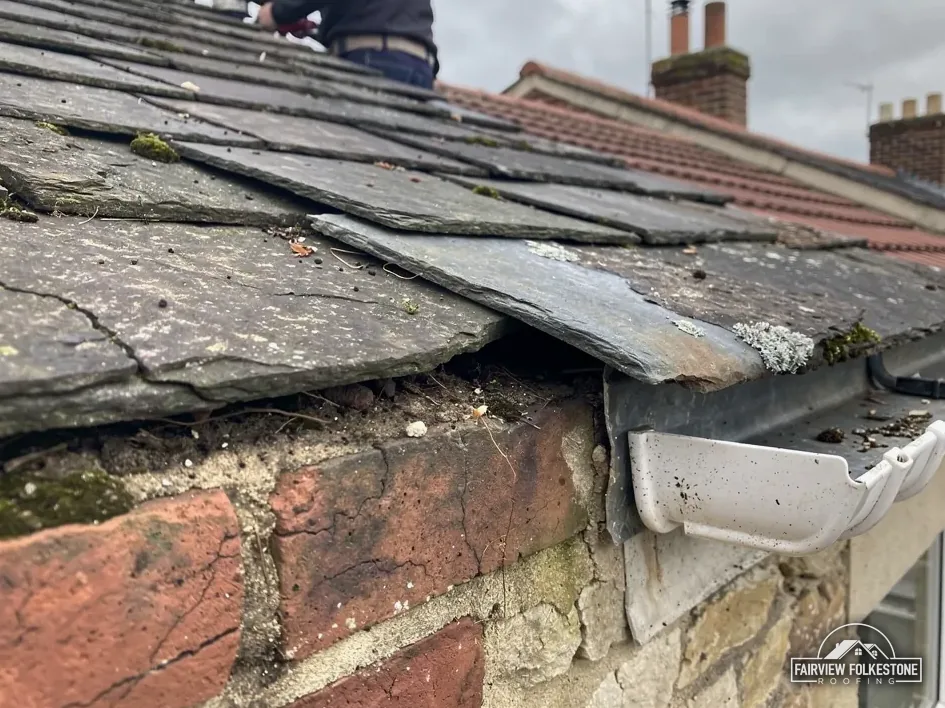
We clear the run first, because a gutter packed with moss and silt can look like a fall problem when it is a cleaning job. Then we run water down it from the far end and watch where it sits, and where it drips. A run that has sagged at one bracket sends water back over a joint instead of down the pipe; re-aligning the brackets and re-sealing that joint can be all it needs. Cracked sections, split outlets and downpipes pulled away from the wall are replaced to match. A blocked downpipe gets rodded through to the drain before anything is swapped, since a clear pipe can save a new one.
Behind the gutter sit the fascia board it hangs from and the soffit under the eaves. Where the fascia has rotted, the brackets have nothing to hold, and the answer moves to the boards: new fascias and soffits, with the gutter refitted to them, all under our gutters, soffits and fascias work. On older homes, HSE lists white asbestos insulating board soffit panels under the eaves among the places asbestos turns up, and most work on that board is licensed, so an old soffit is checked before any of it comes off.
How often should gutters be cleared out?
That depends on the trees around the house more than the calendar. Where branches hang over the roof, a check each autumn after leaf fall keeps the outlets open; on an open plot, clearing them when you see water spilling over in rain is reasonable. One visit tells us which applies to yours.
1:600
Gutter fall towards the outlet: Brett Martin advises 1mm for every 600mm
Moss, cleaning and small maintenance
Moss on a shaded slope washes down into the gutters and can block the outlets. Our roof cleaning and moss removal lifts it off by hand, with the gutters cleared afterwards, and the survey notes any tiles the moss has lifted. Clearing the gutter and its outlet while we are up there is small maintenance, done in the same visit.
A cleaning visit doubles as a look at the whole roof. With the moss gone, a cracked tile under a clump, a ridge with open joints or a valley half full of debris is easy to spot, and each one goes into the verdict we give you afterwards. You decide what happens next; nothing extra is started on the day without your say.
Replacement gutters come in uPVC, cast iron or aluminium. On an older front elevation, cast iron or a matching profile keeps the house looking as it did, and in a conservation area it is worth asking the council before the look of the front changes. At the back, or on a newer house, uPVC in a colour to match the windows is a tidy option, and the fascia, soffit and gutter can all be renewed in one visit from the same scaffold or tower.
How we know a re-roof is the right call
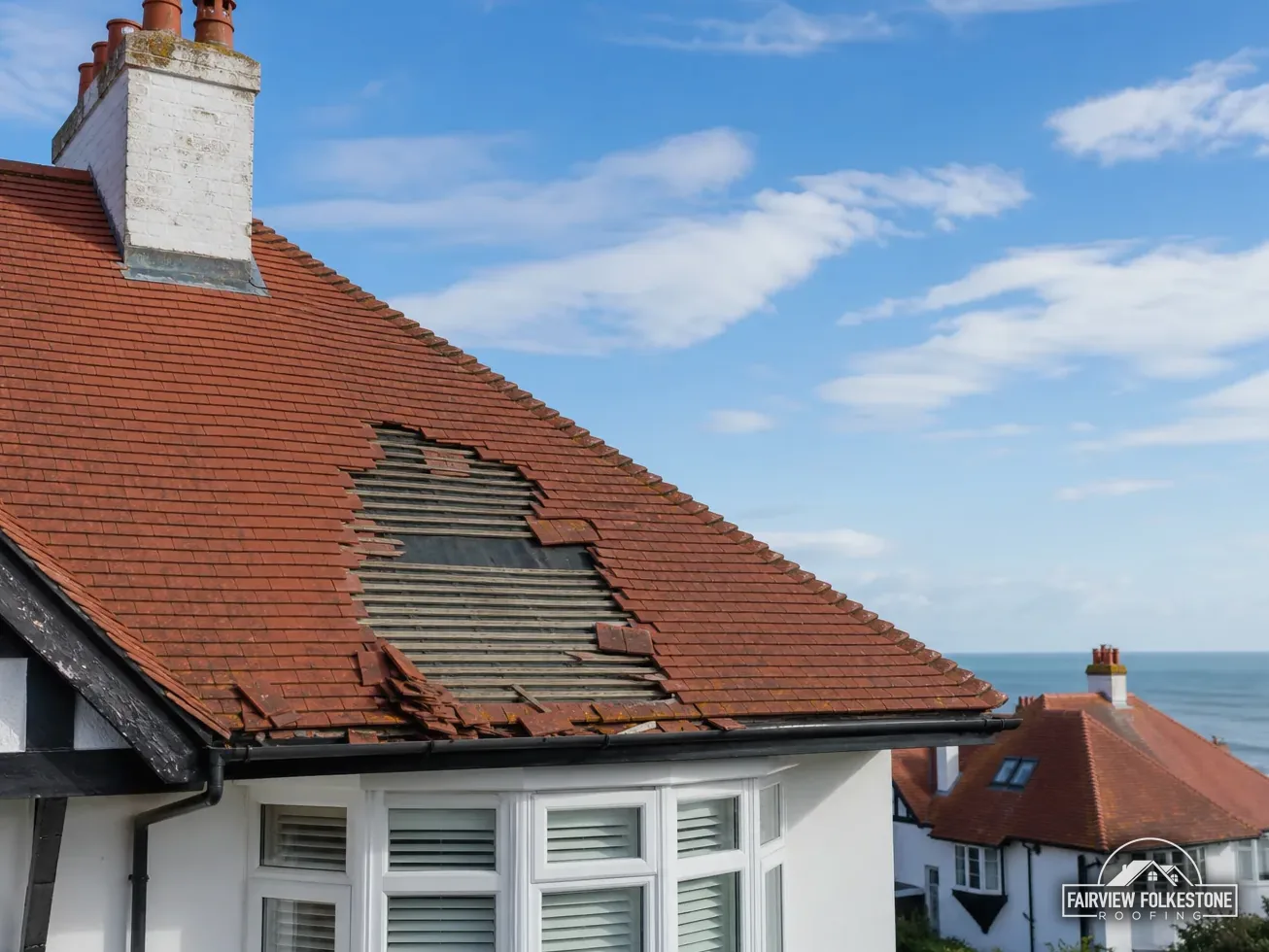
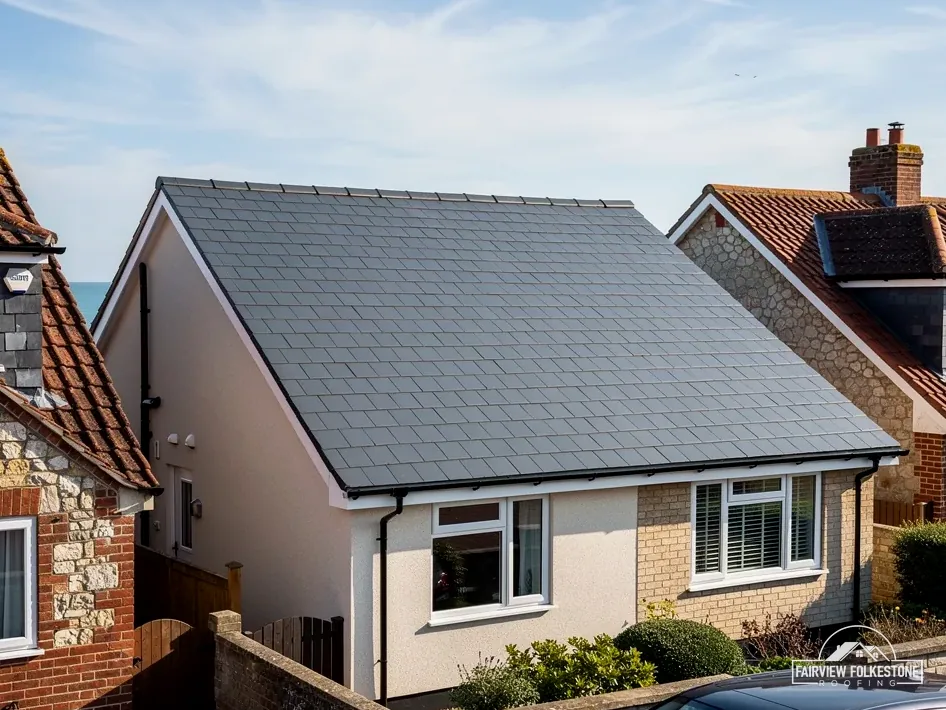
We recommend roof replacement when the survey finds the same failure everywhere rather than in one place: slates slipping across the slope, underlay perished from ridge to eaves, battens soft underfoot, nails giving way course after course. One storm-damaged corner on an otherwise sound roof is a repair, and we price it as one.
A new roof strips back to the rafters. With the timbers exposed we check them too: a split rafter or a rotten wall plate is put right before anything covers it, and you see it in photos first. New underlay goes on, then new battens, then the slates or tiles, fixed to a specification worked out for the site. At the eaves the underlay is dressed into the gutter so anything that gets under the covering drains out rather than into the wall, and a high-resistance underlay needs ventilation at the eaves of its own. How long the new covering lasts depends on the material and how it is fixed. Any roof windows and skylights are easiest to add or replace while the roof is open. The roof is sheeted at the end of each day, and the drive and garden are swept before we leave.
Entry 06Re-roof
A new roof, when the faults run from ridge to eaves
When the same fault turns up across the whole slope, patching becomes a running cost and a re-roof becomes the sounder spend.
Slates slipping across the whole slope
Strip and re-cover
Storm damage to one corner only
Repair that area
Spray foam under the slates
Lender and removal first
What sets the price
- Size, pitch and shape of the roof
- Slate or tile, new or reclaimed
- Scaffold and access to the house
- Chimneys, valleys and roof windows
One written total price
Rules that arrive with a new roof
A re-roof can bring Building Regulations with it. If more than half of a roof is renovated, Part L expects the whole roof to be improved to Table 4.3's U-value of 0.16 (the threshold column is 0.35) where that is feasible and pays back within 15 years. New roof windows work to 1.4 or Window Energy Rating Band B, and rooflights to 2.2. Our guide to planning permission for roof work covers the planning side, including conservation areas and listed homes. Building control is carried out by the council's building control team or by a registered building control approver, and any application is made before the scaffold goes up.
Two other jobs can sit alongside a re-roof. Spray foam under the slates comes off first, and in March 2023 RICS reported concern within specific sectors of the lending market, such as equity release mortgages, so our spray foam insulation removal starts with your lender's view. A tired roof over the back of the house is its own job under conservatory roofs: a ground-level conservatory keeps its energy exemption only while a wall, door or window still separates it from the house and the home's heating is not extended into it, and a new solid roof must comply with building regulations, so we check with building control first.
A re-roof should be the answer the roof gave us, never the one we arrived with.
Not sure which of these six is your roof?
Send a photo on WhatsApp or book a visit. You get a verdict on the roof and the reasons behind it.
Roofing questions answered for Folkestone homes
Plain answers on costs, rules, insurance and hiring a roofer in Kent.
How much should a roofer charge per day or per hour?
We price the job rather than the hour. A day rate only turns into a cost once you know how many days the roof needs, how many roofers are on it and whether scaffold, skips and materials sit inside that rate. After a survey we give one written total price for the whole job. Whoever you ask, check that the quote says whether VAT and scaffold are included, and what happens if the roof needs more once it is opened up.
How can you tell a dodgy roofer from a good one?
A good roofer gets onto the roof, or up a ladder, before giving a price, and shows you photos of what they found. Expect a written quote with the firm's name and contact details and a scope that says what will be done. Be wary of a knock on the door about a fault you never noticed, cash-only deals, pressure to sign on the doorstep and large deposits for small jobs. If something goes wrong, the Citizens Advice consumer helpline is on 0808 223 1133.
What does it cost to replace a roof in the UK?
Which? Trusted Traders put replacing the whole roof of an average three-bedroom house at £7,000 to £21,000 excluding VAT, from prices gathered in November 2025, likely to be at the upper end in the South East, which takes in Kent. HomeBuilding puts a standard three-bedroom semi with a 65m2 roof in plain concrete tiles at between £10,000 and £15,000. Your own figure depends on the size, pitch, covering, chimneys and access, and comes as one total price in writing after a survey.
Do I need building regulations approval to re-roof my house?
Under the Planning Portal's guide, re-roofing does not normally need an application if it affects less than 25 per cent of the building envelope and less than 50 per cent of the roof, but a new covering 15 per cent or more heavier does. Folkestone & Hythe District Council's building control team is on 01303 853538. Dover District Council lists replacing roof coverings, even like for like, among work needing approval, so for Dover district homes we confirm the route with the council before work starts.
Do I need planning permission to change my roof covering?
For a house, re-roofing normally falls under permitted development as Class C of the national rules, so a new covering on its own needs no planning permission. Flats have no permitted development rights. In a conservation area or a National Landscape such as the Kent Downs, dormers are not permitted development, and an Article 4 direction can remove further rights, so check with the council. Dover District Council counts 57 conservation areas in its district. Listed homes need listed building consent for changes that affect their character.
Who arranges the licence when scaffolding goes on the pavement?
Scaffolding on a pavement or road needs a licence from the highway authority. Kent County Council charges £52 per week for 2026 to 2027, and its page says the scaffolding company should submit the application. In Rye and Camber the licence comes from East Sussex Highways, at £127 for 28 days on its fee table, so check the current fee there. Either way, we arrange the licence with our scaffolder, and the scaffold is included in the written quote, so there is no separate form for you to fill in.
Will my home insurance pay for storm damage to the roof?
That depends on your policy wording, the cause and the state of the roof before the storm. The Financial Ombudsman Service says a storm usually involves violent winds, usually with rain, hail or snow, and that rain, hail or snowfall by itself can constitute a storm. Tell your insurer first, have the roof made safe with a temporary repair, and keep photos and receipts. If the insurer's final response seems wrong, the Financial Ombudsman Service helpline is 0800 023 4567.
Can I cancel a roofing contract after signing it at home?
Yes. If you sign at home after our survey, you have 14 days to cancel without giving a reason, and work starts inside those 14 days only if you ask for it in writing. The exception is an urgent repair visit you asked us to make, such as a make-safe after a storm: there is no cancellation right for that one. Citizens Advice can help if a trader refuses to accept a cancellation within the period, and its consumer helpline is 0808 223 1133.
Tell us what's wrong with the roof.
You'll get one written total price.