
The cost of waiting
Why emergency roof repairs cannot wait: what a small leak does to a house
A small leak looks harmless on day one. Water keeps moving through a house after you stop watching the stain, and every layer it reaches adds to the repair.
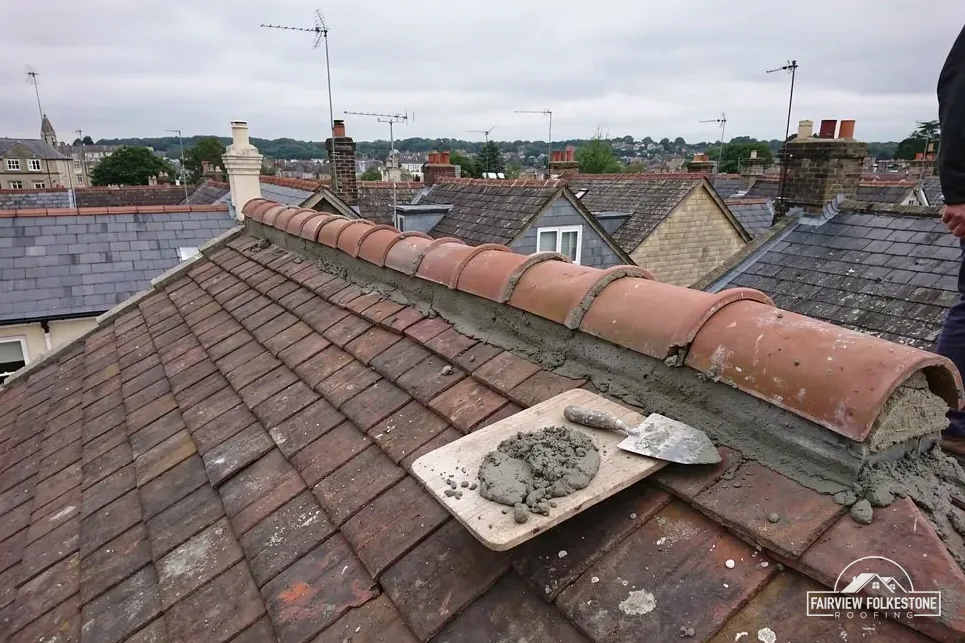
There is a natural temptation to wait with a small roof leak. A dark patch the size of a plate, a drip only in heavy rain, a bucket that needs emptying twice a week: it is easy to live with, and it is easy to put off. The ceiling is not the problem, though. It is simply the first place the water becomes visible.
Behind that stain sits a stack of layers: the covering, the felt or underlay beneath it, the battens, the rafters, the insulation and finally the plasterboard. Rain that gets past the first layer travels along them, and each one it reaches is another thing to inspect and, in some cases, replace. That is what makes a roof leak different from, say, a dripping tap. The visible damage is the smallest part of it.
This page follows the water through the house, one layer at a time. It looks at what happens to roof timbers, insulation and ceilings when a leak is left, what a delay can mean for an insurance claim, how the published repair costs compare, and the checks that catch a fault while it is still small.
01Side by side
Follow the water through the layers
A pitched roof is built as a series of layers, and each one exists to pass water down to the gutter. When one fails, the water takes a different route, and the route is not always a straight line down.
Water follows the slope of the underlay and the grain of the timber, so the stain on the ceiling can be some distance from the hole in the roof. A drip over the landing might begin on the other side of the loft. That is why a roofer looks at the whole path rather than the stain, and why a patch of filler or paint over the mark does nothing for the cause.
Every roof and every leak differs, so nobody can say how fast damage grows. What can be said is that a layer which has been wet for a day is a simpler matter than one left wet over a whole season.
If you want to trace where a leak begins, our page on how to find a roof leak works through the method.
| Layer | What the water does |
|---|---|
| Tiles or slates | Entry point: a slipped, cracked or missing piece |
| Underlay and battens | Runs along the felt, and soaks the timber |
| Rafters and joists | Wets the structure that holds the roof up |
| Insulation | Soaks up water and holds it against the ceiling |
| Plasterboard | Stains, softens, then sags |
02Key points
Timbers: what staying damp does
Roof timbers are meant to stay dry. Battens, rafters and the wall plate they sit on will tolerate the odd wet day, but not a leak that keeps wetting the same spot week after week.
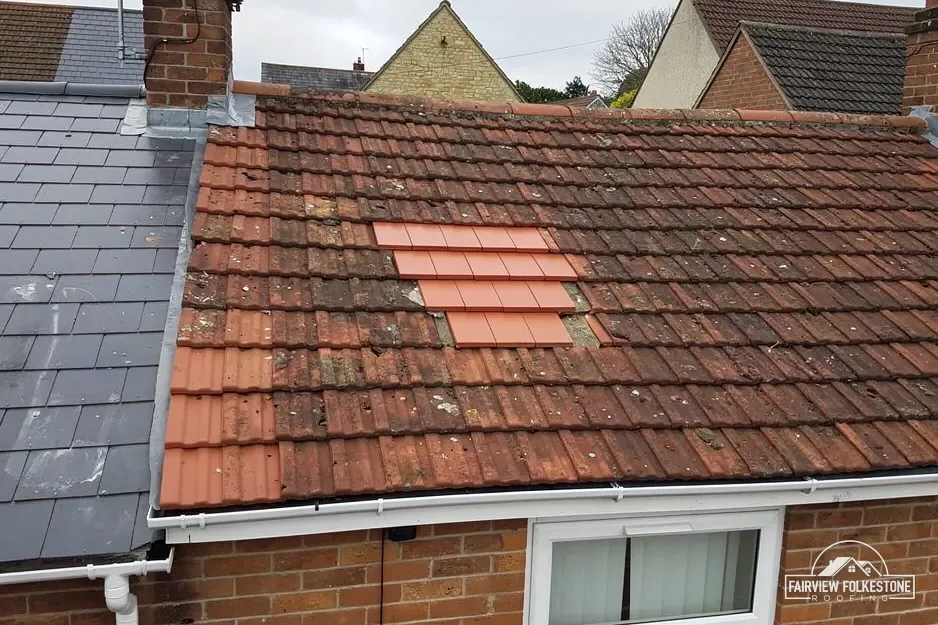
Timber that is repeatedly soaked and slow to dry can soften and decay, and a decayed batten no longer holds a tile or slate as it should. The visible result may be a tile that slips in the next gale, which looks like a new fault but is really the old leak coming back. A rafter that has been wet for a long time is a more serious matter, because it carries the roof's weight.
This is where the surveyor's judgement matters. When we inspect a roof with a long-running leak, we probe the timber near the entry point and tell you what we find, and whether the wood is sound or has to be cut out and replaced.
Delaying a roof repair: your questions
Is it safe to leave a small roof leak for a few weeks?
We would not. Water spreads along the underlay and timbers, so the stain you see may be a long way from the entry point, and each week of rain can wet another layer. A roofer can make the leak safe first and plan the permanent repair for dry weather, which is a better order than waiting.
- Sound timber that has simply been wet can stay, once the roof above it is made watertight and the loft is ventilated.
- Soft or crumbling battens are replaced where they are, in short lengths, rather than the whole roof being stripped.
- A damaged rafter or joist needs a structural view before anyone cuts it, and sometimes a carpenter's repair alongside the roofing.
The principle is the one we apply everywhere: repair where a repair is sound, and replace only what is past saving. Delay only narrows that choice. A timber caught while it is merely damp leaves an easy decision, while one left wet for several seasons may leave a roofer with more to cut out.
03Insulation
Insulation and ceilings: the damage you can see
Insulation laid between or over the joists works by trapping air. Once it is wet, it is no longer doing that, and a wet blanket pressed against a ceiling holds the water against the plasterboard rather than letting it drain. If a loft has been leaking into insulation for a while, the wet insulation can go on feeding the stain for days, and that is why a ceiling can go on dripping after the rain has stopped.
Plasterboard is cheap and heavy, and it does not like water. It begins by staining and then softens, and eventually the board bulges and can come away from the joists. A bulging ceiling should be treated as a hazard: keep people out of the room, and call a roofer and, if there is a light fitting in the wet area, an electrician.
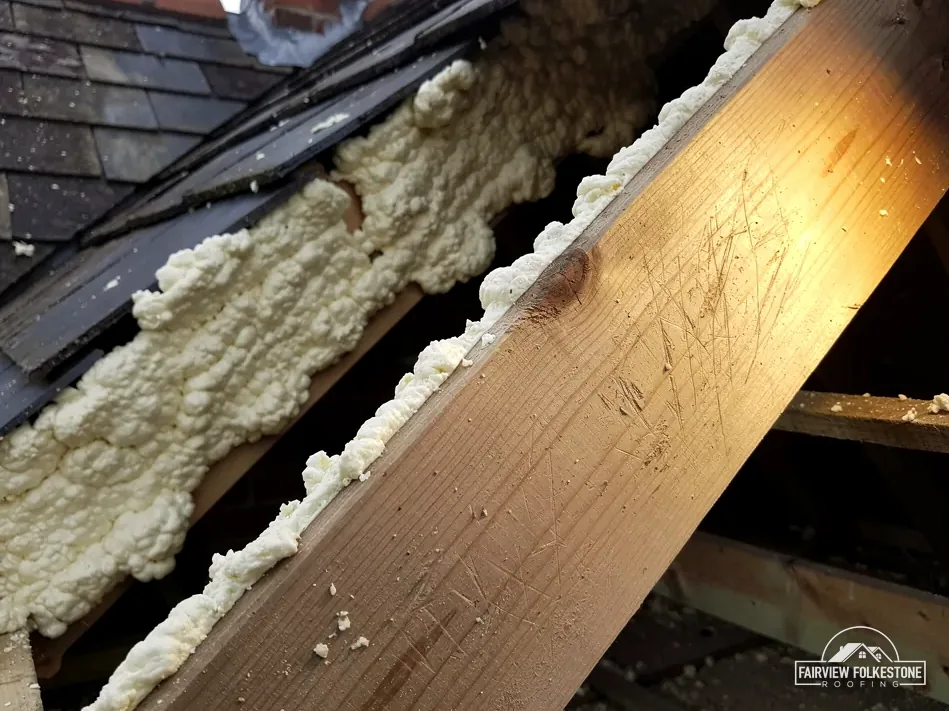
There is one more point if the building is older. On asbestos, HSE's guidance is blunt: for a building like that, HSE would have you presume asbestos is there if it was built or refurbished before 2000. So if a wet ceiling, board or textured coating is about to be broken up, scraped or sanded, get advice on what it is made of before anyone disturbs it, rather than after.
- Do not poke or pull at a sagging ceiling to see how bad it is.
- Do not sand or scrape ceiling surfaces in a building of that age without advice.
- Do photograph the ceiling before any of it comes down.
Once the roof has been repaired, the insulation and plasterboard can be judged properly: wet insulation may be lifted out and replaced, and a sagging ceiling board is cut out and made good. Redecorating comes last, after everything has dried, so the new paint does not cover a damp patch.
04Insurance
Insurance conditions and the paper trail
This is where delay can cost you in a way that has nothing to do with the roof. A home insurance policy sets out what it covers, what it excludes and what you are expected to do, and the wording differs from policy to policy. Some policies say you must report damage promptly, and some talk about keeping the property in good repair. We cannot tell you what yours says, and neither can anyone who has not read it, so read yours now, not after a leak.
The sensible habits cost almost nothing.
- Tell your insurer as soon as damage appears, ahead of paying for more than a temporary repair.
- Photograph the roof damage from the ground, and the stain inside, with dates.
- Get the temporary repair done and keep the invoice, the photos and every receipt.
- Ask the roofer to describe what was found, so there is a written account of the cause.
The Financial Ombudsman Service explains how it looks at storm claims. A storm, in its view, tends to mean violent winds, normally with rain, hail or snow, though rain, hail or snowfall by itself can be enough. It also says an insurer relying on an exclusion has to prove it, with an inspection report, for example. What it does not say is that any delay is acceptable, and a gradual leak left for a year looks different on a claim form to storm damage found the morning after.
Photographs and a written description of the roof, from us, give you something to hand over. The claim, and how it ends, rests between you and your insurer. If a dispute does arise, the Financial Ombudsman Service helpline is 0800 023 4567.
Can waiting affect my home insurance claim?
It can, depending on your policy. Policies differ on reporting damage promptly and keeping a home in repair, so read yours. Tell your insurer early, photograph the damage with dates and keep every receipt. The Ombudsman says the insurer has to prove an exclusion applies, but your evidence still matters.
05Repairs · Costs
Repair costs side by side
Published figures cannot show what a particular leak costs to leave, since each one comes from a separate survey of separate jobs. What they do show is the scale of the gap between a minor repair and a major one.
They are not steps on a ladder that a leak climbs, and nobody should read them that way. A tile is a tile, and extensive storm damage is a separate event. But they show how widely repairs vary, and the first on the list is the end of the scale you would want to be at.
| Work | Figure | Source |
|---|---|---|
| Replacing 1 to 6 standard tiles | £75 to £400, excluding VAT | Which? Trusted Traders, Nov 2025 |
| Average roof repair | Around £650 in 2026 | MyJobQuote |
| Extensive storm repairs | Can cost £1,200 or more | MyJobQuote |
Which? expects its prices to sit at the upper end of its range across London and the South East, which includes Kent and East Sussex. The costs above also leave out the ceiling, the redecoration and the insulation, each of which is somebody's bill when a leak has gone on. For a rented home or a flat, who pays can turn on the tenancy or the lease, which is another reason a shared roof needs an early conversation.
The permanent repair is quoted as one written total once we have surveyed, and whoever quotes you, the paperwork should make clear whether VAT and the scaffold come with the figure. Our page on what an emergency roof repair costs explains what moves the price.
06Leaks
Catching a leak while it is small
The best repair is the one you book when the damage is a few slipped tiles. These checks help you see trouble before it reaches the ceiling.
When something does turn up, the next step is a visit from a roofer who will tell you what the roof needs. For a leak in progress, the roof repairs page sets out the work we do, and the first call can be a phone call or a WhatsApp message with photographs.
Whether the fix turns out to be a few tiles or something larger, you will know the cause and what the repair has to put right.
A last habit is worth adopting: keep a short note, in your phone or on paper, of every date you checked the loft and every stain you marked. It costs five minutes a season, and it turns a vague memory of when the stain first appeared into a record that a roofer, a surveyor or an insurer can use.
- After heavy rain, look at each ceiling in daylight for a new mark or a darker ring around an old one.
- Up in the loft, step on the joists alone and sweep a torch over the timber, the insulation and the roof covering from beneath, looking for damp or daylight.
- From the garden, look for slipped tiles, a gap on the ridge or a gutter spilling over the wall.
- Pencil round any stain and date it, so you can tell if it is growing.
- If a leak appears only in heavy rain, do not treat that as less urgent: our page on roof leaks only in heavy rain explains why a fault can hide until the conditions find it.
Do wet roof timbers always have to be replaced?
No. Timber that has been wet but is still sound can stay once the roof is watertight and the loft can dry. Soft or crumbling battens are cut out and replaced in short lengths, and a damaged rafter needs a structural view first. A roofer probes the wood to tell the difference.
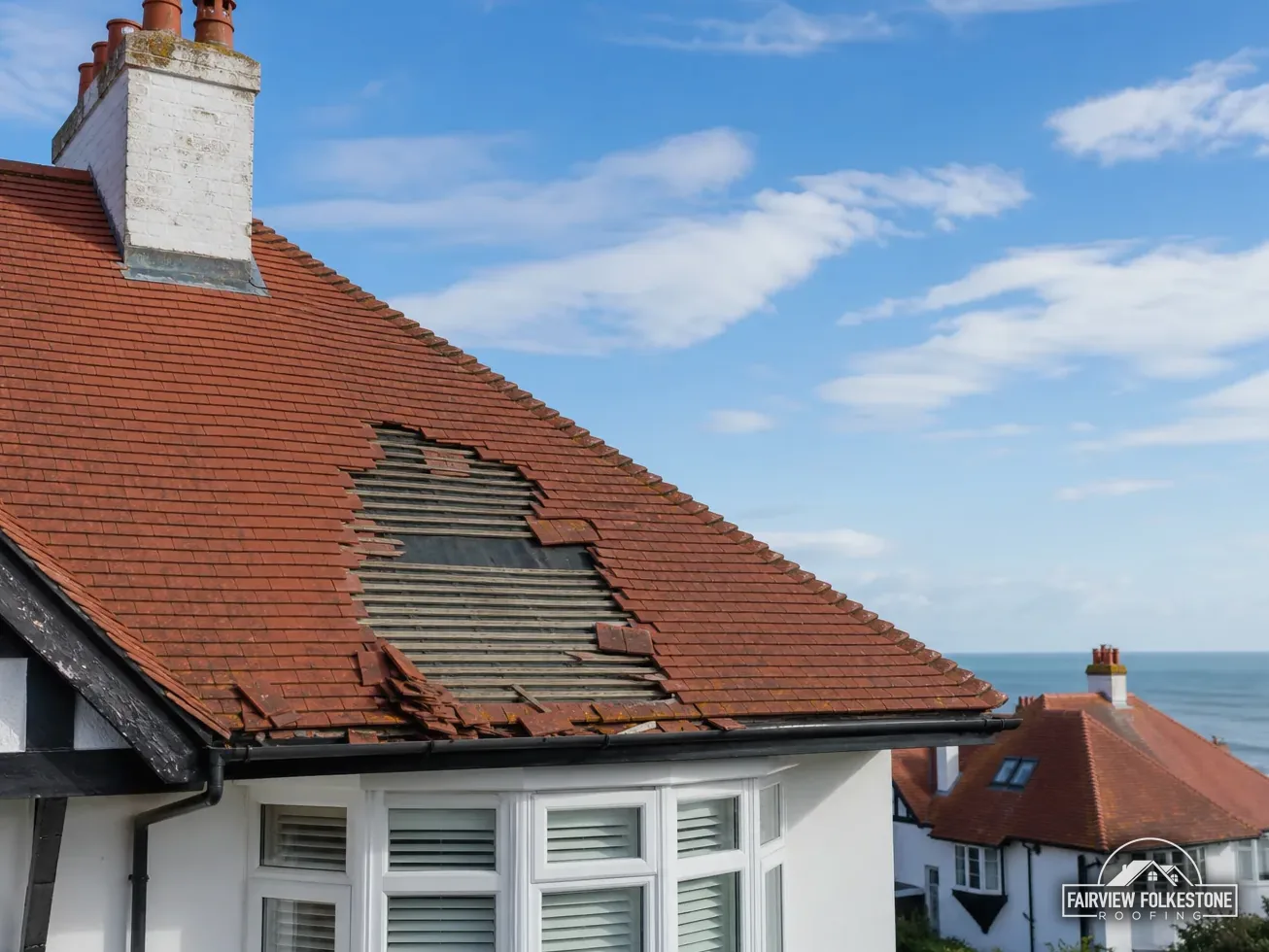

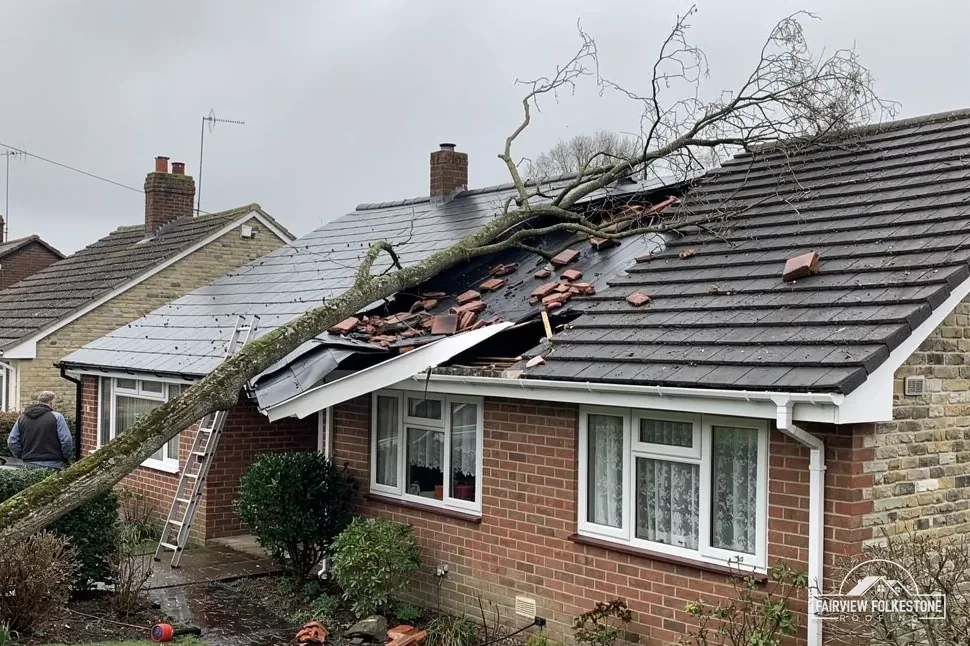
Tell us what's wrong with the roof.
You'll get one written total price.