
Why choose lead
The advantages of lead roofing: durability, versatility and lifespan
Lead earns its place where a roof has awkward shapes and needs to last: bay roofs, porches, dormers and decorative details. Here is what it does well and where its limits sit.
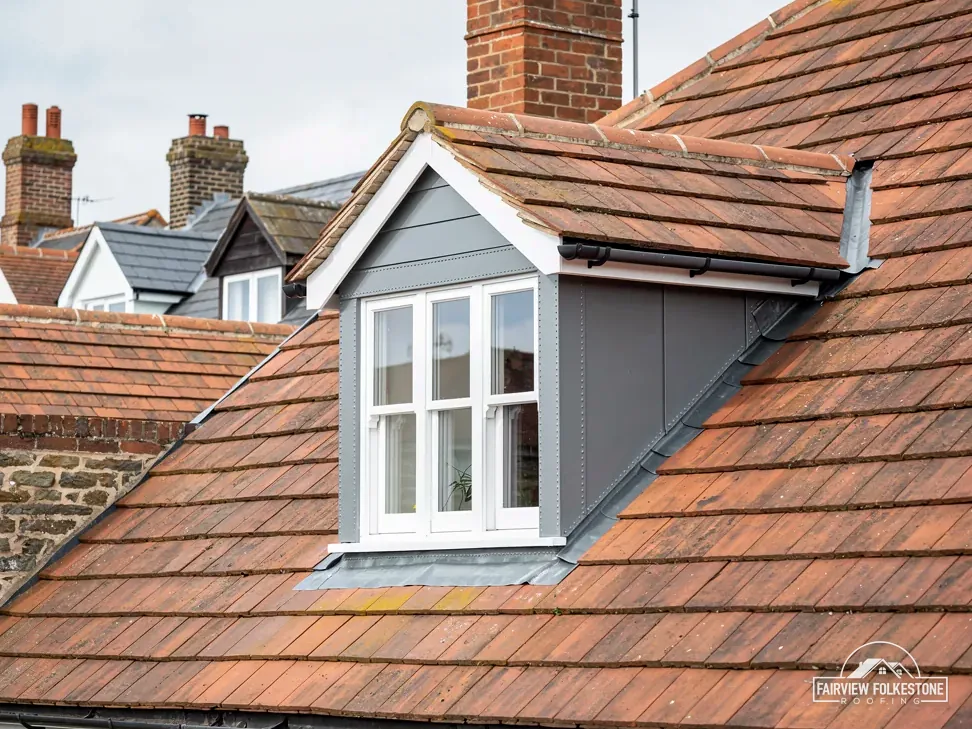
Walk along an older street and look up. The metal sitting on a bay window roof, around a dormer's sides or capping a small porch can be lead, and it may have been there longer than anyone in the house has. That is the case for lead in one glance: it takes the shape of the building rather than asking the building to take the shape of the material.
The advantages are real, and they are specific. Lead is soft enough to be dressed by hand into corners and curves. It is long-lived when it is fitted properly, according to several published sources. It looks right on traditional buildings, and on some of them it is the only covering a conservation officer will want to see.
It also has a cost, a weight and a few weak points, so we cover those at the end. The post follows the four places where lead is most useful to a householder: durability, bays and porches, dormers and the ornamental details that finish an old roof.
01Lifespans
Durability: what published sources say about lifespan
Lifespan is the first reason people give for choosing lead, and several sources publish figures for it. They agree on the shape of the answer, if not on the number.
- HomeBuilding gives a lead flat roof a lifespan of 60-100 years, as an approximate range.
- Less, a cost guide, calls lead the longest-lasting flat roof option at 50 to 100 years.
- MyJobQuote says correctly installed lead flashing can last for over 80 years, and that it can pass 100 years in the higher codes while needing little upkeep.
Put those side by side and a few things stand out. Every figure is a range or a "can", never a promise. The MyJobQuote figures depend on the lead being correctly installed. And lead sits above the membrane materials in each of the published comparisons, which is why it keeps being specified on roofs people intend to keep.
The reason is partly physical. Lead is a dense, heavy metal, and it moves with the weather, so the way a roofer lays it has to allow for that. The standard of the fixing matters as much as the sheet.
A long published lifespan is not a reason to ignore a roof. Check the lead from time to time and have a roofer look at any split or lifted edge you notice, because small faults are the ones that are cheap to fix.
It is also worth separating the sheet from the roof. A lead flashing can outlast the tiles beside it, and then it has to be lifted and refitted when the covering is renewed. Ask whether the lead can be reused, or whether it is better replaced at the same time.
02Key points
Versatility: a metal you can shape on the roof
Lead's other advantage is that it can be worked on site. A roofer can cut it, fold it, bossed or hammered into a corner, and then dress it tight against brick, stone, slate or tile. Most other roofing metals are stiffer and need to be made up to a pattern in advance. Lead can be fitted to what is actually there.
That matters on a roof where nothing is quite square. Typical jobs where it helps are:
Lead advantages answered
Is lead a good material for a bay window roof?
It suits one, because it can be dressed into the angles of a bay without joints being forced. The roof still needs correct falls, enough lap at the seams and room to move. Whether yours can be repaired or needs replacing is a question for a survey.
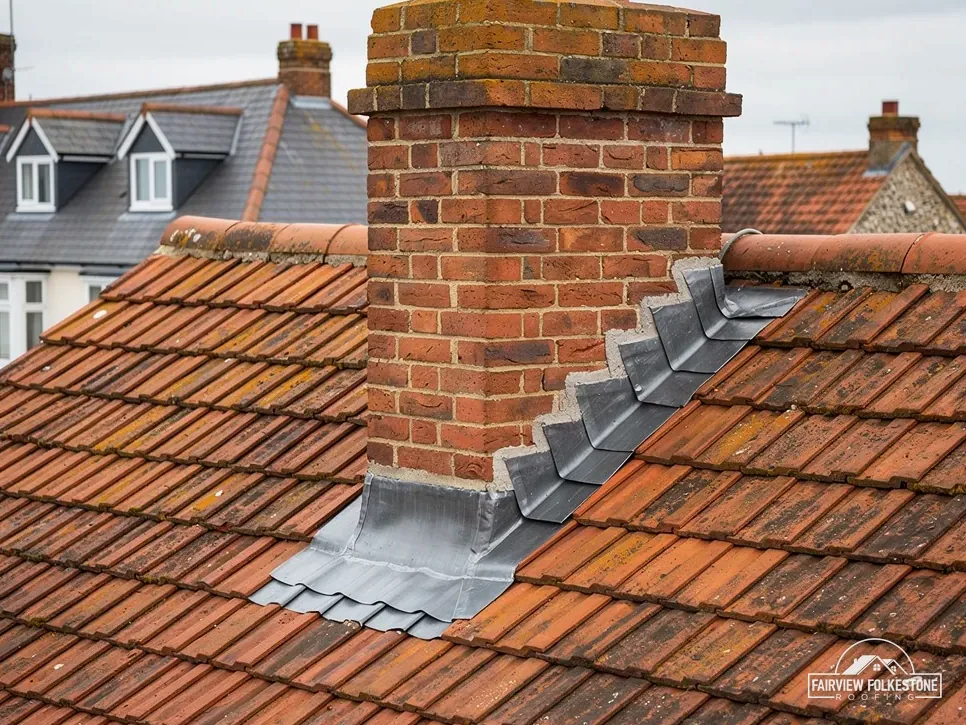
- the sloping flashing beside a chimney, stepped to follow the courses of the brickwork;
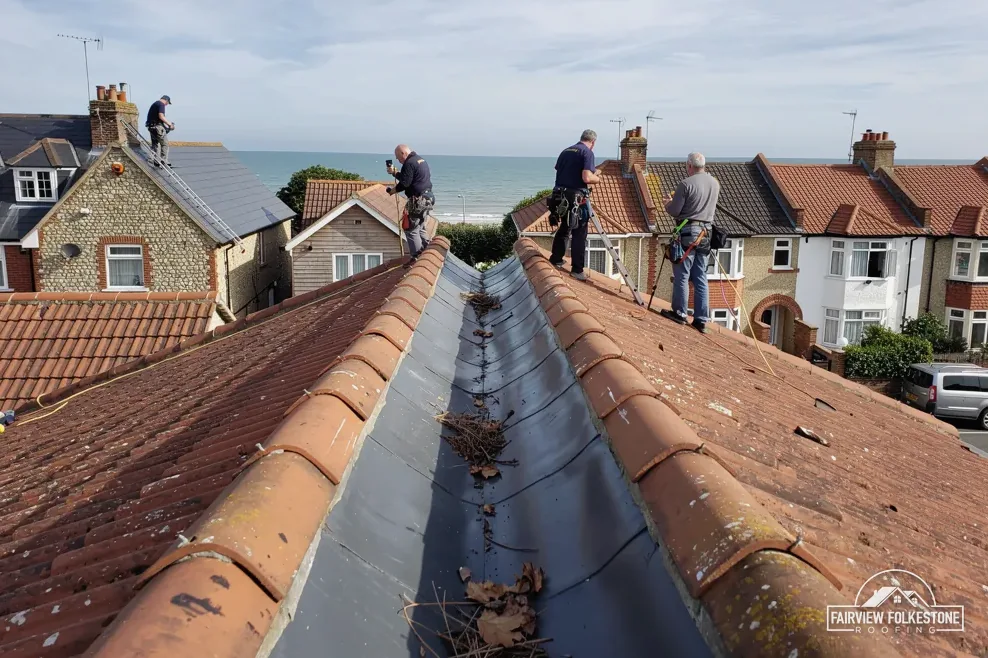
- a valley between two pitched slopes, where the lead lies in the angle and the covering is cut to it;
- soakers, the small bent pieces that go under each tile or slate where it meets a wall;
- the flat top and the cheeks, or sides, of a dormer;
- the roof of a bay window or a porch.
The thickness is chosen for the detail. Royston Lead's brochure lists Code 3 for soakers only, Code 4 for the small details that hug the roof, and Code 5 upwards where gutters and parapets come in. Our post on lead codes gives the full table.
The result of all this shaping is a roof junction with few gaps for water to reach, and few places where a stiff sheet has been forced into a shape it does not want.
Because lead is shaped on the roof, the skill of the person doing it counts for as much as the sheet. A well-dressed joint is almost invisible, and a bad one is the first place water gets in.
03In brief
Bays and porches
A bay window roof is a small area with several angles in it, and a porch roof is often a small flat or low-pitched roof with a wall on one side. Both are difficult shapes for sheet materials that come in straight panels, and both are places where lead suits the job.
A caution belongs here. These roofs are small and easy to see, so a poor lead job shows. Lead needs correct falls, enough lap at the joints and room to expand and contract. A bay roof laid flat, with water standing on it, is a roof that will fail early whatever it is made of.
What the lead does on a bay or porch:
- It covers the whole low-pitch roof in one continuous metal, so the roof is not a patchwork of pieces.
- It turns up against the house wall and is covered by a lead flashing, a junction that lets a porch leak when it is done badly.
- It can be finished in a way that suits the age of the house, which counts on an older frontage.
If your bay or porch roof is leaking and you are wondering whether to repair or replace, a survey will say whether the lead can be saved. Our page on repairing lead flashing explains how we judge that.
Once the survey is done, the price arrives as one written total reflecting the roof and how it is reached.
Access matters too. A bay or porch roof is often reachable from a ladder or a low tower, which keeps the cost of a repair down compared with a high chimney flashing that needs full scaffold.
04Dormers · Flat roofs
Dormers: cheeks, flat tops and planning
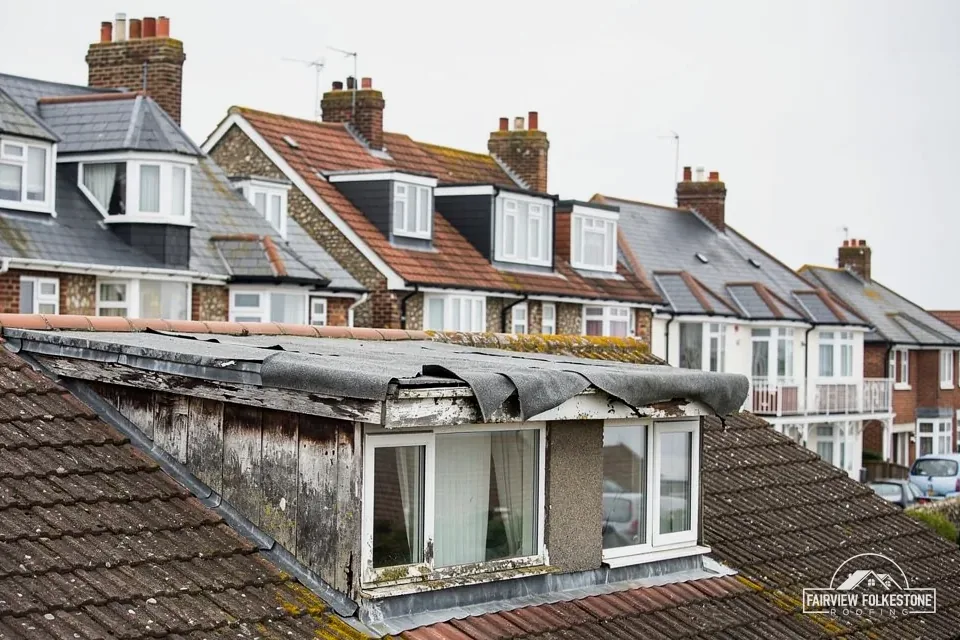
A dormer is a small structure projecting from a sloping roof, with its own cheeks, or side walls, and its own roof. Lead is a long-standing covering for the cheeks and the flat top, because the joint between the dormer and the main roof is where water is most likely to get in.
The brochure's code list covers dormers from Code 4 upwards, so a roofer has some room to choose the sheet to suit the size and exposure of the dormer.
If you are thinking of building a dormer rather than repairing one, the planning position is worth a moment. Class B of the General Permitted Development Order 2015 covers dormers, and its limits are expressed as volume: 40 cubic metres on a terrace house, 50 on any other house. But Class B does not apply on article 2(3) land, which includes conservation areas, so dormers there need planning permission. Flats have no permitted development rights at all.
- The structure and insulation of a converted loft are signed off by building control.
- The weatherproofing of cheeks and flat top is the lead.
A new dormer is also a Building Regulations matter. The council's building control team, or a registered building control approver, signs off the work, and lead is only the outer weatherproofing, though it is the layer visible from the pavement.
If you already have a dormer with a failing lead cheek or flat top, our lead valley and flashing pages explain how those faults are judged.
When a dormer leaks, check the inside first: stains on the cheek walls or at the top corner can show whether the fault is in the lead, the window frame or the main roof beside it.
How long can a lead dormer or flashing last?
MyJobQuote says correctly installed lead flashing can last for over 80 years, and that higher codes can pass 100 years with minimal maintenance. HomeBuilding gives 60-100 years for a lead flat roof. Both are published ranges, not promises, and both depend heavily on the installation.
05Leadwork
Ornamental leadwork and older buildings
On a older house, lead is not only waterproofing. It is part of the look: a rolled ridge, a capping on a parapet, a lead-lined box gutter behind a low wall, or a decorative detail around a chimney. These details are the reason a conservation officer may prefer lead to an alternative.
The consent position is clear and it is worth knowing before work begins:
- A listed building needs listed building consent for works that would affect its character, under section 7 of the Planning (Listed Buildings and Conservation Areas) Act 1990.
- Classes B and C of permitted development stay available for a listed house, yet listed building consent applies in addition.
- A conservation area narrows what you can do without permission, for example by taking away Class B dormers. Check with the council about any Article 4 direction.
For repair work on lead that is already there, like-for-like repair is the usual starting point, and the council will tell you whether consent is needed for yours. Our answer on leadwork on listed buildings goes through the steps.
One thing worth saying plainly: if ornamental lead is in poor condition, the repair is not always replacement. A split in an old rolled joint can be repaired, and a survey is the way to find out which parts are sound.
Ornamental work is also where a like-for-like match matters most, so ask any roofer how a new section will meet the old.
06Costs
Weighing the advantages against the cost
Against the advantages, lead brings three trade-offs: weight, a higher cost to buy and fit than many alternatives, and a market among thieves. Set them next to each other.
On price, MyJobQuote puts full leadwork replacement at £350 to £920, with scaffold the main swing factor. Its repair figures are around £200 for a patch to a chimney flashing and around £570 for replacing it entirely. Checkatrade gives lead flashing repairs as £50 to £70 per metre. These are third-party figures, never ours, and a per-metre rate cannot be multiplied into a total.
Does lead need much maintenance once it is fitted?
MyJobQuote describes correctly installed lead as lasting with minimal maintenance. That does not mean none. Look at joints, edges and flashings now and then, and have a roofer check any split, lifted edge or stain below the lead before a small fault turns into a bigger one.
A short list of cases where the extra cost is easiest to justify:
- a house you plan to keep for many years;
- a listed building or a conservation area, where lead may be the expected covering;
- a bay, porch or dormer with awkward corners that stiff sheet handles badly;
- a decorative detail that is part of the building's character.
And where it is harder to justify: a plain garage roof you may demolish, or a flat roof with simple edges where a membrane would do the job.
New lead darkens as it weathers, and our answer on patination oil on new lead covers what that means for the look. Our lead work page lists the jobs we take on.
No single one of these rules lead out or in on its own. Together they are what the survey weighs up.

Tell us what's wrong with the roof.
You'll get one written total price.