
Lead flashing cost
How much does lead flashing repair cost?
Published UK figures put a chimney flashing patch at around £200. Below: those figures, who they come from, and what moves the price on your roof.
The short answer
MyJobQuote says a patch repair to the lead flashing on a chimney runs around £200, and a full replacement at an average of around £570. Checkatrade lists lead flashing repairs at £50 to £70 per metre. All of these are third-party figures and none is our price. The real cost turns on how much lead is involved and how the wall is reached, and our quote follows a survey.
5 min read · Part of Lead work
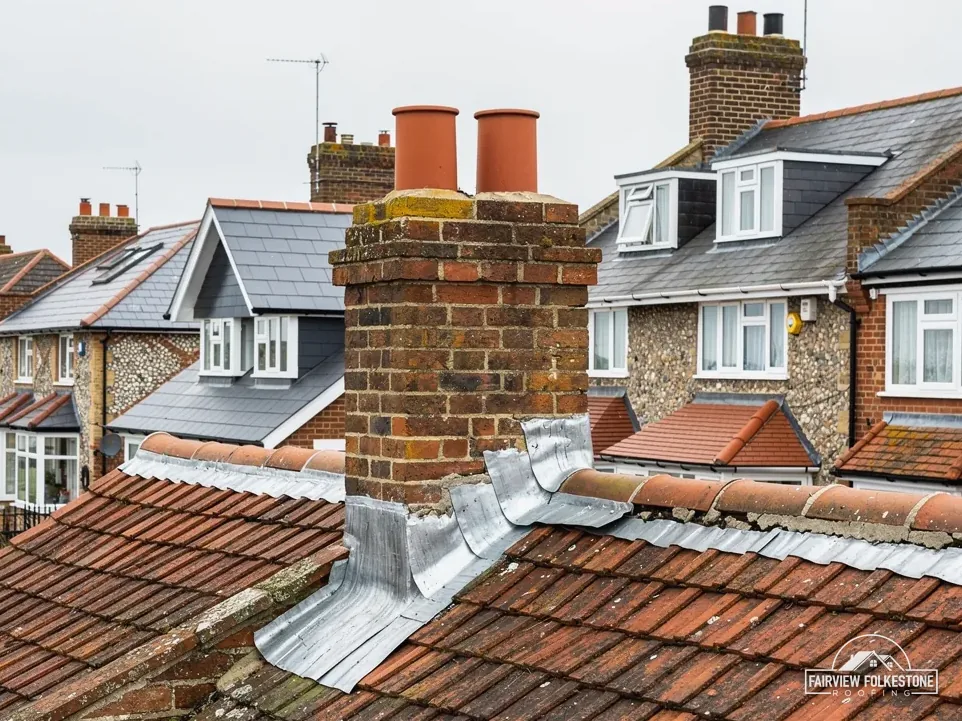
Published figures and their sources
We do not publish our own prices, because a flashing is priced once we have seen the wall. The figures below come from two cost guides. Each has its own unit and its own basis, so they are shown apart and never added together or stretched into a total for your roof.
| Source | Figure |
|---|---|
| MyJobQuote | Chimney flashing patch repair, around £200. |
| MyJobQuote | Full replacement, around £570 on average. |
| MyJobQuote | Full leadwork replacement, £350 to £920. |
| Checkatrade | Lead flashing repairs, £50 to £70 per metre. |
MyJobQuote last updated its page in September 2026 and gives no VAT basis. The Checkatrade rate of £50 to £70 per metre for lead flashing repairs, updated in June 2026, excludes VAT and leaves out access equipment, so a real bill can sit above it. Neither guide knows your wall, your roof height or the state of the pointing, which is why both give ranges. Treat them as a guide to scale, nothing more. The gap between a patch and a full replacement tells you something useful on its own: mending a fault and renewing a run are different amounts of work, and a fair quote shows which one you are being offered.
Why a patch and a replacement sit far apart
A patch and a replacement are different jobs, so their prices differ a long way. A patch mends one fault, such as a torn step or a loose length, while a replacement strips the old lead and fits new sheet along the full run. For a full leadwork replacement, MyJobQuote gives £350 to £920 and says the figure turns mostly on scaffold.
Access is the swing factor. A flashing at the back of a bungalow, reached from a ladder, is a different job from one on a chimney three storeys up, where a scaffold has to go up first. A rate per metre cannot tell you how many metres your wall needs or how the lead is reached. That is why we treat every guide figure as a rough idea of scale, and why you should be wary of any guide or quote that turns a single rate into a total without seeing the roof. A fair price needs the wall in front of the person writing it, with the height, the length of lead and the state of the brickwork all checked.
What moves the price on your roof
When we survey a flashing, these are the points that settle the figure. Each one can be seen in the quote, because the quote is built from what we found on the wall.
- How many metres of lead need work, and whether it is a patch or the full run
- The code of lead sheet the detail calls for, since thicker sheet is more metal
- Whether the joints above need repointing before the lead goes back
- How the wall is reached, by ladder, roof ladder or scaffold
- Whether a neighbour's wall is involved, as with a flashing against a shared stack
Two roofers can quote the same wall at different totals and both be right, because one has priced a patch and the other a renewal. Put the same questions to each: which lead code, how many metres, and whether the joints are being repointed. The answers show whether the two prices describe the same work.
Lead taken from a roof by thieves is priced the same way, by the amount of lead and the access needed to replace it. Our answer on lead stolen from a roof covers the steps to take first, before anyone prices the new lead.
How our written quote works
Once we have surveyed the wall, we send a single written total for the work we recommend. It names the job in plain words, so you can check it against what we found on the wall, and it states whether scaffold is included. If a guide figure and our quote differ, ask us why. The cause can be the access, the code of sheet, or the length of the run. We would rather explain that difference openly than leave you holding two numbers that cannot be compared. Any figure we give is for the work as described, and if we find more once the old lead is off, we tell you before going on.
Repair comes first where the lead is sound. A patch is the fair answer for one torn step, while a run of thin, cracked lead costs less to renew once than to patch season after season. Our answer on whether lead flashing can be repaired shows how we make that call, and how long lead flashing lasts covers what new lead can offer in return. The lead work page lists every lead detail we cover.
More questions
Is a lead flashing patch repair worth doing?
Where the surrounding lead is whole, yes. A patch to one torn step costs far less than renewing the run, according to the published figures, and it keeps good lead on the roof. Where the lead is thin or cracked in several places, a patch only moves the weak point, and new lead is the fairer spend.
Why do two quotes for the same flashing differ so much?
Because they often cover different work. One may patch a step while another renews the whole run, and access can add scaffold to one and not the other. Ask each roofer which lead code and how many metres are priced, and whether scaffold is included, so you compare like with like.

Tell us what's wrong with the roof.
You'll get one written total price.