
Lead flashing lifespan
How long does lead flashing last on a roof?
Correctly installed lead flashing can last for over 80 years, according to one cost guide. Below: other published figures and what shortens them.
The short answer
Correctly installed lead flashing can last for over 80 years, according to MyJobQuote, and over 100 years for the higher lead codes. That is a published figure for good work, not a promise for any one roof. How long your lead lasts depends on the thickness of the sheet, how it was fixed, and whether the joints around it have been kept sound. A survey tells you where yours stands.
4 min read · Part of Lead work
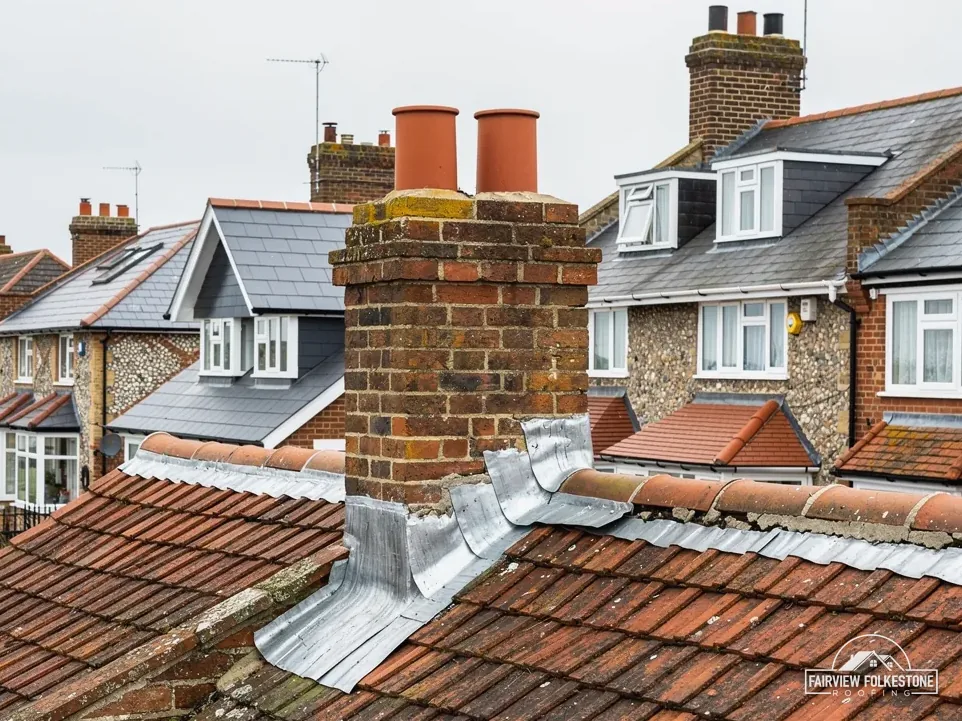
Lifespans quoted for lead
Cost guides and suppliers give lifespans for lead as ranges, and they do not all agree. We set the sources side by side with their hedge words kept, because a range is the fair way to describe a metal whose life depends so much on how it was fitted and how the wall behind it has behaved.
| Source | What it says |
|---|---|
| MyJobQuote | Correctly installed lead flashing can last for over 80 years |
| MyJobQuote, higher codes | Over 100 years, with minimal maintenance |
| HomeBuilding | Lead flat roof, 60 to 100 years |
| Less | Lead is the longest-lasting option at 50 to 100 years |
The last two describe lead as a roof covering, not as flashing, so they show the wider picture and not a figure for your wall. Read every row as a typical range for lead done well, and never as a minimum that your own flashing is owed. A flashing that was badly fixed can fail long before any of these numbers, and one that was fitted with care and looked after can outlast the owner who paid for it.
What shortens the life of lead
Lead is a long-lived metal, so when a flashing fails early the cause may lie around the lead rather than in the lead itself. The things we look for on a survey are these:
- Fixing that leaves the sheet no room to move as it warms and cools, so folds crack
- Sheet that is too thin for the detail, which is why a lead code is written into a specification
- Joints that have crumbled, so the top edge is no longer held
- Old patches and mastic that hide a failing run
- Movement in the wall or chimney stack behind the lead
None of these is cured by waiting. Lead expands and contracts with the weather, and a flashing dressed so it can move wears far better than one held rigid at every point. Each cycle of warming and cooling asks the sheet to shift a little, and where it cannot, the strain collects at a fold and a crack follows. Our answer on why lead flashing cracks goes through how movement does the damage, and what a roofer does differently to stop it.
Why the lead code matters for life
Lead sheet is sold in numbered codes, each a thickness and a weight. Royston Lead publishes them for cast lead, and its brochure lists the details each one is meant for. Codes 3 to 8 run from 1.32 mm to 3.55 mm, and each has its own colour, so rolls are easy to tell apart on site. When a quote names the code, you have something specific to check, and when it does not, that is worth a question before you say yes.
| Code | Thickness | Listed for flashings |
|---|---|---|
| 3 | 1.32 mm | No, soakers only |
| 4 | 1.80 mm | Yes |
| 5 | 2.24 mm | Yes |
| 6 | 2.65 mm | Yes |
The brochure matches each code to a detail, and our lead codes explained post reads the whole table. Thicker sheet carries more metal to wear and weather, which is the sense in which a higher code can last longer. It is not automatically the better pick, because the specification fits the code to the detail and the exposure of that wall. A parapet or box gutter, which carries a lot of water, starts at Code 5, while the narrow strip against a brick wall is a different job.
Signs a flashing is nearing the end
You can spot some warning signs from the garden, and a few need a closer look. Lead that is simply grey and chalky has not worn out: that surface is how old lead looks once it has weathered, and the thickness underneath can be perfectly good. Chalky grey on its own calls for a look, nothing more. These are the signs that matter more:
- Splits or tears along a fold, even small ones
- A gap between the lead and the brickwork that shows daylight
- A brown stain or soft patch on the ceiling next to the wall after rain
- Lead patched several times along the same run
If you see any of these, a survey separates a fixing fault from a worn sheet. A loose but whole flashing is a repair, and our page on whether lead flashing can be repaired sets out how we tell the difference. For the other places lead is used on a roof, the lead work page covers each one in turn, with a clear call on repair or renewal for each, so you can see where your own roof sits before anyone comes out.
More questions
Does old lead flashing have to be replaced after a set number of years?
No. There is no age at which lead must come off. The published figures are typical ranges for well-fitted lead, and they say nothing about a particular roof. Lead that is whole, held in its joints and free of splits can stay, while newer lead that was poorly fixed can fail early.
Will a thicker lead code make my flashing last longer?
A thicker sheet has more metal to wear, which helps, but the code has to suit the detail. Royston Lead lists Code 4, 5 and 6 for flashings and Code 3 for soakers only. We choose the code for the detail and the exposure, then fix it so the lead is free to move.

Tell us what's wrong with the roof.
You'll get one written total price.