
Lead cracking
Why does lead flashing crack or split?
Lead flashing cracks mainly because it is held too tightly while it expands and contracts. Below: the causes, how each looks and what puts it right.
The short answer
Lead flashing cracks mainly because it is held too rigidly while it expands and contracts with the weather. Every warm day and cool night makes the sheet move slightly, and lead that cannot move gathers the strain at a fold until it splits. Sheet too thin for the detail it covers, a moving wall behind it and old patches add to the problem. A roofer finds which one it is before deciding on the repair.
5 min read · Part of Lead work
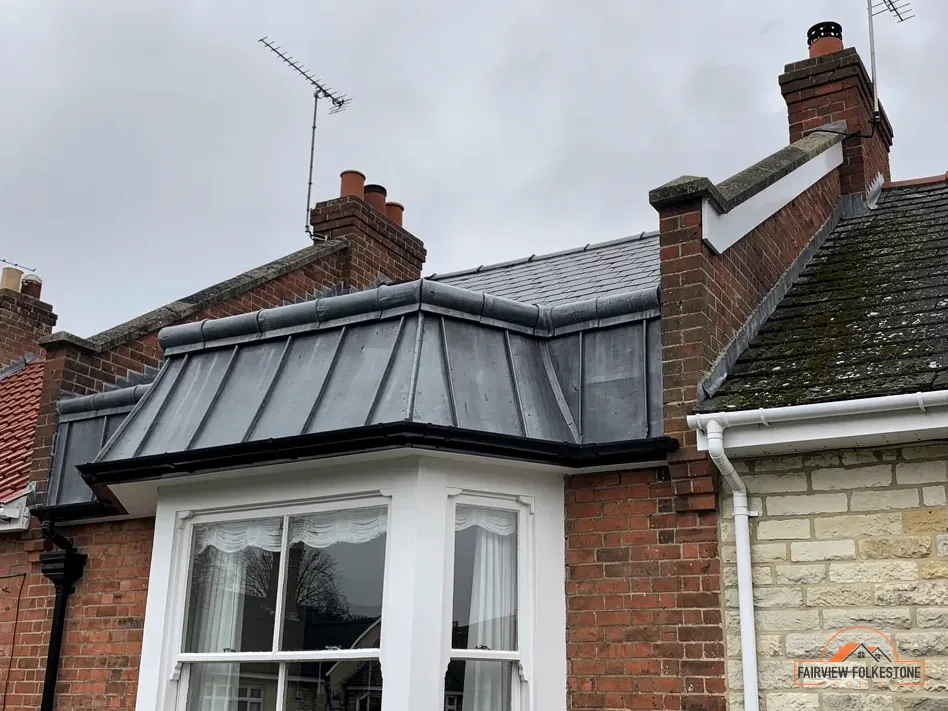
How movement splits lead
Lead is soft and heavy, and it moves. It grows slightly longer in warm weather and shrinks again when it cools, and over a long run of flashing that adds up to a visible shift. A sheet that is free to slide at one end takes this in its stride. A sheet that is nailed down along its full length cannot slide, so the strain has nowhere to go.
The strain collects where the metal is already stressed, which is at a fold, a corner or a nail hole. Each cycle of warming and cooling works the lead a little more, and a hairline crack opens. Rain gets into the crack, and the split spreads along the fold with every season. That is why a crack that looks tiny from the ground can be the start of a long failure, and why we look at how the lead is fixed and not only at the split itself.
The same logic explains why a long, unbroken run is at more risk than a short one: there is more metal to move along it, and every nail line holds that movement in.
The causes we look for
Movement is one cause, and there are others. On a survey we work through a short list, because the cure for each is different.
| Cause | What we see |
|---|---|
| Lead held too rigidly | Splits along folds and at nail lines |
| Pieces cut too long | Cracks near the ends of a run |
| Sheet too thin for the detail | Thin, torn lead in several spots |
| Movement in the wall behind | Cracks that reopen after repair |
| Old patches and mastic | Stiff, layered lead that fails beside the patch |
Thickness is part of this. Royston Lead's brochure marks Code 3, at 1.32 mm, as recommended for lead soakers only, so a flashing cut from it is sheet too thin for the work. Its Code 4 is 1.80 mm and its Code 5 is 2.24 mm, and both are listed for flashings.
Foot traffic is another: lead is soft, and a flashing that has been stood on, or used as a handhold by someone clearing a gutter, can crease and then crack along the crease.
What puts a cracked flashing right
The fix follows the cause, and a patch over a crack that keeps being pulled apart will not hold. If the flashing is whole except for one split and was fixed sensibly, a local repair can work. If the lead was held too rigidly, the fixing has to change, or the next season brings another crack.
- A short split in sound lead can be repaired by letting new lead in
- Over-long pieces are replaced with shorter lengths that can move
- Thin sheet is replaced with a code suited to the detail
- A moving wall is looked at first, so the new lead is not asked to cope with it
Where a flashing sits against a neighbour's wall, the Party Wall etc. Act 1996 applies: section 2(2)(j) gives the building owner a right "to cut into the wall of an adjoining owner's building in order to insert a flashing or other weather-proofing of a wall erected against that wall".
Where cracks run along several folds, our answer on whether lead flashing can be repaired explains why new lead on that run is the fairer call, and how we reach it. Royston Lead lists Code 4 as its lightest for flashings, with Codes 5 and 6 listed too, so thickness can be chosen to suit the exposure.
Preventing the next crack
New lead is worth fitting properly once. That means pieces cut to lengths the lead can manage, folds and laps that leave room to move, fixings that hold the top edge without pinning the whole sheet, and sound pointing for the lead to sit in. It means the right code for the place, set out in the survey, and the written quote names the code and the length of each run, so the detail you approve is the detail that goes on.
Correctly installed lead flashing can last for over 80 years, according to MyJobQuote, and the way it is fitted is what makes that possible. Our answer on how long lead flashing lasts sets out the published figures.
Once the work is done, keep gutters and the roof edge clear and do not stand on the lead. If a new crack shows, have it looked at early, because a small split mended soon is a smaller job. The lead work page shows the other lead details we cover, and the quote is one written total price.
More questions
Can I seal a cracked lead flashing with a tube of sealant?
It may slow a leak for a short time, but sealant does not mend the metal and does not stop the movement that opened the crack. The crack can reopen beside the sealant. It can also trap damp behind the lead. A proper repair puts right the fixing as well as the split, so it lasts.
Is a crack in lead flashing always a sign it needs replacing?
No. A single split in otherwise sound lead, fixed sensibly, can be repaired. Splits at several folds, thin lead or lead patched many times point towards new lead on that run. We look at the whole flashing and the wall, then tell you which applies, and the reason for it.
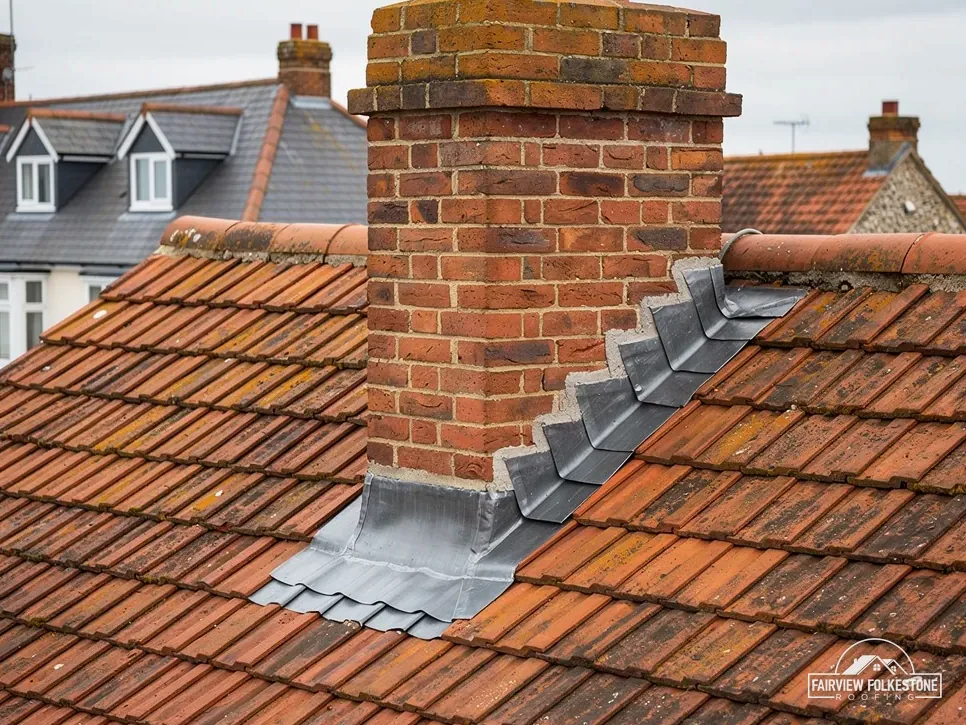

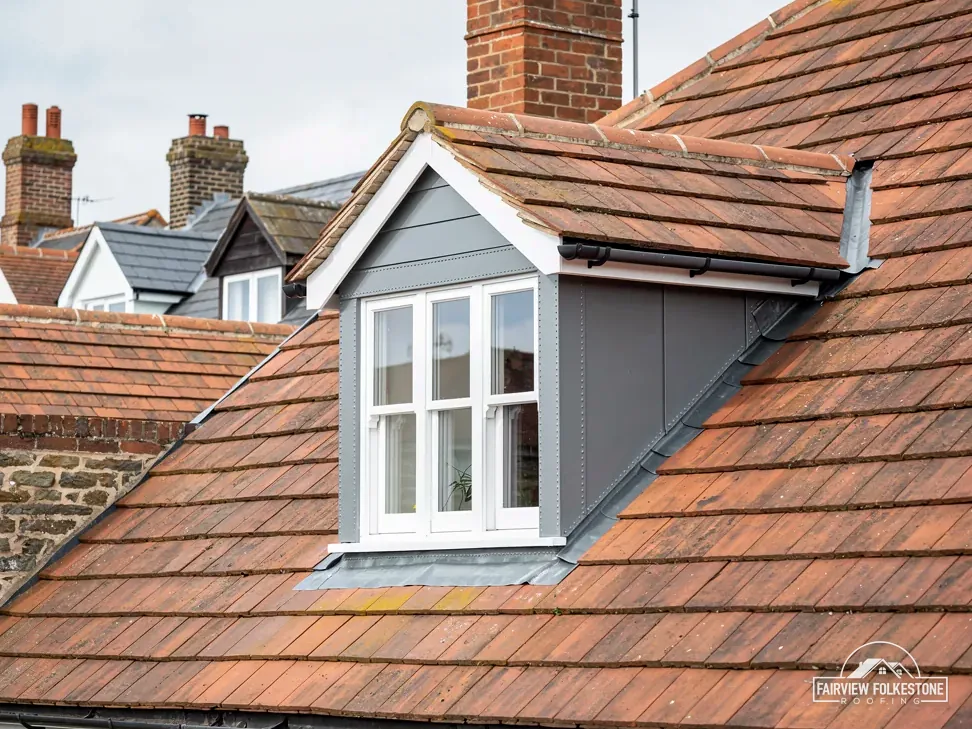
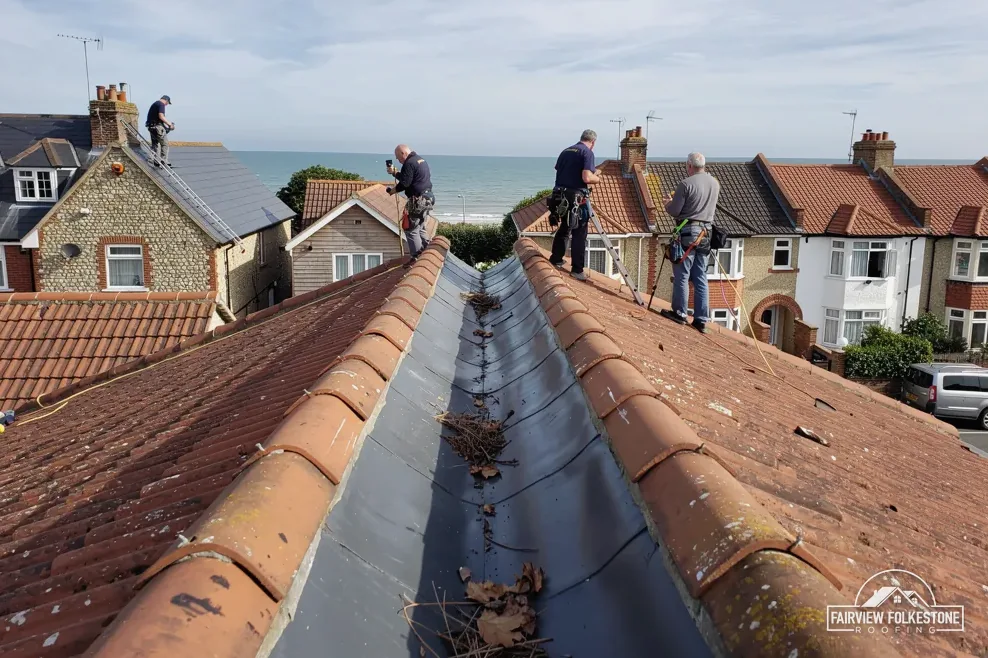
Tell us what's wrong with the roof.
You'll get one written total price.