
Canterbury · 18.1 road miles north
Roofers in Canterbury
A Grade I cathedral, a scheduled Guildhall and a ring of conservation areas around the centre. On a Canterbury roof the address decides what is allowed before the tiles decide anything. We read the roof, find the consent route, and the written total price comes last.
- Cathedral
- Christchurch Cathedral, Grade I, in use for Church of England worship
- Ring of conservation areas
- 97 across Canterbury City Council's district, with several of them wrapped around the centre of the city
- Scaffold permits
- Kent County Council, £52 per week for 2026 to 2027
- Travel from Folkestone
- 18.1 road miles, about 29 minutes by road, heading north
Three Canterbury roofs, and what each one needs first
What we found
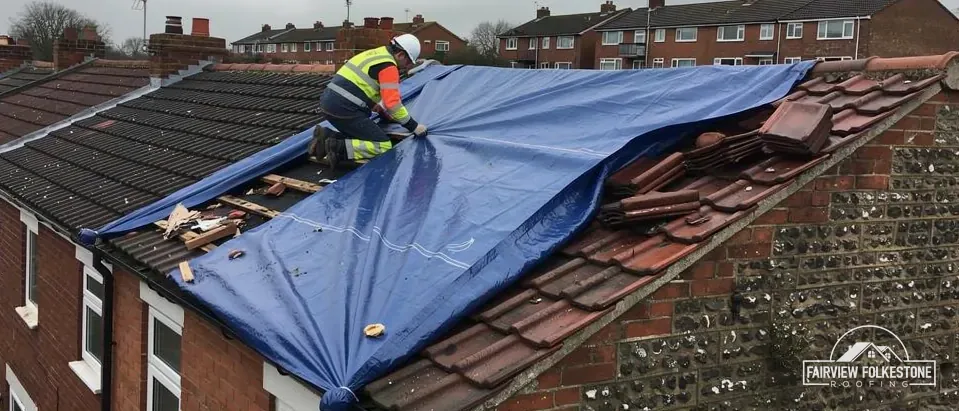
A roof on a building with its own list entry
What it fairly needs
Find the consent route, then match the repair.
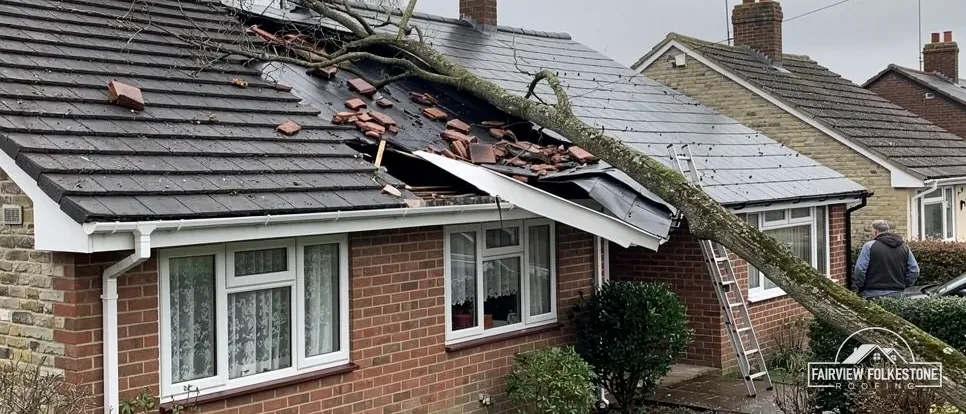
What we found
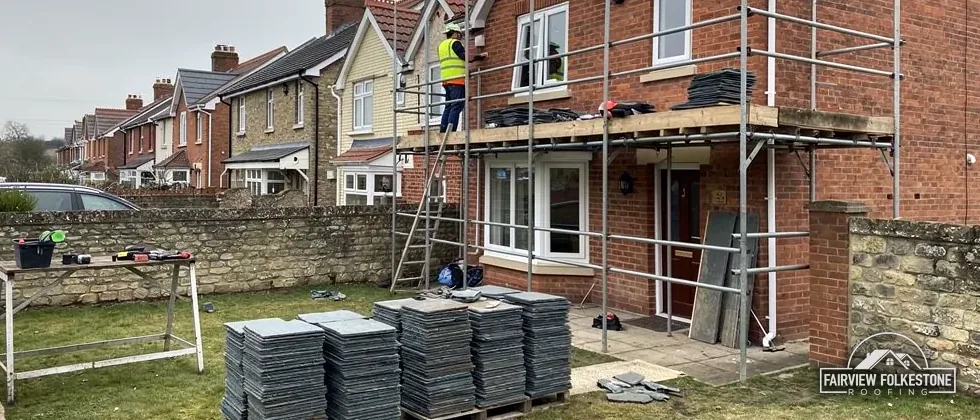
Slipped tiles, battens still firm
What it fairly needs
Refix the slipped ones, replace only the broken.
What we found
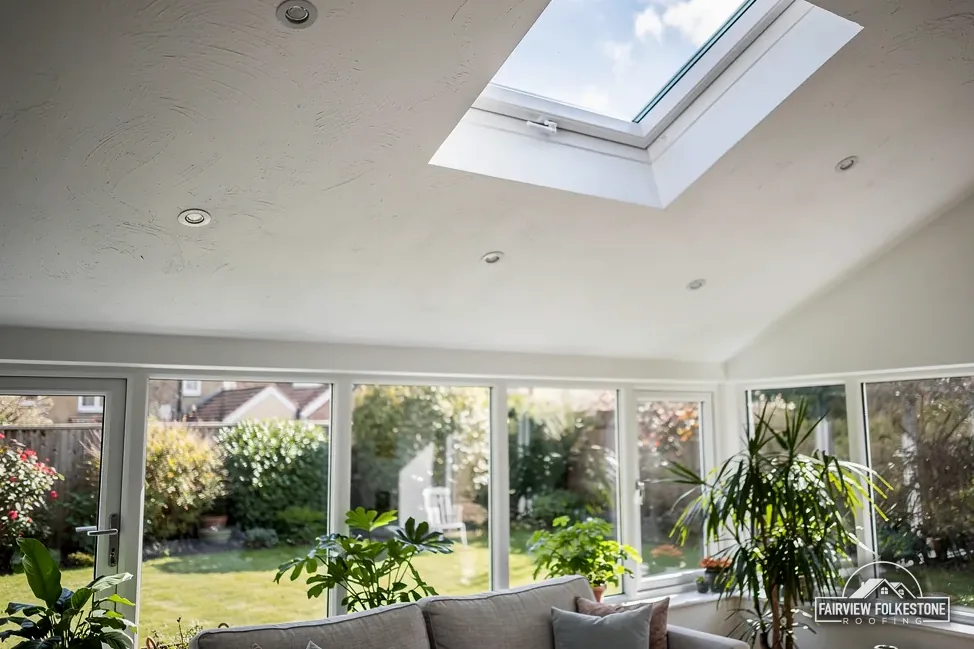
Covering worn across the whole slope
What it fairly needs
New covering, with building control settled first.
The fair ledger
A cathedral, conservation areas and the paperwork behind a Canterbury re-roof
Three entries for Canterbury roofs: how consent differs between the cathedral, a listed house and a scheduled monument, what the conservation areas mean for a re-roof, and which test a new covering must pass.
Entry 01Cathedral and precinct
Cathedral, gateway, palace and Guildhall: four buildings, three consent routes
Christchurch Cathedral is Grade I and still used for worship, while the Guildhall is a scheduled monument. Each building sits under a different consent rule.
Faculty, listed consent and scheduled monument consent
Historic England lists Christchurch Cathedral at Grade I (entry 1336823, first listed on 3 December 1949). Worship continues there under the Church of England, and as a cathedral it comes under the Care of Cathedrals Measure, and article 6 of the Ecclesiastical Exemption Order 2010 keeps buildings under that Measure exempt from listed building consent. Works to it are approved through the Church of England's own cathedral system, which is a separate process from the faculty system that serves parish churches.
Christchurch Gateway (entry 1085119) and the Archbishop's Palace, also known as the Old Palace (entry 1085066), are Grade I as well. Whether a building inside the cathedral precinct falls under the cathedral system or needs consent from the city council turns on the red line plan for the precinct, deposited with the city council, and the cathedral or the council can answer that question. A listed house outside it is dealt with by the city council, which states that you will need listed building consent for any changes which affect the building's character.
The Guildhall is another matter. It is a scheduled monument (entry 1005164), and works to a scheduled monument need authorisation under the Ancient Monuments and Archaeological Areas Act 1979, section 2. That is a third, separate consent.
A house with no entry of its own falls under none of these. For yours, we search the national list by address before pricing, report what it shows (which may be nothing), and photograph the roof so that any application starts from facts rather than guesses. If a consent is needed, the repair is then specified to suit the building, and we put a figure on paper only after the route is known.
Myth: A listed building and a church in use need the same consent.
Fact: Faculty jurisdiction covers a Church of England church in use. A listed Quaker meeting house follows listed building consent instead.
Does the cathedral's exemption cover my house nearby?
No. An exemption belongs to the church building alone. The house next door has its own list entry or none at all, and we look your address up before any price is written down, and the answer goes into the report in plain words, so you can show it to a neighbour or a surveyor if you wish.
Entry 02Conservation areas
Conservation areas round the centre, and what ordinary re-roofing needs
Canterbury City Council counts 97 conservation areas across its district, and a good number of them wrap around the city centre, so a street that looks ordinary can still carry a designation.
Naming the areas, then checking your address
Near the centre you will find Nunnery Fields; Old Dover Road, Oaten Hill and St. Lawrence; Alma, Clyde and Notley Street; Whitstable Road; St Martin's; Martyrs Field; West Station; New Dover Road and St. Augustine's Road; and Canterbury City itself. The council holds the boundaries on its map, and a street can sit right on the edge of one.
Ordinary re-roofing is normally permitted development even in a conservation area. An Article 4 direction can remove further rights, though, and the council publishes a map of the areas one covers. What a given direction takes away is not something we can tell you from here: check with Canterbury City Council about your own address.
The city also holds a World Heritage Site. UNESCO inscribed Canterbury Cathedral, St Augustine's Abbey and St Martin's Church in 1988. Whether an address falls inside that boundary is a question for the map, and our planning guide sets out what it means for dormer windows and roof windows.
For a plain re-cover the normal rules stand. The survey photographs the roof from every side, so that the council can be asked a precise question and give a precise answer. Where the roof is a shared one over flats or a terrace, that note also records who owns which slope, which saves a second visit later.
97
conservation areas across Canterbury City Council's district
the council's own count
Roofs in a conservation area
Plain re-cover, no direction on the street
Normal rules apply
Street shown on the council's Article 4 map
Ask Canterbury City Council first
A few tiles slipped near a ridge
Refix the tiles
Percentages, weight and who inspects
The Planning Portal sets the national test. Work that stays under 25 per cent of the building envelope and under 50 per cent of the roof does not usually require a building regulations application. A covering 15 per cent or more heavier than what it replaces needs approval whatever the area, so the survey writes down what the roof carries today.
Approved Document A calls a loading increase of more than 15% a significant change. We therefore name the new covering in the specification and set it beside the old one before a scaffold is ordered. Where the two do not match, a structural check comes first.
Building control is done either by the council's own team or by a registered building control approver. In Canterbury the council works with the STG Building Control Partnership, reached on 01634 331133, and we settle the route with them or with an approver before the work starts.
Our roof replacement page covers the job itself. The roof inspections page explains how the survey separates a roof worth patching from one that needs renewing. Between them, the two pages show what you will be asked, what we photograph, and what the written report contains before you decide anything.
Entry 03Re-roof route
A Canterbury re-roof: the Planning Portal test, the weight, the inspector
Before a new covering goes on, two questions are settled on paper: how much of the roof is renewed, and how much more the new covering weighs.
What sets the price
- Share of the roof renewed
- Weight of the new covering
- Highway scaffold position
One written total price
Can a Canterbury re-roof start before building control is settled?
No. We agree the route first, either with the council's partner or with a registered approver, because work started without it can be hard to put right later. The survey tells you which route your roof needs, and the report names the contact so you can see the paperwork for yourself.
Layers read one at a time
- Covering
- Batten
- Underlay
- Rafter
A sound batten under a worn tile stays put, so the verdict follows the layer that has actually failed.
Which Canterbury roof should we look at first?
Describe the problem or send a photograph. We answer with a written verdict, either repair or replace, or a note of which consent must come first, and a price comes only after that.
Canterbury, 18.1 road miles north
Canterbury is 18.1 road miles north of Folkestone, about 29 minutes by road. At the survey we settle where the scaffold poles will stand, so the pavement outside your house stays usable, and you are told which dates the highway permit covers before anything goes up. The visit takes in the roof, the gutters and the roof space, and the findings come to you with photographs, each one labelled with the slope it was taken from, so you can follow the report with the roof in front of you.
Questions a Canterbury roof raises before work begins
Plain answers for Canterbury, each with its reason set out beside it, so you can judge the answer for yourself before you decide anything at all.
What does a survey of a Canterbury roof look at before any price is written?
We start at the eaves and gutters, read the covering slope by slope, then check battens, underlay, flashings and the ridge. Up in the roof space we look for damp timber and for light showing through where there should be none. Before a price, the national list is searched for your address, and any conservation area or listing is noted, because in a cathedral city the route to consent can shape the job. The report comes with photographs and says whether the roof needs a repair or a replacement.
Who gives consent for work to a listed house in Canterbury?
Canterbury City Council, which states that you will need listed building consent for any changes which affect the building's character. A listed house keeps its rights to carry out roof work, yet the consent is needed on top for anything touching that character. Parish churches of the Church of England in use go through the faculty system instead, and the cathedral has its own system under the Care of Cathedrals Measure. We work out which route applies to your address before pricing, and say so in the report.
Does a Canterbury re-roof need building control approval?
Work that touches under 25 per cent of the building envelope and under 50 per cent of the roof does not usually require an application, on the Planning Portal's guide. A new covering 15 per cent or more heavier than what it replaces needs approval, however small the area involved. Building control here runs through the STG Building Control Partnership on 01634 331133, and a registered building control approver is the other route. The survey records what the roof carries now.
Who deals with the highway scaffold permit on a Canterbury roof?
A scaffold standing on the road or pavement needs a licence from Kent County Council. Kent County Council's permit costs £52 per week for 2026 to 2027. On who applies, Kent County Council's wording is that the skip or scaffolding company should submit the application for you, which keeps the paperwork ahead of the poles. We arrange it with our scaffolder, and we agree where the poles will stand at the survey so the pavement stays usable. You are told which dates the permit covers before the scaffold goes up.
How do I find out whether an Article 4 direction covers my Canterbury street?
Canterbury City Council publishes a map of the areas an Article 4 direction covers, and that is the place to start. Check with Canterbury City Council about your address before any work is planned: an Article 4 direction can remove further rights, which is what the map is for. At the survey we raise the same point, pass the reply to you in writing, and book nothing until you have read it. A conservation area name on the map is a good prompt to ask.
Is a Canterbury roof job affected by the flood map?
Flood Zone 3 land lies close to the middle of Canterbury on the Environment Agency's map. That is a flood-risk zoning on a map, and it is not a roofing rule: it does not change how a roof is repaired or re-covered. We mention it only so you know the map exists and can be searched by address. The survey itself looks at the roof, the gutters and the roof space, whatever the zone says about the street, and the written report is the same either way.
Send us the Canterbury roof you have in mind.
One written total price follows the survey.