
Bridge · 13.9 road miles north
Roofers in Bridge
Bridge lies within the Kent Downs National Landscape and shares conservation areas with its neighbours Bekesbourne, Patrixbourne and Bishopsbourne. A Grade II* church and a Grade II* house add listings, which is why we look up the address before we climb a ladder.
- Church of St Peter
- St Peter, Grade II*, a Church of England church in use, so works there go through the faculty system
- Re-roofing test
- Planning Portal: normally no application under 25 per cent of the building envelope and under 50 per cent of the roof
- Licence for scaffold
- Kent County Council, £52 per week for 2026 to 2027; we arrange it with our scaffolder
- Drive from Folkestone
- 13.9 road miles, about 21 minutes by road
Along Bridge High Street and beyond: three faults, three verdicts
What we found
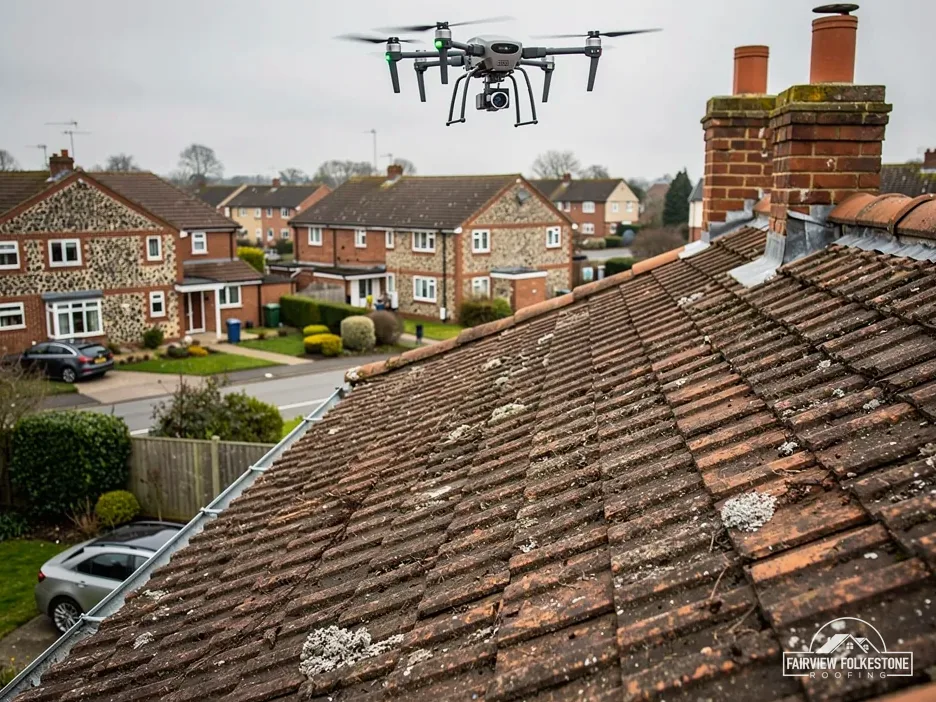
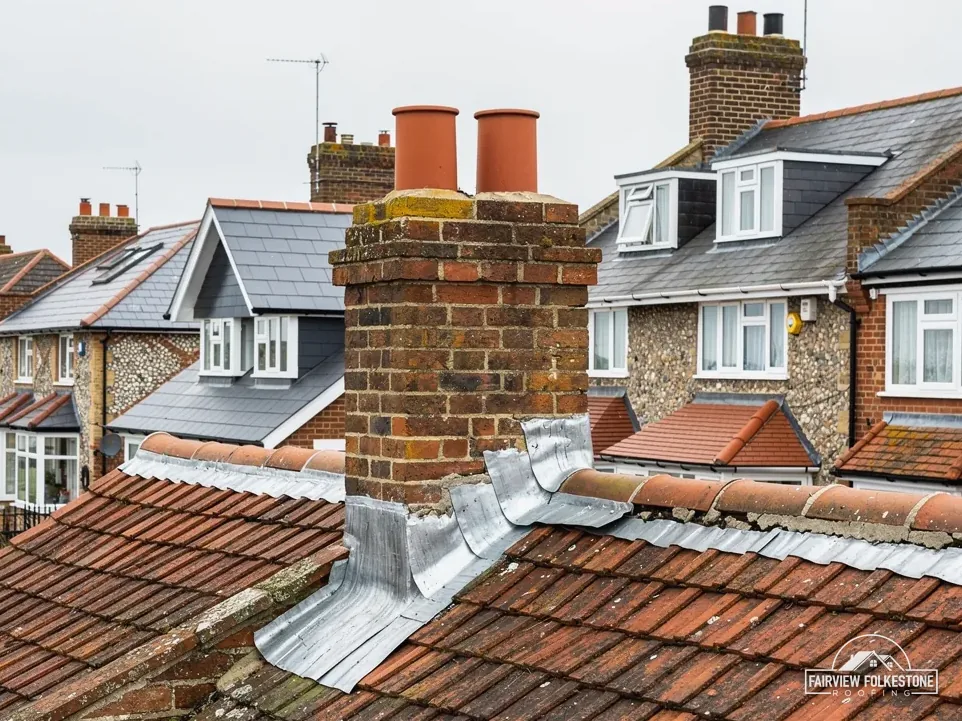
Damp bloom on a chimney breast in the front bedroom
What it fairly needs
Look at the stack and its flashing before deciding what is leaking.
What we found
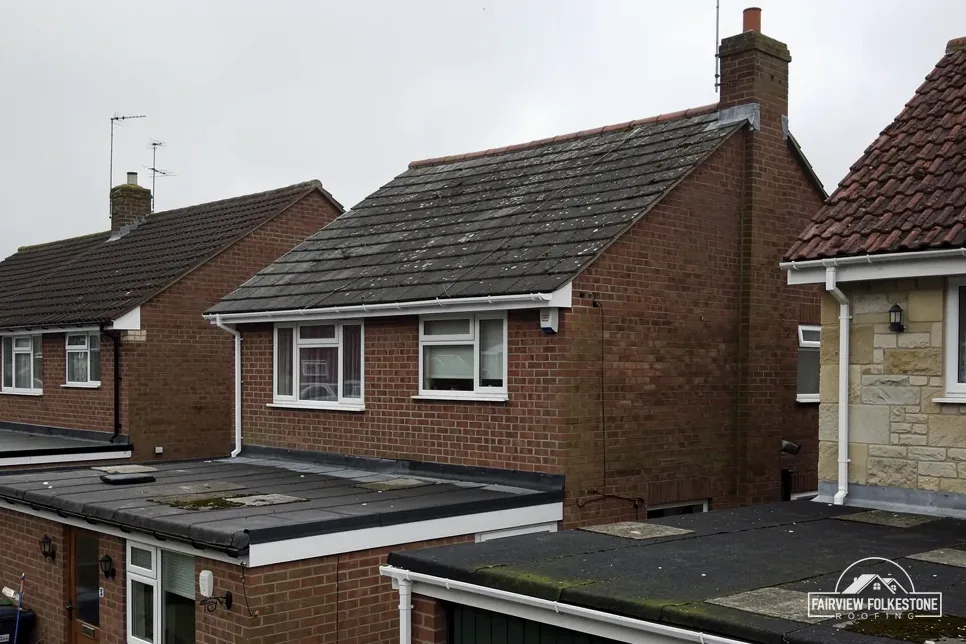
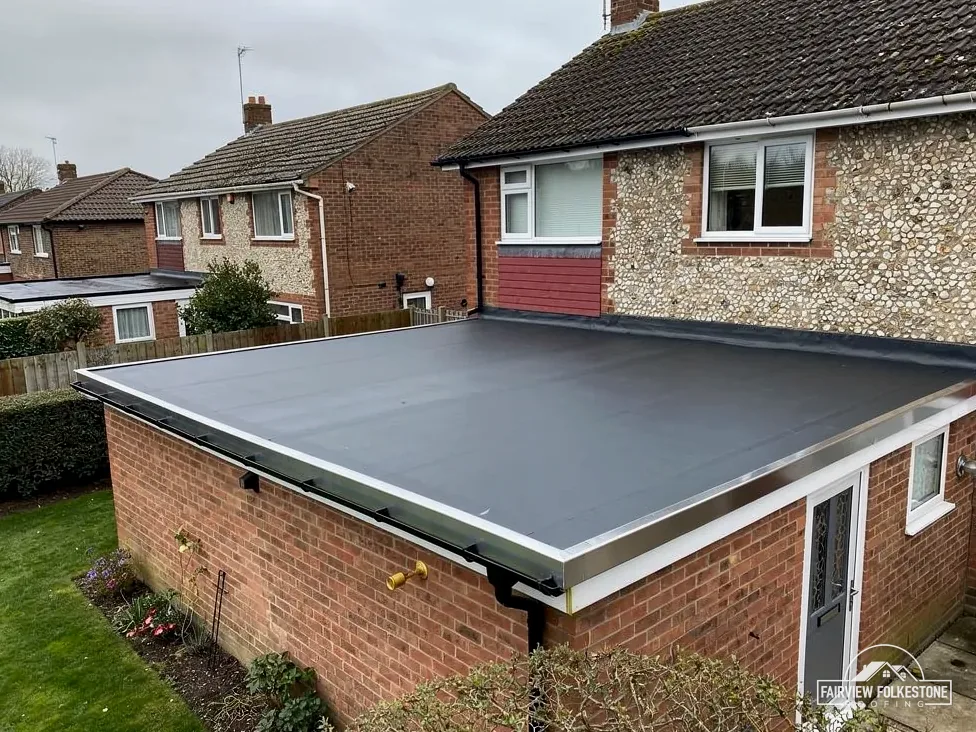
Flat roof over a back extension, blistered and ponding
What it fairly needs
A fresh membrane on a steeper fall, with the upstands renewed.
What we found
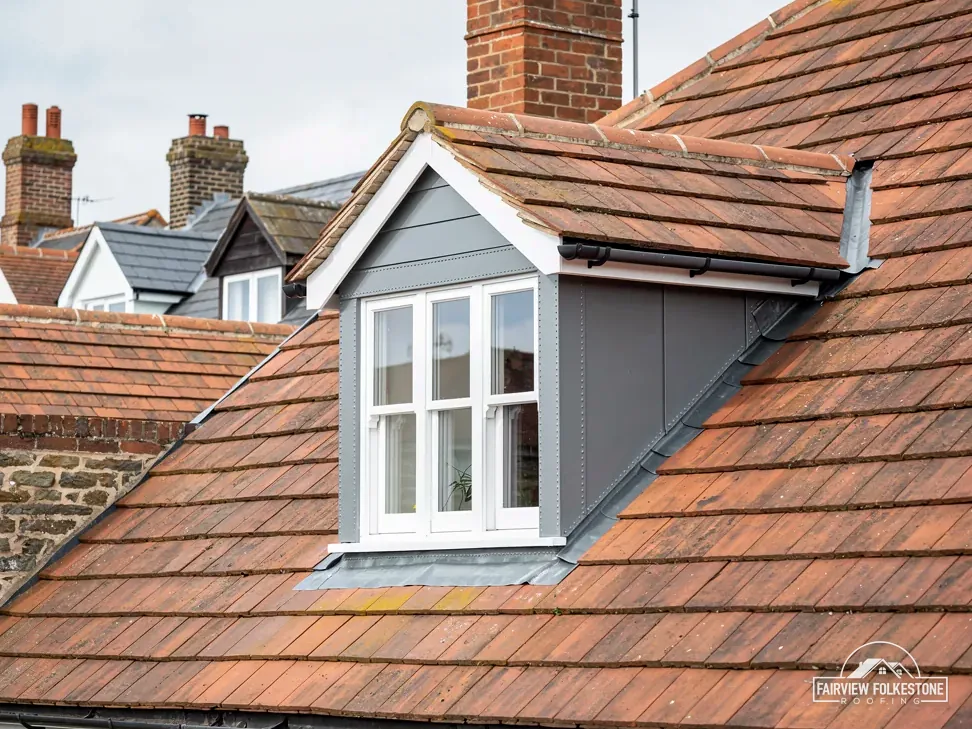
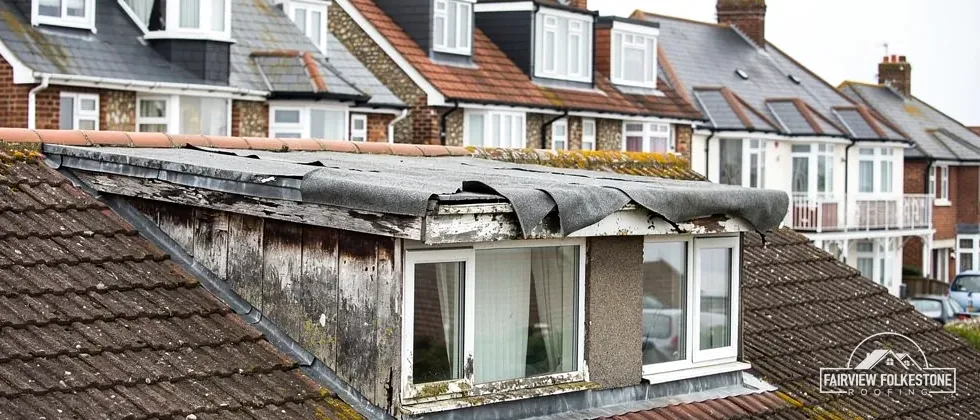
Two slipped tiles beside a dormer cheek
What it fairly needs
Refix them and tuck the lead, leaving the sound slope alone.
The fair ledger
Shared boundaries, Downs label, Grade II* church: your Bridge roof
Several Bridge conservation areas are shared with the next villages, Bridge lies within the Kent Downs National Landscape, and Canterbury City Council decides what a roof job needs. Every entry closes on a stamp.
Entry 01Shared boundaries
Bifrons Park, Bourne Park and Bridge: boundaries that cross villages
Canterbury City Council lists conservation areas for Bridge that are shared with Bekesbourne, Patrixbourne and Bishopsbourne, so a house here can sit near more than one line.
Names that cross the parish edge
The Canterbury list for Bridge includes Bridge itself, Renville Farm and Bridge Railway Station, Bifrons Park (shared with Bekesbourne and Patrixbourne), Patrixbourne, and Bourne Park (shared with Bishopsbourne). Canterbury has 97 conservation areas across its district, and the council's own information is what shows whether a Bridge address is inside one, outside all of them, or just across a line from a neighbour.
Inside a conservation area a repair carries on as usual, and plain re-roofing of a house is normally permitted development. Bigger changes to how a house looks from outside are where care is wanted, and our planning permission guide covers them. Canterbury City Council shows its conservation areas on a map, with appraisals that give guidance on approaching development in each one. An Article 4 direction can take away further rights, and Canterbury City Council is the body to ask whether one applies before work that changes the outside of a house.
We look the address up before we price, since a house near a boundary line is where a guess goes wrong. The reply is filed beside the written price, so the question and the council's answer sit together. If the house sits beside a line, the quote says so plainly and names the area concerned, since several names on the list span more than one parish.
Near a line, or well clear of it
House close to a boundary
Canterbury's answer first
Hip ridge mortar crumbling
Re-bed or dry-fix
Rafter feet rotten at the eaves
Cut out and replace
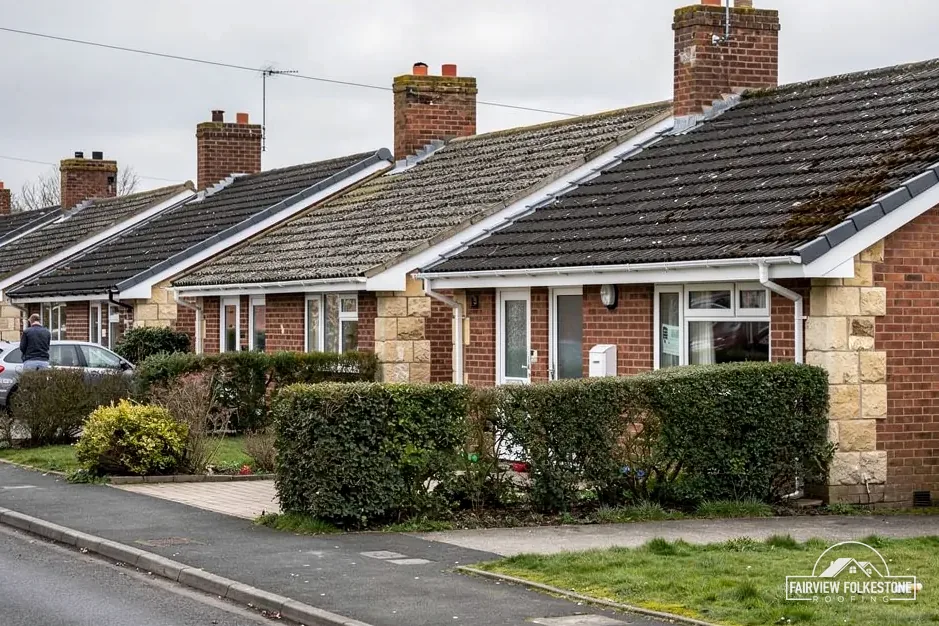
Myth: Sharing a conservation area with Patrixbourne puts a repair under review.
Fact: A repair simply proceeds; the council's answer matters for bigger alterations and for any Article 4 direction, and it is asked for the address, not the village.
Entry 02Who checks it
Bridge re-roofs: the STG partnership and the Planning Portal test
Bridge sits in Canterbury's district, so building control comes from the STG Building Control Partnership, and the national Portal test says when a re-roof needs an application.
Two bodies, one sensible order
Canterbury City Council works with the STG Building Control Partnership, which serves Canterbury, Gravesham, Medway and Swale and can be reached on 01634 331133. Building control comes either from a council team or from a registered approver, and for a Bridge address that route runs through STG, never through another district's office.
The Planning Portal sets the national test. Under it, an application is normally unnecessary while the work touches under 25 per cent of the building envelope and under 50 per cent of the roof, whereas approval is needed for a new covering 15 per cent or more heavier. Canterbury publishes no percentage of its own for re-roofing, so the Portal's guide is the one we work from, and the written quote notes which side of it the job falls on.
The order we follow is simple: survey, then any question for STG or the council, then the price, laid out as one written total. A repair that keeps the existing covering raises none of these questions, and the survey separates it from a full roof replacement before anything is promised. Where STG has a question about the job, we pass it on and order nothing until the reply has come back.
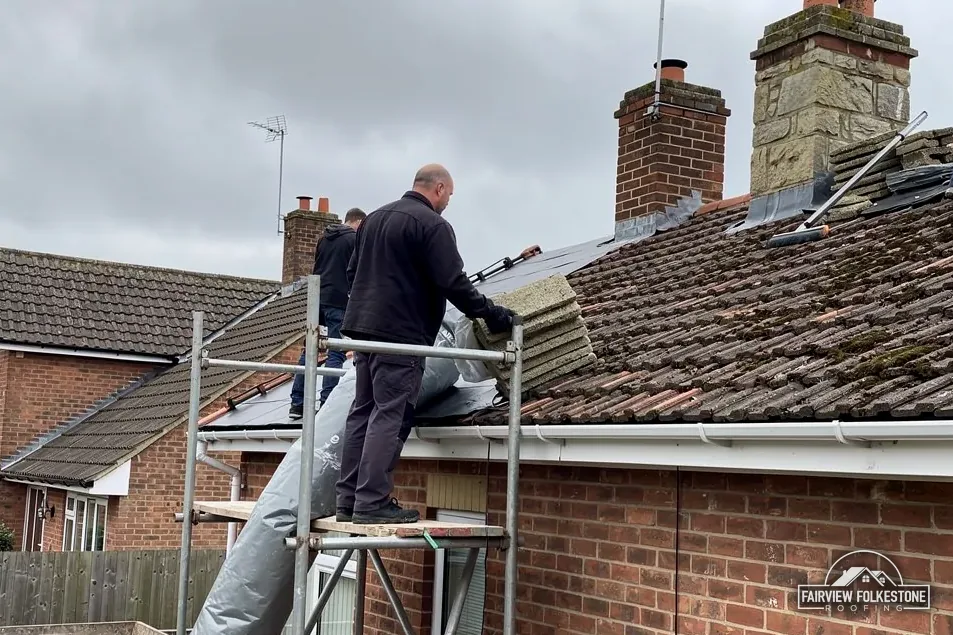
Layers a re-roof uncovers
- Tile or slate on top
- Batten carrying it
- Underlay below the battens
- Rafter under everything
A re-roof opens up every layer, so the timber and underlay get read before a price is fixed.
What sets the price
- How much of the roof is renewed
- What the timber beneath turns out to be
- Any extra weight in the new covering
- Room for the scaffold
One written total price
What the list says, and what it asks of us
On the national list, St Peter's church is Grade II* (list entry 1336512), Bridge Place is Grade II* (1336506) and Riverdale House is Grade II (1085701). St Peter's is a Church of England church in use, so works to it follow the Church of England's faculty system, a route run within that church, and not listed building consent from the council. We would not quote for work to the church itself without that permission in hand.
For a listed house the Listed Buildings Act applies. The house keeps permitted development for roof work, but listed building consent is also required where the work would affect its character. If your Bridge address turns out to be listed, we hold the price until Canterbury City Council has answered the consent question, and the reply goes into the paperwork. Which of the three listings applies to your house, if any, shows on the National Heritage List, and we search it first, since a neighbour's entry does not pass to the house next door.
Lead is where an older roof earns its keep, so stacks, valleys and abutments are read closely; see lead work. The Kent Downs team advises the council on planning, though it does not decide applications, and dormers and other changes to a roof's shape are for the planning guide.
Entry 03Church and house
St Peter's, Bridge Place and Riverdale House: three listings, three questions
A Grade II* church, a Grade II* house and a Grade II house are listed in Bridge, and a roof beside any of them starts with the question of consent.
Does the National Landscape label stop me re-roofing in Bridge?
No. Bridge lies within the Kent Downs National Landscape, but the label advises and the council decides, and ordinary re-roofing is not blocked by it. Only the Kent Downs map can show whether your own address sits inside the line, and we check it before pricing.
A listing decides which door to knock on; the loft decides what the roof needs.
Is your Bridge roof a boundary question, a listing question or a plain repair?
Send your address and one photograph of the problem. We check the house against the council's information, stamp what we find, and give you one written price.
The road to Bridge
From Folkestone, Bridge is 13.9 road miles to the north, about 21 minutes in the van. At the 2021 Census Bridge parish had 1,566 usual residents. Flood Zone 3 on the Environment Agency's flood map includes land by the village centre, a label for the land and nothing to do with how a roof is repaired. A single call can cover slopes, stacks, gutters and the loft together, and a repair booked after it needs no second survey.
Roof questions from Bridge, with the reasons beside them
Plain answers for a village that shares its boundaries with its neighbours.
Can a flat roof over a Bridge extension be patched, or does it need relaying?
A patch works where the membrane is sound apart from one split or a failed joint, and the deck beneath is dry. Ponding, blisters across the sheet or soft decking point to relaying. The survey reads the falls, the upstands and the drip trim, and we explain which route fits, so no patch goes on a soft deck. BS 6229:2025 asks for a minimum finished fall of 1:80 on membrane flat roofs, so a new Bridge roof is laid steeper to cover site tolerances.
Does a Bridge re-roof need building control through STG?
Canterbury addresses use the STG Building Control Partnership, on 01634 331133. Whether a re-roof needs an application turns on the Portal's two thresholds, under 25 per cent of the building envelope and under 50 per cent of the roof, and on whether a new covering is 15 per cent or more heavier. A repair that keeps the covering falls outside that question altogether. We say where the job falls before any price is set, and put the reasoning in writing beside the quote for you to keep.
How is the scaffold licence handled for a house on Bridge High Street?
We arrange it with our scaffolder. On a street like Bridge High Street the licence comes from Kent County Council: £52 per week for 2026 to 2027, each permit covering 7 calendar days. Its licence page states that the skip or scaffolding company should submit the application for you, and Kent County Council wants every application, a renewal included, 5 working days before the start, so a longer job is planned from its first week.
What does a Bridge roof survey record in the loft?
Up in the loft the underside of the roof is read for daylight, stains and damp timber, then the battens within reach and the rafters for any sag. Chimney breasts are checked for damp and the eaves for rot. On the outside the ridge, hips, valleys, gutters and fascias each get their own check. Each part is given a verdict stamp, a photograph backs it where that helps, and one written price follows the survey.
Is the lead round a Bridge chimney worth saving?
Yes, if the stack stands true. Lead flashing that is correctly installed can last for over 80 years, according to MyJobQuote, so a sound run stays and a lifted or split strip is replaced. We look at the pointing and the brickwork under it as well, because a failed joint at the stack can let damp in whatever the lead is doing, and the quote says which job it is. If the stack needs more than lead, you see the evidence before you decide anything.
Does living in Flood Zone 3 land change a Bridge roof repair?
In the Environment Agency's flood map the land near the centre of Bridge sits in Flood Zone 3, which says something about the land and nothing about a roof. A repair is decided by what the survey shows: the covering, the timber below it, the lead and the gutters. Listing and conservation-area questions are the ones that can alter the order of work, and those go to Canterbury City Council, with its answer written beside the price before a scaffold is booked.
Show us the Bridge roof that has you worried
You'll get one written total price.