
Lead flashing repair
Can lead flashing be repaired, or does it need replacing?
Lead flashing can often be mended when the sheet itself is whole. Below: what a repair covers, the signs that point to new lead, and how we decide.
The short answer
Yes, where the lead is still whole and the fault is in how it is held. Lead that has lifted, lost its wedges or come out of a joint can be refixed and repointed. Lead that has cracked along its folds, worn thin or been patched again and again is better renewed along that run. We look at the sheet first, then at the joint, and tell you which it is before any price is given.
5 min read · Part of Lead work
What a repair can cover
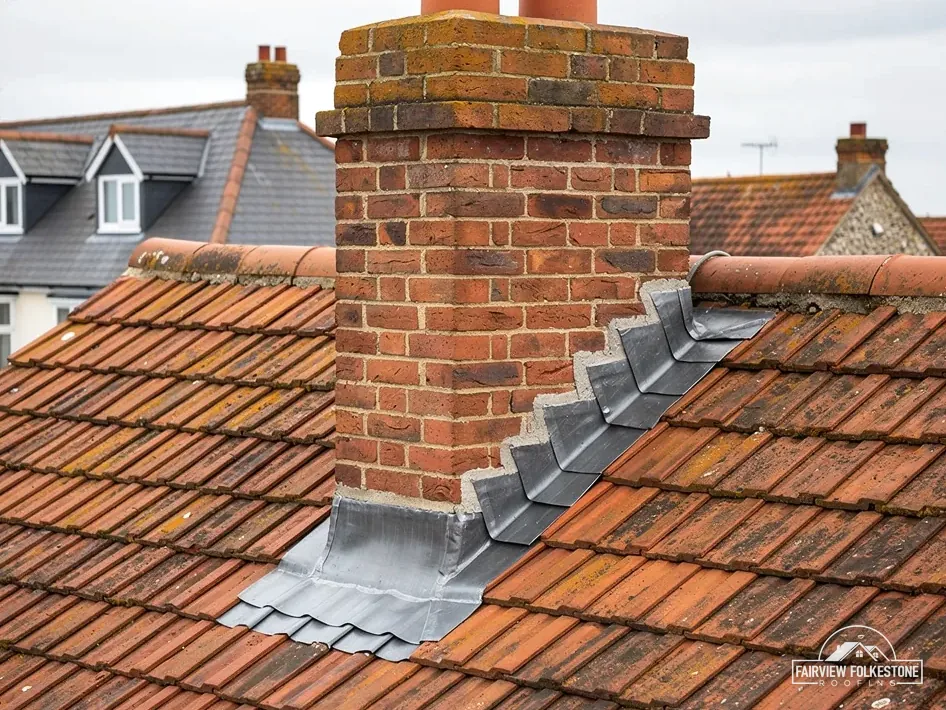
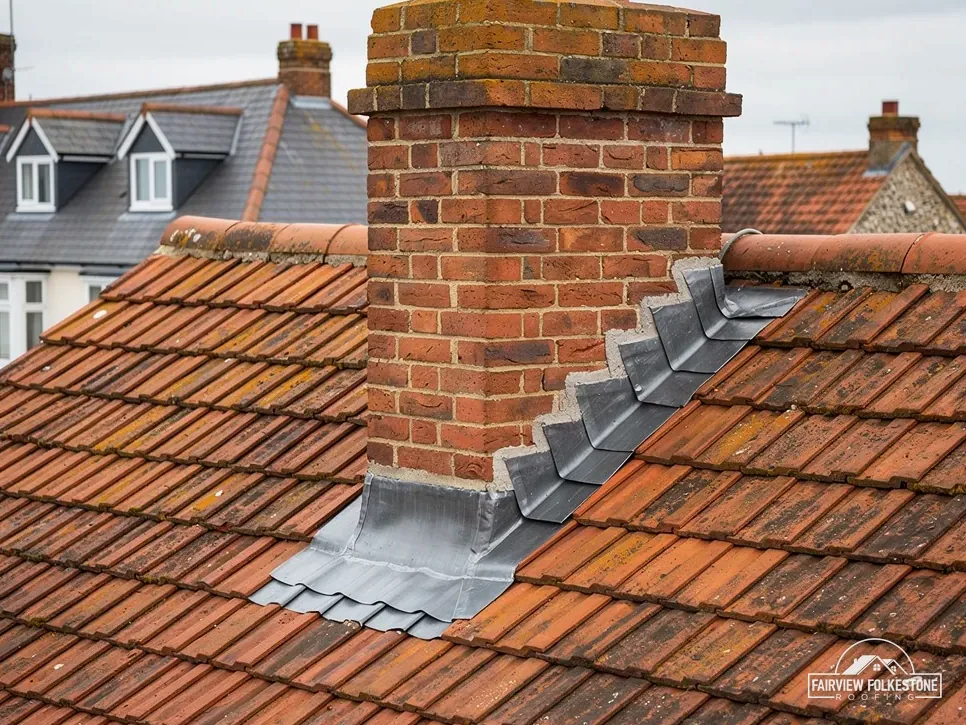
A repair keeps the existing lead and puts right whatever let it down. Lead is only as good as its fixing, so a repair usually starts with the joint the lead sits in rather than the metal. A flashing is the lead that bridges the gap between a roof slope and a wall or chimney stack, with its top edge tucked into a raked-out brick joint and held by small lead wedges.
- Lead lifted away from the wall and dressed back down over the slates or tiles
- New lead wedges where the old ones have dropped out
- Raked-out joints repointed so the top edge is held again
- A short length of lead replaced where one step has failed, with the rest left alone
- Mastic removed and the lead closed properly, rather than sealed over
These jobs work because the sheet has plenty of life left. A flashing that is only loose is a fixing problem, and mending the fixing is the fair answer. It also keeps good lead on the roof instead of sending it to the skip, which matters on an older house where the wall behind it is already settled and the existing lead has shaped itself to it over many winters.
Signs the lead needs renewing instead
Some lead cannot be saved by tidying the joint, because the metal has gone past what a refix can hold. Here is how we read what we find at the wall, from the lightest fix to the heaviest:
| What we find | What it needs |
|---|---|
| Whole sheet, loose in its joint | Refix and repoint |
| One torn step, lead around it sound | Replace that step |
| Splits along several folds | New lead on that run |
| Thin, cracked lead under old patches | New lead, whole run |
| Lead missing after a theft | New lead, matched code |
Where the answer is new lead, we explain why, rather than patching a run that will fail again a season later. A patch laid over thin lead only moves the weak point a few centimetres along, and each repair makes the next one harder to fit cleanly. Lead that has been folded back and patched several times also stiffens at the folds, which is where it can give way. Our page on why lead flashing cracks shows how a split starts and why it keeps spreading once it has begun.
How the survey decides
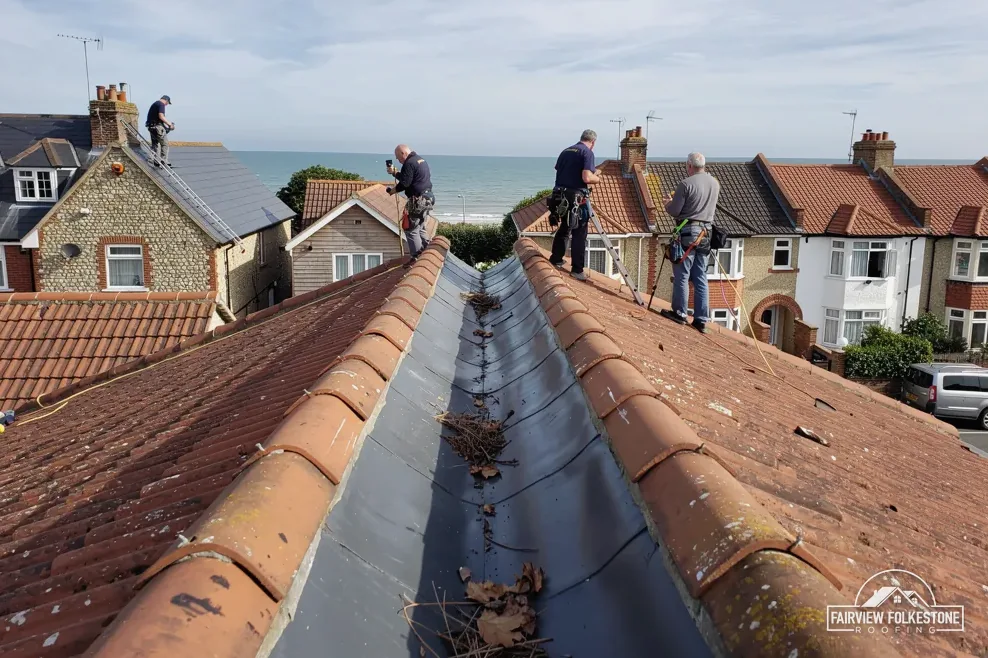
The decision comes from what we see up close, not from how old the roof is. On the visit we look at the flashing from the ground, then from the roof or a ladder, and take photos so you can follow what was found.
We check that the lead is whole along its full length, that each step still sits in its joint, and that the pointing above it is sound. Where a wall leaks and the flashing looks good, we lift a few slates or tiles to see the soakers beneath, the small folded sheets under each course. A soaker that was left out, cut short or has slipped can let rain in beside a perfectly good flashing, and no amount of work on the visible lead will cure that. Our answer on what lead soakers are explains them.
We also look at the lead code, which is a number for the thickness of the sheet. Royston Lead lists Code 4 as its lightest code for flashings, and Codes 5 and 6 are listed for flashings too. The replacement code is chosen for the detail in front of us, and not left to whatever roll is on the van that day.
Repair, renewal and what it costs
Repair first is the fair rule where the lead is sound, because it costs less and keeps good metal on the roof. Renewal is the fair call where the sheet has failed, because a patch on thin lead is money spent twice. Correctly installed lead flashing can last for over 80 years, according to MyJobQuote, so new lead properly fitted is a long-term job and not a stop-gap.
MyJobQuote says a chimney flashing patch repair typically costs around £200, while a full replacement averages around £570. Those are third-party figures, last updated in September 2026, and are not our prices. The patch is cheaper because it mends a fault, while the replacement puts new sheet on the wall. Our lead flashing repair cost page covers what moves them up or down.
Your own quote is written after the survey as one total price, and it should say whether scaffold is included. For the wider picture, our lead work page walks through each place lead is used on a roof, from wall flashings and valleys to small lead roofs over bays and porches.
More questions
Can a roofer just seal a split in lead flashing with mastic?
Mastic can hide a split for a while, but it does not mend the metal, and it can trap damp behind the lead. A sealed split is a temporary cover. We look at why the lead split, then either replace that piece or renew the run, so the fix lasts rather than being painted over.
Does a flashing repair mean the whole chimney needs work?
Not by itself. A lifted flashing and a failed stack are different faults, and a damp patch beside a chimney can come from either. On the survey we check the lead, the pointing and the stack together, and tell you which one the damp points to before recommending any work.

Tell us what's wrong with the roof.
You'll get one written total price.