
Damp diagnosis
Is it condensation or a roof leak? How to tell
Both leave marks on a ceiling, but they behave differently. Below: the clues that separate them, how roof ventilation comes into it, and what to do next.
The short answer
Look at when the damp appears. A leak follows rain, and the stain is usually directly under the fault or along a timber that carries the water sideways. Condensation follows cold, still, humid days, spreads in a film across cold surfaces such as the underside of the roof covering, and shows as beads of water, black speckled mould or damp patches in corners and behind wardrobes. If the marks arrive with the rain, treat it as a leak. If they arrive with the cold, suspect condensation.
5 min read · Part of Roof repairs

Clues that separate the two
The two problems have different fingerprints, and a few minutes with a torch in the loft is often enough to tell which one you have. Start by noting what the weather was doing when the damp first showed.
| What you see | Points to |
|---|---|
| Damp after rain, dry spells in between | A leak |
| Damp on cold mornings, no rain for days | Condensation |
| One stain with a clear edge, getting larger | A leak |
| Beads on the underside of the roof covering | Condensation |
| Black mould in corners and behind furniture | Condensation |
A loft that drips on a cold, dry morning and is bone dry in a downpour is telling you about moisture in the air, not a hole in the covering. Write the dates down beside the forecast for a fortnight. It sounds fussy, yet a simple log of dry mornings and wet afternoons narrows the search before anyone picks up a ladder. Mark the spot on the ceiling in pencil, with the date, each time the stain grows, because the pace of growth matters as much as its position. A stain that creeps outward only in wet weather has a different cause from one that blooms overnight in January.
Why a roof makes condensation
Warm air from cooking, washing and breathing carries water vapour. Once that air drifts into a loft and touches something cold, some water vapour condenses back to droplets. The felt, the timbers and the back of the covering sit closest to the weather, so they are the cold places where beads form.
Moisture in buildings is the subject of BS 5250, which the BSI lists as current and under review. In a cold roof, the loft is left open to the outside air and the insulation sits at ceiling level. Marley says that with a high-resistance underlay, which is not vapour-permeable, a cold roof needs 25mm of ventilation along the eaves for pitches of 15° or less, and 10mm for pitches above 15°. Marley adds that a breather-type (LR) underlay over a tightly sealed ceiling, under a roof covering that is itself air permeable, needs only the 3mm gaps of ordinary eaves construction, provided UKAS third-party certification is fully met.
So insulation pushed hard into the eaves, soffit vents painted over or a bathroom fan venting into the loft can all start a condensation problem that no amount of patching will cure.
Checks you can make safely
You do not need to go on the roof for any of this, and you should not. Work from inside, and from the ground.
- Shine a torch along the rafters on a cold morning and look for beads or frost on the nail points and the felt.
- Look at the same spot during or just after heavy rain for a drip, a tide mark or a wet felt.
- Check that insulation has not been laid over the eaves, blocking the air gap where the roof meets the wall.
- Check that bathroom and kitchen extractor fans vent outside the house, not into the loft space.
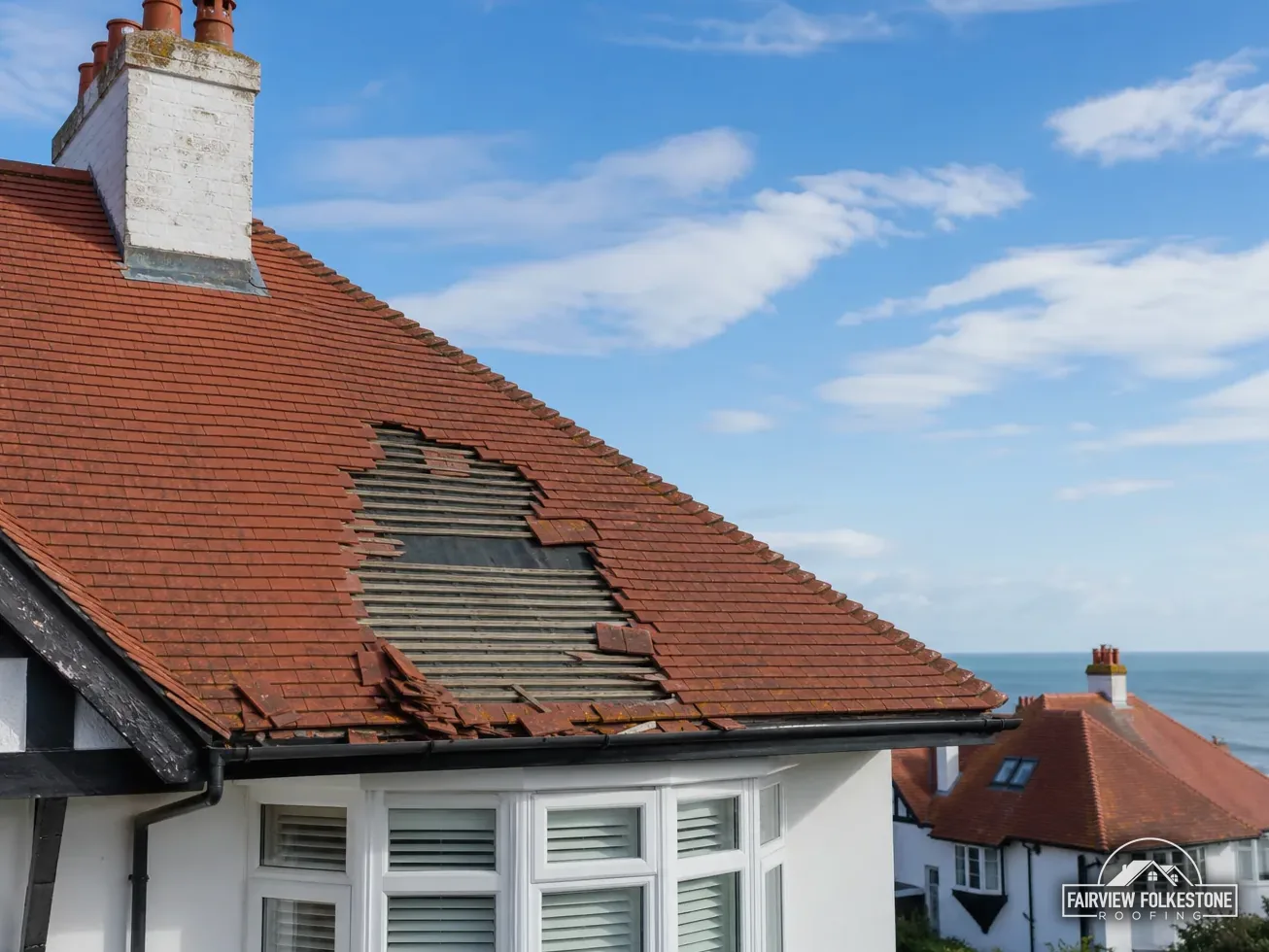
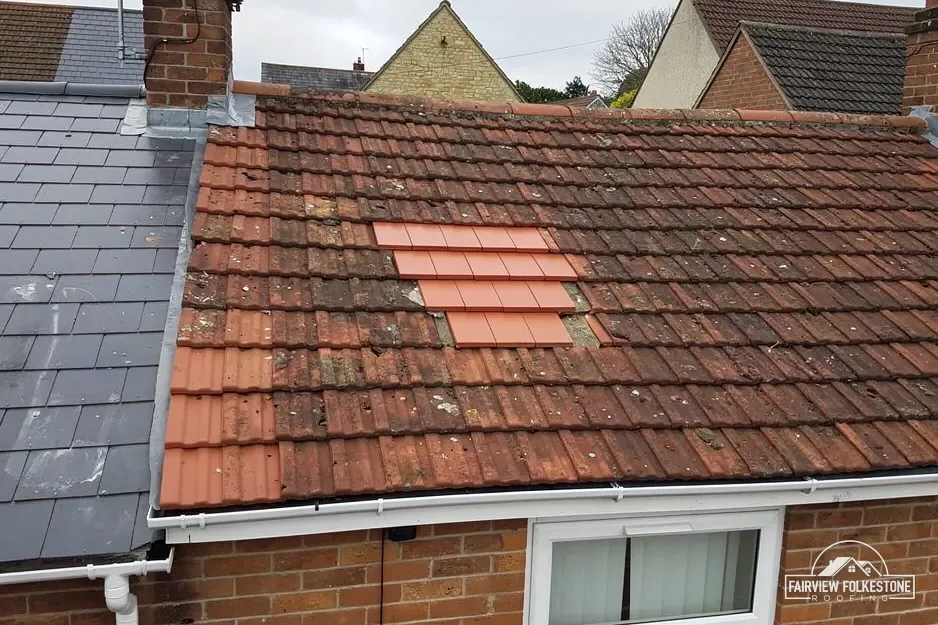
- Stand in the garden with binoculars and scan the area over the stain for gaps in the tile rows or open joints along the flashings.
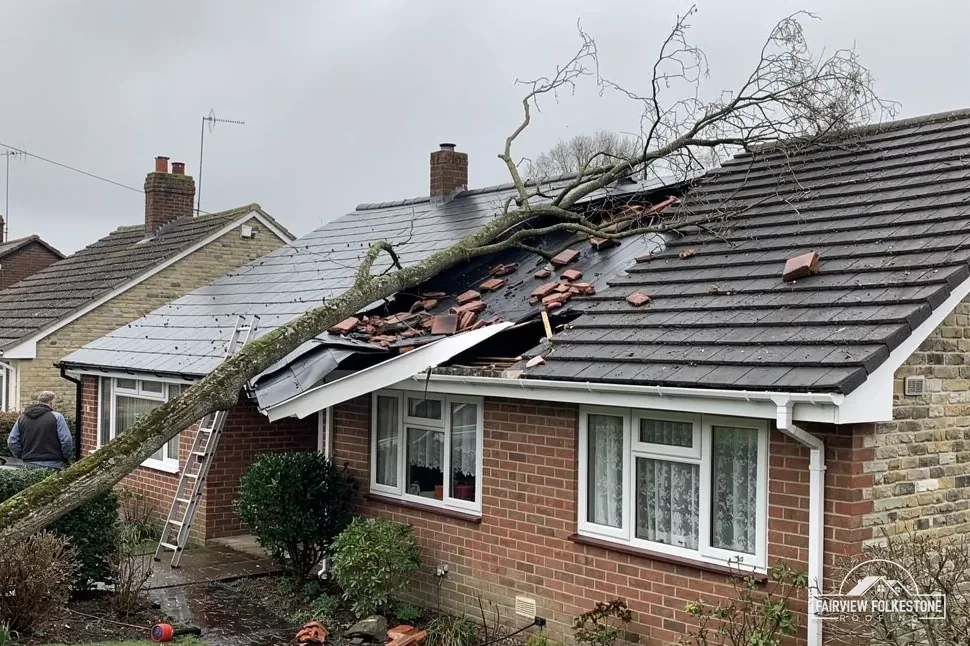
If you see a hole, a missing tile or a dripping line of water, it is a leak. If you see only moisture on cold surfaces and the loft is dry in the rain, the cure is ventilation and moisture control. Our page on how to find a roof leak goes further for the wet-weather case.
What happens next if you are unsure
Both problems can be present together, which is why a firm answer sometimes needs a proper look. A roofer can check the covering, the underlay, the flashings and the eaves in one visit and tell you which of the three it is, then say whether a repair is enough.
Should the cause prove to be a leak, a repair comes first while the tiles themselves are in good order, and the roof repairs page sets out how we approach that. Where the cause is condensation, the fix is usually in the house rather than the roof: moving the moisture out with extraction, clearing the eaves ventilation and keeping insulation back from the roof edge.
Take dated photos of whatever you find, wherever it is. They help a roofer, and they help you if you later need to explain the damage to an insurer. Any price we give is written down after the survey, as a single total.
Do not be tempted to seal the underside of the roof with paint or tape to hide a stain. Moisture trapped behind a patch has nowhere to go, and the ceiling will mark again somewhere else a few weeks later. Treat the source, then redecorate once the ceiling has been dry through a full wet spell.
More questions
Can mould on a bedroom ceiling be caused by the roof?
It can be. Black mould in a corner or above a wardrobe can point to cold surfaces and trapped moisture rather than a hole, but a slow leak can grow it as well. Check the loft above after rain and again on a cold dry morning, and the two visits will usually separate the causes.
Will more loft insulation stop condensation?
Not by itself. Insulation keeps heat in the house, which leaves the roof space colder, and if it blocks the eaves it cuts off the air that carries moisture away. Add insulation and keep the ventilation gap clear at the same time, then see what the survey says about the roof.
Tell us what's wrong with the roof.
You'll get one written total price.