
Finding leaks
How do you find where a roof is leaking?
The drip may not be under the hole. Below: how to trace a leak from the ceiling to its source, what to check from the ground, and when to stop.
The short answer
Start at the stain and work up the slope and sideways from it, because the point where water enters the roof is higher than the place where it drips. In the loft, look along the rafters and the felt for a dark tide mark or a wet timber, ideally during rain. From the ground, scan the roof above for slipped or missing tiles, damaged flashings and blocked gutters. Do not climb onto the roof to look.
5 min read · Part of Roof repairs

Why the drip is not the hole
Water entering a pitched roof does not drop straight down. It lands on the underlay or a timber, runs along it, and falls where the surface lets go. By then it may be a metre or more from the opening. On a ceiling it can spread again along a joist before it shows, so the visible stain tells you where the water came out and very little about where it went in.
That is why the search starts at the stain and then moves up the slope and out to either side. The entry point sits higher on the roof than the mark, never lower, because water only runs downhill.
Work out which direction the wet is coming from using three facts: which wall or corner the stain is nearest, what the wind did on the day it appeared, and whether it appears in any rain or only in some. Our page on roofs that leak only in heavy rain goes into the second and third of these. Keep a written note of each time the stain changes, because a pattern in the dates is often the best clue you will get.
A careful loft inspection
The loft is the safest place to look, as long as you step only on the joists and not the plasterboard between them. Take a torch and a phone, and go up in daylight if you can.
- Follow the stain's position up to the underside of the roof and look for a wet or dark patch on the rafters, battens or felt.
- Check for a pinprick of daylight in a place that should be dark, which points to a missing tile or a gap round a pipe.
- Look around the chimney, the soil pipe and any roof window, where one surface meets another.
- Press a dry fingertip on timbers that look dark. A soft timber means the wet has been present for a while.
- Note any damp insulation, since it holds water and spreads the stain.
If it is raining, a second visit is worth the effort. A line of drips running down one rafter points to the entry above it. Mark the spot with chalk and photograph it. If the timber looks sound but the felt is wet, a slipped tile is the likelier cause.
Clues visible from the garden
You can learn a lot from the garden or pavement with a pair of binoculars. Keep your feet on the ground and check each of these in turn:
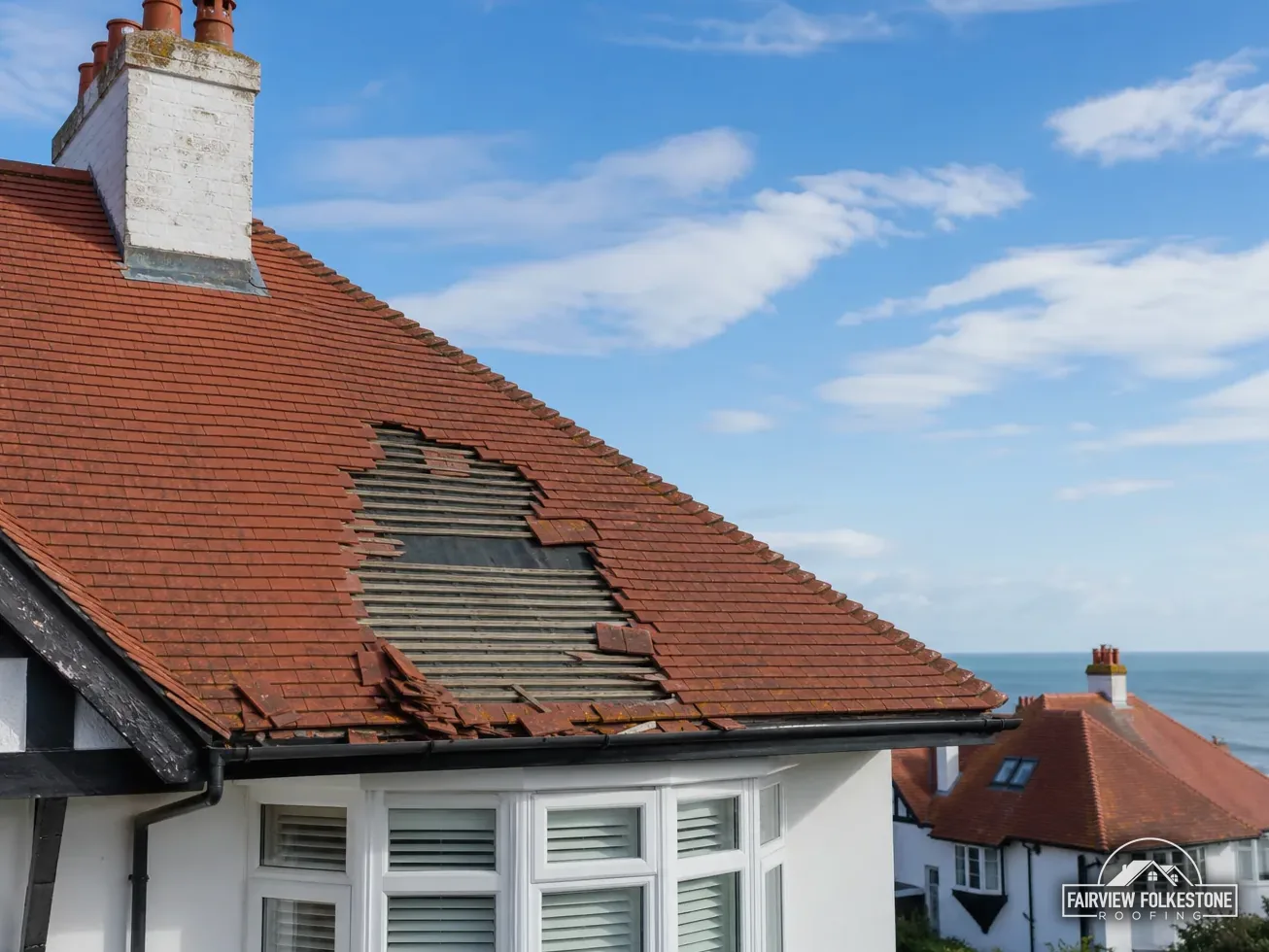
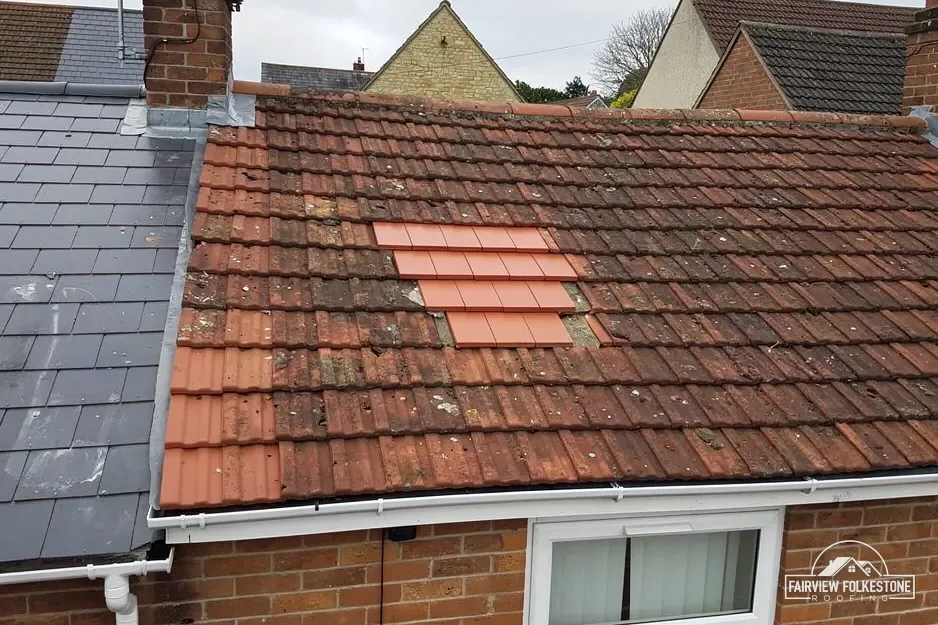
- Slipped, cracked or missing tiles or slates, which show as gaps or darker patches in the rows.
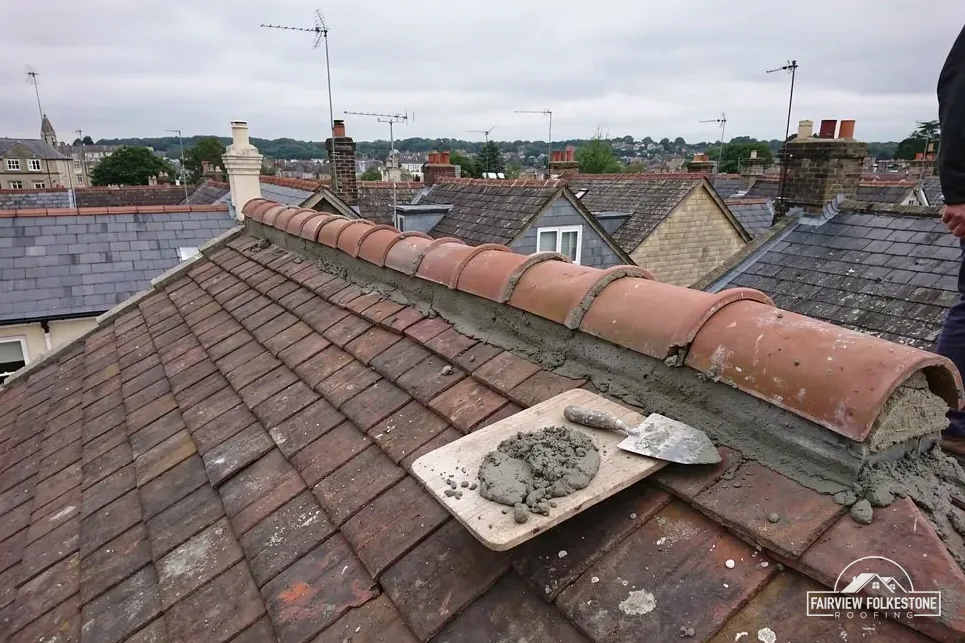
- Ridge and hip tiles that have shifted or lost their bedding.
- Flashings at the chimney, a wall or a dormer, where a lifted or cracked joint lets the rain behind it.
- A valley gutter choked with moss or leaves.
- Gutters that are blocked or overflowing, because water spilling over the edge can run behind the fascia and into the wall plate.
A hose test is one way a roofer narrows it down: wetting one section at a time, starting low and working up, while someone watches the loft. Do not try this alone, and never on a roof you cannot reach safely from the ground.
A leak at the joint between a roof and a wall points towards the flashing, though only the survey settles it. Mark each suspect spot in your photographs so the roofer can compare them with what is found.
When to stop looking and call a roofer
Some searches should end early. If you have to climb to see, stop. A ladder on its own is not a safe way to inspect a roof, and the loft and the garden give you most of what you can usefully learn. If the stain is growing quickly, or the ceiling is bulging or sagging, tell a roofer straight away and keep clear of the area below.
Photograph what you have found, with dates. Pictures taken before anything is moved help when you describe the problem to a roofer, and again if an insurer asks about it later. Our page on what to do first when water comes through a ceiling covers the steps inside the house.
At the survey, a roofer works through tiles, felt, flashings and gutters in turn, and then says whether the fault is a repair or something larger. Expect to be shown the evidence, such as the wet timber or the slipped tile, rather than simply told. The roof repairs page sets out how that decision is made, and you receive a single written total before any work begins.
More questions
Can I find a leak by spraying the roof with a garden hose?
A roofer does something similar, one section at a time with a second person watching the loft. Done carelessly it adds water to a roof that is already failing, and it puts you on a ladder or the roof itself. Leave it to someone with the right access.
What if there is no stain, but the loft smells damp?
A damp smell without a stain can mean wet insulation, a slow leak or condensation. Check the loft on a cold dry morning and again after rain, and look at the eaves for blocked ventilation. Our page on condensation or a roof leak explains the difference.
Tell us what's wrong with the roof.
You'll get one written total price.