
Ceiling leaks
Water coming through the ceiling: what to do first
Water through a ceiling needs calm, ordered steps. Below: how to stay safe, how to contain it, what to record for an insurer, and who to ring about the roof.
The short answer
Make the room safe before anything else. Keep clear of any light fitting or socket the water is near, and switch the circuit off at the consumer unit if you can reach it dry. Then move furniture and valuables, put a bucket under the drip, and photograph the damage before you clear anything. Ring your insurer, and then a roofer. The ceiling is the symptom, so the roof above it needs a look as soon as it is safe.
5 min read · Part of Roof repairs

The first ten minutes
Water and electricity do not mix, and a ceiling that has taken on water may hold a lot of it. Work through these in order.
- Keep away from light fittings, sockets and switches that the water is touching or dripping near.
- Switch off the lighting circuit, or the whole supply, at the consumer unit, if you can reach it without standing in water.
- Move furniture, rugs and electronics out of the drip zone and cover anything that has to stay with plastic sheeting.
- Put a bucket or a washing-up bowl beneath the drip, with a towel in the base to stop splashing.
- Open the windows if the room is damp, and keep children and pets out.
If the ceiling is bulging with trapped water, a roofer or electrician can tell you whether to release it. A common safety measure is to make a small hole at the lowest point of the bulge with a bucket beneath it, but only if the area is clear of wiring and you are standing safely. If you are unsure, keep out of the room and ask for advice.
Record it before you tidy it
If a dispute with an insurer ever reaches the Financial Ombudsman Service, the pictures you take in the first hour can matter. Take them before you clear up.
- Wide shots of the room and close-ups of the stain and any drips.
- The ceiling from the loft, if you can look in without stepping off the joists.
- Anything damaged, such as carpets, furniture or electrical goods.
- The date and time, and what the weather was doing.
Ring your insurer before you commission anything beyond a stop-gap, and keep every receipt for that stop-gap. Whatever your policy wording says about storms, the plain record of what happened and when is your strongest footing. If it comes to a complaint, the Financial Ombudsman Service's helpline is 0800 023 4567, and the insurer gets the first chance to put things right.
Dated photographs and receipts keep the conversation simple whichever way it goes. A written note from the roofer saying what they found is worth asking for too, since an inspection report carries more weight than a recollection.
Finding what is above the stain
The mark on the ceiling shows where water came out, and the roof opening may be well to one side and higher up. Follow the stain upward, and look along the rafters for a wet timber or a tide mark on the felt. The plumbing is worth ruling out as well: a stain below a bathroom or a water tank may be a pipe or an overflow rather than the roof, so check whether it keeps dripping when it is dry outside.
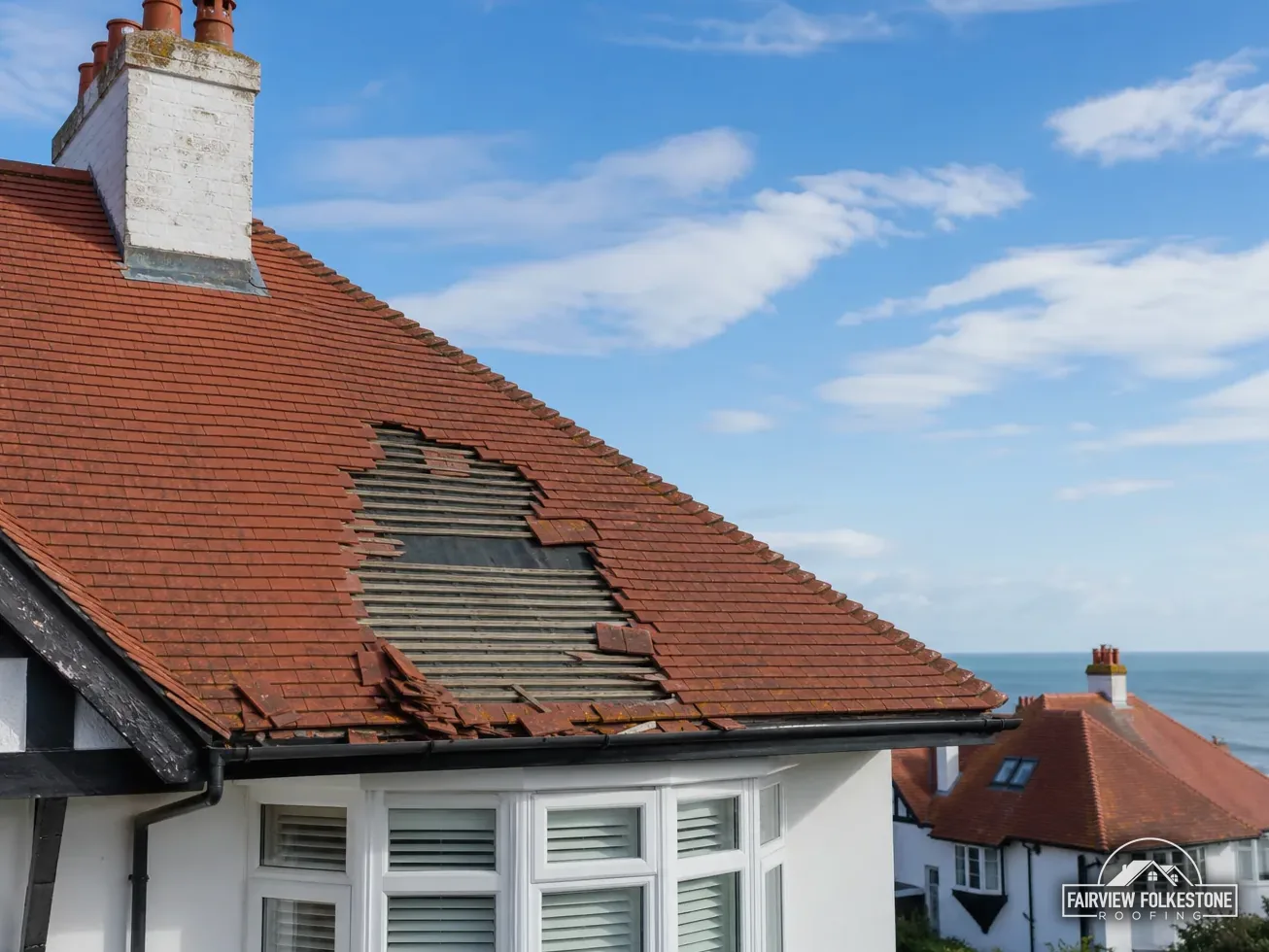
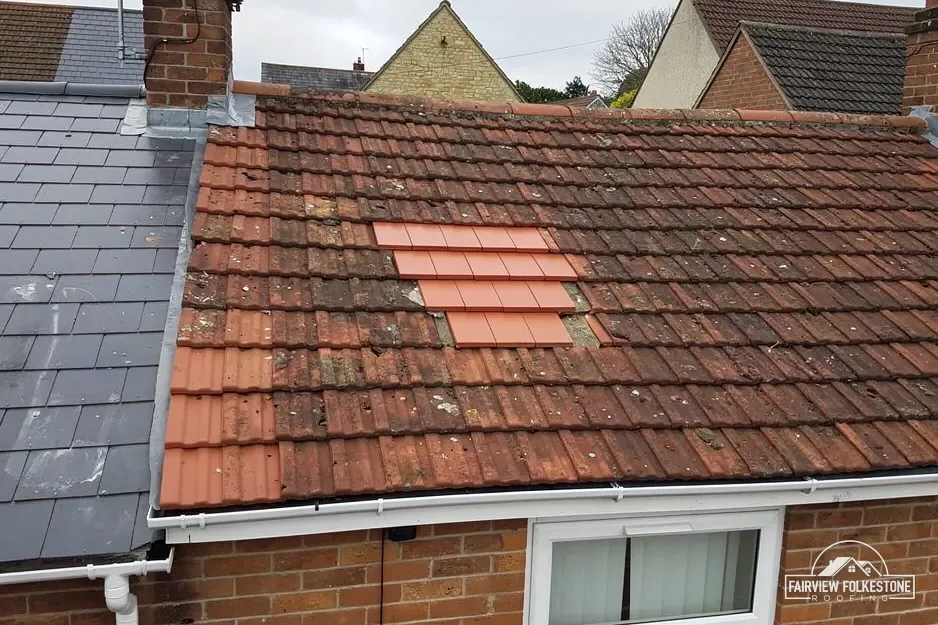
If it is the roof, the cause could be a slipped tile, a lifted flashing, a blocked gutter or a gap around a chimney. Our page on how to find a roof leak goes through the loft and ground checks. If the damp is more of a sweat on cold surfaces than a drip, the difference between condensation and a roof leak is worth working out before anyone is called.
Stay off the roof itself. A torch in the loft and binoculars in the garden show enough to give a roofer a head start, and they keep you on the ground where a slip does no harm. Write down what you see in each place, with the time, so the roofer can compare the loft with the room below.
Calling a roofer and what it costs
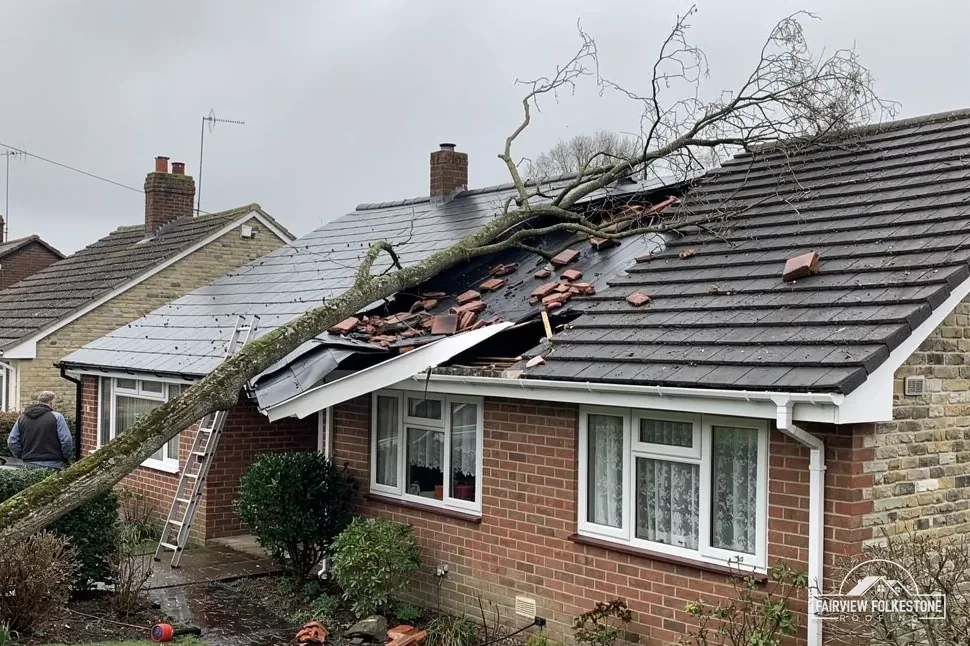
Whether the call is urgent depends on what you see. Water running in now, a sagging ceiling or a missing section of roof calls for an immediate roofer. A dried stain after a one-off storm can wait for a survey. Our page on when to call an emergency roofer explains the difference in more detail.
Our page on emergency roof repair costs gives the published ranges with their sources, and those are third-party figures, not ours. After a survey, what you receive from us is one written total.
Be aware of one rule before you ring. If you specifically ask a trader to visit for an urgent repair, you have no right to cancel that visit, under Regulation 28(1)(e) of the Consumer Contracts Regulations. Ask for a written description of what is to be done, and see the roof repairs page for what comes after the roof is safe.
While you wait, keep the buckets emptied, and keep a note of how full they get between visits. That tells the roofer how fast the water is arriving.
More questions
Should I pierce a bulging ceiling to let the water out?
Only if the area is clear of wiring and you can stand safely. Water held in a bulge can bring the plaster down. A small hole at the lowest point with a bucket underneath controls it. If you are unsure, keep out of the room and ask an electrician or roofer.
Do I need a roofer even if the stain has stopped growing?
Yes, a survey is still sensible. A stain that has dried may have come from a gap that will open again in the next heavy rain. Photograph it, note the weather when it appeared, and have the roof checked before it needs a bigger repair.
Tell us what's wrong with the roof.
You'll get one written total price.