
Urgent or not
When should you call an emergency roofer?
Not every roof problem is an emergency, and some are worse than they look. Below: the signs that justify an urgent call, those that can wait, and what to do.
The short answer
Call an emergency roofer when water is entering the house now, when part of the roof has come off or is moving, or when something heavy has landed on it. A tree branch through the covering, a section of tiles blown away or a sagging ceiling will not wait for the next dry day. A slow stain, a single slipped tile or a worn flashing can wait for a survey. If anyone is at risk, ring 999 first and keep clear of the area.
5 min read · Part of Roof repairs

Signs that justify an urgent call
The test is whether waiting makes things unsafe or much worse. These are the cases that meet it:
- Water running into the house, or a ceiling that is bulging, sagging or dripping steadily.
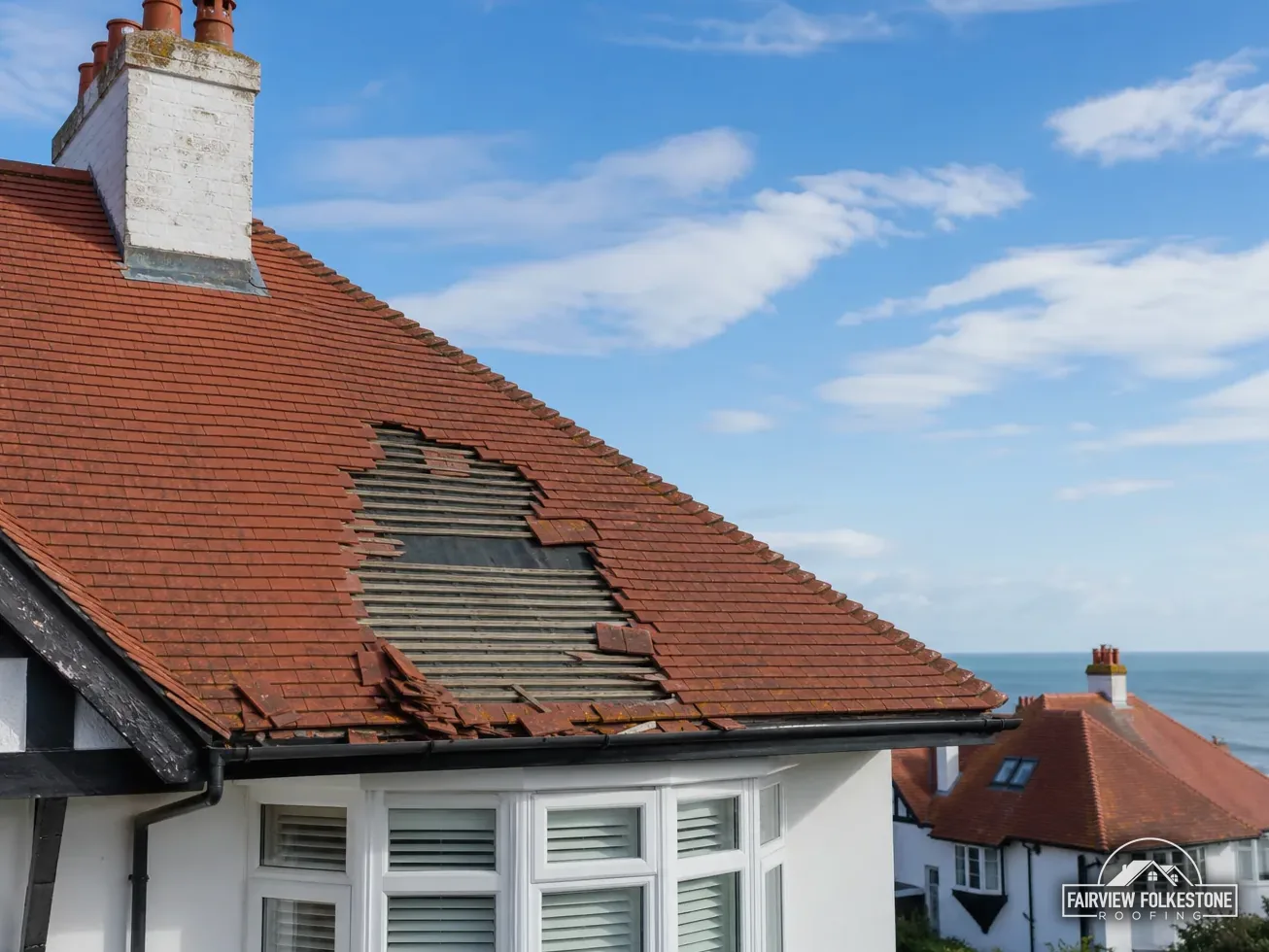
- A hole in the roof, or a run of tiles or slates blown off, leaving the felt or timbers exposed.
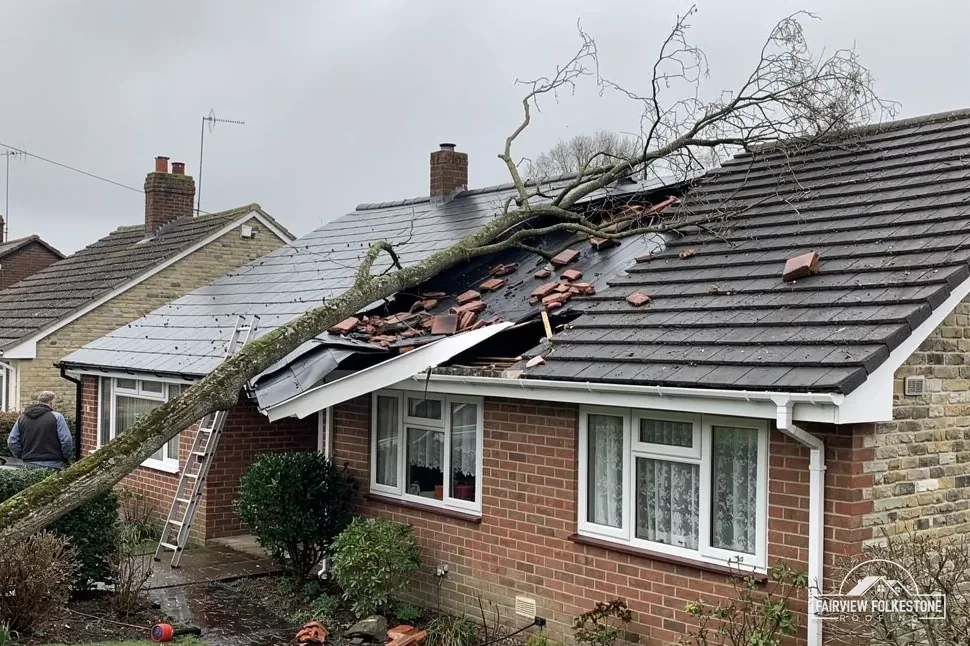
- A fallen tree or branch on the roof, or a chimney pot, stack or ridge section that has shifted.
- Tiles or masonry that are loose over a pavement, a drive or an entrance, where they could fall onto someone.
- A visible sag in the roof line, or a crack opening in a wall under the eaves.
If the damage is structural, or something has fallen onto a road or footpath, ring 999 and keep people away. For a house in a terrace, check whether a neighbouring section is affected too, and tell the neighbour at once, since damage on a shared roof does not stop at a boundary.
Leave the ladder where it is. A look from the loft and from the garden is enough to describe the problem accurately on the phone.
Signs that can wait for a survey
Some faults are worth fixing and still do not need a night-time call. They matter, because a roof left alone gets worse, but they do not put anyone at risk today, and a daylight survey will deal with them properly. The table sorts the common signs into the two groups, and the notes below it explain the grey areas.
| What you see | Call now? |
|---|---|
| Water running in | Yes |
| Tiles missing, felt exposed | Yes |
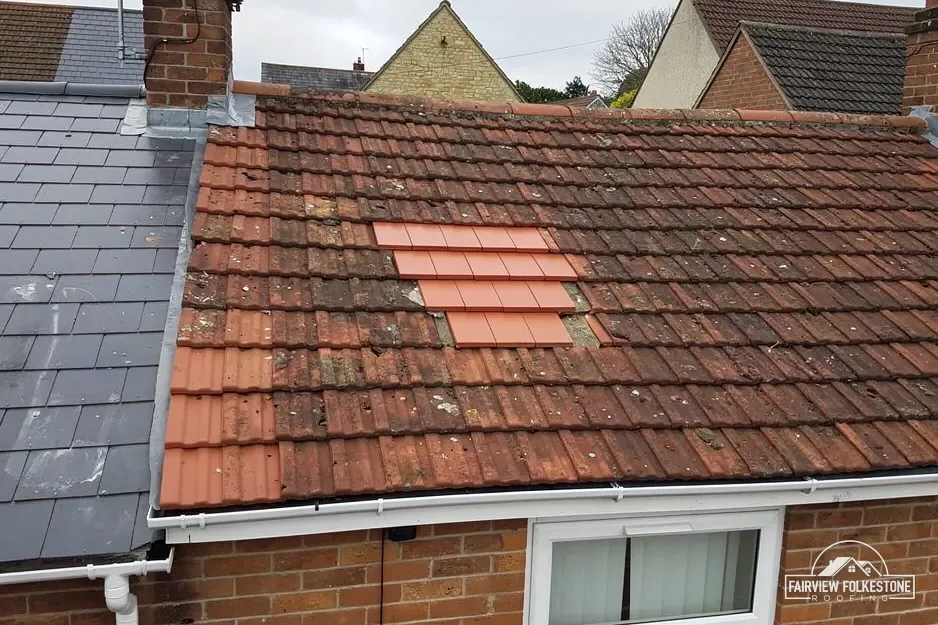
| One slipped tile, loft dry | Book a survey |
| Old stain, no change | Book a survey |
| Moss, worn pointing, ageing flashing | Book a survey |
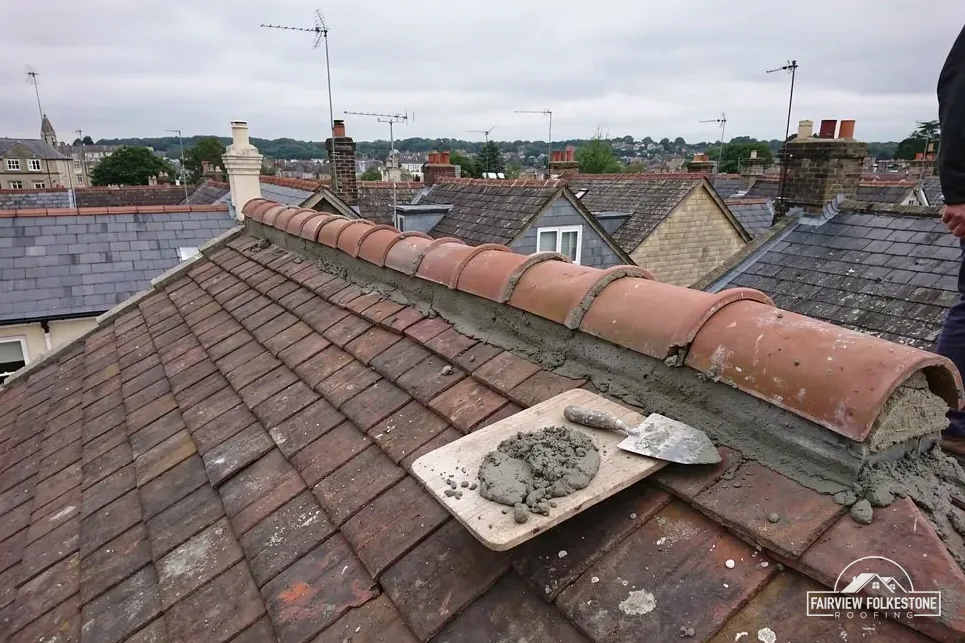
Even a repair that can wait should not be left for months. Our page on loose ridge tiles shows how a small fault at the top of the roof can turn into a falling hazard.
A single slipped tile with a dry loft is a survey job, but a slipped tile in a gale, above a door, is a different matter. The risk to people decides it. If you are unsure, take photographs and describe what you see when you ring, and say whether the weather is still bad. A roofer can then tell you whether it sounds like something to attend straight away.
What to do while you wait
The aim is to protect people first, the house second and the evidence third.
- Keep everyone clear of the area under the damage and away from windows if the wind is strong.
- Move belongings and furniture from the wet area, and put a container under any drip.
- Switch off electricity to a wet room if you can do it safely.
- Photograph the damage from inside and from the ground, and note the time and weather.
- Ring your insurer, and hold off on paying for anything more than a stop-gap, keeping every receipt.
Keep your insurer informed at each step. If a claim is refused, the Financial Ombudsman Service, on 0800 023 4567, can look at it once the insurer has had its chance to respond. Until then, keep the paperwork in one place: the photographs, the receipts, the roofer's notes and the dates of every call.
Our page on water coming through the ceiling goes through the steps indoors in more detail. A temporary repair, such as sheeting a damaged slope, keeps the weather out, and the lasting repair is arranged afterwards.
Costs and your rights on an urgent visit
For scale, MyJobQuote puts a typical emergency call-out at £150 to £300, with extensive storm damage costing £1,200 or more to repair. These third-party UK ranges are never our prices, and our own quote is one total in writing, produced after the survey.
Rights can catch out people in a hurry. Sign for work at home after a survey and you normally get 14 days to cancel. A call-out you ask for because of an urgent repair is outside that rule, since Regulation 28(1)(e) of the Consumer Contracts Regulations takes away that cancellation right. Citizens Advice puts the same point another way: you have invited the business in for the emergency.
That is no reason to hesitate over a real emergency. It is a reason to read the paperwork before signing, to ask what the visit covers, and to keep a copy of whatever you agree.
So ask for the price, the scope and what is included before work begins. Our page on emergency roof repair costs goes into the ranges, and the roof repairs page shows the wider picture.
More questions
Is a roof leak at night always an emergency?
Not always. If water is pouring in or the ceiling is bulging, it is. If there is a slow drip you can catch in a bucket and the weather is clearing, you can contain it, photograph it and have a roofer survey the roof in daylight. Use your judgement about safety.
Who should I ring if a tile has fallen into the road?
If anyone is at risk, ring 999 and keep people clear. If the road is clear, photograph the damage from a safe place, tell your insurer, then get a roofer to secure the area. Do not climb up to pick the tile or check the rest of the roof.
Tell us what's wrong with the roof.
You'll get one written total price.