
Weather leaks
Why does a roof leak only in heavy rain or wind?
A roof that stays dry in drizzle and drips in a downpour has a fault that only some weather reaches. Below: the reasons, and a log that helps.
The short answer
A roof that leaks only in heavy rain or wind has a gap the lighter weather never reaches. Hard rain pushes more water against the roof at once, and wind drives it sideways and upwards under tiles, behind flashings and into small openings that drizzle runs past. The gutters can also overflow. The fault is real even if it shows rarely, so note the wind direction and rainfall on each occasion, and have the roof checked.
5 min read · Part of Roof repairs

What heavy rain and wind do differently
Light rain falls almost straight down and runs off the covering as it was designed to. A heavy shower or a gale changes three things at once, and any one of them is enough to expose a small fault in the roof that the rest of the year never tests.
- Volume: more water arrives each minute than a small gap can shed, so it backs up and finds the opening.
- Direction: wind pushes rain across the roof and upwards beneath the lap of a tile, which gravity alone would never do.
- Pressure: gusts can lift a loose tile or a tired flashing for an instant, letting water in, then drop it back so that no damage shows afterwards.
None of this takes a named storm. The Financial Ombudsman Service says a storm usually involves violent winds, usually with rain, hail or snow, and adds that rain alone can qualify. A roof with a small weak point can show it on a wrong day without anything dramatic happening, which is why a stain after one wild night is worth chasing.
It also explains why a roofer asked to look on a dry afternoon may find nothing at all. The fault is real, and it is only waiting for the right combination of rain and wind.
Weak points that need strong weather
When a leak needs strong weather, look for a place where the roof depends on a narrow overlap or a seal. A few examples show how each one behaves.
| Place | Why weather finds it |
|---|---|
| Flashing at a chimney or wall | A lifted edge admits wind-driven rain |
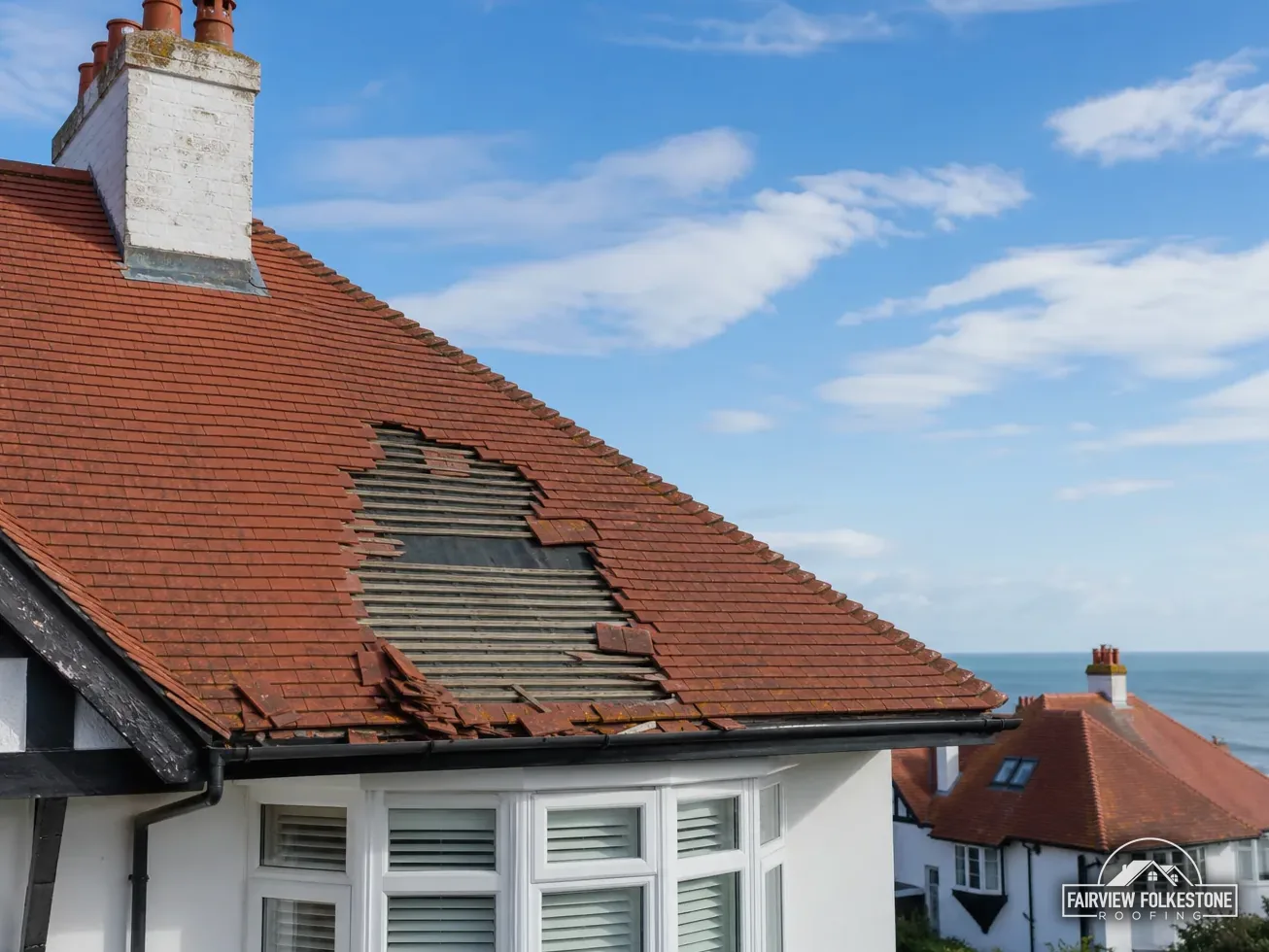
| Slipped or cracked tile | Rain reaches the felt only when it is driven hard |
| Valley or gutter | Overflow in a downpour backs up over the edge |
| Ridge or verge | Open joints let sideways rain in |
Exposure matters here. For Cupa, which makes slate, wind and rain are the main influences on a roof, and sites on coasts and slopes are graded for higher exposure. A house in an open position takes the sharper end of the weather, so a detail that is fine in a sheltered street can let go on the day a hard gale arrives. A survey starts with the side of the house that faces the weather, noting how each flashing is lapped and fixed, and how the tiles at the edges, the ridge and the verge are held.
Our page on finding a roof leak sets out how to trace where the water comes in.
A weather log a roofer can use
A leak that comes and goes is hard to find, because the roof is dry on the day someone looks. A short record changes that.
- Write down the date and time each time you notice damp.
- Note the wind direction, using a phone compass if you like, and whether it was gusty.
- Record how long the rain had been falling, and whether it was heavy or steady.
- Photograph the stain and its position on the ceiling or wall, with a coin or a tape measure beside it for scale, and take one wide shot of the room.
- Mark the edge of the stain in pencil with the date, so growth is clear.
If every entry shows the same wind direction, the entry point is on the face of the house that meets it, and that narrows the search to one slope, one gable or one chimney. A roofer can then look in the right place. Keep the photographs in one folder with the log, so that anyone who has to judge the damage later can follow the sequence.
What gets done about it
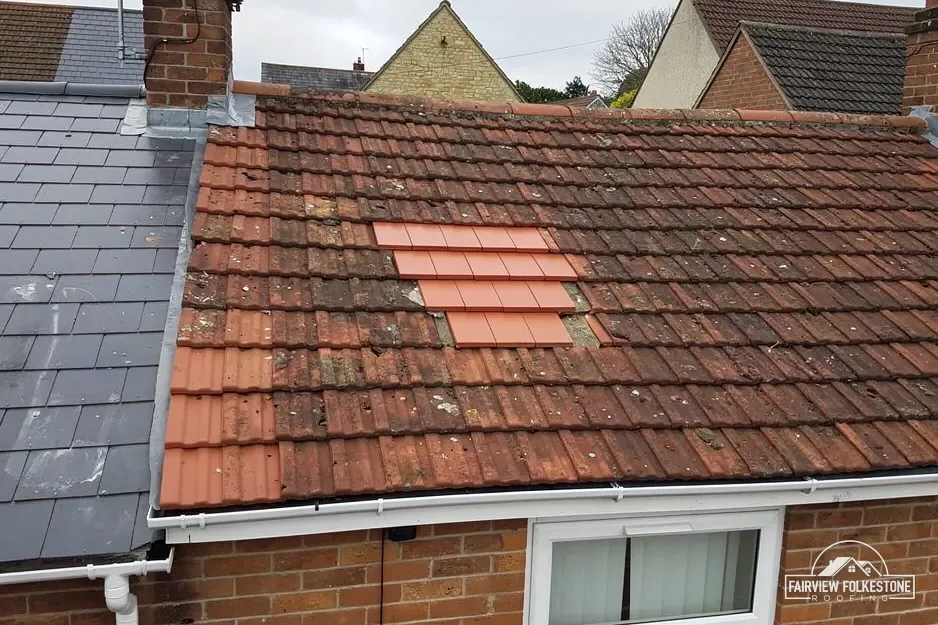
The survey looks at the covering, the flashings, the valleys, the ridge and the gutters on the exposed side first. A tile that has slipped is re-laid or replaced. A flashing with a lifted edge is refixed or renewed. If the gutters overflow, they are cleared and checked for their fall.
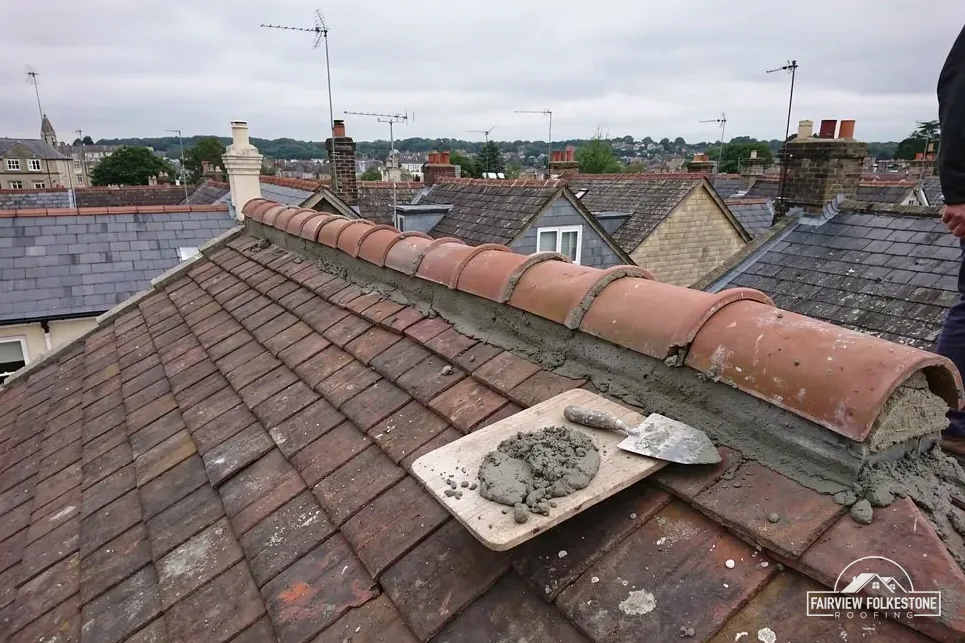
A gutter run needs a slight fall to its outlet, and Brett Martin, a gutter maker, advises 1mm for every 600mm. A run that has sagged holds water and spills over the front in a downpour. At ridges and verges, sideways rain can reach an old mortar bed, and refixing the tiles with proper fixings closes that route.
Do not leave a fault like this to chance. A roof with one weak point is easier to put right before the insulation and the ceiling have been soaked. The roof repairs page explains how a repair is chosen, and our page on condensation or a roof leak helps if the damp may not be coming from outside at all.
What you are given at the end of the survey is a single total in writing, with the repair described clearly enough for you to check it afterwards.
More questions
If it only leaks a couple of times a year, can it wait?
A leak that shows only rarely still wets the insulation and timbers each time, and the damage builds up unseen. The repair is simpler before the ceiling is stained and the felt has rotted. Photograph each event and have the roof looked at well before winter arrives.
Could a blocked gutter cause a leak in heavy rain?
Yes. A blocked or sagging gutter overflows in a downpour, and the spill can track back behind the fascia towards the wall and eaves. Clear the gutters and check their fall, then see whether the leak repeats. If it does, the covering above needs a look.
Tell us what's wrong with the roof.
You'll get one written total price.