
Fascia capping
Is capping over old fascias a false economy?
Capping puts a new plastic face on the old board. Whether that saves money or only postpones a bigger bill depends on what the timber underneath is doing.
The short answer
Capping over old fascias is a false economy when the timber behind it is soft, and a fair saving when the timber is dry and firm. The plastic only covers what is already there. On sound boards it ends the repainting for good. On wet boards it hides the rot, and the gutter brackets stay screwed into wood that is failing out of sight.
4 min read · Part of Gutters, soffits & fascias

What capping actually is
Capping, also called over-cladding, fits a thin uPVC cover over the old timber fascia and soffit. The old boards stay up, and the new face is clipped or glued over them. It is quicker than replacement because nothing comes down, and from the ground the result looks like fresh boards.
What it does not do is strengthen anything. A fascia has to hold the weight of the gutter, heavy with water in a downpour, and a cover adds no support. The brackets still bite into the old timber, whether they pass through the cover or sit beside it, so the finished job is only as sound as the wood beneath.
MyJobQuote, a cost guide, gives the average cost of capping fascias and soffits as around £800. That is a national average from a page dated 17/09/26, with no VAT basis given, so read it as a sense of scale, not a price for your house. Your own figure follows a survey, as one written total price covering the whole job.
When capping is a fair choice
Capping is a fair route when three things line up, and we test each before offering it.
- The fascia is firm along its whole length when probed with a blade, including at the joints and the low points.
- The rafter feet behind the board are dry, which we can judge from the loft or through a gap at the eaves.
- The gutter is staying, or is being renewed onto a board that will hold a screw.
On those terms you keep the old boards and never paint the outside again. The plastic face wipes clean, and the roofline looks finished. For a house where the gutters are also due for renewal, doing both together means one scaffold serves both.
The soffit counts as much as the fascia. A soffit that has split, or that stands away from the wall, lets birds and wasps into the roof space, so it needs repair before any cover goes on. Where birds or bats are using that gap, the rules in our answer on bats and nesting birds in soffits apply first, and the cover waits until the gap is free of both.
When it becomes a false economy
Capping goes wrong in a few predictable ways, every one tied to timber that was already damaged before the plastic arrived.
| Board underneath | Result of capping |
|---|---|
| Dry, firm, paint flaking | A fair saving |
| Soft at the joints | Rot carries on unseen |
| Wet rafter ends behind | Open up and repair first |
| Warped or split board | Cover cannot straighten it |
The trouble with a soft board is that the cover traps damp against it, and the board has no way to dry out. The wood stays wet behind the plastic, softens further, and the brackets work loose. You then pay for the capping and for the replacement it only postponed, which is the double cost that makes this a false economy.
Where a leaking gutter has run behind the fascia for years, the damage can reach the rafter ends as well. That is a repair to the roof structure, and a cover on top would only hide it. The same applies to a soffit that has been wet for a long time: a cover over it hides a damp patch that would otherwise show as a stain, so the first sign may be a board that gives way.
Capping or full replacement
Replacement lifts the old fascia and soffit away, so the rafter ends can be seen, dried and repaired before new boards are fixed to them. It costs more at the outset, and it needs scaffold along the eaves, which our page on scaffolding for fascia replacement explains. Capping needs the same access, though less time is spent up there.
One retailer's page on uPVC fascia boards puts their reliable performance, when installed correctly, at between 20 and 40 years, with the word typically attached. That is a seller's range, not a promise, and capping onto timber that is already wet cannot meet the words installed correctly. The wood behind it sets the limit.
So the verdict depends on what the survey finds. If the boards are firm, capping is a fair repair and we say that plainly. If they are soft, replacing them costs more now and less in the end. Our hub page on gutters, soffits and fascias sets out how the choice is weighed, and what each route involves on your house.
More questions
Can new gutters be hung on top of capped fascias?
Yes, provided the timber behind the cover is firm enough to hold a screw along the whole run. The brackets go through the cover and into the old board. Where the wood is soft in places, brackets pull out again, so we probe the timber first and agree to hang a gutter on it only if it holds.
How can I tell if my fascia is soft behind the paint?
Press a blade or screwdriver into the board at the joints and the low points: firm wood resists and soft wood gives. Peeling paint, dark staining below the gutter and loosened brackets are other signs. Wet rafter ends are hard to see from the ground, so the survey includes a look from the loft.
More on gutters, soffits & fascias
All guides and posts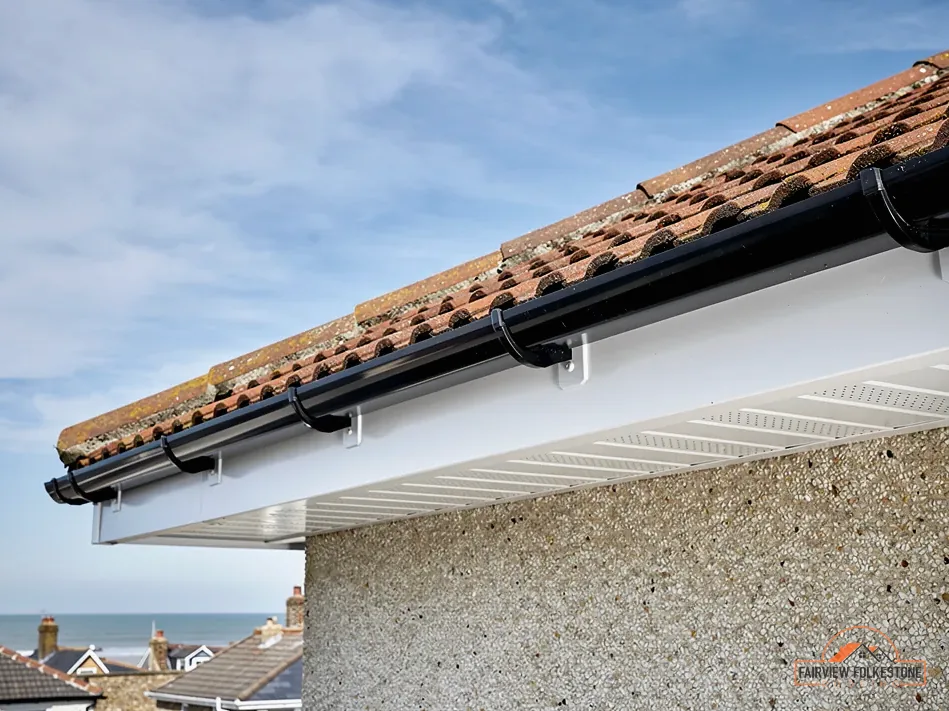
Tell us what's wrong with the roof.
You'll get one written total price.