
Peg tiles
What are Kent peg tiles, and can they be reused?
Peg tiles are traditional plain clay tiles, and old ones can sometimes go back on the roof. Below: what they are, how reuse is judged and which rules apply.
The short answer
Peg tiles are traditional plain clay roof tiles, named for the peg that hangs each tile from its batten. They can be reused where each tile is sound, but that is decided tile by tile after the roof has been stripped, and a roof with heritage protection may need the council's agreement before the covering changes at all. Sound tiles go back on; cracked or split ones are replaced.
4 min read · Part of Pitched roofing

What the name describes
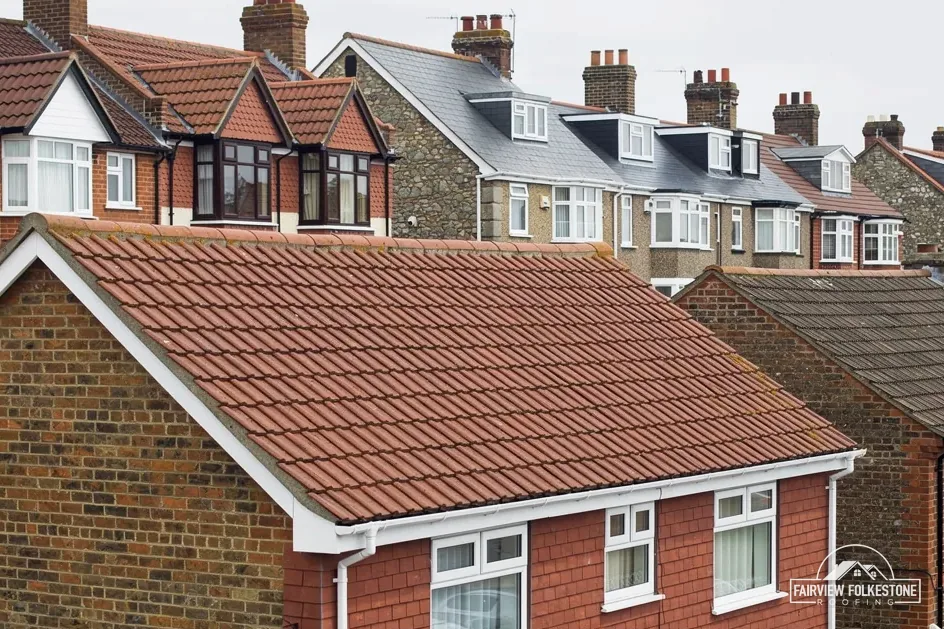
A peg tile is a plain tile, small and flat, laid in overlapping courses so that each row covers the joints of the row below. The peg is the old way of hanging it: a wooden peg through a hole near the top of the tile engages the batten. Modern plain tiles are normally held with nails or clips instead, so an older roof may combine old and newer fixings, and the survey notes which is which.
Age matters, but clay holds up well. Marley reports that BRE determined a minimum life expectancy of 60 years for clay roof tiles. That figure is for clay only. HomeBuilding gives its own approximate lifespans:
| Tile | Lifespan, approx |
|---|---|
| Clay | 60-80 years |
| Plain concrete | 40-50 years |
Treat both as typical ranges rather than guarantees: the condition of the battens, the state of the fixings and the shelter of the slope decide how long any one covering lasts. A roof of old clay tiles that still sheds water well needs its battens and nails checking more than it needs replacing, and a tile that has outlived its fixings can be refixed where it is sound.
How reuse is judged
Reuse is a decision about each tile, not about the roof as a whole. Once the tiles are off, they are lifted, sorted and checked, and the sound ones are stacked for relaying. MyJobQuote makes the same point about verge tiles: old ones can sometimes be reused, if they are in good condition and compatible with what is going on beside them, and worn or damaged ones need replacing.
What the sorting looks for:
- cracks, splits or chips that would let rain through
- a peg hole or nib that has broken away, so the tile cannot hang properly
- surface that is crumbling or flaking
- enough sound tiles overall to finish the slope, since replacements must be added for the rest
Matching is the practical limit. MyJobQuote notes that on an older property it can be hard to source tiles that do not stand out against the originals, and for a consistent look an entire run may have to be replaced instead of patched. We tell you on the survey how many tiles the roof is likely to need, and why. Our clay against concrete page sets out how the two materials compare.
Fixing, mortar and heritage rules
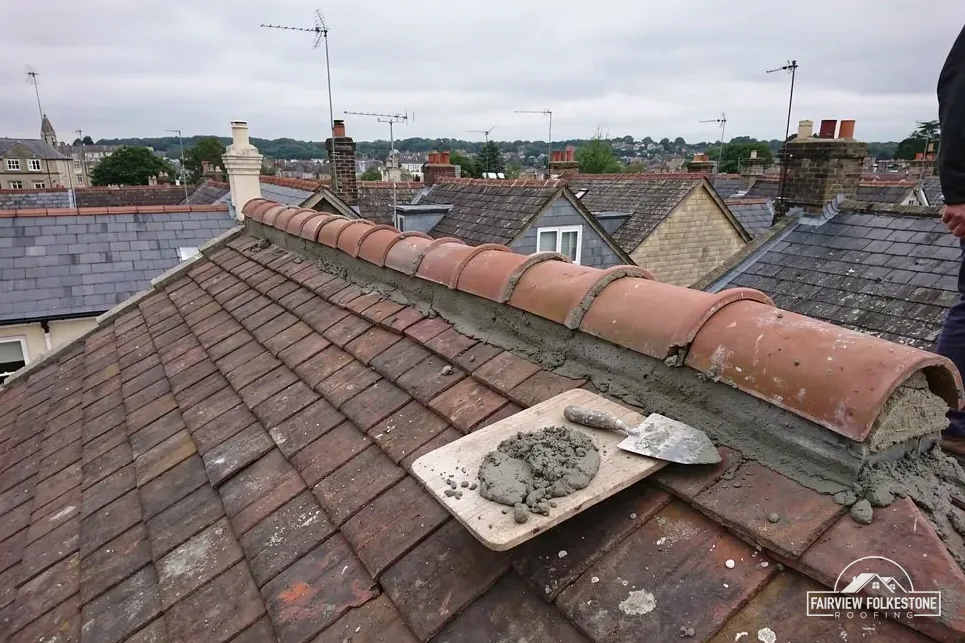
BS 5534 covers normal re-roofing work and repairs, not just new roofs, though following it is not required by law. Marley's reading is that the 2015 amendments meant mortar alone could no longer be relied on to secure a covering, so reused tiles are fixed to the current specification. For heritage properties and listed buildings where a traditional look matters, Marley accepts mortar bedding without mechanical fixings, but warns that this part of the work then falls outside BS 5534.
Protection changes what you need to ask before re-roofing:
- ordinary re-roofing in a conservation area is normally permitted development, but an Article 4 direction can remove those rights, so ask the council
- on a listed home, listed building consent covers anything that alters its character, including a change of tile
- in the Kent Downs or High Weald National Landscapes, the district council still decides
Under the Planning Portal's test, a covering that makes the roof 15 per cent or more heavier needs approval. Reused clay on the original structure need not change the load, but a different tile can.
What we look at before relaying
The tiles are only part of the picture, so the first look takes in the timbers from inside the roof space. We note the state of the battens, the underlay beneath the tiles and the existing fixings, because reusing a tile on a worn batten defeats the purpose. If the timbers need renewing, the roof is stripped anyway, which is the moment when reuse makes most sense.
A repair of a handful of tiles is a different job from a re-roof. For scale, Which? Trusted Traders give £75 to £400 for making good a handful of broken or missing tiles, from one to six, based on November 2025 prices excluding VAT and likely to be at the upper end in the South East. A strip and relay is a bigger job, and the written price after a survey is one total.
Where reuse makes sense, we say which tiles go back and which are replaced. Where it does not, we say that too, and the reasons come with the written price. Our pitched roofing page sets out how that work runs.
More questions
Do peg tiles last longer than concrete tiles?
The published figures say clay generally lasts longer. Marley quotes a BRE minimum life expectancy of 60 years for clay tiles, and HomeBuilding gives 60-80 years for clay against 40-50 years for plain concrete. These are approximate lifespans from the sources, not promises, and a given roof depends on its condition and fixings.
Do I need permission to re-roof in peg tiles?
Ordinary re-roofing is normally permitted development, even in a conservation area, but an Article 4 direction can remove that right, and a listed home needs listed building consent if the work affects its character. In the Kent Downs or High Weald the district council decides. Check with the council first.

Tell us what's wrong with the roof.
You'll get one written total price.