
Black streaks
What causes black streaks on a roof?
Dark bands down a slope are a surface growth, not a sign the tiles have failed. Below: why they form where they do, and what we do about them.
The short answer
Black streaks on a roof are an algae growth, a thin dark film that settles on a surface which stays damp, and they show in bands because the growth follows the path water takes down the slope. The streaks are a surface problem, not a verdict on the tiles. Before anything is cleaned off, we look at what sits under the dark patch, because that decides whether the job is a clean or something more.
5 min read · Part of Roof cleaning

Why the dark film forms in bands
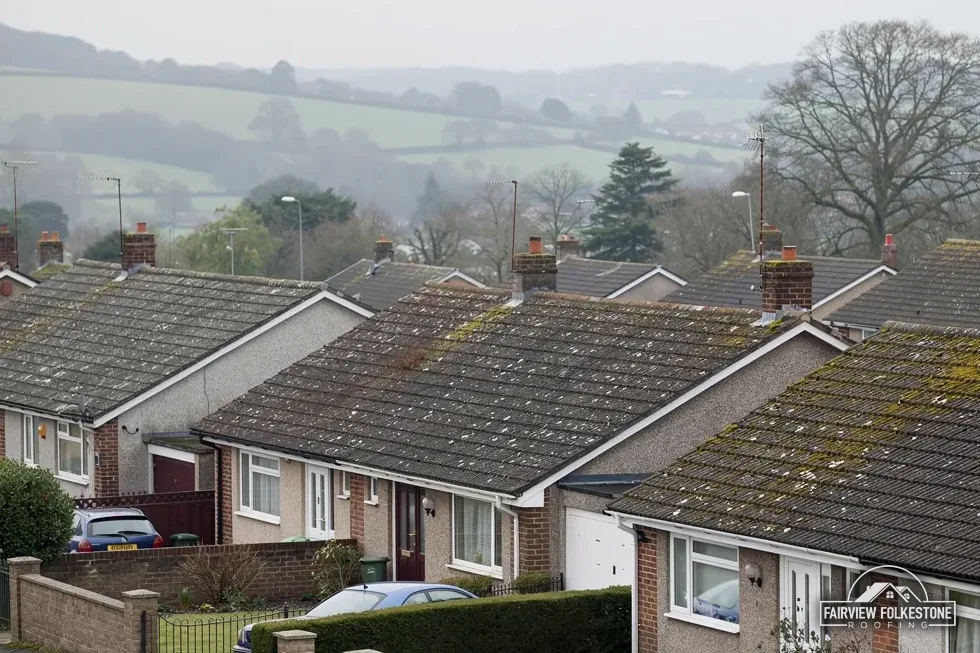
Algae needs a surface that stays wet for long spells. A slope that dries slowly after rain, or one that sits in shade for most of the day, gives the film what it wants, and it spreads in the direction the water travels. That is why streaks run from the ridge towards the gutter, and why one slope can be streaked while its neighbour stays pale.
The film is not dirt carried down by rain that wipes off like a smear on glass. It is a living layer that grips the surface of the tile, so a quick rinse leaves a ghost of the streak behind. Where a roof has a chimney, a tall tree or a neighbouring gable close by, the band can start in the lee of it, because the roof under that shadow dries last.
Streaks tell you about damp and shade on the surface. They tell you very little about the tile beneath, which is why we never judge a roof from the pavement alone, and why a photo from the garden is a start rather than a verdict.
Streaks, moss and lichen side by side
Three surface growths get lumped together, and each calls for a slightly different look from us on the day. The same roof can carry all three at once, and a single slope can show streaks near the ridge and moss thickening towards the gutter.
| Growth | What you see | What we check |
|---|---|---|
| Algae streaks | Dark bands down the slope | Whether the tile surface is sound |
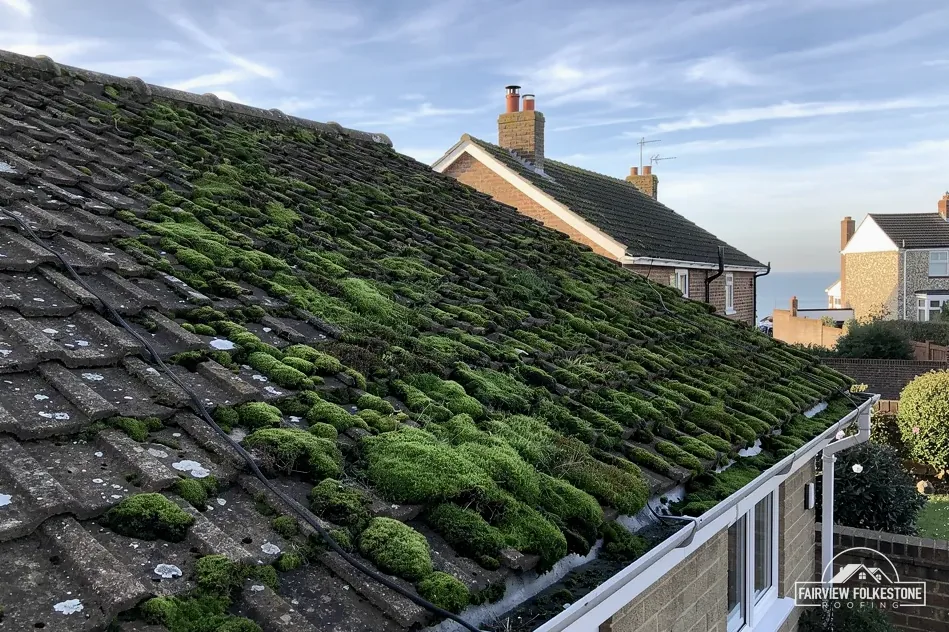
| Moss | Raised green cushions | Joints, gutters and valleys it packs |
| Lichen | Flat crusty patches | Whether it sits over a crack |
Our answer on lichen on roof tiles covers the crusty kind in more depth. Moss, and the rest of the work that goes with it, is on the main roof cleaning and moss removal page. Where streaks and moss share a slope, the moss comes off first, by hand, and the dark film is dealt with afterwards, once the surface is open to the spray.
If you are unsure which growth is on your roof, a photograph taken in daylight with the camera zoomed in helps, because the texture shows the difference: flat and dark for the film, raised and soft for moss, crusty and pale for lichen. Send one over, and we will tell you what it looks like.
How the streaks are taken off
The method is gentle on purpose. Loose growth is lifted with soft brushes, then the slope is sprayed at low pressure with a biocide, a product made to kill living growth so that it is treated rather than only scraped from the surface. Marley, the tile maker, advises against high-powered jet washes on slate and tile, because they can damage the surface and cut the roof's expected life considerably, so none goes near the tiles we clean.
Once the surface is clear, we go over it tile by tile and tell you what we found. Dark staining can sit over a hairline crack as easily as over sound tile, and a cleaned roof is the first chance anyone has had to see it properly. You get the findings as photos, with a plain note on what each one means.
- Soft brushing to lift what is loose
- A low-pressure spray of biocide over the slope
- A tile-by-tile check of the cleaned surface
- Gutters cleared of everything that came down
Our answer on the roof biocide treatment explains the spray step.
Will the streaks come back?
Treatment deals with what is on the roof now. It cannot change why the roof stays damp, so streaks can return on a slope that still gets little sun or sits under overhanging branches. A tree cut back, a gutter that no longer spills over the tiles and a slope that catches more daylight all work in your favour, and none of them costs much compared with a second clean.
No set period applies to every roof, and we do not promise one. Our answer on how long roof cleaning lasts sets out what changes the picture from one house to the next.
If you want to know whether a roof needs a clean at all, photos from the ground are a fair start. Send a few, and we will say whether the streaks look cosmetic or point to something worth a closer look from a ladder. A quote for the clean is one total price, written after we have surveyed the roof itself.
A cleaned roof also gives you a fresh starting point. Take a photo from the same spot each spring, and you can see for yourself whether the dark bands are creeping back, and how quickly, on your slope in particular.
More questions
Are black streaks on my roof harmful to the tiles?
The streaks themselves are a surface film, so the dark colour alone does not mean damage. What matters is what the film covers and how long the surface stays wet. We check the cleaned tiles for cracks and slips, and report what we found, tile by tile, with photos you can keep.
Do black streaks mean I need a new roof?
No. Streaks on their own point to damp and shade on the surface, not to a failed roof. A re-roof is only the answer when a survey shows the covering, battens or underlay are past repair, and we say which it is, and why, before any price is given to you.
Tell us what's wrong with the roof.
You'll get one written total price.