
Biocide treatment
What does a biocide treatment do on a roof?
A biocide is a spray that kills the living growth brushing cannot reach. Below: how it goes on, what it does not do, and what to expect.
The short answer
A biocide treatment kills the moss, algae and lichen left on a roof after the thick growth has been lifted away, so that it is treated instead of only scraped from the surface. It is sprayed on at low pressure and left to work, which is why a roof can keep clearing for some time afterwards. It cannot repair a tile and it cannot waterproof anything. Its label sets how it is used and in what weather.
4 min read · Part of Roof cleaning

What the spray is for
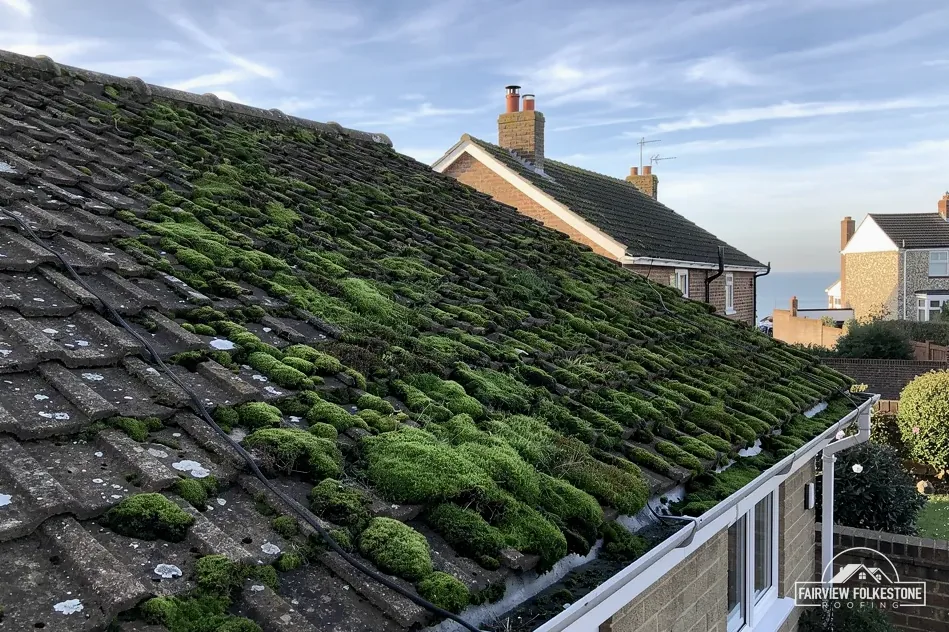
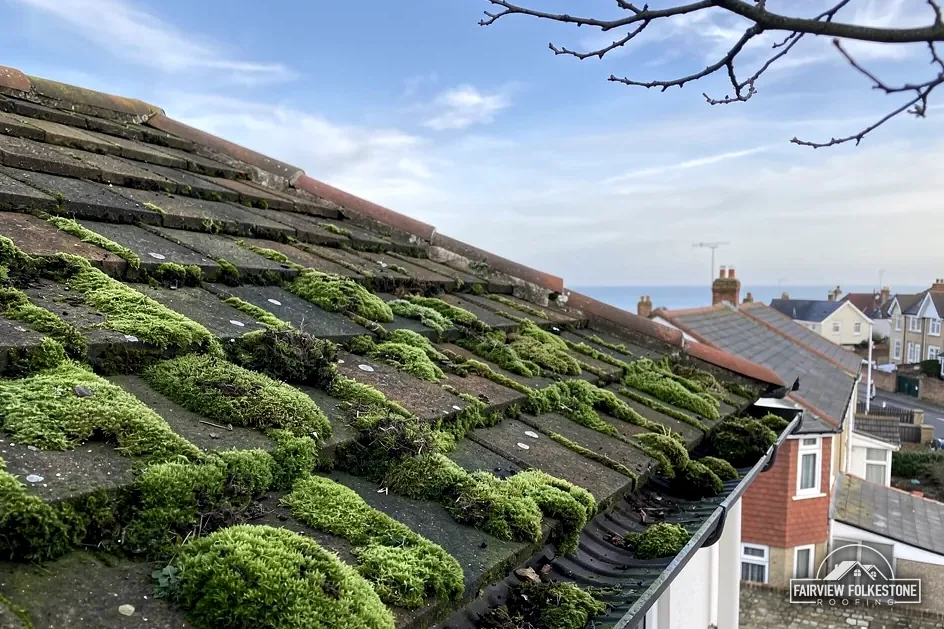
Brushing and scraping take off the bulk of the growth, but they leave living material in the surface of the tile and in the fine gaps between laps. A biocide, made to kill living organisms, deals with that remainder. It is what turns a scrape into a clean.
It goes on after the hand work. The roof has been brushed and the loose growth cleared, so the spray reaches the surface rather than a thick mat of moss. Applying it over heavy moss would waste it and leave the roots in place, so the order of work matters.
It also takes time. A biocide does not bleach growth away in minutes. The treated patches die back over the days and weeks that follow, and the roof looks cleaner as the weather washes them off. We tell you what to expect, so that a roof that looks patchy on the day is not a surprise.
A biocide also reaches places a brush cannot, such as the rough surface of the tile and the narrow gap along each lap. That is the second reason it follows the hand work, and why a spray alone, over thick moss, would not do the job.
How the treatment goes on
Application is straightforward but follows rules that the product label sets.
| Step | What happens |
|---|---|
| Preparation | Thick growth lifted by hand first |
| Spray | Low-pressure application over the slope |
| Contact time | Left to work, as the label says |
| Weather | Applied in the dry its label calls for |
The spray is low pressure on purpose. A hard jet can damage slate or tile, so the spray goes on gently; a biocide does its work by contact rather than force. We read the product label for each job, since the weather, the contact time and the rinsing instructions come from the maker.
The weather window matters as much as the product. Rain soon after application can wash it off the slope before it has done its work, so the spray goes on in a dry spell and the sky is checked on the morning. If a shower is due, the job moves to another day rather than risk wasting the treatment. You are told the plan in advance, so a change of date is never a surprise, and nothing is rushed to hit a date.
Care for plants, gutters and people
A spray that kills living growth needs care around anything else that lives nearby. Before the work starts, we look at what sits below the roof and plan around it.
- Plants, lawns and ponds below the eaves, which are covered or moved
- Cars, furniture and washing, which are kept out of the way
- Gutters, where the runoff lands and which are cleared after
- Neighbours and pets, who are kept informed or away from the area
The label on the product is the guide for all of this, and if it says to avoid wind or rain, the date moves. We would rather return on a dry day than work to a timetable the product does not suit. If birds are using the roof, the work near the nest waits as well.
Runoff is a real consideration. The cleared moss and the treated water end up in the gutters, so they are cleared and the downpipes checked before we leave. Anything that spills onto a path is rinsed away, so the site is left tidy, with no residue to step around.
What a biocide does not do
A biocide is no substitute for a sound roof. It does not mend a cracked tile, seal a joint or stop a leak. A roof that needs repairs still needs them, and the clean can make the faults easier to see.
It also does not promise how long the roof stays clean. Our answer on how long roof cleaning lasts explains why no single period applies, and how to slow regrowth. A roof coating is a different product with a different job, and our answer on a roof coating after cleaning covers it.
The wider work is on the main roof cleaning and moss removal page. The written price is a single total set after a survey, and the area the spray covers is part of it.
If your roof has had a biocide before, tell us. The product, the date and the result are useful to know, and it helps us judge whether another application is worth doing now or can wait for the next time the roof is looked at.
More questions
Is a biocide treatment safe for my garden and pets?
It needs care, and the product label is the guide. Before spraying we look at what sits below, cover or move plants and furniture, and choose a day that suits the label. Keep pets and children clear while it is applied, and ask us about any concern before the date is fixed.
Do I need a biocide treatment as well as cleaning?
It is part of how we clean. Brushing lifts the growth you can see, and the spray treats what is left in the surface. If a roof only needs a light brush, you hear that after the survey, so the price covers only the work the roof needs.
Tell us what's wrong with the roof.
You'll get one written total price.