
Conservatory roofs
How do you clean a conservatory roof safely?
A conservatory roof is cleaned from a ladder or platform, never by standing on it. Below: the roof types, the method and the care taken at the wall joint.
The short answer
A conservatory roof is cleaned safely by working from a ladder, a tower or a crawling board that spreads weight, never by standing on the glazing or panels. Growth is brushed off with a soft brush and rinsed away at low pressure, and the cleaning is done in dry weather so nothing runs into the seals. Start by finding out what the roof is made of, because polycarbonate, glass and tile are each treated differently.
5 min read · Part of Roof cleaning
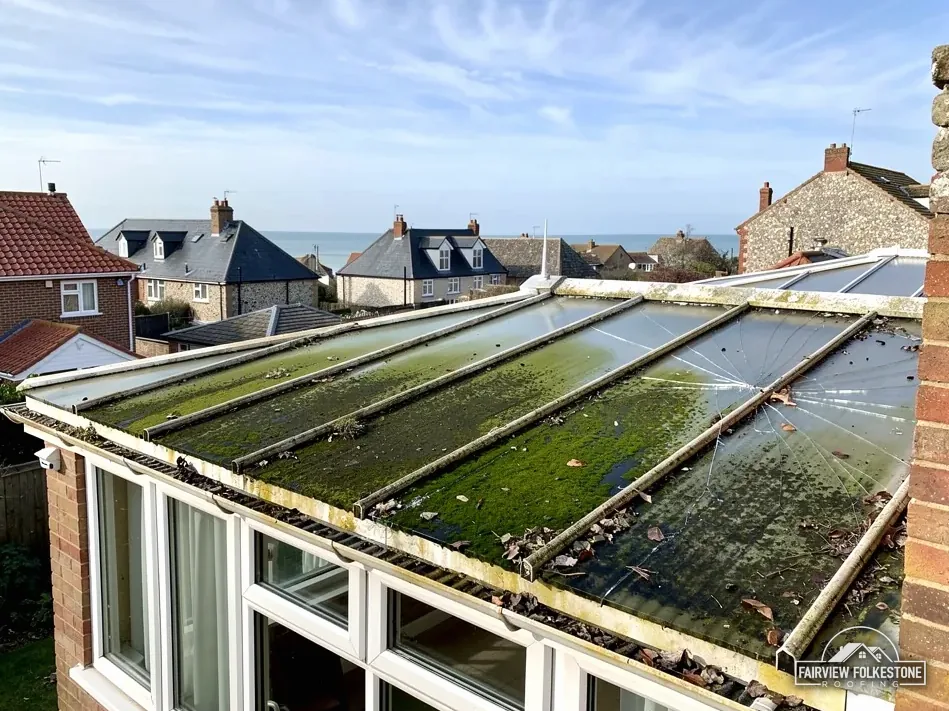
Identify the roof before touching it
Conservatory roofs come in three kinds that matter for cleaning, and a quick look tells us which one we are dealing with.
| Covering | Care needed | Never |
|---|---|---|
| Polycarbonate | Soft brush, low rinse | Stand on it |
| Glass | Soft brush, low rinse | Lean on it |
| Solid tiled roof | Treated like a house roof | Wash with a jet |
HomeBuilding gives a typical lifespan of 10 years for polycarbonate. Roofing Megastore's managing director, quoted by HomeBuilding, says a glass roof will likely last in excess of 30 years and a tiled one will typically last in excess of 50 years with little maintenance required. None of those figures depends on a clean, and a roof close to the end of its working life is looked at differently from a sound one.
The tiled kind is the closest to a house roof, and it takes the same approach: hand work first, then a low-pressure spray of biocide, with the junction at the house wall checked by eye. Glazed and polycarbonate roofs take a soft brush and a rinse, and nothing stronger. Frames can be plastic, aluminium or timber, so harsh products are checked against the maker's advice first.
The safe way to reach the roof
Glazing and thin panels are not made to carry a person. A foot on polycarbonate can crack it, and glass can fail without warning, so nobody climbs onto either. The roof is reached from outside, with ladders footed by a second person, a tower, or boards laid to spread weight where the structure allows it.
Where the conservatory roof is within reach of the main roof, the work often starts from the house side. A glazed roof also needs attention at the place where it meets the house wall, which is where a flashing or a sealant line sits. We look at that joint before any water goes on, and tell you if it looks open.
If the conservatory sits against a boundary or over a patio, we also check where the loosened growth will fall, so that furniture, doors and plants below are covered or moved first. A conservatory roof near a public path is a case for a short survey visit before the date is fixed.
For a very large or awkward roof, we look at whether a tower or a short scaffold would make the work safer, and agree it with you before the date is set.
Cleaning and rinsing steps
The method stays gentle because the surface is easy to mark.
- Loose leaves, moss and debris lifted off by hand, working away from the house wall
- A soft brush used along the glazing bars and panels, never a stiff one
- A low-pressure rinse with clean water, aimed so it runs down the slope and away from the joints
- Gutters and any box gutter beside the roof cleared by hand
- A last look from the inside for any stain or drip that shows where a seal has let go
A jet is not used on any conservatory roof. Jet washes can damage slate and tile, as Marley cautions, and the same risk applies to a roof built from panels, bars and seals, so the rinse is gentle, as our answer on washing a roof without damaging it explains. Biocide goes on a solid tiled roof only, never on glazing, where its label does not call for it.
Water is the only thing that goes on glazing and panels, with a mild cleaner only if the maker allows it. Harsh products can cloud polycarbonate and attack seals, so they stay out of it. The aim is a roof that looks clear and lets the light through, with the seals as sound as before.
When the roof needs more than a clean
A conservatory roof that leaks, clouds from the inside or has cracked panels needs a repair, and cleaning it will not help. Growth is sometimes the first sign, because it settles where a surface stays damp, and a damp line along a bar or seal is worth a closer look.
Replacing the roof is a bigger decision. The Planning Portal says a new roof on a conservatory must comply with building regulations, so we check with building control first before we price anything solid. Our page on conservatory roofs covers what a replacement involves.
For a clean alone, the written price comes after a look at the roof and is one total. It covers the roof and the gutters beside it, and nothing is added without your agreement. The main roof cleaning and moss removal page has the rest of what a clean includes, from growth to gutters.
If a clean shows that a seal has failed or a panel has cracked, you hear about it with photos. A cracked panel can be swapped, and a failed seal can sometimes be re-run, so a conservatory roof is not always a replacement job. Where it is, the survey tells you.
More questions
Can I clean my conservatory roof from the inside?
Only the inside face can be reached that way. Growth sits on the outside, where it needs a soft brush and a gentle rinse from a ladder or platform. The inside is worth looking at, though, because staining or drips there can show where a seal has let go.
Is it safe to stand on a conservatory roof to clean it?
No. Polycarbonate can crack and glass can fail under a person, so nobody should stand on either. We reach the roof from outside with ladders, a tower or boards that spread the weight, and where that is not possible, you hear about it before the work begins.

Tell us what's wrong with the roof.
You'll get one written total price.