
Battens and underlay
Does a new roof need new battens and felt?
A new covering goes onto new battens over a new underlay, and reuse has to be earned by the survey. Below: what each layer does and what the survey decides.
The short answer
Yes, in the ordinary run of re-roofs: a new covering is laid over new battens and a new underlay, and old ones stay only where the survey shows them sound and right for the new tiles. Battens are what the covering is fixed to, and the underlay is the second layer of protection beneath it. Felt is the older word for that underlay, and the type now chosen is explained on our membrane page.
4 min read · Part of Roof replacement

What battens do under new tiles
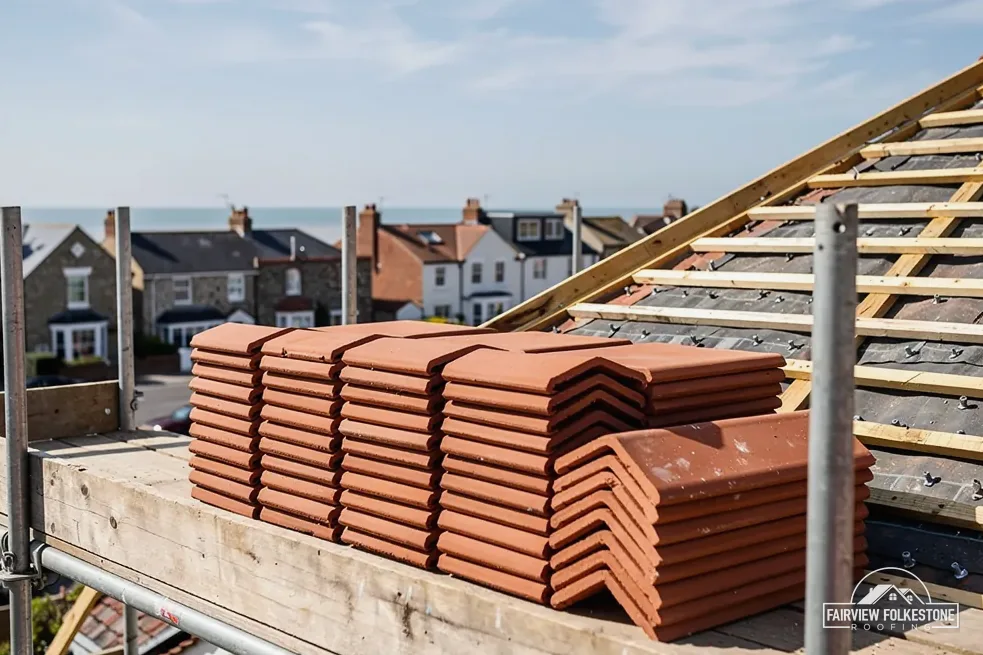
Battens are the narrow timber strips that run across the rafters, and every tile or slate is fixed to one. The covering sets their spacing, so a different tile can mean a different gauge, and nail holes left in reused strips stop lining up with the new fixing points. Their size and fixing come under BS 5534, the code for slating and tiling, which BSI lists as current at the 2014 edition with its 2018 amendment.
The code deals with battens, fixing methods and uplift calculations. Marley points out that working to the code is not a legal duty, but after its 2015 amendments a bed of mortar by itself stopped being trusted as the fixing for a covering. So the useful question for a quote is what the fixings and battens will be worked to, not whether the standard has been named. The calculation is made for your site, and exposure is part of it: Cupa notes that sloping, high, coastal and tall sites are graded with higher exposure, which feeds into the fixing pattern for each slope.
When a survey says old battens can stay
Reusing battens is decided from the loft side and on the slope itself, not at the quote stage, and the findings go into the survey notes. The survey looks for:
- a split, soft or darkened strip, tested with a probe from the loft side where it can be reached
- nails that have lifted, or battens that have come away along a rafter
- a new covering that needs a different gauge from the old one
- rafters too weak or too damp to take fresh nails
One failed answer means new battens, because a covering can only be as secure as the timber that holds it. With the covering coming off anyway, new battens are also the plain way to meet a fixing specification drawn up for the new roof, and they sit inside the written price rather than turning up as a surprise on the day. If the rafters need work, that is raised before the new covering goes on, since timber is far simpler to deal with while the roof is open than after the tiles are back.
Felt, underlay and the layer beneath the battens
The underlay lies over the rafters, with the battens fixed on top of it. Traditional felt is one name for it; what goes on a new roof is picked by type, and the two routes are laid out on our page about the breathable roof membrane. In outline, with Marley's eaves ventilation figures for a cold roof:
| Underlay | Eaves ventilation in a cold roof |
|---|---|
| High resistance, not vapour permeable | 25 mm along the eaves at 15° or less; 10 mm above 15° |
| Breather type (LR), well-sealed ceiling, air-permeable covering | About 3 mm, from normal eaves construction, if UKAS certification requirements are met |
BS 5250, which covers the management of moisture in buildings, is listed by BSI as current, under review. The underlay and the battens above it make one design, so they are specified together and sit in the same written price. Ask for the maker's data sheet for whichever underlay you are offered: it states which type the product is, and that decides the ventilation the roof needs.
What to ask before you accept a quote
A quote that says only "new roof" leaves the layers unsaid, and the layers are where a re-roof is won or lost. Before you sign, ask:
- Are new battens included, and to what gauge?
- Which underlay is going on, and what eaves ventilation does it call for?
- Who checks the rafters, and what happens to the price if timber needs replacing?
- What are the fixings, and what exposure were they calculated for?
- Will the old underlay and battens be taken away, and is the skip included?
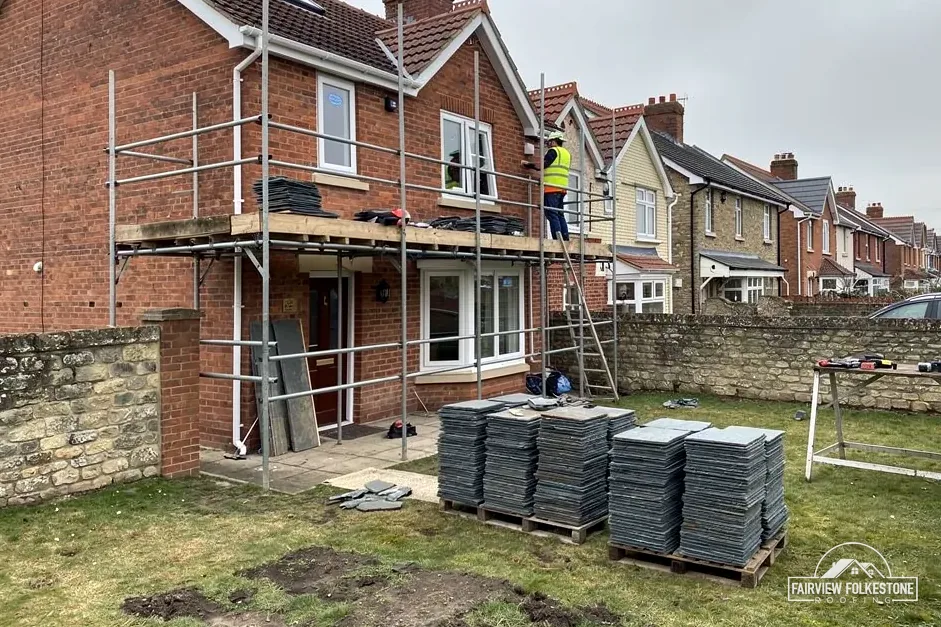
- Is the scaffold licence arranged as part of the job?
Stripping also opens up the loft side of the roof. HSE's wording is "If the building was built or refurbished before 2000, assume that there is asbestos in it", so soffits and any cement sheets are checked before the strip begins, not after, and the findings are shared with you.
The written quote follows a survey and gives one total price, with the scaffold inside it. Our page on heavier roof tiles shows what changes when the new covering weighs more than the old, and the roof replacement page follows the whole job from survey to clear-up.
More questions
Can the old tiles go back on new battens?
Yes, sound tiles can go back on new battens, because the gauge is set by the tile. Cracked, flaking or broken tiles are sorted before relaying, so the survey notes how many need replacing. The written quote reflects that decision in its one total price, and any change after the roof is open is raised with you first.
Where does the underlay sit in relation to the battens?
The underlay is laid over the rafters first and the battens are fixed on top of it, so the two are replaced together. If new battens went onto an old underlay, the nail holes through it would be left behind, which is one reason a new covering brings a new underlay with it.
More on roof replacement
All guides and posts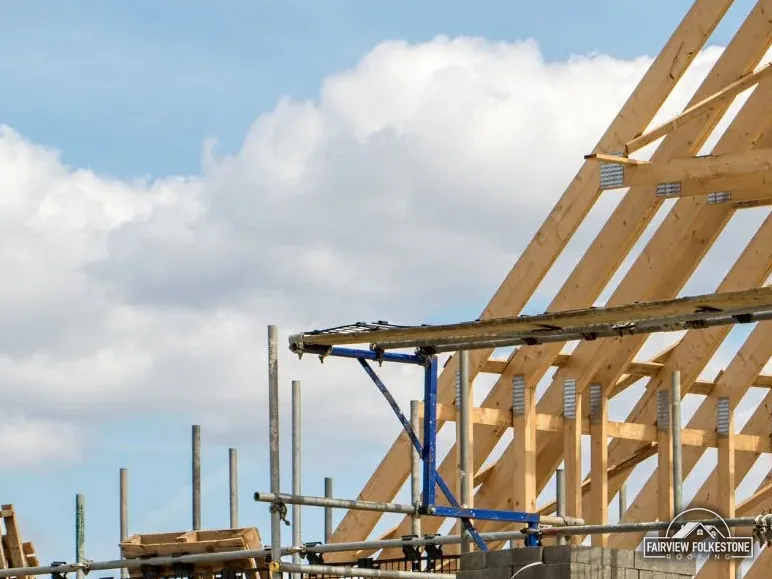
Tell us what's wrong with the roof.
You'll get one written total price.