
Slate delamination
Why do roof slates flake and delaminate?
A slate that peels into layers has failed in itself, and no refixing will save it. Here is what it looks like and what it means for the roof.
The short answer
Slate flakes when its natural layers begin to part, and a slate that has started to peel cannot be mended, only replaced. Slate is made by splitting natural rock into sheets, and delamination is those layers coming apart in the weather. MyJobQuote counts flaking, layering or soft-feeling slates as grounds for considering a new roof. A handful of flaking slates in an otherwise sound slope is a repair; a whole slope of them points to a re-slate.
5 min read · Part of Slate roofing

What delamination looks like
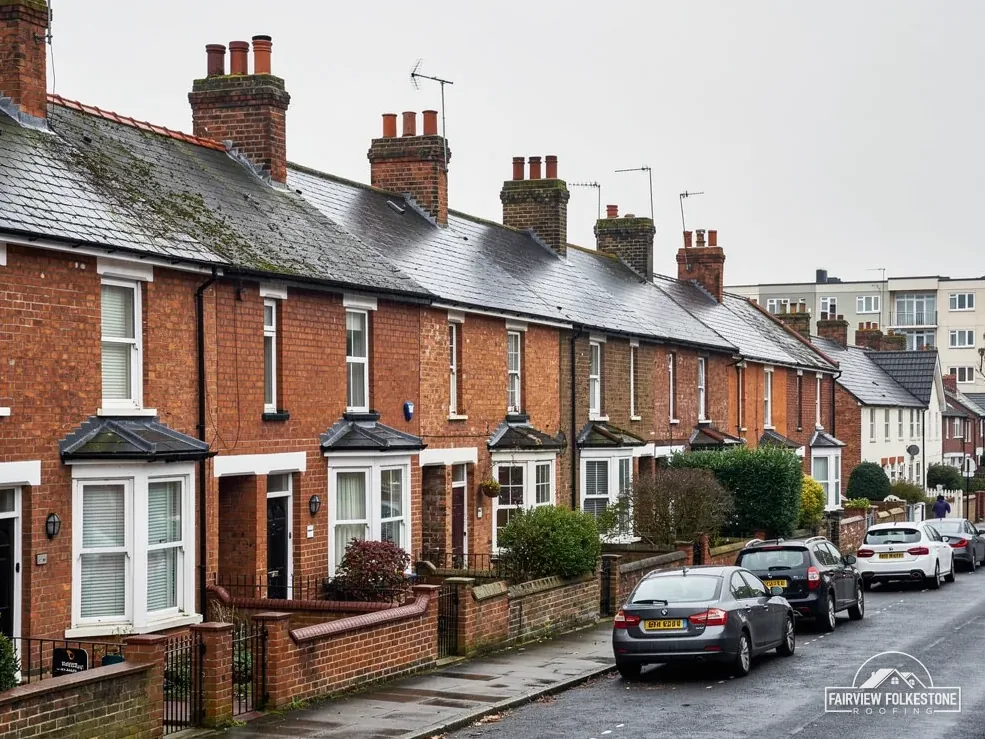
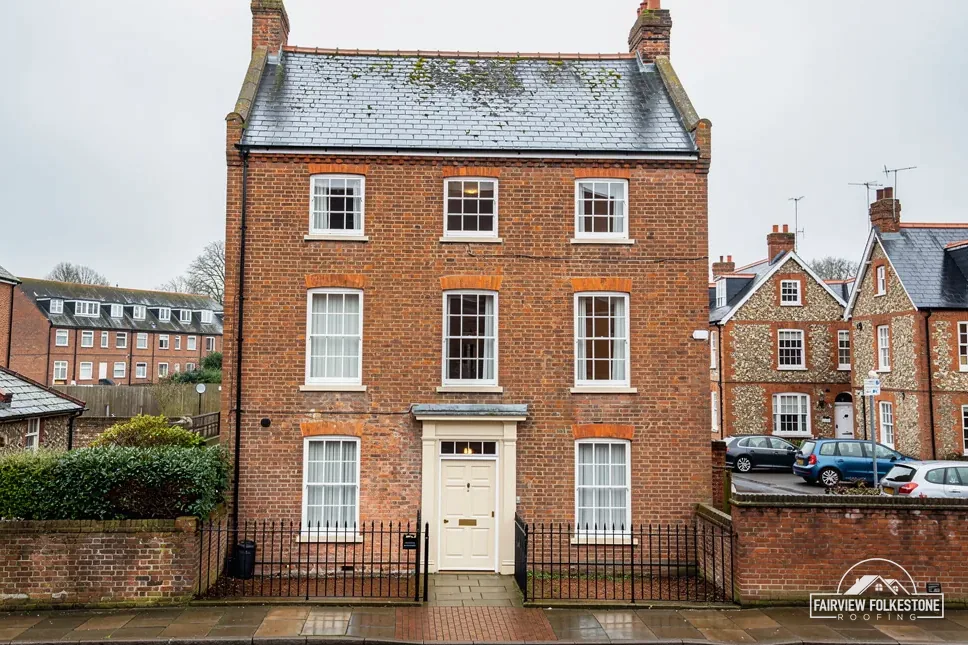
Delamination is different from a crack. A crack is a clean break, usually from a knock or a footstep. Delamination is a surface that lifts and peels in thin layers, so the slate looks ragged and thinner than its neighbours. From the ground you may see pale, rough tails on a few slates, or small flakes in the gutter and on the path below.
- Layers lifting at the tail or the edges of a slate.
- A slate that feels soft or crumbly when handled.
- A slate noticeably thinner than the ones around it.
- Slate fragments collecting in the gutter or the downpipe.
None of these can be confirmed from the pavement. A close look at the slate itself, from a ladder, from scaffold or with the slate in the hand, is the only way to be sure. When a slate is lifted it is turned over and checked on both faces, because a slate can seem fine from above yet be peeling on the side you cannot see. Please keep off the slates yourself while you wait for a visit, since a footstep can crack a slate that has already weakened.
Why one slate flakes and another does not
The cause differs from slate to slate, and it cannot be named from the ground. What the published figures do show is that slates differ by type and by history. HomeBuilding gives approximate lifespans of 100+ years for Welsh slate, 75 to 100 years for Spanish natural slate and 50 to 80 years for reclaimed Welsh slate, so two slates on the same roof need not age alike.
Treatment can matter too. Marley advises against powerful jet washes on slate and tile roofs, saying they can damage the surface and so reduce the expected life considerably. A surface that has been blasted may start to lose layers sooner than one left alone.
For that reason the judgement is made slate by slate, with the roof's age, its type of slate and its exposure all in mind. A flaking slate on a sheltered back slope and a flaking slate on an exposed front slope are read differently, and neither is read from a photograph alone. A photograph helps you keep a record of what you saw and when, but it does not replace a slate held in the hand.
Telling delamination from nail fatigue
Two faults get mixed up because both end with slates coming loose. The cure for one does nothing for the other, so the survey separates them.
| What you see | Points to |
|---|---|
| Sound slate slipped down | The fixing, not the slate |
| Slate peeling in layers | The slate itself |
| Both, across one slope | A re-slate to consider |
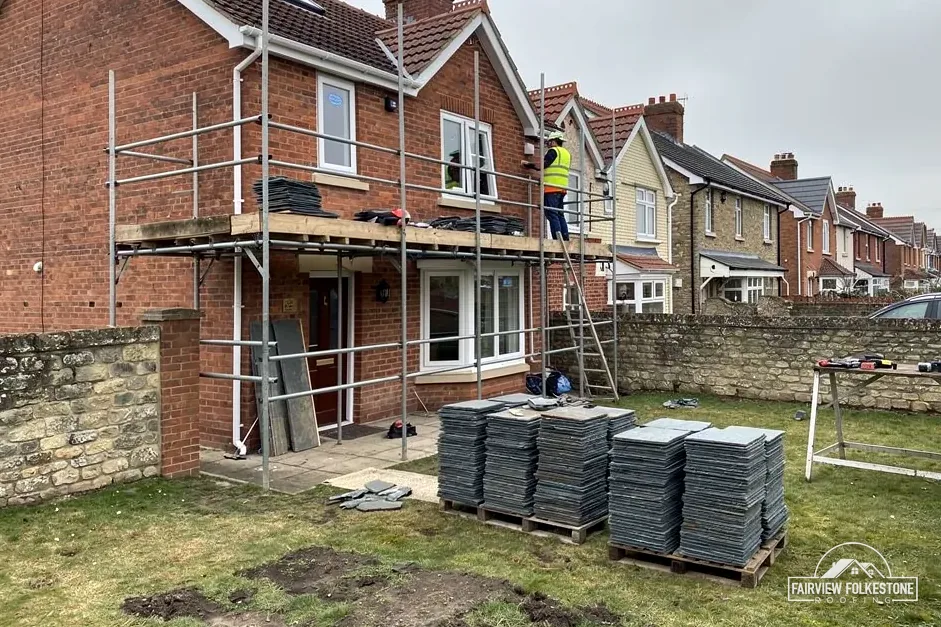
A slate that has slipped but is whole can be refixed. A slate that has delaminated is replaced with a sound one of the same size and thickness, new or reclaimed. Where nails are failing and slates are flaking on the same slope, patching both again and again stops being fair to you, and the survey tells you so plainly. Each repair also needs safe access, and on a high roof that can mean scaffold for a handful of slates, which is one more reason a run of small repairs can end up costing more than one planned job. The survey weighs that against the condition of the rest of the slope.
Our guide to the signs a slate roof is failing sets the faults side by side.
Repair or re-slate
The verdict follows how far the flaking has spread, not how bad one slate looks. Where a handful of slates have gone and the battens and fixings around them are sound, replacing those slates is a repair. Where flaking runs across a whole slope, or the slates that look fine are also soft, a re-slate is the straight option to put in front of you.
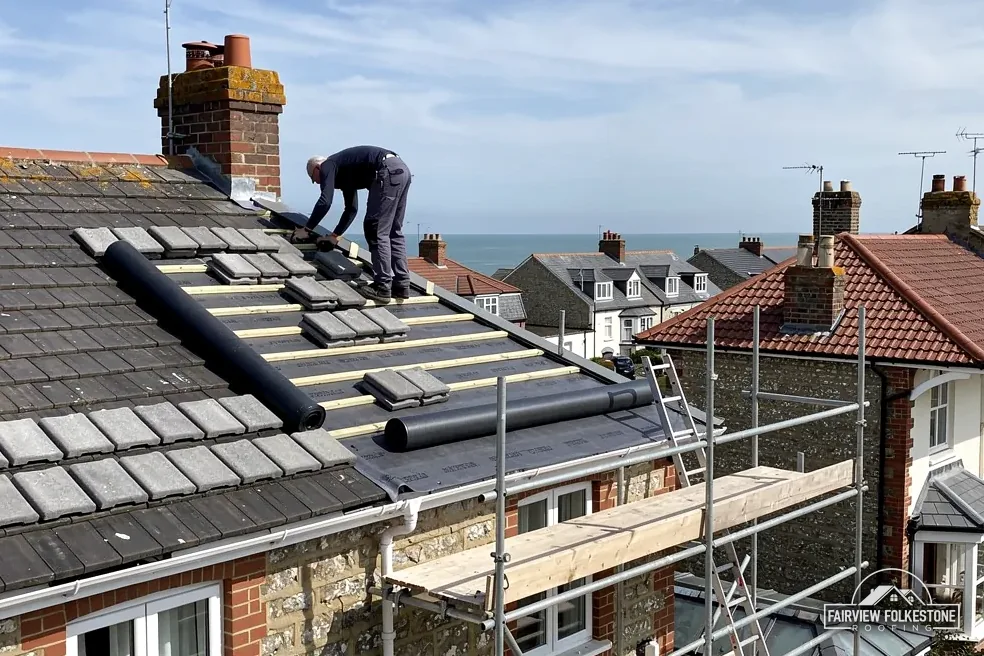
When slates are reused after a re-slate, flaking ones are rejected during sorting and the shortfall is made up with sound slates. Our answer on reusing old roof slates explains that sorting.
Re-slating meets the usual tests. The Planning Portal's test for a re-roof is that less than 25 per cent of the building envelope and less than 50 per cent of the roof affected normally means no building regulations application. Whatever the verdict, you get a single written total once the survey is done, and our slate roofing page shows what the job covers. If water is already coming in, a temporary cover is a matter for the visit, not for a climb up the slope yourself.
More questions
Can a flaking slate be repaired in place?
A slate that has split along its layers is replaced with a sound slate of matching size and thickness, from reclaimed stock or new. Where only a few have gone and the battens are sound, that is a small job. Flaking across a whole slope leads the survey towards a re-slate.
How can I check for flaking slates from the ground?
Look at the roof with binoculars, or zoom a phone camera, for ragged or lifting tails, and check the gutter and path for flakes. Please stay off the roof. A close look from a ladder or scaffold is part of the survey, and it settles what the ground cannot.
Tell us what's wrong with the roof.
You'll get one written total price.