
Smeeth · 11.5 road miles west
Roofers in Smeeth
A village where a Grade I church, the listed Church Cottages close by and a listed sundial all lie close to a designated conservation area. Roofs here are read slowly, covering first and paperwork second, and what the roof fairly needs is set down as a single total. Photographs of each fault travel with the quote.
- Church
- St Mary, Grade I, in use for Church of England worship
- Beside the church
- Church Cottages and a sundial, both Grade II
- Boundary map
- Smeeth conservation area, designated; held by Ashford Borough Council
- Scaffold permits
- Kent County Council, £52 per week for 2026 to 2027
Cottage row, chimney stack, porch: three Smeeth faults and their stamps
What we found
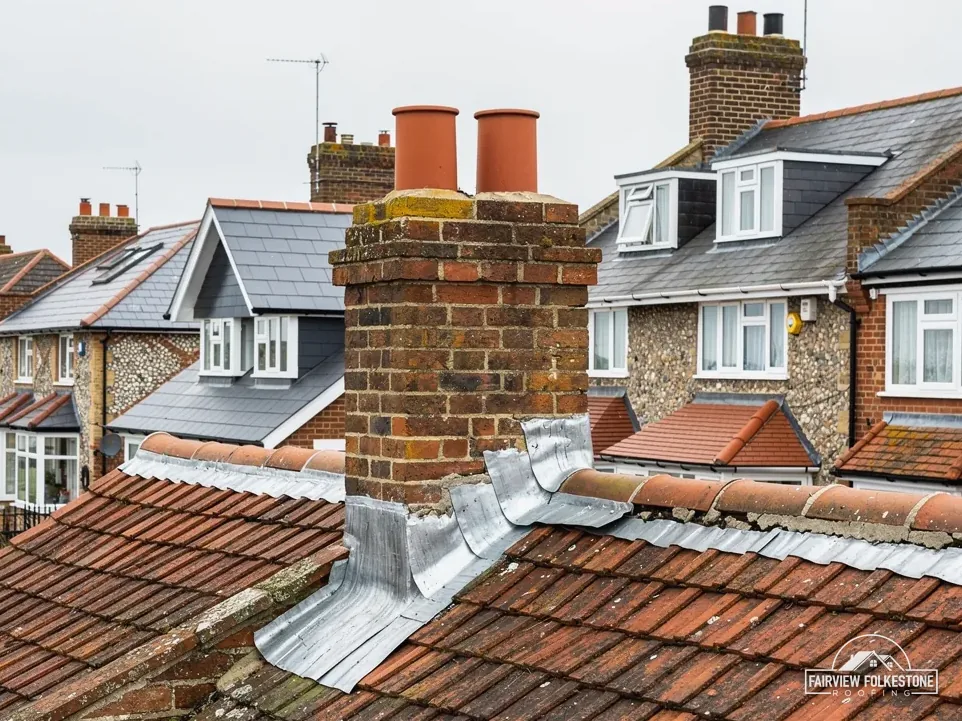
Flashing lifting where roof meets chimney
What it fairly needs
Refix and reseal the flashing; leave the slope.
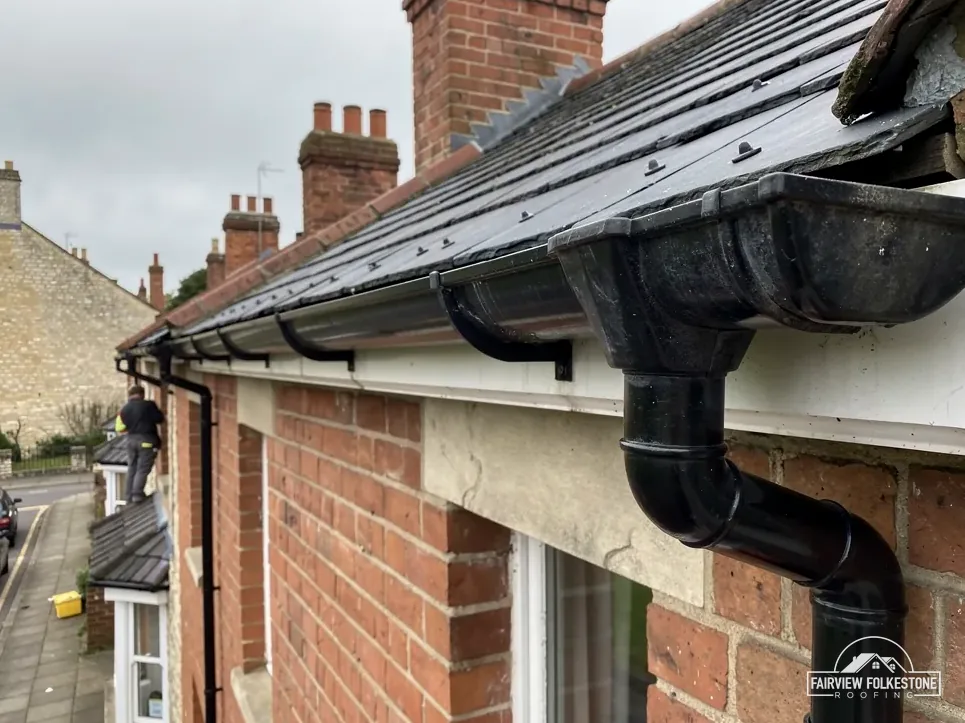
What we found
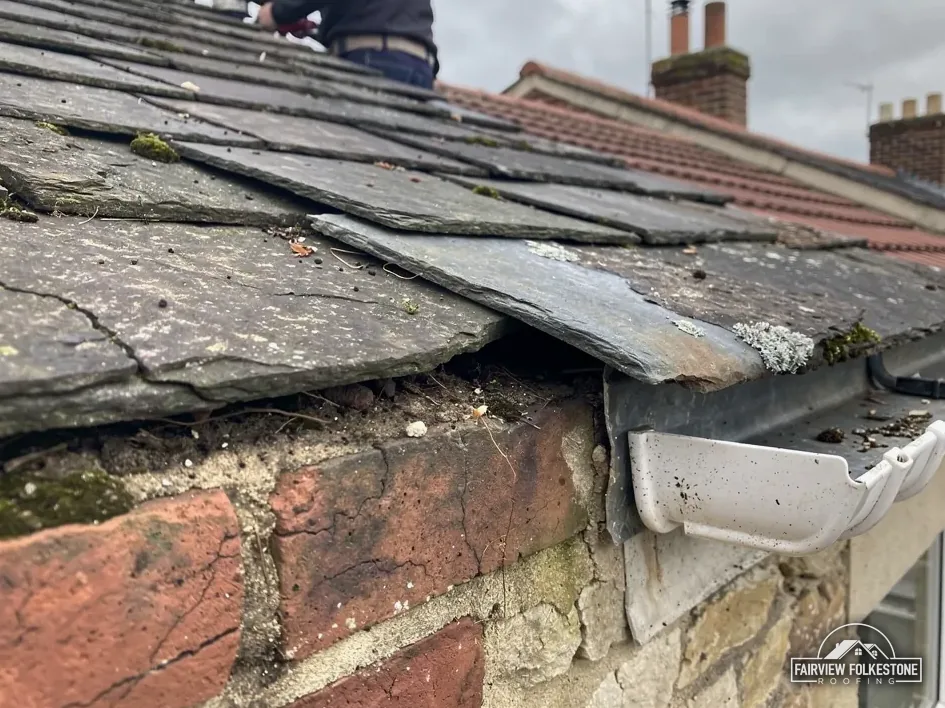
Listed cottage roof, tiles slipping at the eaves
What it fairly needs
Confirm consent with the council first.
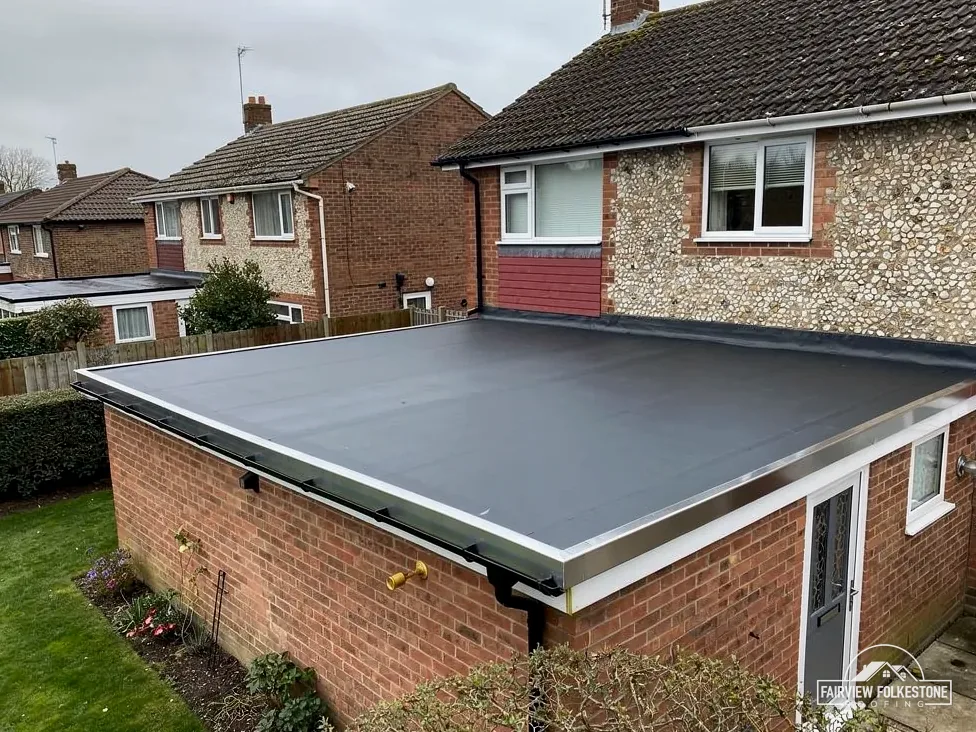
What we found
Porch roof felt split, boards soft beneath
What it fairly needs
New boards and a new covering, set to a fall.
Photograph the Smeeth roof, add the road name, and send both
The fair ledger
Cottages by the churchyard, a village boundary and a slow survey
Several of Smeeth's list entries stand close to St Mary's churchyard, and the conservation boundary adds a second question to many roofs. Each entry sets out what to ask, who answers it, and the verdict that follows.
Entry 01Churchyard
Church Cottages and the sundial: roofs beside a Grade I churchyard
Church Cottages and a sundial are both Grade II, and they stand beside a Grade I church, so one roof here can be touched by several different rules.
Three listings, three routes
Historic England lists St Mary's at Grade I (list entry 1071165), Church Cottages at Grade II (list entry 1071168) and a sundial about ten metres south of the church, also Grade II (list entry 1362793). They stand close together, yet each follows its own route to consent. St Mary's is still a Church of England church in use, which puts repairs to the building into the faculty process. Church Cottages need listed building consent for work affecting their character, and Ashford Borough Council decides that. The sundial is a reminder that the list covers small structures as well as houses.
Any house outside that group is none of these, and the survey establishes its own status before anything is priced. Where a roof meets a shared wall or a chimney stack, the flashing is the part to watch. A lifted edge can let damp behind the covering while every tile still looks tidy from the lane, so the junction is examined from above and, when there is a safe way into the loft, from below as well. Soakers, the small folded sheets that sit under the tiles along a wall, are checked at the same time, because they fail out of sight.
Photographs of the roof as found, taken before any work, stay with the written quote. Our chimney repairs and lead work pages describe the flashing repairs that follow a survey.
- Stepped flashing up the wall
- Joint cut into the brick
- Soakers beneath the tiles
- Fillet where flashing meets stack
Where a roof meets a wall or chimney, these four parts keep the junction closed.
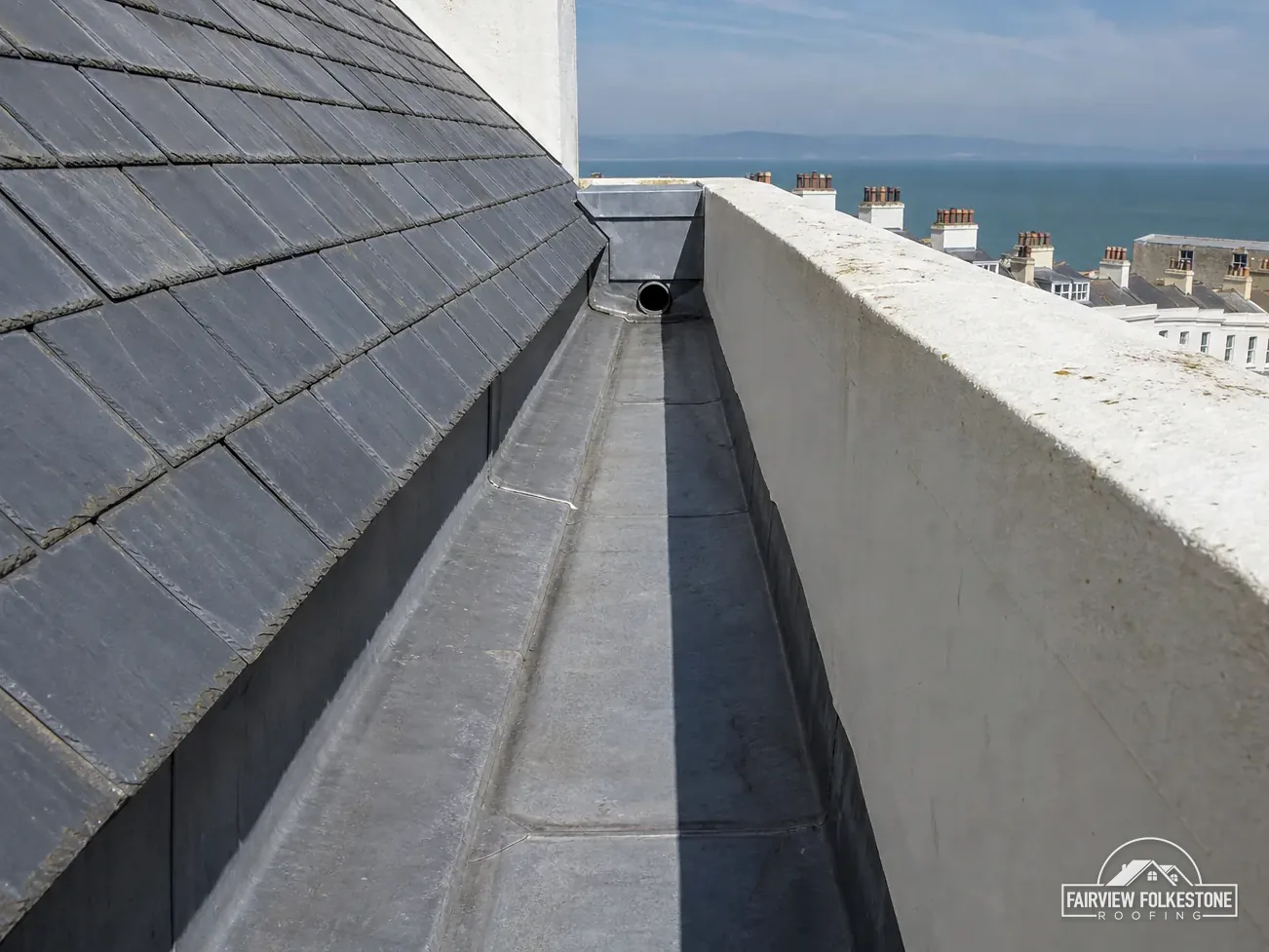
Beside the churchyard
Flashing edge lifted, covering sound
Refix flashing
Listed roof, work changes its look
Consent first
Soakers rotted along a wall
New soakers
Entry 02Boundary
The Smeeth conservation boundary and the Article 4 question
Smeeth has a designated conservation area. Ashford Borough Council keeps the boundary, and the map, never the eye, puts an address on one side of it.
Placing an address on the map
Smeeth's conservation area is designated, and the line on the map is held by Ashford Borough Council, which reports 43 conservation areas across the borough. Because a line on a map can pass through a garden or between two front doors, looking at a street tells you very little. Before the survey is written up we place your address on the council's map. If the line leaves doubt, we ask the council directly instead of rounding the answer whichever way suits the job.
Article 4 is the second question. Where a direction is in force, named permitted development rights have been taken away within a mapped area, so work that normally needs no application may need one, and the council is the one to say whether that applies to your road. Whether one touches a Smeeth road is for Ashford Borough Council to say, so we ask before pricing anything beyond a repair, and the reply is written on the quote.
For a house inside the boundary, a straightforward repair carries on as normal. Larger changes, including dormers, are covered in our planning permission guide. The sensible order is to ask first and draw second, so that nobody pays for plans the council would never accept.
Myth: A conservation area rules out any roof work.
Fact: Repairs carry on; bigger alterations, and any Article 4 direction, mean asking the council before work starts.
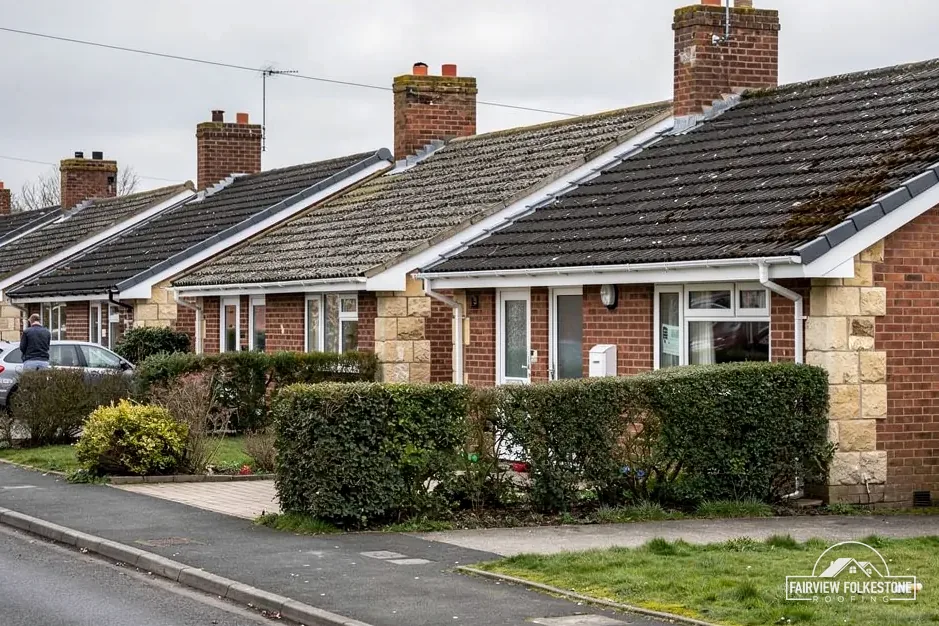
Ask the council about the address first, and the roof is never designed twice.
Will the council inspect a repair on a village roof?
Planning permission and Building Regulations are separate matters, and a repair of the kind we write up can need neither. Where the question is open, Ashford Borough Council Building Control on 01233 330282 can answer for your address, and whatever it says is noted on the quote.
The order the roof is read in
A Smeeth survey follows the water. It starts where rain lands first, on the ridge and hips and the fixings that hold them, then tracks it down each slope, through any valley, past every flashing at a wall or stack, and out through the eaves, gutters and fascias. Trouble at any of those stages is marked with a stamp. Repair comes first wherever it is sound, because slipped tiles or a loose ridge do not call for a new roof. Replace is kept for a covering past mending, and check marks a fault that deserves a second look before anyone commits. The stamp matters more than the length of the list, since it says what each fault fairly needs.
Given a safe way into the loft, the underside gets the same attention: daylight where there should be none, staining on the timbers, and the condition of the battens and underlay. From the road a roof can seem sound and still tell a different story from inside, so the loft visit is worth the extra few minutes it takes.
The written quote that follows names a single total, and each stamp keeps its photograph, so what was found can be checked against the roof itself. Our pitched roofing page covers the work that comes after a survey, from refixing slipped tiles to a full re-cover.
Entry 03The survey
A Smeeth roof read from apex to gutter before any price
Before the paperwork questions matter there is the roof itself, and the survey moves across it in a fixed order so that nothing is skipped.
What sets the price
- How much of the roof needs work
- What lies under the covering
- Where a scaffold can stand
- Whether a listing adds steps
One written total price
How long does a survey of a Smeeth house take?
That depends on the roof, so no time is promised here. A small cottage roof is quicker than a long run with several valleys, and a visit into the loft adds to it, as does a roof with a chimney at each end. At booking you are told what the visit will cover, and you keep the photographs afterwards.
Does a listing or the conservation boundary reach your Smeeth roof?
Give us your road, add a photograph and describe anything you can spot from the garden. Stamps and reasons reach you before any total does, so the findings can be weighed first.
West along to Smeeth
Smeeth is 11.5 road miles west of Folkestone, about 16 minutes by road. The parish had 931 usual residents at the 2021 Census. Begin with a photograph and your road, and the boundary map and list entries are looked up ahead of the visit, so nothing about the rules is left to discover on the day and the hours on site go to the roof itself.
Smeeth roofs: the church, the map and the survey
Answers for owners near the churchyard and across the village.
What should I look for where a Smeeth roof meets a chimney or a shared wall?
Look for flashing that has lifted at its edge, gaps in the sealing along the joint, and staining on the ceiling or wall beneath. A junction like this lets damp behind the covering where roofs share a wall, so it is worth a look from the loft, ideally on a bright day. We check every flashing at the survey, and a lifted one can be a repair rather than a new roof, with the photographs to show which, and its stamp is noted in the quote.
Does a Smeeth re-roof need Building Regulations approval?
Smeeth falls under Ashford Borough Council's own Building Control team (01233 330282), which can confirm the position for a given house. The Planning Portal sets a two-part test: the work affects less than 25 per cent of the building envelope and less than 50 per cent of the roof. Under both thresholds an application is not required as a rule, while a new covering that is 15 per cent or more heavier needs approval instead. What the roof is covered with today goes into the survey notes.
Who licenses scaffolding on a Smeeth street?
Kent County Council licenses scaffolding for work on the road or pavement, at £52 per week for 2026 to 2027. We arrange the licence with our scaffolder. Kent County Council's licensing guidance says that the skip or scaffolding company should submit the application for you. If a scaffold would stand on the pavement or road, the survey flags it early, so the licence dates are fixed in writing before work begins and no one is caught out.
Is my Smeeth house in the conservation area, and does it matter for a repair?
Ashford Borough Council holds the boundary, so its map answers the first half, and your address is checked against it before the survey. A repair carries on as usual. The boundary bears on bigger alterations, where an Article 4 direction may withdraw more rights, and that question goes to the council before any price is set for that kind of work, with its reply noted beside the figure so the file shows what was asked.
Will the Grade I listing of St Mary's reach my own Smeeth house?
It will not. The listing belongs to the church. Your house has an entry on the list of its own, or none. Where a Smeeth house turns out to be listed, listed building consent is required for work changing its special character, so the council is asked first and the price follows. Nothing is assumed from how the house looks. Repairs to St Mary's itself follow the faculty route of the Church of England, a separate matter altogether.
Will a quote for a Smeeth repair arrive as one price?
Yes, a single figure in writing. It covers the whole job and comes with a photograph for each stamp and a note of the rules checked for your address. A sound repair is quoted as a repair. A full re-cover is quoted only for a covering that cannot be mended, and gutter or fascia work spotted on the visit is added into the same figure, so a dropped run or a soft fascia board never becomes a second quote.
Smeeth roof leaking or sagging? Send a picture.
Your written total follows the visit.