
Roof repair costs
How much do roof repairs cost in the UK, and what moves the price?
Published UK figures run from £75 to £400 for a few replaced tiles to around £650 for the average roof repair. This guide shows what moves a repair up or down on your own roof.
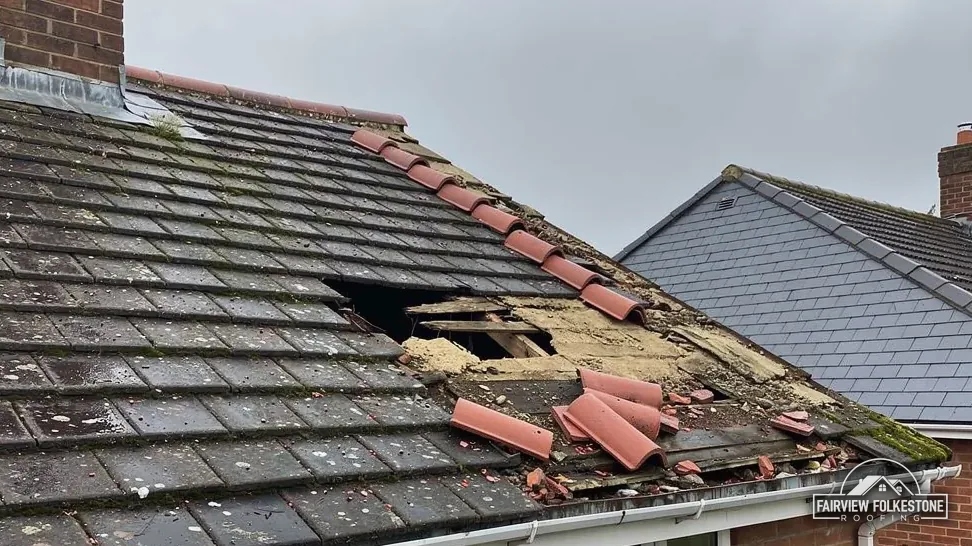
Published figures are a fair place to start, as long as you know whose they are and what they leave out. A Which? Trusted Traders survey from November 2025 prices a tile job, between one and six standard tiles broken or missing, at £75 to £400, excluding VAT. MyJobQuote says the average roof repair costs around £650 in 2026. The two numbers sit far apart, and both are sound, because a repair is not one job. It can be a handful of tiles reached from a ladder or a ridge that needs rebuilding from a scaffold.
This guide sets out dated ranges from named third parties, explains their units and why none should be multiplied into a total, and looks at what pushes a repair up or down on a real roof. It also covers scaffold, the approvals that occasionally apply, emergency visits and storm damage, and what a written quote ought to state. Any total of ours is given in writing after a survey, because only a look at the roof can fix it.
01Side by side
Dated figures from published sources
These are typical UK figures from published sources and not Fairview prices. Each is a snapshot with a date, and each comes with the limits its publisher set.
The Which? prices come from a survey of 11 of its Trusted Traders, include labour and materials, and exclude VAT. Which? says they are likely to be at the upper end if you live in London or the South East, a region that takes in Kent and East Sussex. MyJobQuote states no VAT basis, so its figures are shown here exactly as published.
Each source works differently. Which? gathers its prices in a survey of traders, and MyJobQuote publishes averages on cost guides that carry an update date. The rates in the next section use another basis again. Their samples differ, so a figure from one should not be set against a figure from another as though both measured the same thing.
The last row needs care. The £1,200 figure belongs to extensive storm damage and not to any storm repair, and a call-out pays for attendance, which is a different thing from the make-safe or the repair that follows it.
| Repair | Figure | Source |
|---|---|---|
| Between one and six tiles replaced | £75 to £400 | Which? Trusted Traders, November 2025 |
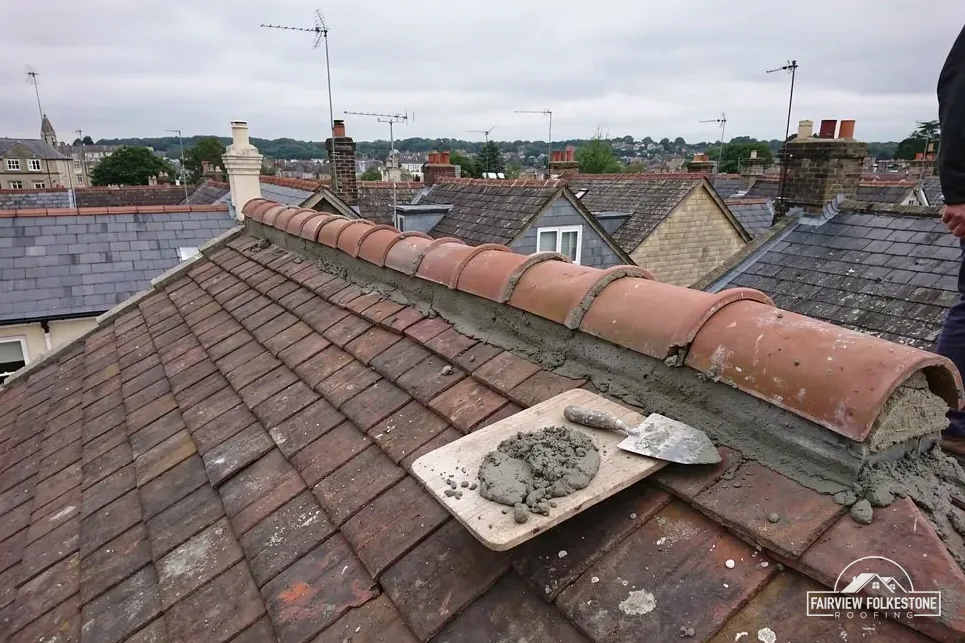
| A new ridge tile | £80 to £300 | Which? Trusted Traders, November 2025 |
| Average roof repair | Around £650 | MyJobQuote, 2026 |
| Emergency call-out | £150 to £300 | MyJobQuote, 2026 |
| Extensive storm damage | £1,200 or more | MyJobQuote, 2026 |
02Rates
Rates per square metre and per metre
Some repair rates are set by area or by length. Checkatrade's table, last updated in June 2026, lists concrete tile repairs at £90 to £120 per m², capped at 3 m², excluding VAT and access equipment. The same basis runs through its other rows.
Roof repair cost questions
Why is the published average so much higher than the tile figure?
They measure different jobs. Which? priced a few replaced tiles at £75 to £400, while the MyJobQuote average of around £650 covers roof repairs of every size. A ridge, a flashing or a patch of battens costs more than a few tiles, so a mixed average lands higher.
- Concrete tiles: £90 to £120 per m², as above.
- Clay tiles: £110 to £160 per m².
- Natural slate: £150 to £220 per m².
- Ridge tile repairs: £50 to £70 per metre.
- Lead flashing repairs: £50 to £70 per metre.
On the same basis, flat roof repairs are listed at £120 to £170 per m² for EPDM rubber, and £130 to £180 per m² for GRP fibreglass.
These rows come from one table, so the units agree with each other. They do not agree with the Which? and MyJobQuote figures, which describe whole jobs and not rates.
Do not multiply one of these into a total. They describe small patches and short runs, and the rate stops at 3 m²; past that size the access, the matching and the verdict all need a survey of their own. A long ridge or a run of lead is priced from what the survey finds, not from a rate times a length. If anyone quotes you a total built that way, ask what it assumes about the condition of everything around the repair.
For the call-out side of an emergency, our guide to emergency roof repair costs goes further.
03Price · Repairs
What moves the price of a repair
Two repairs that sound alike can differ a good deal in cost. These are the things that shift the figure on a real roof.
- Extent. A few tiles, a stretch of ridge and a whole slope of failing fixings are three different jobs, and the last is a re-cover, not a repair.
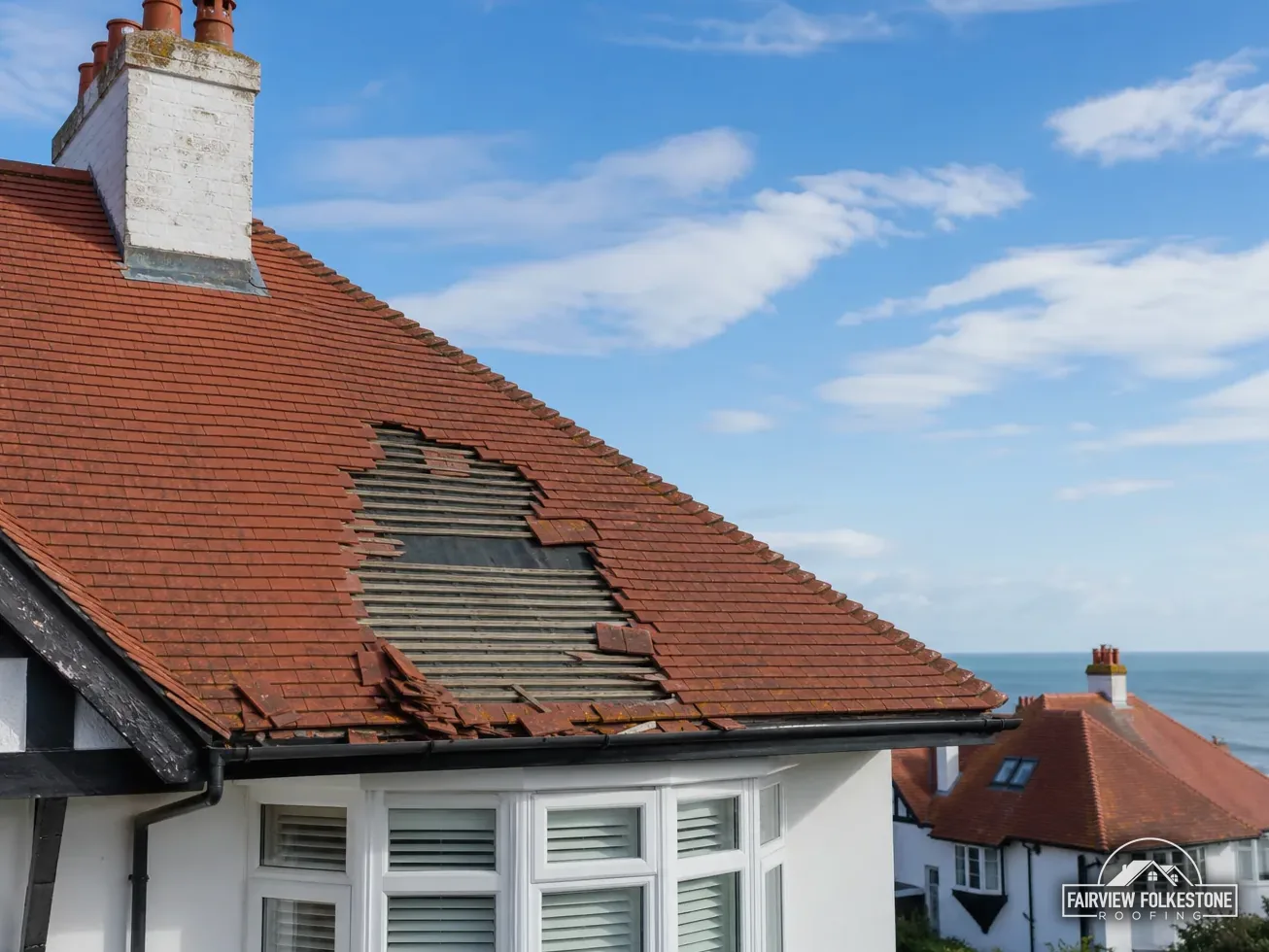
- The layers underneath. Soft battens, torn underlay or old water staining add work, because a tile is only as secure as the timber holding it.
- Matching. An older tile may need a reclaimed match, which takes time to find, and slate comes in different sizes, thicknesses and shades.
- Reach. A low roof can be reached by ladder, whereas a chimney stack on a tall house calls for a platform.
- Exposure. Cupa says a roof that is tall, or stands on a hill, a slope or at the coast, is graded with higher exposure, so on an exposed roof the nails and clips are worked out for the site to BS 5534.
- Conditions on the day. Rain and wind decide whether a repair can be finished in one visit or has to be made safe first.
Timing plays a part. A small fault left through a wet winter can let water reach the battens, the underlay and the ceilings below, which is how a small repair grows into a larger one. Looking early costs little, and it keeps the choice between repair and replacement open.
One slipped tile with firm battens around it is a small job and needs nothing bigger. The same fault repeated across a slope points to a roof failing as a whole, and then you hear that from us, with the reasons, before any figure is mentioned.
04Scaffold
Scaffold, access and approvals
Access can add to a repair, and rules can apply to it. Neither shows up in a published per-metre rate.
On scaffold, Kent County Council licenses scaffolding on the highway at £52 per week for 2026 to 2027, and its page says the scaffolding company should submit the application. For Rye and Camber, East Sussex Highways shows £127 for 28 days on its fee table, which is worth checking again. The two fees run on different units, so never set them side by side. Scaffold sits inside the quote, and the licence is one we arrange with our scaffolder.
Can I work out my repair cost from a per-metre rate?
No. A rate per metre or per m² covers a short run or a small patch under a set limit, and it excludes VAT and access equipment. The real cost depends on what is under the repair, how it is reached and what must be matched, which only a survey can show.
On approvals, Folkestone & Hythe District Council's building control page says "you also don't need approval for most repairs, replacements, and maintenance work", though replacing roof coverings sits on its list of alterations in some cases needing approval. Under the Planning Portal's test, no application is normally called for when a re-roof touches less than 25 per cent of the building envelope and less than 50 per cent of the roof. A new covering 15 per cent or more heavier is a separate matter that does need approval.
Dover District Council is stricter. Its building control page says replacing roof coverings needs approval even if it is like for like, so for Dover, Deal and Sandwich addresses we confirm with that council first. That is Dover's rule alone, and it does not carry to other districts.
05Emergencies · Storms
Emergency visits and storm damage
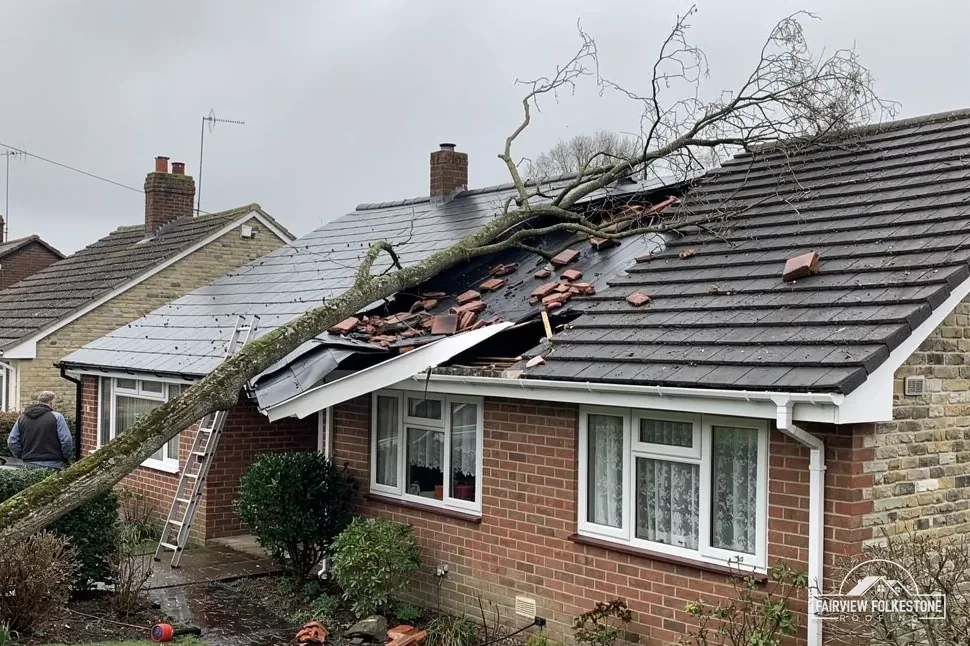
A storm repair has two parts: making the roof safe, then the repair that follows in daylight. That is why a published call-out figure and a published storm figure differ so widely. MyJobQuote gives emergency call-out costs as typically £150 to £300, and extensive storm damage repairs as £1,200 or more.
Your rights differ for an urgent visit. A contract signed in your house once we have surveyed carries 14 days to cancel, and an earlier start needs a written request from you. Under regulation 28(1)(e) of the Consumer Contracts Regulations 2013 there is no cancellation right where you have specifically asked a trader to visit for urgent repairs, and Citizens Advice describes the same exception.
A make-safe is not the end of the job. A sheet fixed over a gap keeps rain out until a strong gust gets under it, and the tiles, battens or ridge beneath still need their permanent repair. Ask what the temporary work covers and what comes next.
If the damage is insured, the plain steps are these:
- Ring your insurer before permanent work starts.
- Have the roof covered with a temporary repair.
- Photograph the damage before anything is shifted, and hold on to every receipt.
According to the Financial Ombudsman Service, rain, hail or snowfall alone can amount to a storm, and it will usually look at expert reports and photos of the damage. Whether a policy pays is for you and your insurer to settle. Our answer on when to call an emergency roofer covers when a leak can wait.
06Survey
One written total after the survey
The quote for a repair is one written total price, arrived at once the roof has been surveyed. It names the repair, says what is covered and states whether VAT and scaffold are accounted for. When you compare quotes for the same repair, check each one on those two points before looking at the figure, because a lower total that leaves them out is not lower.
- Does the quote name the repair and the area it covers?
- Does it say whether VAT is included?
- Is scaffold in the total, if the roof needs it?
- What happens if the battens or underlay turn out worse than they looked?
On that last point, a repair can change shape once tiles are lifted. If the timber beneath proves soft, we pause the job, photograph it for you and send the new total in writing before any further work, so nothing is added without you seeing why.
Two more questions suit any roofer: how long the quote stays valid, and whether anything is left to be agreed once the work starts. If a quote cannot answer them in writing, treat the figure as a guess.
If you are unsure whether you need a repair at all, say so when you ask for the visit. If the trouble is confined to one spot and the rest of the roof checks out, the survey will point to a repair. Our guide to how long a roof repair takes covers the time side, and the roof repairs page shows how a whole visit runs.
Does home insurance cover a repair after a storm?
That depends on your policy and is for your insurer to decide. Tell the insurer first, make the roof safe, and keep photos and receipts. If you are unhappy with the answer, the Financial Ombudsman Service can look at the complaint, and it says it will usually look at expert reports and photos.

Tell us what's wrong with the roof.
You'll get one written total price.