
Garage roof lifespan
How long does a garage roof last?
A garage roof's life depends on its covering and what is underneath it. These are typical published figures, given with their sources, never promises.
The short answer
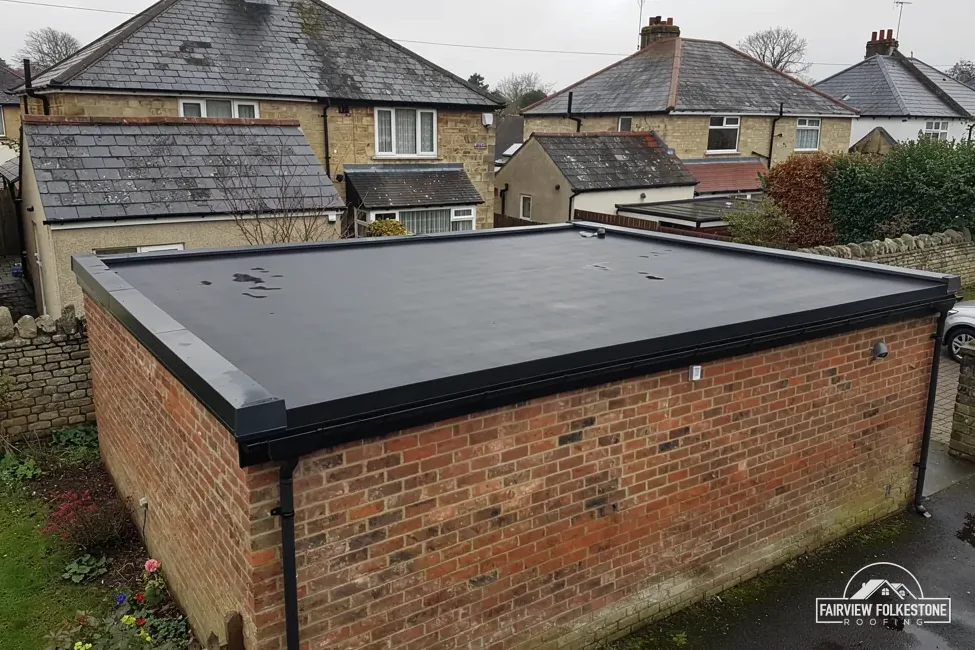
A flat garage roof covering can last from about 10 years for felt to between 25 and 50 for rubber, depending on the covering and which guide you read. HomeBuilding gives felt 10 to 15 years and EPDM 25 to 30 years, while Less gives torch-on felt 10 to 20 years and EPDM typically 30 to 50 years. Treat them as typical figures instead of promises; the deck and drainage beneath count as much as the covering.
4 min read · Part of Garage roofs
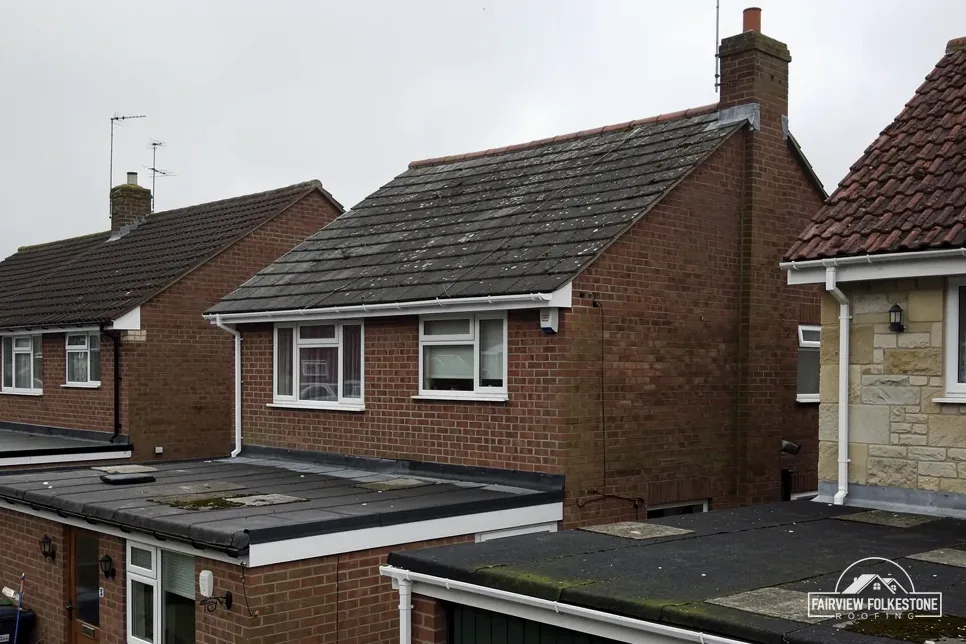
Flat roof coverings, source by source
HomeBuilding and Less give different figures, so each one is named. Where they differ, the range between them is wide, and that is the honest picture of what the evidence supports.
| Covering | HomeBuilding | Less |
|---|---|---|
| Felt (torch-on) | 10 to 15 years | 10 to 20 years |
| EPDM rubber | 25 to 30 years | 30 to 50 years |
| GRP fibreglass | 25 to 30 years | 25 to 40 years |
Less qualifies its felt figure with "depending on quality and installation" and its GRP figure with "minimal maintenance". Quality and installation move a roof within its range, so the same covering can fall at either end. A roof's age alone is a poor guide: a young roof with a split seam needs a repair now, and an older one with sound boards and a clear outlet may be fine.
Metal is the longer-lived family. HomeBuilding gives a lead flat roof 60 to 100 years and Less puts lead at 50 to 100 years, while VMZinc, the maker, writes that "When correctly designed and installed a zinc roof can last in excess of 100 years." Those figures are for the metal itself, and they depend on the detailing and the deck beneath it.
Pitched garage roofs: tiles and sheets
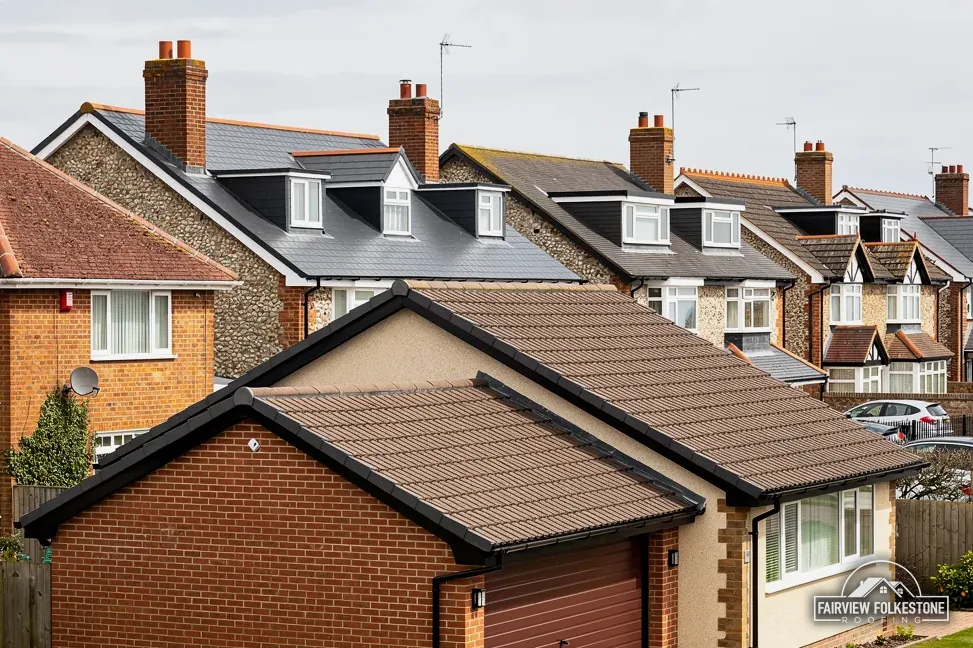
A pitched garage roof may carry tiles, and the figures for tiles are approximate and differ by source.
- Plain concrete tiles: HomeBuilding gives 40 to 50 years. Marley writes that "Typically, roof tiles are expected to last for around 60 years", with the caveat that this is not a guarantee or warranty. Double Roman tiles also sit at 40 to 50 years on HomeBuilding's table.
- Clay tiles: Marley reports that the BRE determined a minimum life expectancy of 60 years for clay roof tiles. HomeBuilding gives 60 to 80 years.
- Slate: HomeBuilding gives Welsh slate 100+ years, Spanish natural slate 75 to 100 years and reclaimed Welsh slate 50 to 80 years.
- Fibre cement tiles: HomeBuilding gives 30 to 40 years.
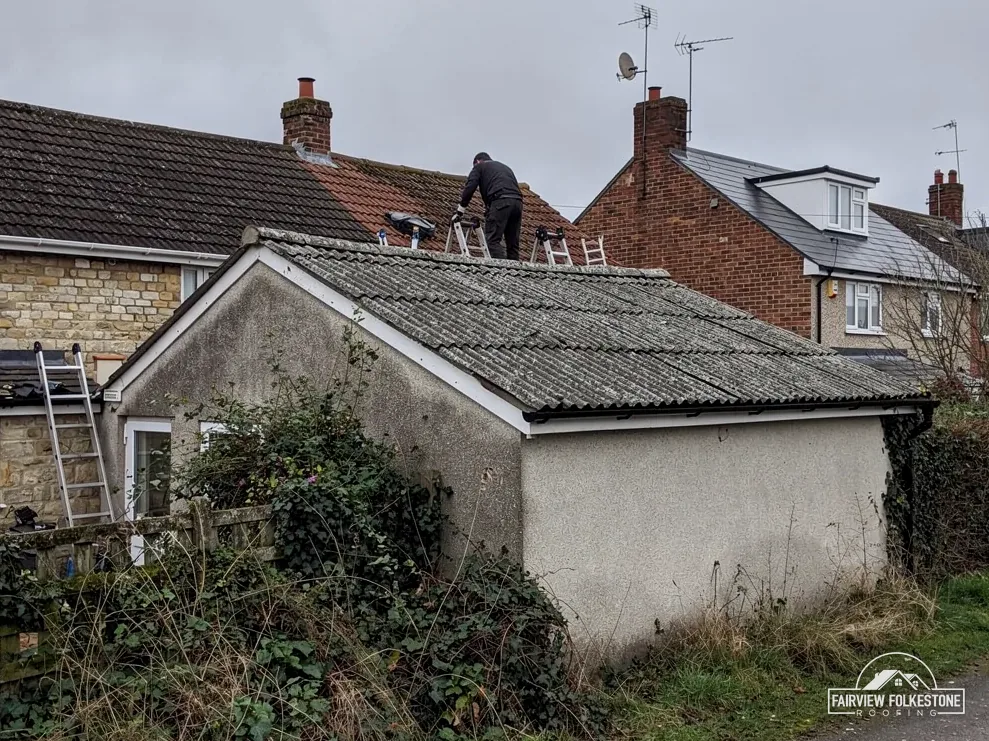
No lifespan is sourced here for old asbestos cement sheets. HSE's A14 guidance puts it bluntly: AC roofs are always fragile. The condition of the sheets matters more than their age, and only a survey can judge it. Our page on overlaying an asbestos garage roof covers that case, and the first check is to ask how to identify an asbestos garage roof before anyone goes near it.
What shortens a garage roof's life
A published lifespan assumes the roof is built well and left to drain. Several things work against that assumption.
- Standing water. A flat roof should have a minimum finished fall of 1:80 under BS 6229:2025, and one that holds a pool is working outside its design.
- Blocked or sagging gutters, which send water to the roof edge and the wall.
- Soft boards beneath the covering, which carry on failing under a new one.
- Poor detailing at edges, upstands and joints.
- Jet washing: Marley says jet washes are not recommended on slate or tile, since a high-powered one can reduce the expected life considerably.
- Gutters with no fall: Brett Martin, a manufacturer, advises 1 mm for every 600 mm towards the outlet.
- Exposure: Cupa says coastal areas are graded with higher exposure, so the fixings on a pitched covering are specified for the site under BS 5534.
These are reasons a roof can fall short of the range, not predictions for yours, and a roof in good order can sit towards the top of it. Our page on why a garage roof leaks goes through the signs of each, and what to do while you wait for a visit.
Judging the age of your roof
You may not know the covering's date, so a survey looks at its condition instead of its age. We look at splits, blistering, loose seams, the state of the boards from inside and the drainage, then give a plain verdict: repair, replace, or leave alone for now.
A short remaining life does not always mean replacing at once. A sound felt roof near the middle of its published range may be repaired, and a covering past it may be repaired once and then planned for. The survey ends in a single written total, so you can weigh a repair against a new roof knowing what each involves. Photos of the underside, the edges and the outlet go with it, with dates, so that a later survey can see what changed, and a quiet roof stays on record as quiet.
For a decision, our repair or replace guide sets out how that verdict is reached, and the garage roofs hub covers the service in full. If the roof is cement sheets, the survey also settles the material first.
More questions
Does the covering's life include the boards under it?
No. A covering's published lifespan assumes sound boards and drainage. Soft or damp boards can fail beneath a new covering and shorten its life, which is why we check the deck from inside the garage as well as from above before we advise a replacement.
How do I know when a garage roof needs replacing, not repairing?
A roof that leaks in several places, has a covering that is splitting or lifting, or has boards that have gone soft is likely to need replacing. A single fault on a sound covering is a repair. A survey gives the verdict and one written total price.
Tell us what's wrong with the roof.
You'll get one written total price.