
uPVC lifespan
How long do uPVC fascias and soffits last?
One retailer gives a range for how long uPVC roofline boards keep performing. It comes with a condition, and that condition decides the life of yours.
The short answer
One retailer's advice puts the typical reliable life of uPVC fascia boards at between 20 and 40 years, provided they are installed correctly. Treat that as a seller's range rather than a promise. What decides where a board lands in it is the fitting: sound rafter feet beneath, firm gutter brackets above and a ventilated eaves give the plastic its fairest chance.
4 min read · Part of Gutters, soffits & fascias

Reading the 20 to 40 year range
The range comes from a retailer's advice on how long uPVC fascia boards last. A retailer sells the boards, so it has an interest in the answer, and we treat the figure as a guide. It carries two hedges, can and typically, and a board that can keep performing is not a board that will. Neither word is a guarantee, and a range is the careful way to put it.
The range is wide because a good deal sits behind the board. Twenty years and forty are far enough apart that the product cannot explain the gap alone. How the board was fitted, what it was fixed to and what has happened to the gutter above it all play their part.
The same page gives nothing for the soffit on its own, and no other maker's boards are quoted here, so there is no second range to compare. If you are weighing a sales figure from any firm, read it as the case it hopes for, and ask what the fitting depends on. Plastic cannot outlast what it is screwed to, and a long life on paper counts for nothing if the screws have nothing to bite into.
What installed correctly depends on
A uPVC board is a skin over a structure, so its life follows the structure. Four things matter when we fit one.
- The rafter feet are dry and sound, so each board is fixed to wood that will hold a screw.
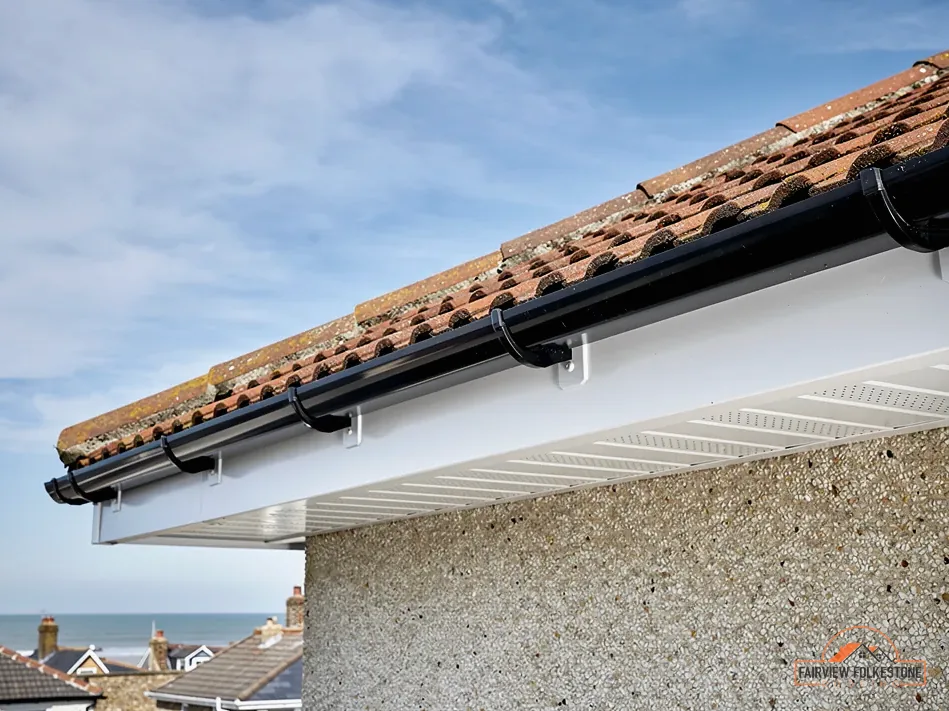
- The gutter hangs on firm brackets at the right slope, so water leaves instead of lying at the joints.
- The eaves breathe: on a cold roof laid with a high-resistance underlay, Marley's figure is 25 mm of ventilation at the eaves on a pitch of 15 degrees or under, and 10 mm on anything steeper.
- The underlay at the eaves is dressed into the gutter, so water that gets under the tiles runs out clear of the fascia.
Get those right and the plastic is never asked to cope with anything it was not made for. Get them wrong and the board is only the face of a hidden problem, which is how a roofline can look tidy for years while the structure behind it fails. A cold roof needs air moving at the eaves, so a soffit blocked with insulation or paint works against the rest of the roof.
Signs a board is failing early
You can read a lot from the ground. Look along each elevation for these signs:
- Boards that have bowed or sprung away from the rafter feet.
- Joints that have opened between two lengths, or a gap at a corner.
- Cracks along a board, or a section that rattles in the wind, which shows its fixings have lost their hold, or that the board has shrunk away from them.
- A gutter that sags between brackets, which can mean the board behind has weakened.
- Dark staining or a damp patch below a gutter joint.
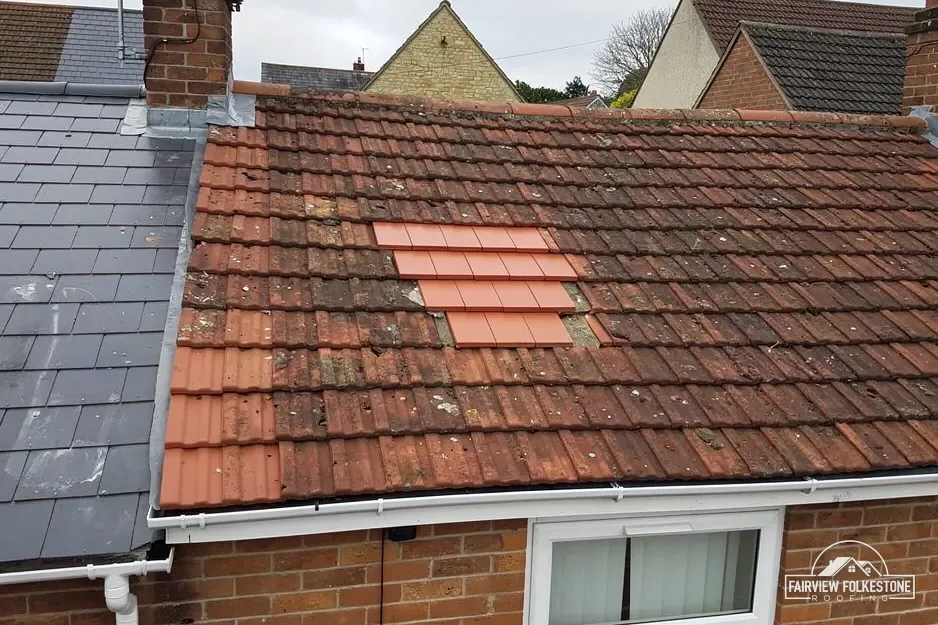
None of these proves the whole roofline is finished. A loose board can be refixed and a joint can be re-sealed, and a repair is where we begin. If one stretch has gone but the rest is firm, only that stretch is replaced, with the colour matched as closely as the product allows. Our check covers each fixing, each joint and the timber behind the plastic, not only the white face, and we photograph what we find so you can see it too. Capping over an old timber fascia is a separate question, which our answer on capping over fascias covers in full.
Planning for replacement
When boards do reach the end, the sensible plan is to renew the fascia, soffit and gutter together, because one scaffold serves all three. The cost then turns on the number of elevations and their height, and our page on the cost to replace fascias, soffits and guttering sets out what has been published.
On an older house, we check what a soffit is made of before it comes down. HSE's guidance on older buildings, those built or refurbished before 2000, is to assume asbestos is present, and its location list includes white soffit panels of asbestos insulating board. Because the bulk of work on that board is licensed, a sample goes to a laboratory first and the board stays whole until the result is back, which can add a little time before the job starts.
If nests or bats are found behind the boards, the affected stretch waits, as our answer on bats and birds in soffits explains. For the whole job, see our hub page on gutters, soffits and fascias.
More questions
Do uPVC fascias need maintenance during their life?
Less than timber, because there is nothing to repaint. The plastic wipes clean, and the gutter above should be kept clear so it does not spill down the face. Check the fixings, joints and brackets from time to time. Staining below a joint is the cue to look.
Does the 20 to 40 year range apply to my own boards?
Only in general. It is a retailer's advice on the product, with the words can and typically attached, and it depends on correct installation. It says nothing about a particular house. What a survey finds on yours, namely the rafter feet, the joints and the fixings, tells you far more than any range.
Tell us what's wrong with the roof.
You'll get one written total price.