
Pitched roofing guide
Slipped roof tiles: refix or replace?
A slipped tile means a fixing has let go. Whether that is one fixing or every fixing on the slope decides between a short refix and a re-cover.
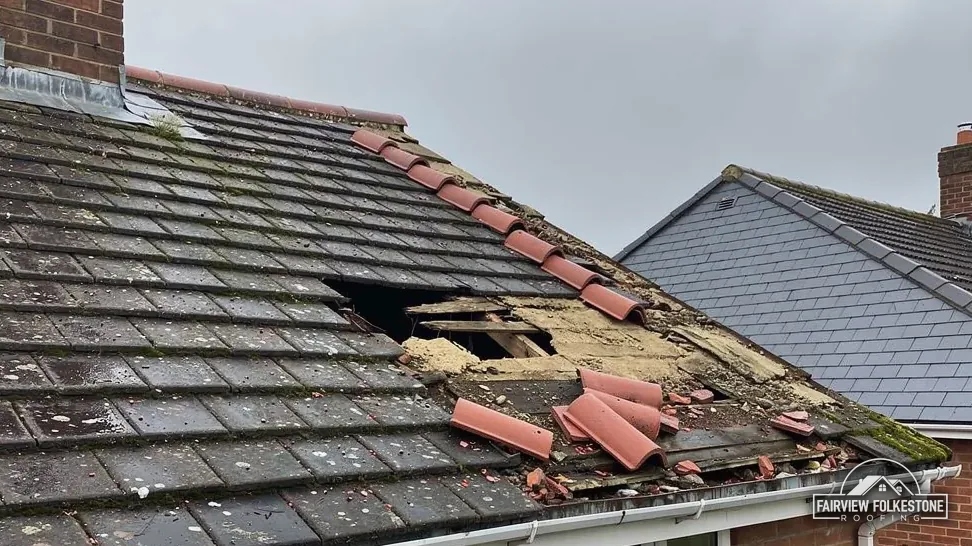
A tile missing from a slope is easy to spot from the garden and hard to judge from there. One gap can mean a single nail has given up after decades in the same spot. It can also be the first visible sign that the nails, nibs or battens across the whole slope are reaching the end of their life together. The repair for the first is a refix that needs a short visit. The second calls for a conversation about re-covering the slope, because refixing tile after tile on a failing roof spends money without buying much time.
This guide sets out why tiles slip, what we look at before deciding anything, where a refix is the right answer and where it is not, which rules apply once a slope is re-covered, and what moves the cost of each. We start from the repair. Re-covering is the answer only when the roof around the gap shows us that its fixings have run out of life, and we explain what we saw either way.
01Tiles
Why a tile leaves its place
A plain or interlocking tile stays where it is because something holds it: a nail through the tile into the batten (the timber strip that runs across the rafters), a clip at its tail, or its nibs, the small lugs on its back that hook over the batten. A tile slips when one of those holds lets go, and which one it was decides a great deal about what the roof needs next.
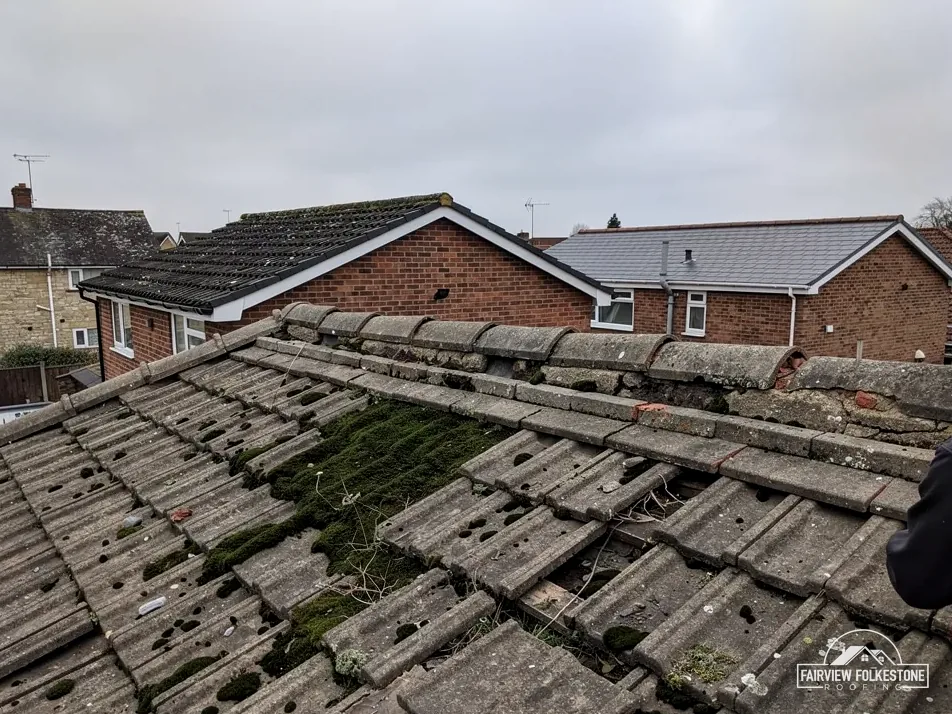
- A tired nail. Nails can corrode or work loose over the years as the roof moves with heat, cold and wind, until the tile is hanging on its nibs alone.
- A broken nib. A tile can lose a nib to frost or to a foot on the slope, and a tile with no nib has nothing left to hang on.
- A soft or split batten. Where damp has reached the timber, the nail loses its grip in the wood, and every tile on that batten is at risk, not only the one that moved.
- A cracked tile. The lower half can slide out while the top half stays nailed, which looks like a slip from the street but is really a breakage.
- Disturbance. Aerial brackets, satellite dishes, gutter work and ladders leant on the slope can all knock tiles out of their courses.
Wind plays its part too, since a loose tile gives a gust something to lift; our page on tiles blown off in wind covers that side. Both the one-tile repair and the whole-slope job start in the same place: working out which of these happened.
02On mortar
Reading the slope around the gap
We never judge a slipped tile from the gap alone. The tiles next to it, the course above and the batten underneath tell us whether we are looking at one fixing or a pattern across the roof.
From outside, we check:
- whether the tiles either side sit firm when pressed, or rock on their battens
- whether other tiles along the same course have crept down out of line, even slightly
- whether nibs or tails are broken on tiles near the gap
- the ridge, the verges and any valley close by, since a slip near an edge can start at a failed mortar joint
From the loft, where we can get in, we look at the underside. The battens get checked for softness, splits and old water staining. The underlay (the membrane or felt under the battens that sheds any water getting past the tiles) gets checked for tears, sagging and gaps. Daylight showing through anywhere is noted too. Where there is no hatch, or the loft is boarded over, we read what the outside shows and say where that leaves the verdict less certain.
The fallen tile has its own evidence. A tile that slid out whole with its nail still in it tells a different story from one that cracked across, or from a bare nail hole in a batten that has gone soft.
A dry, firm batten either side of the gap points to a refix. A run of stained or crumbling timber points the other way. Either way, we tell you what we found and why it leads where it does, before anyone talks about the cost.
Slipped tile questions
Is a single slipped tile urgent?
It needs looking at soon rather than leaving for months. The gap lets rain reach the underlay, and the batten beneath if the underlay is tired, and a loose tile can fall from the slope. Until we visit, keep clear of the ground below it and stay off the ladder. With sound battens around it, a single slip is a refix.
03Key points
When a refix is the right call
A refix puts the slipped tile back in its course with a sound fixing, or fits a matching tile if the original has cracked, and leaves the rest of the slope alone. It suits a roof where the trouble is local and everything around it is healthy.
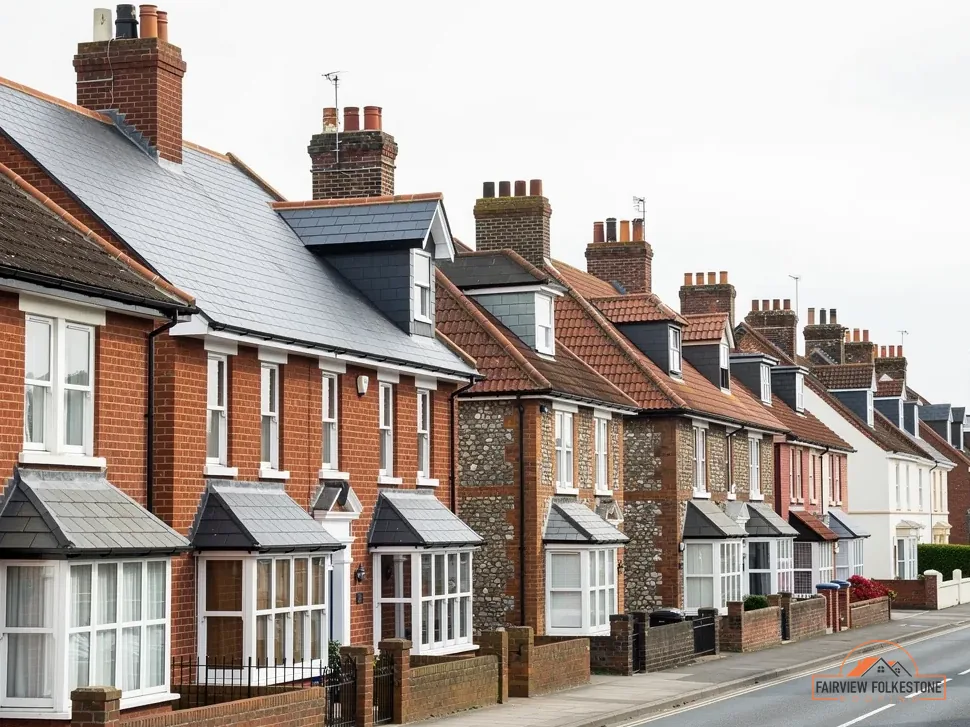
One slipped tile is a question about a fixing. Slips across five courses are a question about the roof.
- One tile, or a small group, has moved in one spot.
- The battens behind them are dry and firm.
- The neighbouring tiles sit tight and still have their nibs.
- The underlay at that point is intact.
- A matching tile can be found if the old one is broken.
Matching matters more than people expect. A replacement has to share the profile and size of the tiles beside it so the courses lock together, and with an older roof the answer may well be a reclaimed tile rather than a new one. It also has to suit the pitch. Marley, for instance, publishes the lowest pitch every tile in its range is made for, from 12.5° for its Mendip 12.5 concrete tile to 40° for its Canterbury clay tile, and the maker's data sheet is the check for anything else. Once the tile is back, we make sure the course above settles over it with its full headlap (the overlap of one tile on the next), since a tile left sitting proud lets rain blow in underneath.
Refixing an isolated tile is a small job, and the slope keeps whatever years it has left. For the method step by step, our post on replacing a broken roof tile walks through it, and whether every tile needs a nail is answered in do roof tiles need nailing.
04Side by side
Signs the slope is past refixing
Some roofs tell us the fixings are going together. Refixing one tile there only moves the trouble a few feet along the batten, and you pay for a visit that buys very little time.
Age is part of the picture, but only part. Lifespans are typical ranges rather than promises, and the sources disagree. HomeBuilding gives approximate lifespans of 100+ years for Welsh slate, 60 to 80 years for clay tiles and 40 to 50 years for plain concrete tiles. Marley's own figure for roof tiles is around 60 years, typically, and the maker is clear that the figure is no promise of longevity; it also reports that the BRE set a minimum life expectancy of 60 years for clay tiles.
A roof well inside those ranges with one slipped tile gets a refix. A roof near the end of them, with slips in several places and tired timber behind, is where re-covering becomes the fairer spend, because the old nails left in place will keep letting go one at a time.
| What we find | What it points to | Verdict |
|---|---|---|
| One tile out, the rest firm | A single failed fixing | Refix |
| Tiles creeping in several courses | Nails letting go across the slope | Check the whole slope |
| Battens soft or broken in the loft | Timber that no longer holds a nail | Re-cover that slope |
| Many tiles with broken nibs | Tiles that cannot hang on their own | Re-cover that slope |
| Torn or perished underlay | No second line of defence under the tiles | Re-cover with new underlay |
Will a refixed tile slip again?
Not from the same cause, provided the new fixing is right and the batten holds it. A refix fails again when the real problem was wider: battens softening along the course, or nails giving up across the slope. That is why we check the tiles and timber around the gap first, and say plainly if a refix would only buy months.
05In brief
If the slope needs re-covering
Re-covering means stripping the tiles, renewing the battens and underlay, and laying the slope again, reusing sound tiles where that suits the roof. A few rules come in at this point that a refix never touches.
- Building Regulations. Going by the Planning Portal's guide, no building regulations application is normally required for re-covering when under 25 per cent of the building envelope and under 50 per cent of the roof are affected. Approval is needed where the new covering adds 15 per cent or more to the weight, and ahead of a change like that the Portal advises getting a structural engineer or surveyor to look.
- Fixings. In Marley's words, BS 5534 includes "a means of calculating fixing specifications". Cupa, a slate maker, says a building on a hill, a slope or the coast is graded as more exposed, so for a roof near the sea the nails and clips on the new slope are calculated for that site under BS 5534.
- Ridges and verges. BS 8612:2018 is the current standard for dry fixing at ridges, hips and verges, so those edges are held mechanically rather than by mortar alone.
- Ventilation. An underlay of the high-resistance type does not let vapour through, so in a cold roof with one Marley gives 25 mm of eaves ventilation at pitches of 15° or less and 10 mm above 15°, in line with BS 5250.
A listed house keeps the permitted development rights that cover roof work. Listed building consent is still required where the work alters its character, so we confirm the listing before any listed roof is stripped. The full re-roof, from strip to ridge, is set out on our pitched roofing page.
06Price
What sets the price either way
A refix and a re-cover are very different sizes of job, and the cost follows the work. For a sense of scale, Which? Trusted Traders priced swapping between one and six standard tiles that were broken or missing at £75 to £400, excluding VAT, in a November 2025 survey of its traders, adding that a job in the South East is likely to land near the top of that range. Checkatrade's repair rates, which exclude VAT and access equipment, run at £90 to £120 per m² for concrete tiles and £110 to £160 per m² for clay tiles, for areas of up to 3 m².
Do I need scaffolding to refix one tile?
Not always. It depends on the height of the slope, where the tile sits and how safely we can reach it: a tile low on a bungalow is a different job from one beside a chimney three storeys up. If scaffold is needed, it is part of the written price, and in Kent we arrange the licence with our scaffolder.
What moves the figure on your own roof:
- how many tiles have moved, and whether they can be reused or must be matched
- whether the battens and underlay behind them need replacing
- how high the slope is and how we reach it safely
- whether scaffolding must go up on the footway or the road
- how long it takes to find a match for an older tile
For a Kent address, the highway scaffold licence from Kent County Council costs £52 per week for 2026 to 2027. Kent County Council's page says the scaffolding company should submit the application, and we arrange the licence through our scaffolder.
A refix can also change shape partway through. If lifting the tiles round the gap turns up soft battens, we stop, show you what is there, and give a fresh price before going any further.
Either way, the price arrives as one written total once the roof has been seen. Comparing quotes? Check each one states whether it includes VAT and scaffold.


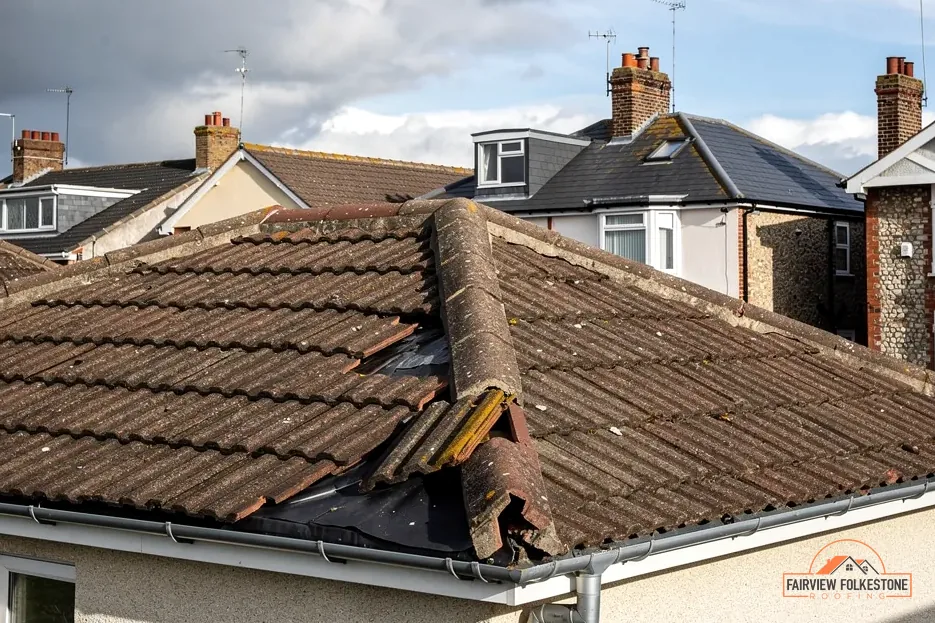
Tell us what's wrong with the roof.
You'll get one written total price.