
Wind damage
Why do roof tiles blow off in high winds?
Tiles blow off when the wind lifts them harder than their fixings and weight can hold them. Below: what holds a tile, why fixings fail and what to do next.
The short answer
Tiles blow off when wind lifts them harder than their own weight and fixings can resist, which happens where a nail has failed, a tile has slipped, a batten has weakened or the mortar at the ridge or verge has let go. Wind speed alone does not explain every loss. A sound, properly fixed covering holds, while one with weak points gives the gale something to work on.
4 min read · Part of Pitched roofing

What keeps a tile on the roof
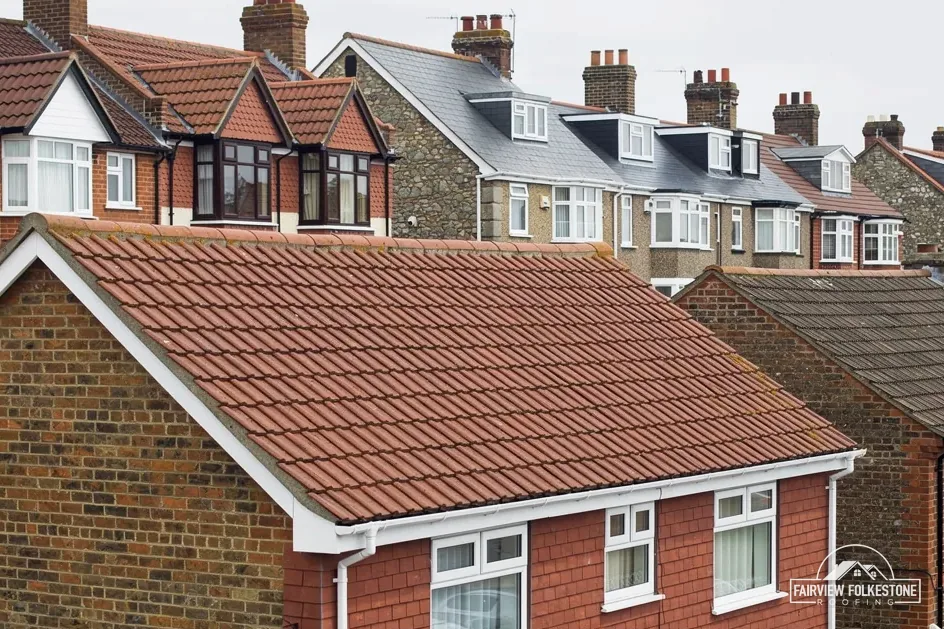
Three things hold a tile: its own weight, the way it hooks over the batten, and the fixings that stop it lifting. In a light breeze, weight and the hook over the batten are enough to keep a tile where it was laid. A gale is different: air moving across the roof pulls upward on the slopes, and the fixings take the load that weight cannot.
BS 5534 deals with this for slating and tiling. Marley lists what it contains: batten selection, methods of fixing, wind uplift formulas and a means of calculating fixing specifications. Marley also reports what the 2015 amendments changed:
- higher wind loads were assumed, so more fixings were needed overall
- single-lap tiles, hip tiles and ridge tiles all had to be mechanically fixed, with or without mortar
- tiles around the perimeter of the roof had to be fixed twice
Following BS 5534 is not required by law, so a roof laid before those changes may carry fewer fixings than a new one. That is no proof it is failing, only a reason for the survey to look at what is actually holding the tiles down.
Why one roof loses tiles and its neighbour keeps them
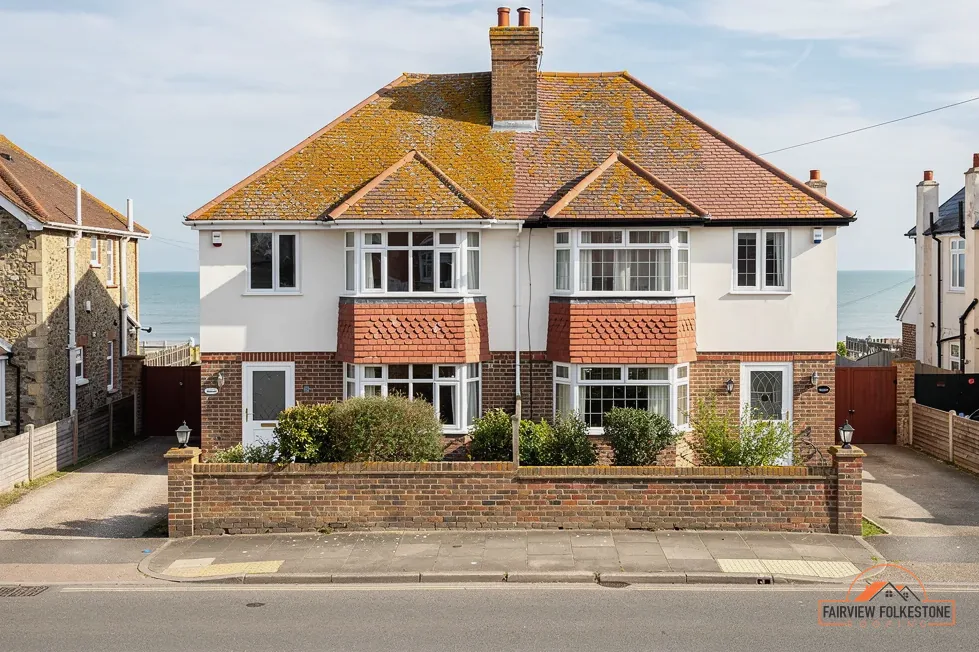
Two houses in the same street can face one gale and come through it differently. The reasons sit partly in the roof and partly in the site. On wind, the slate maker Cupa puts it this way: "Buildings positioned on slopes, hills or coastal areas as well as tall buildings will be graded with higher exposure." On a coastal house the fixings are therefore calculated for the site under BS 5534.
The roof's own condition decides much of the rest:
- tiles that have slipped a little, leaving a gap the wind can get under
- nails or clips that have worked loose or given up with age
- battens that have softened or split, so a fixing has nothing to grip
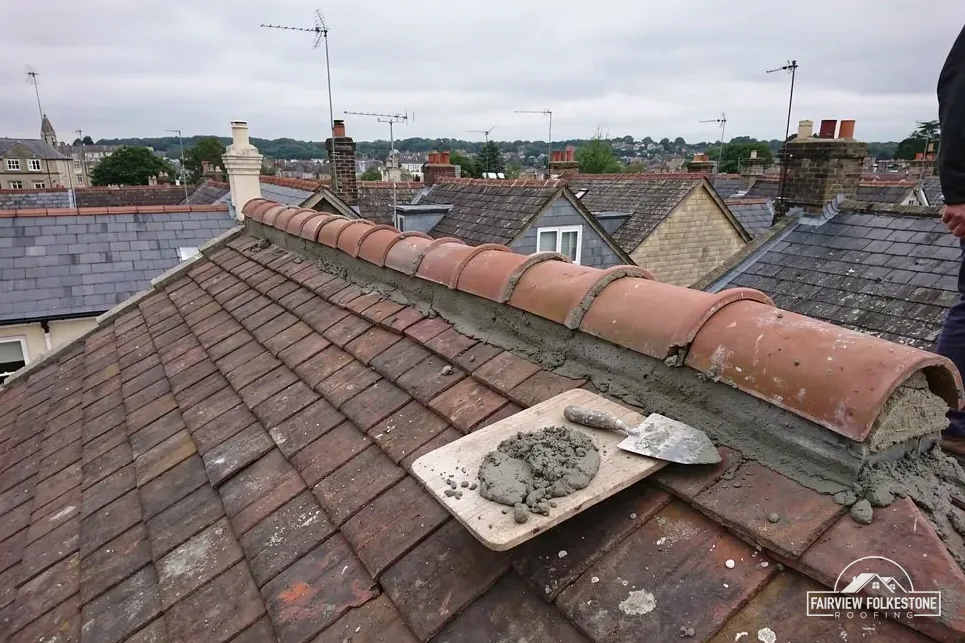
- ridge or verge mortar that has cracked and dropped out
The Met Office records that the Great Storm of 1987 brought Force 11 winds (56 to 63 knots) to many coastal regions of south-east England and blew a Channel ferry ashore near Folkestone. A modern roof is specified for the exposure it faces, so on survey we look at the battens and the fixings under the tiles as well as the tiles themselves. Our pitched roofing page describes the wider work.
What to do once tiles have come off
Keep off the roof and keep people clear of the ground below, where more tiles may drop. From the ground, photograph the damage and any fallen tiles before anything is moved. The Financial Ombudsman Service says that in a dispute over storm damage it will usually look at expert reports and photos. It also notes that a storm need not involve wind alone, since rain, hail or snowfall can constitute one.
A sensible order of events:
- tell your insurer before arranging anything permanent
- have a roofer cover the gap temporarily so no more rain gets in
- keep the photos, the roofer's report and every receipt
- agree the lasting repair once the cause is understood
A temporary cover buys time and nothing more. It does not explain why the tiles went, and the next gale will test the same weak point. Our page on a roof inspection after a storm covers what a full check looks at, and it looks along the whole roof, because a gust that shifts one tile can loosen its neighbours without any sign from below.
Refix, replace or re-roof
A few lost tiles on an otherwise sound roof call for a repair. Which? Trusted Traders give £75 to £400 for putting back between one and six standard roof tiles that are broken or gone (November 2025, excluding VAT, with the South East likely to be at the upper end). MyJobQuote adds that extensive storm damage repairs can cost £1,200 or more. Both are third-party guides, never our prices, because our written price follows a survey and comes as one total for the job. A few loose tiles and a worn slope are different jobs with different costs.
Refixing matters as much as replacing. Where the survey finds slipped or loose tiles, refixing them with proper fixings can be better than laying new ones, and our page on slipped tiles sets out how we choose between the two. If the nails, battens and underlay are tired across the whole slope, a full re-roof becomes the sensible recommendation, and the reasons are given to you on site before any work starts. The page on nailing and clipping tiles covers what a fixing specification asks for.
More questions
Should I climb up to replace a blown-off tile myself?
No. A wet or windy roof is dangerous, and a loose tile on its way down can injure someone below. Take photos from the ground, tell your insurer and ask a roofer to make the roof safe. A single tile put back without checking the fixings and battens around it may simply fail again.
Do replacement tiles have to be nailed or clipped?
BS 5534 is not required by law, but Marley says its 2015 amendments meant bedding on mortar had to be backed by mechanical fixings, and single-lap, hip and ridge tiles all had to be mechanically fixed. In practice a repair follows the maker's fixing instructions for that particular tile.

Tell us what's wrong with the roof.
You'll get one written total price.