
After a storm
Should you have your roof inspected after a storm?
Yes, when winds have been violent or you have found debris or a stain. Below: what hides from the ground, what to do first and what a visit records.
The short answer
Yes, have the roof looked at once a storm has brought violent winds, or whenever you find slates in the garden, a new stain on a ceiling or a gutter hanging loose. Damage up on a roof is hard to judge from the ground, and a record made soon afterwards helps an insurance claim as well as the repair.
5 min read · Part of Roof inspections
What a storm can do that you cannot see
Whether a spell of weather counts as a storm for your policy is for your insurer to say, and the Financial Ombudsman Service is where a dispute over that goes. For the roof the label matters less than the effect. Wind, driving rain, hail or snow can each leave a roof damaged in ways that show nothing from the pavement.
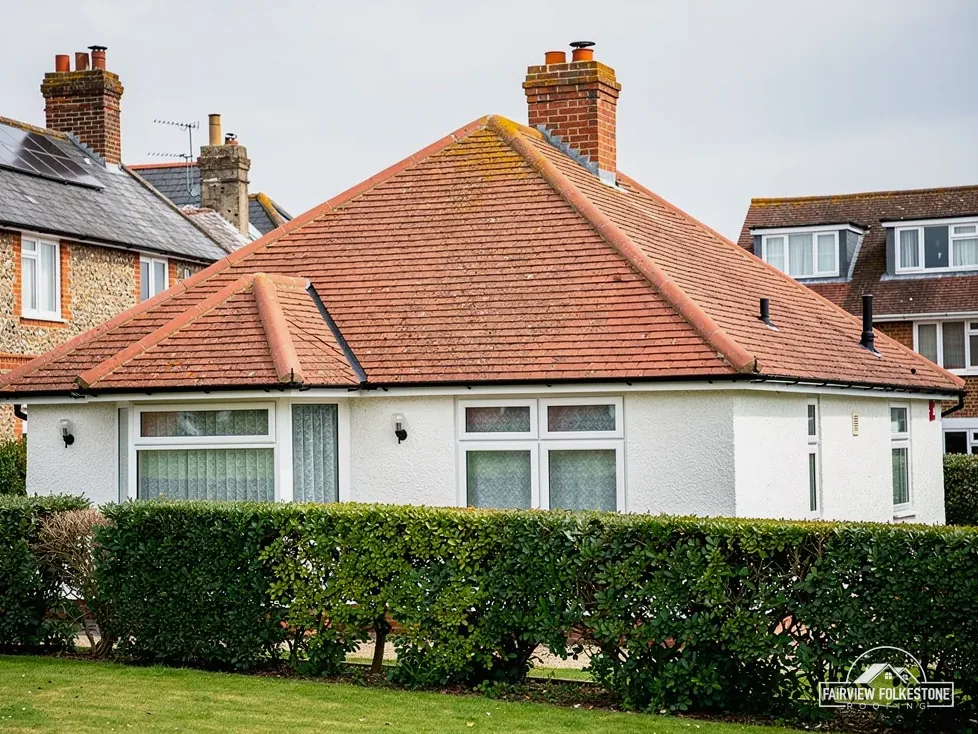
Wind lifts a tile or slate at one edge, cracks a ridge piece or peels back a strip of lead, and the covering can still look whole from the road, because the gap is on the far slope or under the lifted edge. Rain then reaches the underlay and the timbers. The first sign may be a drip weeks later, long after the weather has passed and the cause has been forgotten, and by then the timbers may have been damp for some time.
Coastal areas are graded for higher exposure, so the fixings on a seaside roof are calculated for the site under BS 5534. For a sense of what these roofs can face, the Met Office case study of the Great Storm of 1987 says a ferry on the Channel was blown ashore near Folkestone. A check after a hard blow can catch a loose ridge or a lifted lead edge before water reaches the ceiling.
What to do first
Safety comes before the roof. Stay off it, and keep clear of anything hanging loose. Then work through this order:
- Photograph the damage from outside and inside the house, and any debris before it is moved, because the Financial Ombudsman Service says it will usually look at expert reports and photos of a property's condition, and a picture taken before anything is cleared up is worth more than a description.
- Tell your insurer before arranging anything beyond an emergency make-safe, and ask which records the policy requires.
- Arrange a temporary repair if water is coming in, and keep the receipt.
- Book an inspection so the full extent is written down.
Any claim sits between you and your insurer, and its outcome turns on the policy wording. What we give you are dated photographs and a written account of what the roof shows. Our guide to roof inspections for insurance claims covers the paperwork in more depth, and the receipts and photographs you gather now will matter later. Keep them together in one folder, with the date of the storm written on the front, so nothing has to be reconstructed months afterwards.
What the inspection records
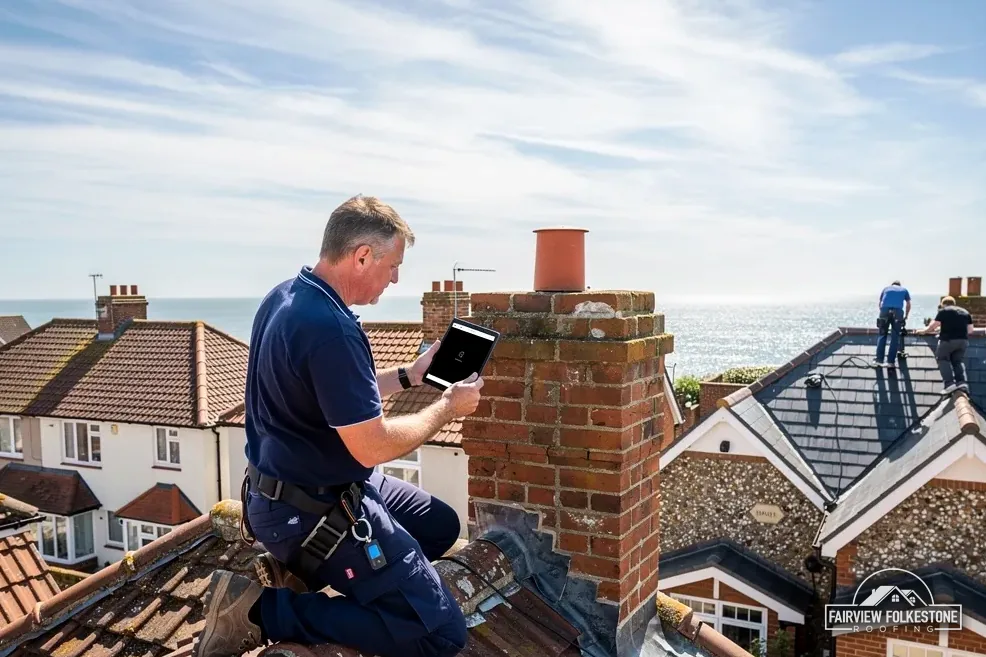
After a storm the visit has one job: to separate fresh damage from old wear and to record each fault where it sits, so the repair can be sized to what the weather actually did. Working from the ladder, the loft and, on a tall roof, a drone, the inspector checks the following:
- slipped, missing or cracked tiles and slates, and the courses around them
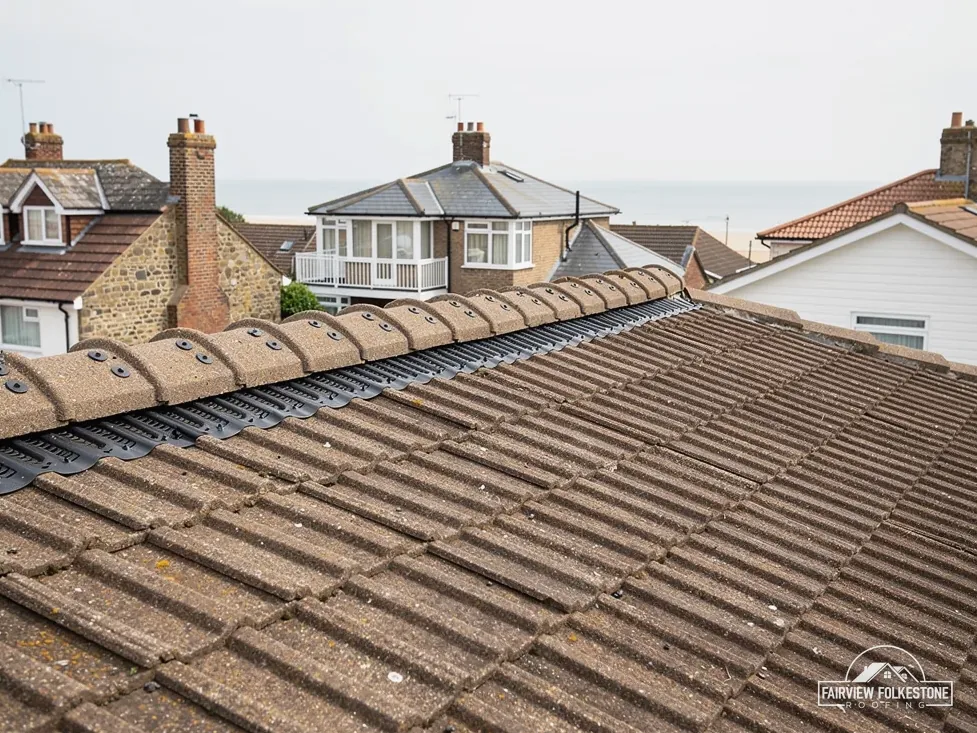
- ridge and hip pieces, and what bedding or fixing holds them
- flashings, valleys and the lead around chimneys
- fascias, soffits and bargeboards that wind may have loosened
- gutters and downpipes, which can be knocked off their brackets
- the underside: wet insulation, stained rafters and any gap that lets light in
Each fault gets a close photograph and a verdict. A loose tile is a repair. A roof with widespread lifting may need more, and the findings say which and why. If the building was built or refurbished before 2000, HSE advises assuming that asbestos is present, and HSE lists asbestos insulating board among soffit materials, so a damaged old soffit is photographed and left alone until it has been identified. Our roof condition report answer shows how those findings are written up.
What the work can cost
MyJobQuote gives a range for emergency roofers: call-out costs typically range from £150 to £300, while extensive storm damage repairs can cost £1,200 or more (its page, 22 October 2026). The higher figure is for extensive damage only. A few replaced tiles will cost far less, and a call-out pays for someone to attend, not for the repair itself. What a particular roof needs is only known once it has been looked at properly.
Those are national figures for guidance and not our prices. If a repair follows an inspection, the price comes in writing as a single sum once the survey is done, with any scaffold built into it. Where scaffold has to stand on the highway, we arrange the licence with our scaffolder, and the written quote says whether the scaffold is included.
If you are unsure whether damage has happened at all, start with the cheaper step. An inspection tells you whether the roof needs work, and it hands you the records you would want if you later decide to claim. The roof inspections page explains what a visit includes, and what you can expect to receive afterwards.
More questions
Will my insurer accept rain damage as storm damage?
That depends on the wording of your policy and on your insurer's decision, and neither is something a roofer can settle. Read the policy, ask the insurer how it defines a storm, and keep the dates. Photographs and a dated inspection report help whichever way the decision falls, and the Financial Ombudsman Service handles disputes on 0800 023 4567.
Can I check the roof myself after a storm?
You can look safely from outside at ground level, using binoculars if you own a pair, and from inside the loft. Walking on a roof is dangerous, wet slates and tiles are slippery, and standing on a damaged covering can cause more damage. Photograph what you see and leave the roof itself to an inspector with a ladder.

Tell us what's wrong with the roof.
You'll get one written total price.