
Roof evidence guide
Roof inspections for insurance claims: what evidence insurers want
When storm damage may lead to an insurance claim, the roof needs recording before it is repaired. This guide covers the photos, notes and reports worth having, and who decides what.
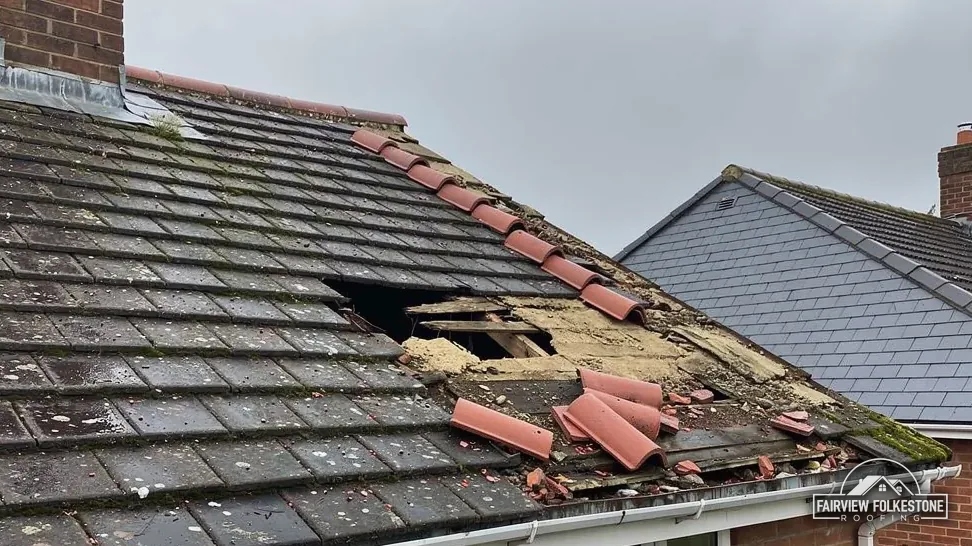
A damaged roof puts two jobs on your plate at the same time. The roof has to be made safe, and the damage has to be recorded well enough for an insurer to understand what happened. The second job is easy to skip when water is coming in, and it is the one that is hardest to do afterwards, once the tiles have been swept up and the temporary sheeting is on.
This guide is about the evidence. It covers what to do in what order, which photographs and notes help, what a roofer's inspection report can and cannot add, how the Financial Ombudsman Service describes a storm, and what to do if an insurer turns a claim down. It is not advice on any particular policy, and we do not handle claims: that stays between you and your insurer.
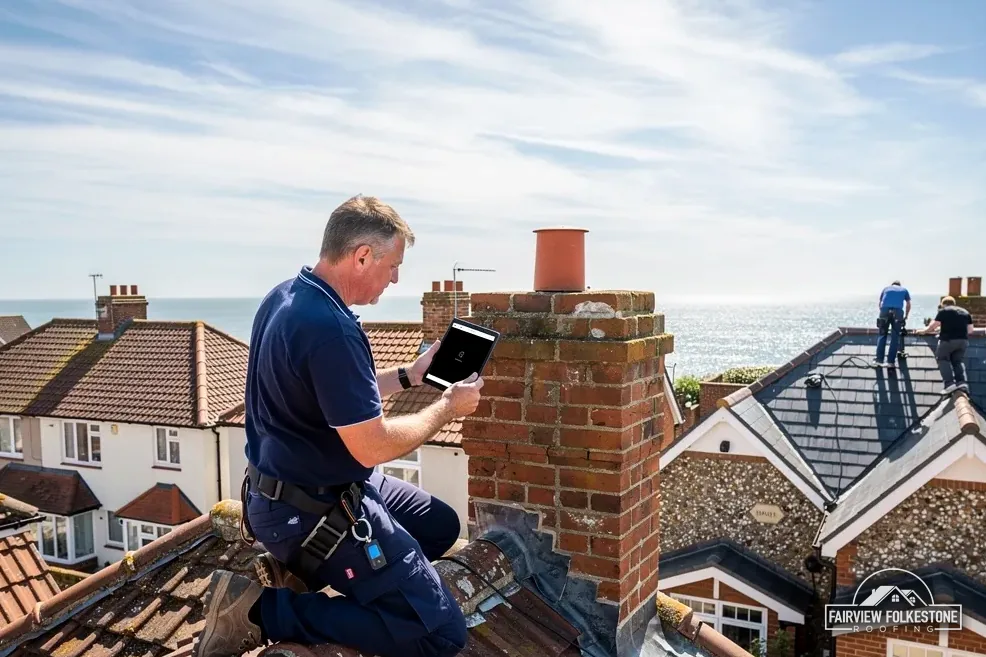
Where a roofer fits in is narrower than people expect. We look at the roof and write down what we find.
01The detail
Who decides, and where a report fits
Your insurer decides whether your policy covers the damage. A roofer does not, and neither does a report written by a roofer. What a report does is put facts in front of the people who decide: what was found, where on the roof, in what condition, and how it compares with the roof around it.
The Financial Ombudsman Service is the free service that settles disputes between consumers and financial firms. When it weighs a storm complaint, it will usually give weight to photos and to reports from experts, and it adds that the insurer will normally have a surveyor write a report of its own. So two accounts of the same roof are in play: the insurer's surveyor's, and whatever record you made or paid for.
That is the reason to gather your own, and to start before the roof is touched. If the only report on file is the insurer's, you have little to set against it when the two differ. If you hold dated photographs and a written inspection, you can point to what the roof looked like on the day. Be wary of anyone who offers to tell you in advance that a claim will succeed, or who asks to speak to the insurer for you before you have seen what the policy says. Evidence is yours to gather and yours to send.
Nothing in a report can promise an outcome, and a good roofer will say so before starting. What it can do is leave less room for doubt about the facts. Read your policy for its conditions on notifying the insurer, on repairs and on who may carry them out, because those differ from one policy to the next.
02In order
The order of events after damage
When a storm has just passed, order matters more than speed. This sequence keeps the evidence intact and the roof safe:
Roof evidence questions
Should I clear the debris before the insurer sees it?
Photograph first, then clear. The Financial Ombudsman Service says it will usually look at photos, so a picture of the damage where it lay is worth having. Move whatever is dangerous, keep the broken pieces if you can, and tell your insurer what you moved and why.
- Keep clear of the damaged area, and stay off the roof and out from under loose tiles.
- Contact your insurer before any lasting repair, and find out what they will want to see.
- Take photographs of the damage as it lies, before anything is swept, lifted or covered.
- Cover the opening with a temporary repair to make it safe, and photograph that too.
- Keep every receipt, including those for sheeting, hire and any call-out.
- Arrange a written inspection of the roof as a whole, not just the visible hole.
Steps three and four are the ones that slip in the rush. Once a tile has been picked up and put in a bin, it cannot be photographed where it landed. Once sheeting covers a hole, nobody can see its edges.
Photographs of a property's condition carry weight with the Ombudsman, which will usually consider expert reports too, so a photograph taken first has a use later. Our page on a roof inspection after a storm goes through what is safe to do from the ground while you wait for a visit.
If you ask a roofer to attend to make the roof safe, remember that a visit you request specifically to deal with something urgent carries no 14-day cancellation right, under the 2013 consumer contracts regulations as Citizens Advice explains them. Ask what the visit will cost before you agree to it.
03Side by side
Photographs and notes that carry weight
You do not need professional equipment. A phone is enough if the photographs are taken the right way and kept with the details that give them meaning. The table sets out what each piece of evidence shows.
| Evidence | What it shows | When to take it |
|---|---|---|
| Wide shots of each elevation | Where the damage sits on the house | Before any tidying |
| Close shots of each fault | The condition of the break, the fixing and the batten | Before any tidying |
| Fallen tiles and debris | Where pieces landed, and what they hit | Before they are moved |
| Water marks indoors | How far the wet has travelled | On the day, then again later |
| Temporary repair | What was done to keep rain out | Once it is in place |
| Receipts | What the emergency cost | As you go |
Date every photograph, which a phone does for you, and write a short note of what you saw and when. A note made that evening reads more reliably than one pieced together weeks later. Keep any photographs of the roof from before the damage, such as holiday snaps with the house behind. They show the roof's earlier state, which can matter if an insurer questions how worn it already was.
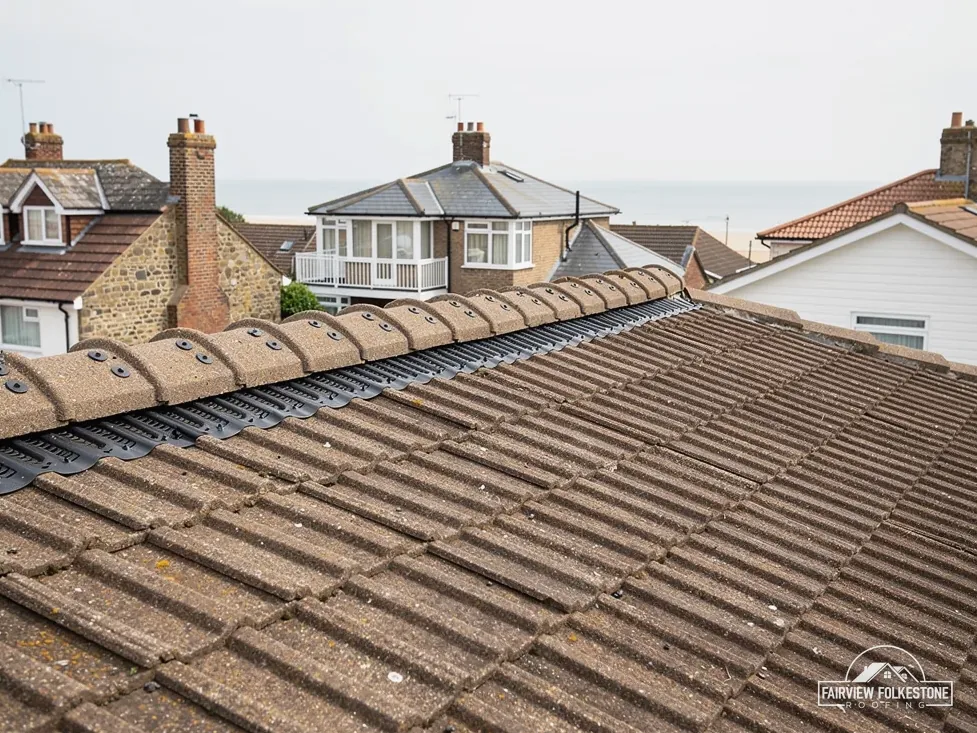
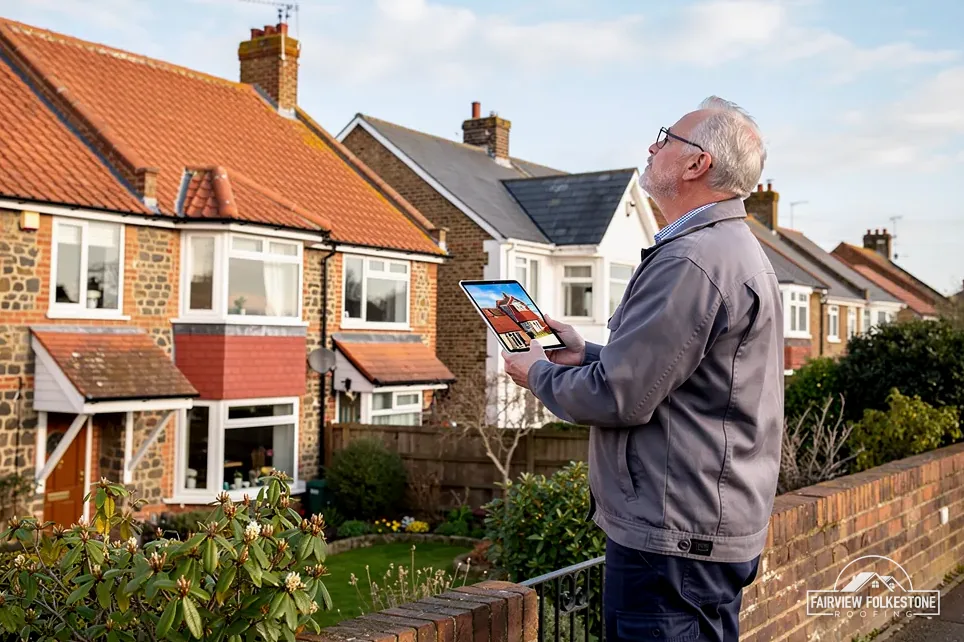
Take more pictures than seem necessary. Storage costs nothing, and a gap in the record cannot be filled later. If the weather allows a safe look from the garden or the street, a few shots with a zoom lens or the phone's zoom, taken from firm ground, show the slopes without anyone going near the edge.
04Choosing a roofer
What a roofer's inspection adds
A roofer who can climb, reach the loft and see the whole roof can record things you cannot easily photograph from the ground. A written inspection after damage should set out:
- every fault found, with photographs and its position on the roof
- the condition around each fault, such as sound battens, firm neighbouring tiles or tired nails
- what the loft shows, including water marks and the state of the underlay
- what was made safe, and with what
It should also separate what the roofer saw from what they infer. A slate lying broken on the lawn is a fact. Saying the wind broke it is a view, and the report should label it as one. That separation is what makes a report useful to a reader who was not there, and it protects you if the question later becomes one of cause.
Timing helps the report too. An inspection carried out soon after the damage shows the roof close to the state the weather left it in, and the longer the gap, the more a reader has to guess about what changed in between. Say in the report when the visit took place and what the weather had been doing since.
Do I need my own report if my insurer sends a surveyor?
Nothing requires it. The insurer will normally have its own surveyor write a report, as the Ombudsman notes. A written inspection of your own gives you a second record of the roof, taken by someone who is on your side of the table, and it lets you compare the two accounts if they differ.
What the report cannot do is say that your policy will pay. No roofer can tell you what an insurer will decide. The report goes to you, and you decide whether to send it on.
If the inspection finds that the roof was already near the end of its life, say so plainly to yourself before you send it anywhere. A worn roof and a storm-damaged roof are different problems, and an accurate record serves you better than one that blurs them. Our guide to the roof condition report shows how a finished one is laid out.
05Storms
How a storm is defined, and who proves what
It is easy to assume a storm needs a named event or a set wind speed. The Ombudsman's approach is wider. To it, a storm usually means violent winds accompanied by rain, hail or snow. A fall of rain, hail or snow can amount to a storm by itself, and the Beaufort Scale is one of the things it takes into account.
Policies differ here. The Ombudsman notes that some insurers set their own cut-off on the Beaufort Scale and count only winds above it as storm-force. Check your policy for how it defines a storm, since that is where an insurer will start.
The Ombudsman also covers the burden of proof. When an insurer leans on an exclusion, it is the insurer who has to show that it applies, and an inspection report is the example the Ombudsman gives of the evidence. That matters if you are told the damage was wear and tear rather than weather. The proof sits with the insurer, and a dated record of your roof's condition gives you something to hold their evidence against.
Before relying on any of this, read the Ombudsman's page on storm damage and home insurance in full. We summarise it here, and the source is the authority on its own approach. A roofer's inspection fits the same pattern: it is evidence about the roof, and the question of cover remains with the insurer.
06Key points
If your insurer says no
A refusal is not the end of the road, and the route has set steps. You complain to the insurer first. The Ombudsman says a business gets up to 8 weeks to consider most complaints. If you are unhappy with the final response, you then have 6 months from the date on it to bring the matter to the Ombudsman, whose helpline is 0800 023 4567.
What helps at that stage is what you gathered at the start:
- dated photographs of the damage before anything was moved
- the written inspection, with its separation of fact from view
- receipts for the temporary repair
- your note of what happened and when
- the insurer's own surveyor report, which you can ask to see
Do not delay. The time limits run from the dates on the letters you receive, so keep every letter and note the day it arrived. Set the insurer's report beside your own and mark where the two disagree. If the insurer's surveyor puts the damage down to age and your inspection shows sound battens and firm tiles beside the break, that difference is what to put to the insurer in writing.
The repair still needs doing while all this runs. We give a single written price for the permanent work after a survey, and when you compare quotes, make sure each price states if VAT and scaffold are in it. Where an insurer is paying, show them the written price before work starts, and ask them to confirm in writing that they are content for the work to begin. For the wider service see our roof inspections page, and for what is checked indoors, what a roofer checks in the loft.
Could a temporary repair count against me?
Check your policy, because its wording sets what it asks for. Making the roof safe is a sensible step, and photographs of the damage before the repair, with receipts afterwards, show what was done and why. If you are unsure, ask your insurer before the work and keep their answer in writing.
Tell us what's wrong with the roof.
You'll get one written total price.