
Inspection time
How long does a roof inspection take?
It depends on the roof, so be wary of a fixed time. Below: what stretches or shortens a visit, what each check adds, and what you receive afterwards.
The short answer
The time depends on the size of the roof, how easy it is to reach and how many faults turn up, so a fixed figure would be a guess. A small, simple roof can be walked round far sooner than a large one with several slopes, a chimney stack and a flat extension. A visit that finishes in minutes is worth questioning: ask what was actually looked at.
4 min read · Part of Roof inspections

What stretches or shortens the visit
How long a roof inspection takes depends on the roof, so no single figure fits every house. What can be said is what moves the time up or down on site. These are the factors that count:
- the number of slopes, and whether any of them is steep or tall
- how many separate parts the roof has, such as a porch, a bay window roof or a dormer
- whether the loft is open, boarded or packed, and how easily the hatch can be reached
- the number of faults found, since each needs a close look and a photograph
- how much of the roof can be seen from the ground, a ladder or the air
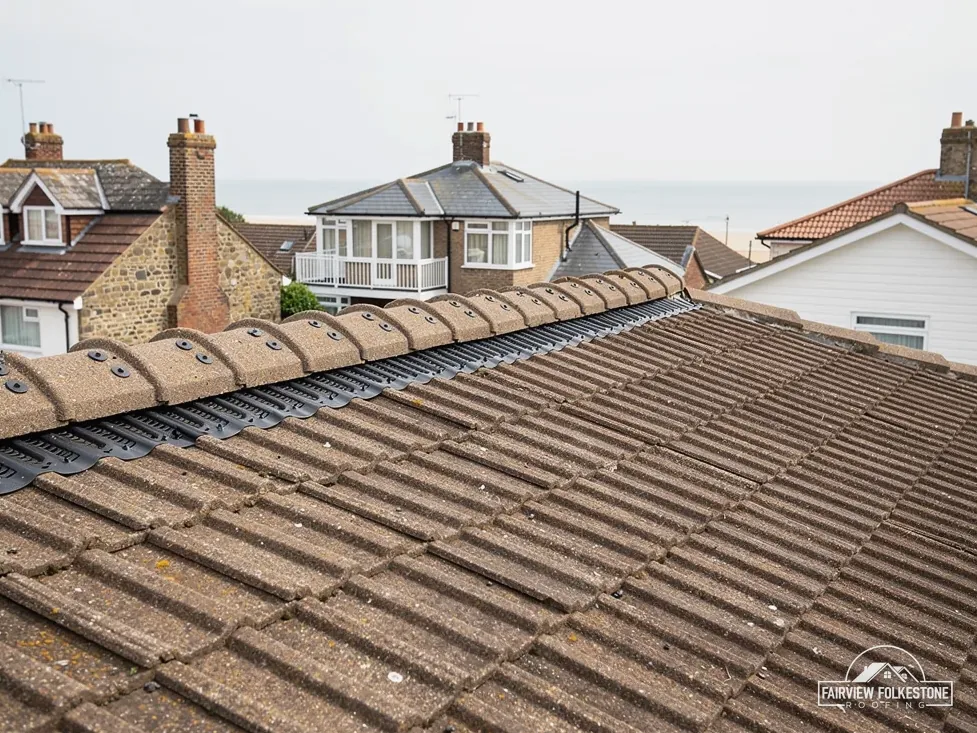
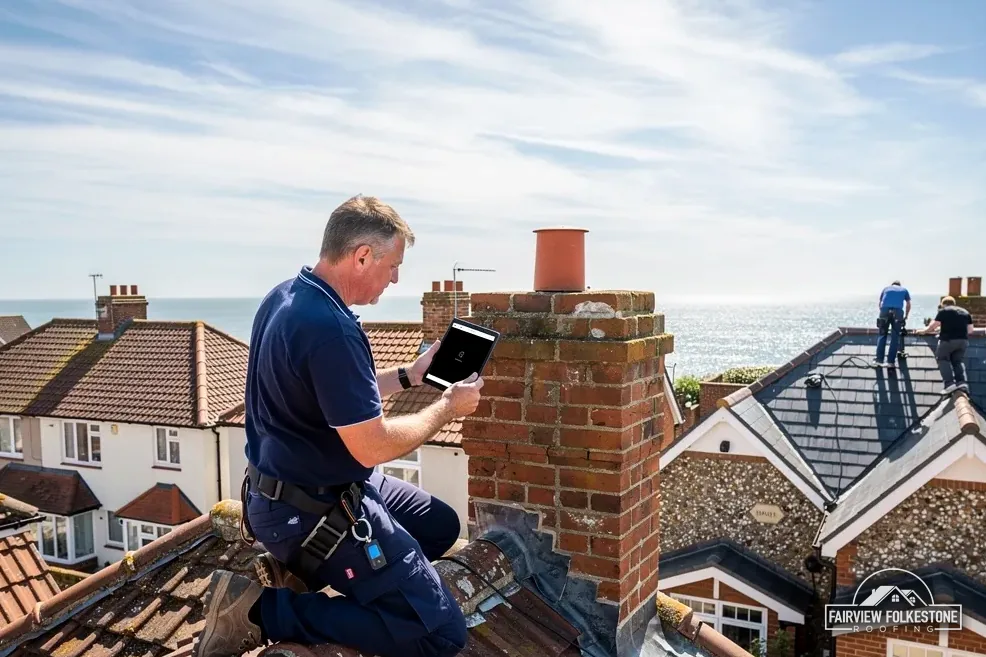
A roof that seems simple from the road can still take time. A flat section tucked behind a parapet, or a chimney with lead flashings on three sides, each need their own check before anything is written down, and weather can add to it if the roof is wet and slippery, since a wet slope may have to wait for a drier day.
What each check adds
An inspection can combine more than one way of looking, and each adds time because each shows something the others cannot.
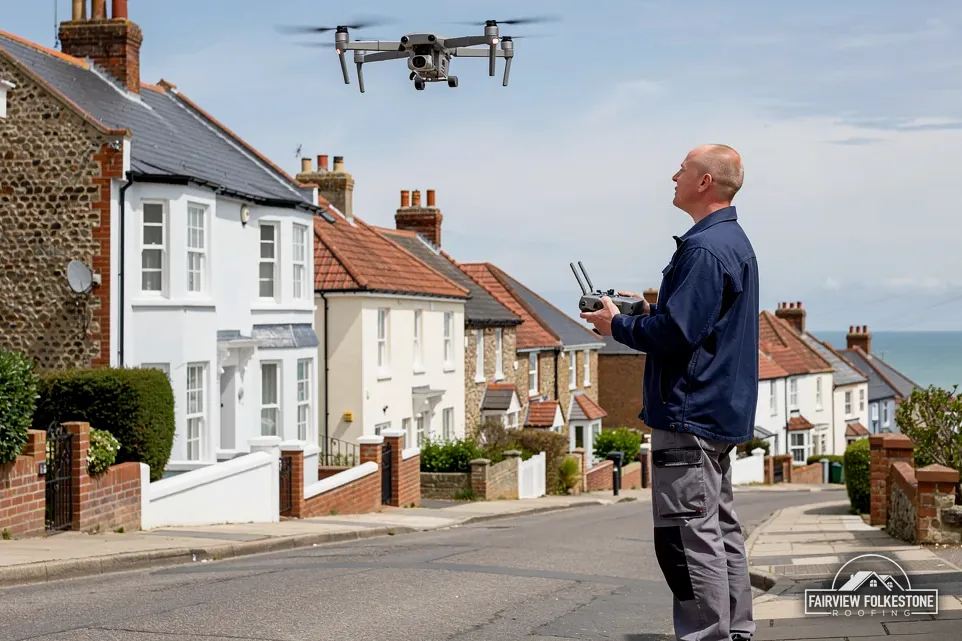
The ladder check gets close enough to judge a single slate or tile: a hairline crack, a slipped course, a gap at a verge. The loft check shows the underside of the roof, where stained timbers, damp insulation and daylight through the covering give away problems the outside hides. A drone covers areas that are unsafe to reach by ladder, such as a high ridge or a steep rear slope, and it records images you can study yourself afterwards, at your own pace, with the inspector's notes beside them.
Our post on drone, ladder and loft inspections compares the three, and what each can and cannot see. If you want only a quick look at one worry, such as a stain over a single room, the visit can be narrower, and we agree that scope with you before we start, so you know exactly what the time covers. A narrow scope is not a lesser job; it is a job matched to the question you asked, and the findings say what was and was not checked.
Why a very quick visit can miss things
Speed is not a fault in itself. A short visit suits a short question. The trouble starts when a short visit claims to answer a big one, such as whether the whole roof is sound.
Roof faults can be small at first. A cracked tile, a lifted piece of lead or a gap in the pointing around a chimney can each sit on a slope for a long time before any stain appears indoors. Finding them means working across the roof course by course, then going into the loft to see the same area from beneath.
When you book, ask what the inspector will look at and in what order, and whether the loft is included. If the answer is vague, the findings are likely to be vague as well. Ask too whether photographs are taken as the work goes, because that is the clearest sign a visit was not rushed. The roof inspection checklist shows what a thorough visit covers, area by area, so you can hold any quote against it.
What happens when the visit is done
The visit is the middle of the job, not the end of it. Afterwards you should receive the photographs, a list of the findings and a verdict on each: repair, replace or leave and watch, with the loft findings set beside the outside ones. Writing that up takes time away from your house, which is one reason a report cannot be handed over on the doorstep.
If the findings call for work, you get a written price for the whole job, worked out after the survey, not a figure called down from the ladder. The price follows the findings, never the other way round. Keep the findings with the house papers. A dated record of the roof's condition helps if a problem develops later, and a buyer or insurer may ask to see it.
If a visit turns up nothing needing work, that is a result too, and it saves you from guessing. It also gives you a dated starting point to compare against next time. See the main roof inspections page for how we report each visit.
More questions
Do I need to be at home during the inspection?
Not for the outside, but the loft check needs access to the hatch, so someone should be there or a key should be arranged. It helps to clear the space beneath the hatch and to tell the inspector about any leak, stain or noise you have noticed, and which room it is over. That points the visit at the right area.
Can I stay and watch the inspection?
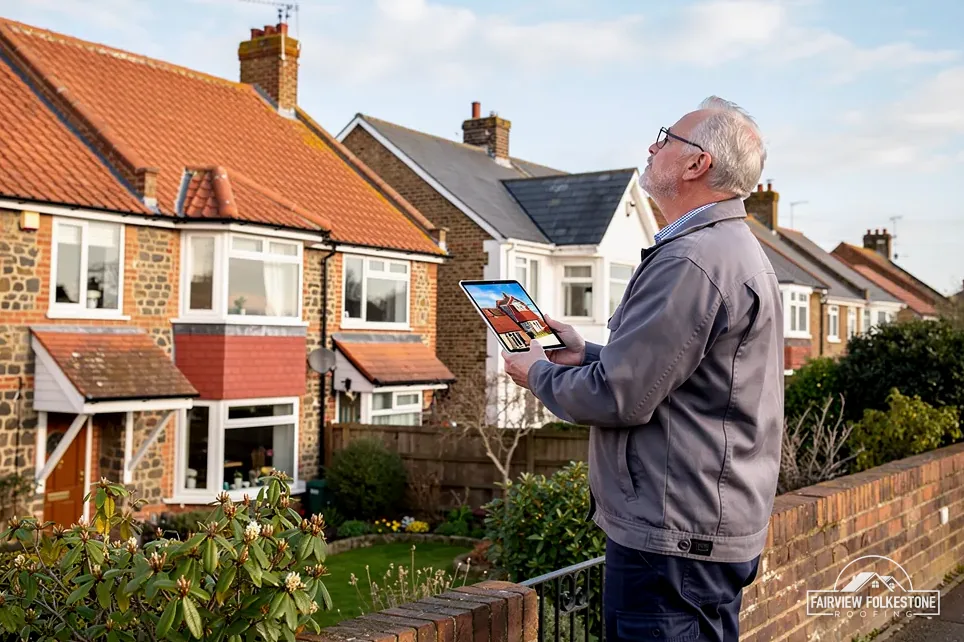
Yes, from the ground. Standing back lets you see what is being looked at, and the inspector can point out a fault on the roof as it is found. Please keep clear of the ladder base and any area where a tile or tool could fall. Photographs taken during the visit let you see the roof as the inspector did.
Tell us what's wrong with the roof.
You'll get one written total price.