
Listed roofs
What does a roof survey on a listed building involve?
It records the roof's condition and original fabric before any repair is planned. Below: what is checked, where consent comes in and church routes.
The short answer
A roof survey on a listed building records the materials, the condition of each part and what a repair would involve, so consent questions can be settled before any work is priced. The survey itself changes nothing on the roof. The findings must be exact about materials and fixings, because the consent route turns on the building's character.
4 min read · Part of Roof inspections

What the survey records
On a listed roof, the material counts for as much as the leak does. A survey for this kind of building notes the details a council will want to see described before it considers any change. A complete record includes the following:
- the covering: slate, clay tile, stone or another material, and how each course is fixed
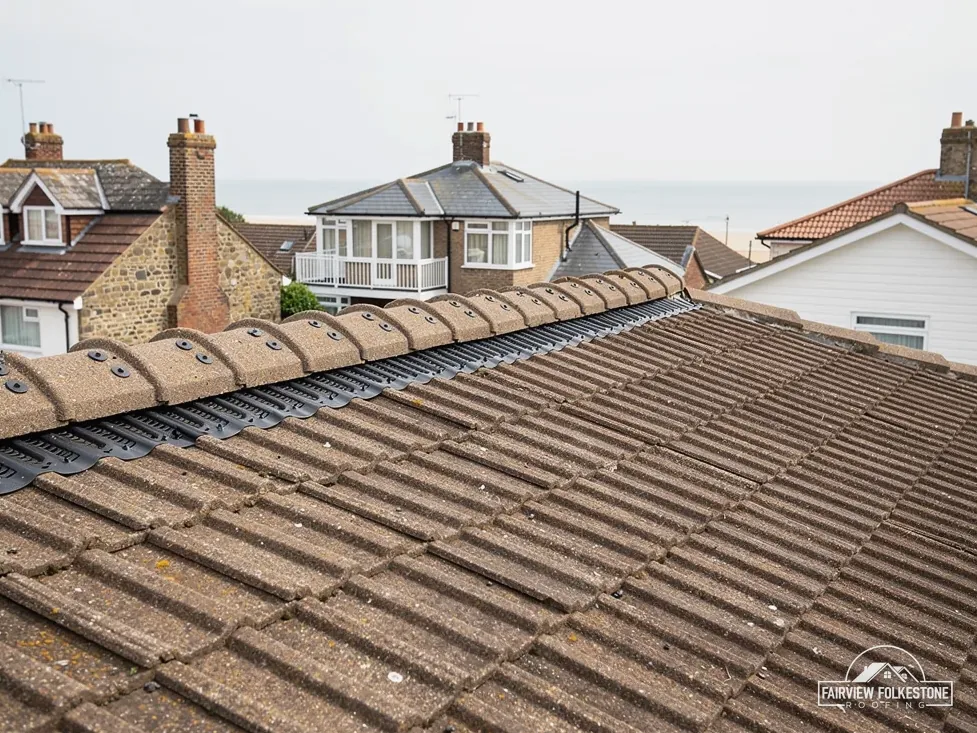
- the ridge, hips and verges, and whether they are bedded in mortar or fixed dry
- lead flashings, valleys and gutters, with the state of each
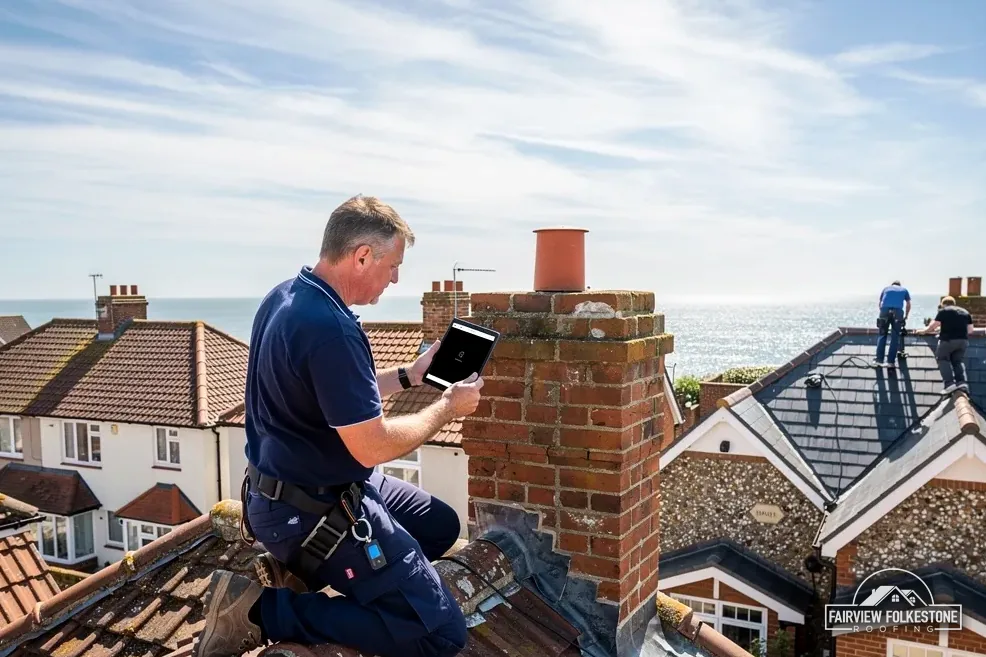
- the chimney stacks, including pointing and the lead around them
- the roof timbers seen from the loft, with any rot, beetle damage or earlier repairs
- photographs of each fault, taken close enough to show the material itself
We write down what we find without pushing a replacement the building may not allow, and we note which original parts look worth keeping. Where a repair could re-use the existing slates or tiles, the findings say so. The aim is a document you can take to the council, not a decision made on your behalf.
Consent comes before the repair
A listed home keeps permitted development for roof work, but anything touching the building's character also calls for listed building consent. Where a repair crosses that line is for the council to judge, under the Planning (Listed Buildings and Conservation Areas) Act 1990. A roofer cannot decide it for the council, a survey is not a consent, and the council's reply should be kept on file with the findings.
That is why the survey comes first. With specific findings in hand, you can ask the council whether a like-for-like repair needs consent and, if it does, describe the work precisely. A vague request tends to bring a vague reply, and a precise one is easier to answer. Photographs of the exact tile, slate or lead detail speed that up.
Planning is a separate test from Building Regulations. A listed roof still has to meet the building control rules for the work it receives, so ask building control as well. The roof inspections hub explains how our reports are laid out, and our roof condition report answer shows what a findings list looks like.
Churches and other special cases
Not every listed building follows the council route. The consent system depends on what the building is and who uses it, so find out which applies before you book a survey.
- A Church of England church that is in use goes through the faculty system rather than the council's listed building consent.
- United Reformed, Methodist and Roman Catholic churches in use each work through their own denominational system.
- Listed Unitarian, Quaker and redundant churches need listed building consent.
- A scheduled monument needs its own consent, under section 2 of the 1979 Act on ancient monuments and archaeological areas.
A minister's house sits outside the church exemption and goes the listed building consent route. For anyone who looks after a church or chapel, the survey findings read the same whichever route applies, but the body that receives them differs.
We keep the descriptions of materials and fixings plain and specific, so they can be passed to whichever body decides, whether that is a council officer, the people handling a faculty petition or a trust. A church roof often has lead, stone and old timber in one run, and each material is described separately.
Listed, conservation area or both
Listing and conservation areas are separate things. A listed building can stand inside a conservation area, and a house inside one need not be listed. Ordinary re-roofing is normally permitted development even in a conservation area, but dormers are not, and an Article 4 direction can remove further rights, so we check with the council first.
Each council keeps its own conservation area map, and the counts differ: Dover 57, Canterbury 97, Ashford 43 and Thanet 27. For Folkestone & Hythe and for Rother, ask the council directly for the map that covers your address.
Some listed buildings also stand in a Kent Downs or High Weald National Landscape. There the district council still decides planning applications; dormers need planning permission, while ordinary re-roofing stays under the normal rules. Old roofs and loft spaces can also hold protected wildlife, which is one more reason the survey is careful and takes its time. If we see signs of bats or nesting birds while recording the roof, we stop and report them to you before anything is moved. Our loft checks answer covers what we look at from inside, and what the law says about it.
More questions
Does a like-for-like repair on a listed roof need consent?
That is for the council to decide, not a roofer. Any work that affects the building's character needs listed building consent, and where the line falls depends on the material and the extent of the repair. Take the survey findings and photographs to the council and ask before any work starts, so the answer comes in writing and not from memory.
Is a survey for a listed roof any different from a normal one?
The checks are the same, but the record is more detailed about materials, fixings and earlier repairs, because the council will want them described. Expect closer photographs, a note of what could be re-used and a plain statement of what could not be reached. The survey still ends with a verdict on each fault.

Tell us what's wrong with the roof.
You'll get one written total price.