
Roof inspection guide
What a roof condition report includes, and how to read one
A condition report turns a roof visit into something you can read, keep and show to another roofer. Here is what goes in one, with an example of how the findings are written.
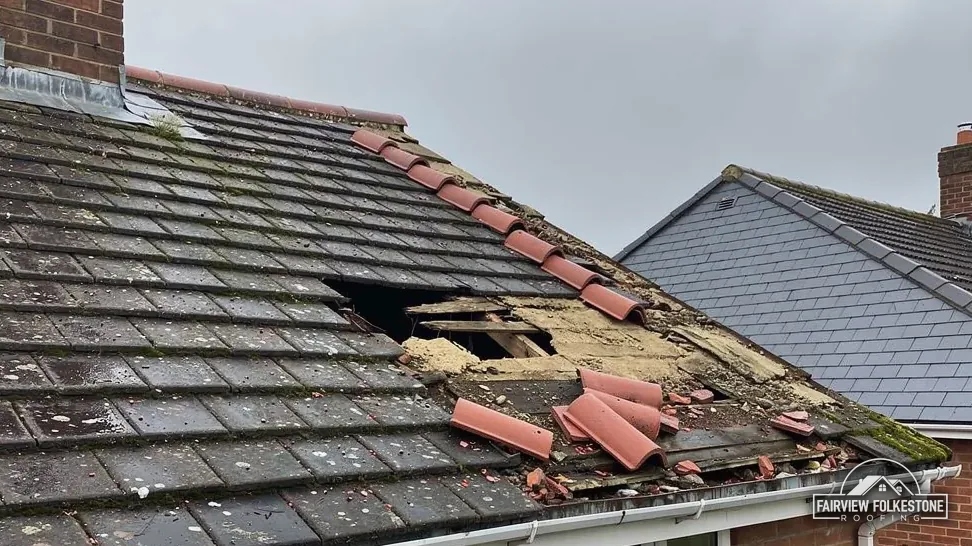
Plenty of roofers will tell you what they think of your roof, standing on the drive. Fewer put it in writing. A condition report is the written version: a record of what was looked at, what was found, how serious it is, and what the roof needs, with photographs to back each entry. It is worth having because a spoken opinion fades by the next morning and cannot be shown to anyone else.
Examples of the thing itself are surprisingly hard to find. Most pages tell you a report exists and stop there. This guide opens one up. It sets out the sections in the order they appear, shows how a finding is written with its verdict beside it, explains the words and photographs you will meet, and says what to do once the report is in your hands, for a sale, a purchase, an insurance claim or an ordinary decision about what to do next with the roof over your head.
01The detail
What the report is for, and what it is not
A roof condition report describes the state of the roof on the day it was looked at. It records what can be seen, what the roofer concludes from it, and what should happen next. It is written for the person who owns the roof, and it should be clear enough that someone who was not there could follow it from start to finish without a phone call.
It is not a valuation, and it says nothing certain about the future. Roof coverings age at different speeds, and a clean report today does not promise a clean one in ten years. Equally, a report that finds faults is no reason to panic. Much of what a report records is routine, such as a slipped tile or a dry lead joint, and the useful part is the sorting: what is urgent, what can wait and what simply needs watching.
A report is most useful when the person who writes it is also the person who would do the work, or at least understands it. Someone who knows how a ridge is bedded, how a valley is lined and how lead is dressed can tell a fault from an oddity. Someone who is only filling in a form tends to record everything with equal weight, which leaves you to do the sorting yourself.
How an inspection differs from a survey commissioned for a mortgage is set out on our page on roof inspection versus roof survey. For scale, MyJobQuote's roof survey average is around £300 (12 October 2026), and our guide to roof inspection cost explains what moves a figure like that up or down. The wider roof inspections page lists what a visit covers, from the top of the ladder to the underside of the covering.
02In order
The sections, in the order you will read them
Reports differ in layout, but a useful one covers the same ground. This is the order we write ours in, so you know what to look for in any report you are handed, from us or anyone else.
Roof condition report questions
Does a condition report tell me how many years are left?
No. Lifespans published for a material are general ranges, never a promise about one roof. A report can say what condition each part is in today and which parts look closest to the end, but nobody can fix a date, and a roofer who offers one is guessing.
- The property and the roof: the address, the date, the weather, how the roof was reached, and a plain description of whether it is pitched or flat and what covers it.
- The limits: what could not be seen, for example a loft that was boarded over, a slope that could not be reached safely, or a roof viewed only from the ground.
- The findings, area by area: covering, ridge, hips and verges, valleys, flashings, chimneys, rainwater goods and the roofline, then the loft and any flat roofs.
- The photographs, each labelled with its location, so a finding can be matched to a place on the roof.
- The verdicts, one per finding, using a small set of words.
- The summary: what to do first, what can wait, and what to look at again.
The second item deserves attention. A report that does not state its limits is hiding something, even if by accident. If the writer could not get into the loft, the report should say so, and any remark about the timbers should be marked as resting on what could be seen from outside. We note limits next to the findings, so that a missing view reads as a gap and never as a clean bill of health.
03Side by side
How a finding is written: an example
Here is a worked extract. It is an illustration of the form, not a real property, and it is deliberately short so that you can see the pattern.
Notice what every row does. It names the place. It says what was seen, in words an owner can check against the photograph. It then gives a verdict in one word: repair when the fault is local and the surroundings are sound, replace when patching would not hold, check when something needs a closer look before anyone can say. A verdict never carries a price, because the price comes afterwards, as one written total for the work you decide to have done.
A good entry is never vague. Words such as "some wear" or "general ageing" tell you nothing you could act on, so we replace them with the place, the symptom and the evidence.
The check verdict deserves a word. It is not a way of avoiding a decision. It is used when a fault points to something we cannot see, such as a lifted flashing that could be a loose edge or a failed joint behind the brickwork, and the report says what would settle it. That might be a look from the loft, a second visit after rain, or opening up one small area. Until then, it is honest to say the verdict is not yet known.
| Item | Finding | Verdict |
|---|---|---|
| Front slope, tiles | Two tiles slipped at the third course; battens beneath dry and firm | Repair |
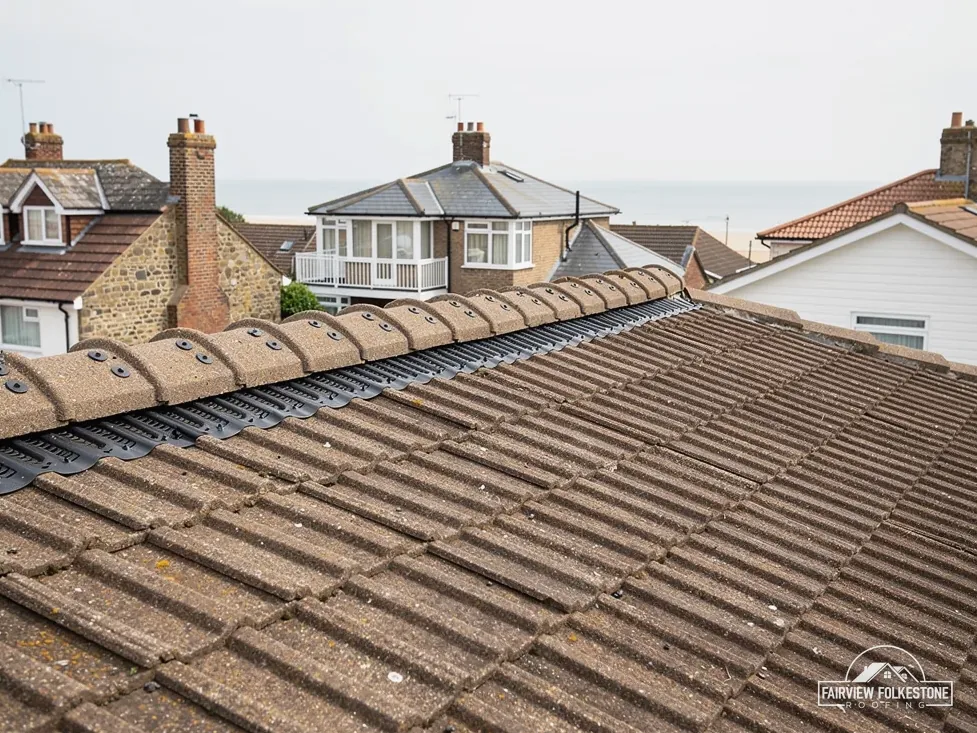
| Ridge | Mortar bedding cracked along its length; photographs 7 and 8 | Repair |
| Chimney flashing | Lead lifted at the upper edge; cause not clear from outside | Check |
| Rear flat roof | Standing water after rain; covering split at the upstand | Replace |
| Gutters | Joint dripping at the corner; bracket missing | Repair |
04Key points
What the photographs should show
Photographs are the part of a report that people trust most, so they need to be useful. A good set follows a few habits.
Photographs also protect you. For a storm claim, the Financial Ombudsman Service says it usually considers expert reports and photos showing the condition of a property, so a dated set taken before anything is moved is worth having. Our page on roof inspections for insurance claims explains what to do after storm damage.
- Each photograph is labelled with where it was taken and which finding it supports.
- Faults are shown in context first, then in close-up, so you can find them on the roof yourself.
- Sound areas are photographed too, not only faults, which shows what was checked and found in good order.
- Loft photographs show the underside of the covering, the underlay, the battens and the timbers, with any staining or daylight in frame.
A report that arrives with no photographs, or with a handful of generic pictures of the front of the house, is difficult to rely on. You cannot tell what was looked at, and neither can the next roofer. If you are paying for a report, ask to see the photographs before you accept the written part, and ask for the original files if you plan to share them with an insurer, a buyer or another roofer, since compressed copies lose the detail that makes a crack or a gap visible.
Can I use a report from a previous owner?
Only as background. A report describes the roof on the day it was written, and weather, work or neglect since then may have changed it. If an older report exists, share it with whoever inspects the roof now, because it shows what has changed and what was already known.
05In brief
The technical lines worth recognising
You do not need to be an expert to read a report, but a few phrases turn up often enough to be worth understanding before you see one.
- BS 5534 is the standard for slating and tiling. Marley says a roofer is not bound by law to follow it, though its 2015 amendments made clear that mortar could not stay the sole means of securing a covering, so a report may flag cracked ridge mortar as a fixing question, not just a cosmetic one.
- Falls: BS 6229:2025 sets a minimum finished fall of 1:80 for membrane flat roofs, so a report that records standing water is describing a fall problem.
- Ventilation: Marley gives 25 mm of eaves ventilation at 15° or less, and 10 mm above 15°, where a cold roof has a high resistance underlay, which it describes as not vapour permeable.
- Lead: MyJobQuote says correctly installed lead flashing can last for over 80 years, so lifted or split lead on an older roof usually points to a failed detail, not to the end of the material.
- Soffits and garages: where a report names a possible asbestos material, it should say whether a sample test is advised before any work touches it.
Where a report mentions a garage roof or a soffit that might contain asbestos, HSE says to assume it is there if the building was built or refurbished before 2000. That is a reason to stop and test before anything is disturbed, and a good report says so in plain words.
06The short list
What to do once you have the report
A report is a tool. Its value comes from what you do with it, and the options depend on why you asked for it.
If you are deciding about work, the summary tells you the order: urgent repairs first, then anything marked check, then the items that can wait. You can show the report to another roofer and ask for their view, which is the fairest way to test any recommendation, ours included. Because it names places and carries photographs, they can give a first view without climbing up, and they can tell you where they disagree and why.
What if the report says check further?
It means something could not be judged from where the roofer stood, such as a hidden lead detail or a loft that could not be reached. The report should say what the next step is, whether that is opening up a small area, getting access or looking again after rain.
A sound way to use the summary is to read it twice:
- First pass: what is urgent, meaning anything letting water in now.
- Second pass: what is optional, meaning work that can wait for a dry spell or a bigger job.
Together the two passes give you a plan you can follow. A short list in the right order can be kinder to your budget than an all-in programme, since not every finding needs doing at once.
If the report says a roof needs re-covering, the rules are worth a look before work is booked. In the Planning Portal's words, a building regulations application is not normally needed for a re-roof affecting less than 25 per cent of the building envelope and less than 50 per cent of the roof, and a separate trigger applies to a covering that is 15 per cent or more heavier. Our planning guide covers the permitted development side.
If you are buying, selling or letting, a report gives the other party something concrete to read. If you are claiming, it supports the photographs you took. Either way, keep it with your house papers, and ask for a fresh one after any storm or major work, because a report only describes the day it was written.

Tell us what's wrong with the roof.
You'll get one written total price.