
Dry verge
What is a dry verge system, and is it worth fitting?
A dry verge finishes the sloping edge of a tiled roof with fixed caps, not mortar. Below: how it works, the types, a third-party cost range and whether it pays.
The short answer
A dry verge system finishes the sloping edge of a tiled roof with mechanically fixed caps and trays instead of a mortar bed. It is worth fitting where an existing mortar verge keeps cracking or dropping out, because the edge tiles are then held by fixings that do not depend on mortar. MyJobQuote puts the average installation at around £1,000, and the work takes one to two days.
4 min read · Part of Pitched roofing

What a dry verge system is
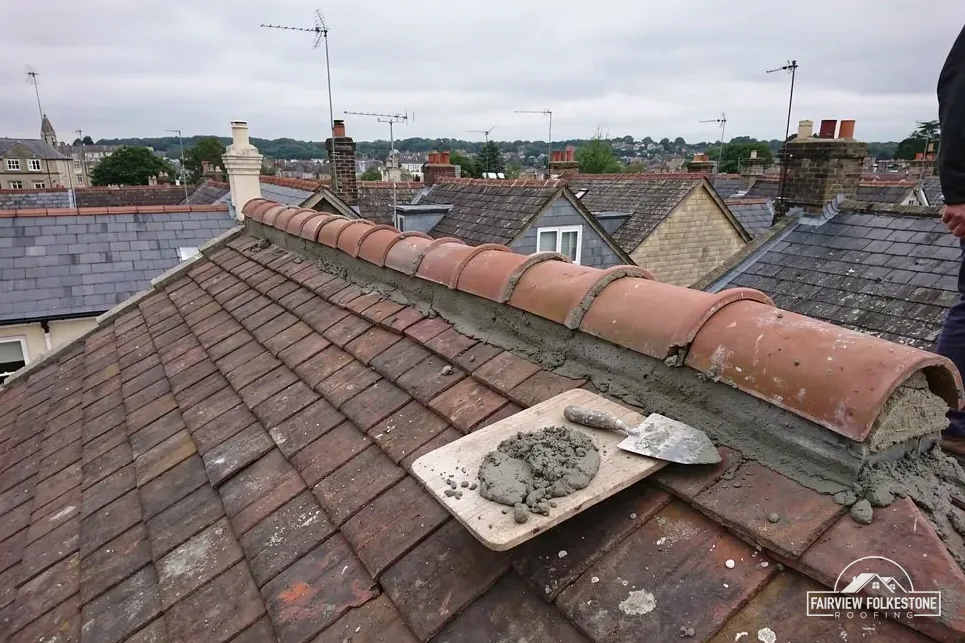
The verge is the edge of the roof where the tiles stop at a gable wall. Traditionally the last row of tiles was bedded in mortar and pointed. A dry verge replaces that mortar with mechanically fixed caps, which grip the edge tiles and give a neat, weatherproof finish. MyJobQuote notes that mortar can crack and crumble over time, especially after bad weather.
The standards explain why the change happened. Marley reports that BS 5534 was amended again in February 2018 because dry-fix products had arrived in many qualities, with no agreed way to compare them. The problems it names include:
- verge systems that gave too little mechanical restraint
- verges that failed to shed water, so the gable wall below was stained
The 2018 revision refers to BS 8612, the test specification that covers dry-fixed verge, ridge and hip kits, so only products tested to it can be used to show compliance. The maker's data sheet for the exact system is checked before the verge is priced, and we fix the perimeter tiles to suit it.
The types of system and what suits each
MyJobQuote describes three families of dry verge. Which one fits depends on the tile on your roof, so the choice is made on the survey, not from a catalogue.
| System | Fits | Point to note |
|---|---|---|
| Universal | Most standard roofs | Flexible and adaptable |
| Interlocking tile | Specific interlocking tiles | Precise fitting needed |
| Plain tile | Smaller plain tiles | More labour-intensive |
A plain-tiled roof is the awkward case, because smaller tiles need a system made for them. If your roof is clay or concrete plain tile, ask the system to be named in the written quote, and compare it with our guidance on clay and concrete tiles before you decide on a re-roof as well.
MyJobQuote also sets out the alternatives to a dry verge. A traditional mortar verge is cheaper to install at first, but it cracks over time, needs regular maintenance and can fall out in extreme weather, even though the tiles are also fixed with nails, screws or clips. A wet verge repair patches the existing mortar at a lower cost, but it is a short-term fix that leaves the long-term deterioration alone. An over-fascia and undercloak system appears as a further choice in the same guide.
What it costs and how long it takes
These are third-party figures, never our prices. MyJobQuote says the average dry verge installation in the UK usually falls between £500 and £2,000, with an average of around £1,000, depending on roof size, the condition of the existing verge and how easy the roof is to reach. The same guide gives one to two days for a standard semi-detached house, and two to three for a large detached house or complex roof.
Three things move the figure up or down:
- the length of verge, since a bungalow has far less than a large detached house
- old mortar that has to be broken out before the new system goes on
- repairs that only show once the mortar is off, such as cracked tiles, weakened battens or slipped underlay
A dry verge can be retrofitted to most existing pitched roofs. The old mortar verge normally has to come off first, and the roofer checks the existing tiles suit the new system. Tiles in good condition can sometimes be reused. Scaffold is included in the written quote, which is one total price after the survey.
Is it worth fitting?
For a roof whose verge mortar keeps failing, yes. Marley says dry-fix is now the most widely used method for fixing roof tiles in new-build and refurbishment, and describes it as low-maintenance, with fixings that do not depend on a mortar bed curing in dry weather. MyJobQuote calls it the better option for most modern homes. Mortar is not banned: Marley accepts it for heritage and listed buildings where a traditional appearance matters, though that work then falls outside BS 5534.
On the rules, a verge job sits well inside the re-roofing test the Planning Portal sets out: under 25 per cent of the building envelope and under 50 per cent of the roof. Where a conservation area carries an Article 4 direction, it can remove permitted development rights. Listed homes need listed building consent for anything that changes their character, so ask the council first, as the answer depends on your address. The page on dry ridge or mortar runs the same comparison for the ridge, and the pitched roofing page shows the wider work.
More questions
Can a dry verge be fitted to a roof that already has mortar?
Yes, MyJobQuote says a dry verge system can be retrofitted to most existing pitched roofs. The old mortar normally comes off first, and the roofer checks that the existing tiles suit the new system. Where they do not, or where tiles are damaged, those tiles are replaced as part of the job.
Does fitting a dry verge need planning permission?
Ordinary roof work is normally permitted development, so a verge change alone need not mean an application. That changes where a conservation area has an Article 4 direction, and on a listed home, where listed building consent applies if the work affects its character. Check with the council before any work starts.

Tell us what's wrong with the roof.
You'll get one written total price.