
Ridge fixing
Dry ridge or mortar bedding: which suits a windy coastal roof?
On an exposed roof a mechanically fixed ridge is the sound specification. Below: why, what dry-fix means, published costs and how we decide.
The short answer
For a windy coastal roof, specify a mechanically fixed ridge and treat any mortar as a bed, not the fixing. Marley warns that mortar alone is not enough to keep ridge and hip tiles on, and BS 8612:2018 is the standard written for dry-fixed ridge, hip and verge work. MyJobQuote puts the average cost of replacing ridge tiles in 2026 at between £225 and £550, a figure that varies with the length of ridge.
4 min read · Part of Pitched roofing

What a mortar bed does and where it stops
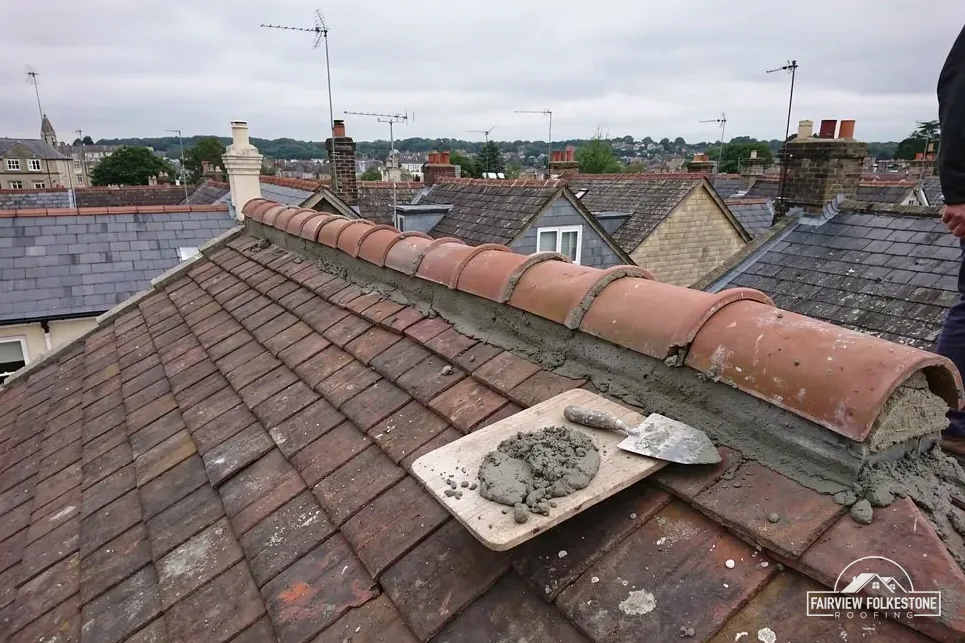
The traditional ridge is a row of half-round tiles laid on a bed of mortar along the apex, where the two slopes meet. The mortar fills the gap under the tiles, gives them a level seat and closes the joint against the weather. It does that job well while it stays whole.
What it was never good at is holding a tile down against the wind. Marley's guidance says the tensile strength of mortar alone could no longer be relied upon, and the 2015 amendments to BS 5534 made the same point about the roof covering as a whole. A bed that cracks, dries out or lets go leaves each tile resting under its own weight. That is the condition our loose ridge tiles page deals with. The signs are tiles that rock when pressed, open gaps along the joint and crumbs of mortar turning up in the gutter below, and any one of them is worth a look before the next gale rather than after it, since a loose tile that falls can damage the slope below or whatever stands beneath it.
What dry-fix means for the ridge
In a dry system the tiles are held down by fixings made for the purpose, instead of leaning on a bed of wet mortar. Ridge, hip and verge each have their own system, and BS 8612:2018 is the specification that governs them, shown by BSI as Current. Since the tiles are held mechanically, the roof no longer depends on a joint that can crack with age or frost.
None of this makes mortar illegal. Marley words it carefully, saying that mortar was no longer to be relied upon as the sole fixing for the covering. That leaves room for a bed that is backed up by something else, and room for a roof where a dry system is simply the better build. What we avoid is leaving a ridge on mortar alone. A survey tells us which of the two builds suits the tile and the pitch you have, and the written quote names the system we would fit. The dry verge page explains the same idea at the gable edge of the roof.
What published guides charge for ridge work
Three published figures give a feel for ridge work. Each describes a different job, so they sit together here and are never blended into one number.
| Published by | Job | Figure |
|---|---|---|
| Which?, November 2025 | Put in a new ridge tile, excluding VAT | £80-£300. |
| MyJobQuote, 1 October 2026 | Average ridge tile replacement in 2026, no VAT basis stated | Between £225 and £550. |
Both guides are describing replacement of the tiles, and neither says how long the ridge is, which also moves the final bill. A short ridge on a small extension and a long ridge with two hips on a detached house sit at very different points in any range, so the survey measures before it prices.
Checkatrade's repair rate for ridge tiles is £50 to £70 per metre. That is a repair rate, meaning a run of tiles that need work and not a whole new ridge, and it is never multiplied into a total for the roof. What we send is one written total, drawn up after the survey has measured the ridge and the hips, and it names the fixing system included, so there is no gap between what was priced and what is fitted.
Choosing for an exposed roof
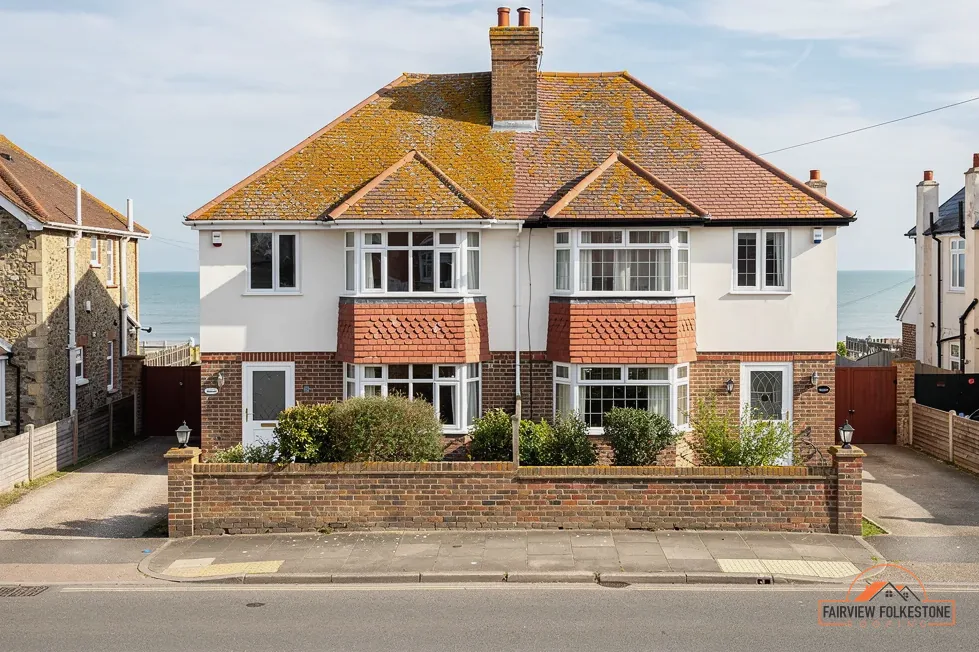
Exposure decides this, and the ridge sits at the apex of the roof where the wind arrives first. Cupa says buildings in coastal areas or on hills, and tall buildings, are graded for higher exposure. That is why the fixing specification for a coastal home is calculated for the site, and why the ridge is the first part we look at after a gale.
- Choose dry-fix where the house is tall, stands open to the weather or sits close to the coast, and where past repairs have already failed.
- Keep a mortar bed where the tiles and the look of the roof call for it, with a mechanical fixing working alongside.
- Repoint or rebed only where the existing bed is sound, a question our ridge repointing page answers.
Where a repair is enough we price a repair, and a sound ridge is left alone. The pitched roofing page shows how ridge work fits into the rest of a tiled roof, from the first survey visit to the day the site is left clean. If you already know the ridge is loose, you can message us a photo before booking, though only a survey gives a price.
More questions
Is mortar banned for bedding ridge tiles?
No. Marley says mortar was no longer to be relied upon as the sole fixing, so a bed can remain provided something else holds the tiles. Installing to BS 5534 is not required by law, but it is the code the trade works from, and on a ridge we specify a mechanical fixing whichever bed is used.
Which British Standard covers dry-fixed ridge tiles?
BS 8612:2018 covers dry-fixed ridge, hip and verge systems for slating and tiling, and BSI lists it as Current. Where a dry system is chosen we specify to it, and the written quote names the system fitted so you can check it against the standard before any work begins on site.

Tell us what's wrong with the roof.
You'll get one written total price.