
Conservation areas
Must you use natural slate in a conservation area?
No national rule makes natural slate compulsory. Article 4 directions, listed status and your own council can still change the answer for your street.
The short answer
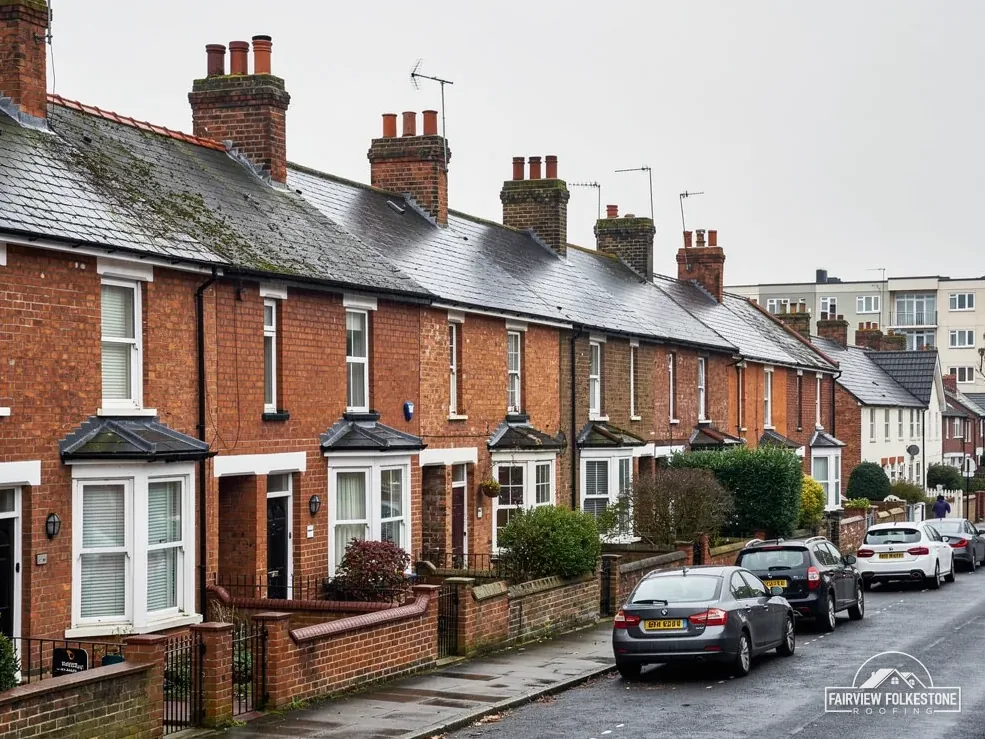
No, no national rule makes natural slate compulsory in a conservation area. Re-roofing a house with a different covering is normally permitted development under Class C, whose conditions say nothing about matching materials. Three things can change that: an Article 4 direction that withdraws the right, listed status, and a flat, which has no permitted development rights at all. A dormer is a different matter, because Class B does not apply in a conservation area, so one needs planning permission. Check with your council first.
4 min read · Part of Slate roofing

What Class C allows on a house
Class C of the permitted development rules covers "any other alteration to the roof of a dwellinghouse", and that includes re-roofing. In England it has no condition requiring the new covering to match the old, and it has no exclusion for article 2(3) land, the category that takes in conservation areas. So changing a slate roof on a house to another covering is not blocked by the conservation area alone.
The limits Class C does carry are about shape. A new covering may not stand more than 0.15 metres proud of the original roof plane, and it may not lift the highest point of the roof. A covering of similar thickness sits comfortably inside both.
Class B, which covers dormers, is different. A house on article 2(3) land cannot use it, so a dormer in a conservation area needs planning permission. Our planning guide for roof work sets out the classes in full, which is the page for anyone also thinking about a dormer or a roof window.
When the answer changes
Three situations can take the choice of covering out of your hands, and the street alone will not tell you which applies to your house.
- An Article 4 direction, which the Secretary of State or the planning authority can make to withdraw specified permitted development rights across a defined area.
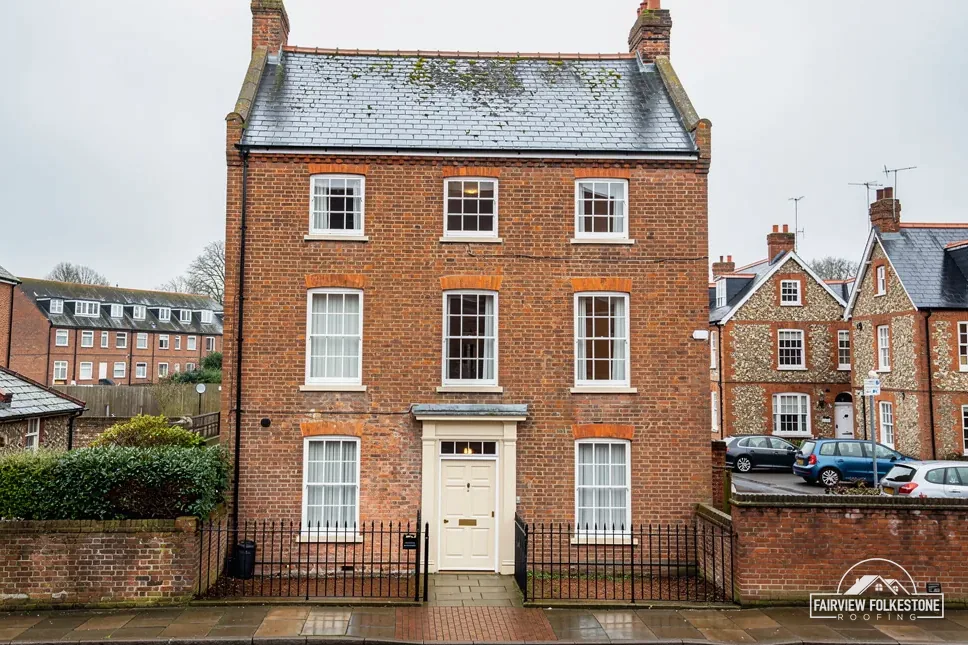
- Listed status: a listed house still has Classes B and C, but the work also needs listed building consent if it would change what makes the building special.
- A flat or maisonette, where "dwellinghouse" does not apply and planning permission is needed to change the outside appearance.
Where a direction exists, what it covers is the council's to say. Folkestone & Hythe words a conservation area as meaning that new developments must be appropriately designed, including using traditional natural materials, which is a reason to ask the council about your roof before ordering anything, not a statement about re-roofing.
Natural slate is the safest match for an old slate roof. It is not a legal minimum, but a council that cares about a street may well prefer it, and a preference put in writing is worth having before the slates are ordered. It also means the specification, the price and the council's view all line up before a single slate is lifted.
What each council publishes
Every council in our area keeps its own map, and what each page says differs. Your council's map is where to look for your address, and a phone call settles any doubt about what a direction covers.
| Council | What its page says |
|---|---|
| Dover District Council | 57 conservation areas; directions can reach roof alterations on parts facing a road |
| Canterbury City Council | 97 conservation areas; Article 4 areas on its map |
| Ashford Borough Council | 43 conservation areas, on an interactive map |
| Folkestone & Hythe District Council | An interactive map; no count published |
| Rother District Council | Check with the council |
Inside the Kent Downs and High Weald National Landscapes the district council is still the body that decides planning applications, while the National Landscape team only advises, so the same council is the one to ask there too. Which of these applies to a given house depends on its address, so ask before you assume. A neighbour's experience is not a guide either, because two houses in the same road can sit on different sides of a boundary or carry different listing.
What we do before a slate quote
The first step on a conservation-area or listed house is to ask the council, not to price the roof. We check the map for the address, ask whether an Article 4 direction applies, and ask whether the house is listed. For a listed building, Canterbury City Council says consent is required for any alteration touching the building's character, and swapping one covering for another is exactly the sort of change to put to the council first.
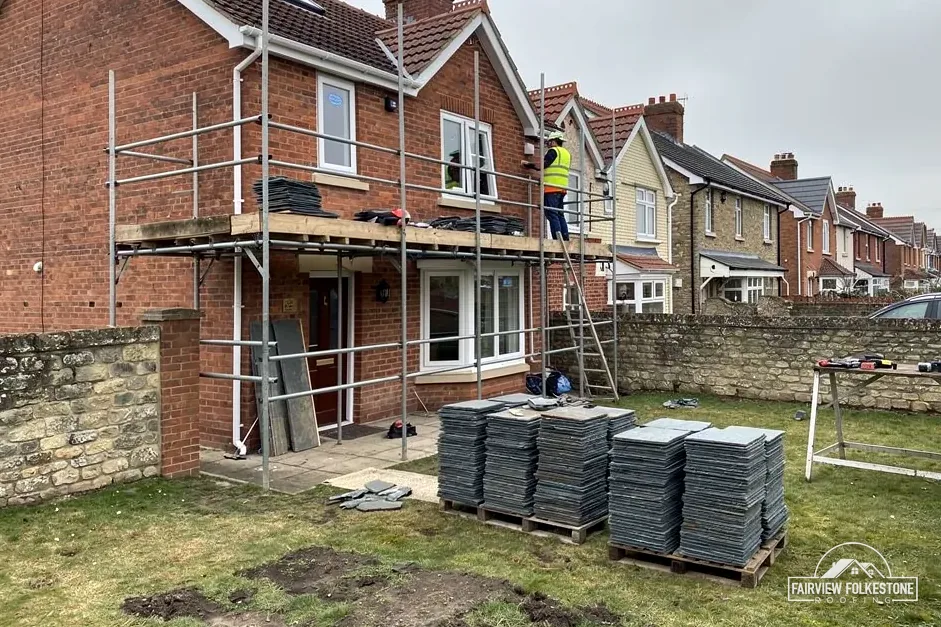
Where nothing stands in the way, you can choose the covering on its merits. Natural slate, Spanish slate and man-made slate are compared on lifespan, pitch and price after a survey, and the choice is yours. Our guide to natural against man-made slate sets out how they differ.
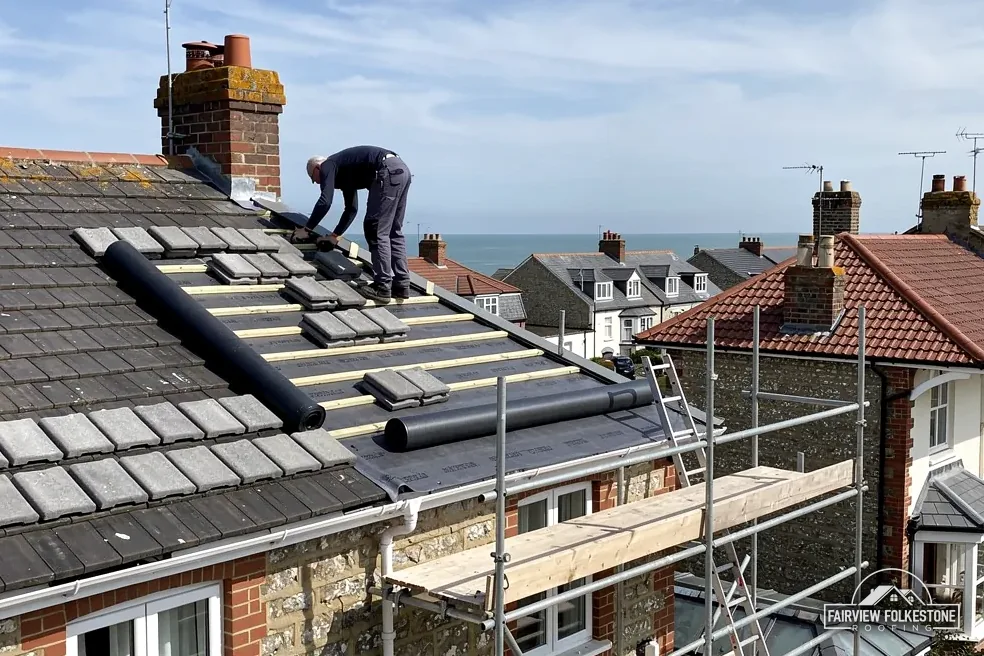
Everything is written into one total price after the survey, so a council's answer can be built into it rather than arriving as a surprise later. The slate roofing page describes a re-slate from the first visit to the last tile on the ridge, and how the written price is reached.
More questions
Can I use man-made slate in a conservation area?
The covering is not set by a national rule, because Class C has no condition on materials. An Article 4 direction or listed status can change that, so ask your council before ordering. A listed home needs consent of its own for work that alters its character.
Where can I see if my house is inside a conservation area?
On your council's own map. Folkestone & Hythe offers an interactive map, Dover publishes its list of 57 areas, Canterbury has 97 and Ashford 43. For Rye and Camber, ask Rother District Council. If the map leaves any doubt, a call to the planning team settles it before you order.
Tell us what's wrong with the roof.
You'll get one written total price.