
Slipped slates
Can a slipped slate be refixed with a tingle?
One slate that has dropped can often be held again with a small metal strip. Several slipped slates are a different question, and the survey tells them apart.
The short answer
Yes, a single slipped slate can be refixed with a tingle when the battens and the slates around it are sound. A tingle is a small metal strip, nailed to the batten and folded up over the tail of the slate to hold it in place. Several slipped slates across one slope suggest the fixings are giving up together, and mending them singly then stops being a fair repair.
5 min read · Part of Slate roofing

How a tingle holds a slate
A slate slips when whatever held it has let go. The refix puts a new hold on it without taking up the courses above. The slate is slid back into its place, a strip of lead or copper is nailed to the batten beneath it, and the free end is turned up over the slate's lower edge so the slate cannot move down again.
A clip or hook can stand in for the tingle where a tidier finish is wanted, and which suits depends on the slate size and the pitch. Cupa's advice is no hooks below 25 degrees, so on a shallow roof the tingle or a nail is the answer.
The aim is that the repaired slate looks like its neighbours from the ground. Where the original is broken, a new slate or a reclaimed one is used, sorted for size, thickness and colour. A strip of metal under the tail is hard to see from the pavement, which is part of the reason it suits a small repair on a slate roof. Done well, it leaves the slope looking as it did before the slip, with the courses straight and no gaps.
When a refix is the right repair
A refix suits a roof whose faults are local. Before one is quoted, the slates either side of the gap are lifted and what held the slipped one is examined.
- The neighbouring slates hold firm under a gentle press, with no snapped nails or chipped edges.
- The timber behind the gap is dry and will hold a nail.
- The lining at that spot is intact.
- The slipped slate is itself in one piece, or can be matched.
If all four hold, the job is small: slide the slate back, fix it, check the neighbours. A slate found on the path or in the gutter tells you one fixing gave way. It does not settle whether the whole roof has reached the end of its covering life. The survey is what finds out whether it was an isolated failure or the first of many.
Once the slate is fixed, the neighbours are checked again, because a refix that leaves an unsteady slate beside it has only moved the problem along by one course. Our guide to re-slating or repairing shows how the wider decision is made, for roofs where the answer is less clear.
When slipping slates mean something wider
MyJobQuote includes multiple slipped, cracked or missing slates, and nail decay causing slates to work loose, in its list of warning signs for a slate roof. Its roofing contributors add that the nails tend to give out before the slate, which is why a sound slate can still slip.
That fault has its own name, nail fatigue, and refixing a single slate cannot cure it, because the slates beside it hang on equally tired nails. Our answer on what nail fatigue is explains how it works.
The signs that move the verdict from repair to re-slate are plain enough to look for:
- Slipped slates on several courses, not one.
- New slips appearing soon after an earlier repair.
- Slates that come away freely when lifted.
- Nails that are rusted through or missing from the battens.
None of them calls for a climb. Each can be reported from the ground, with a photograph if you have one, and then confirmed at the survey when a few slates are lifted and the nails are looked at one by one.
Reaching the slate, and what it costs
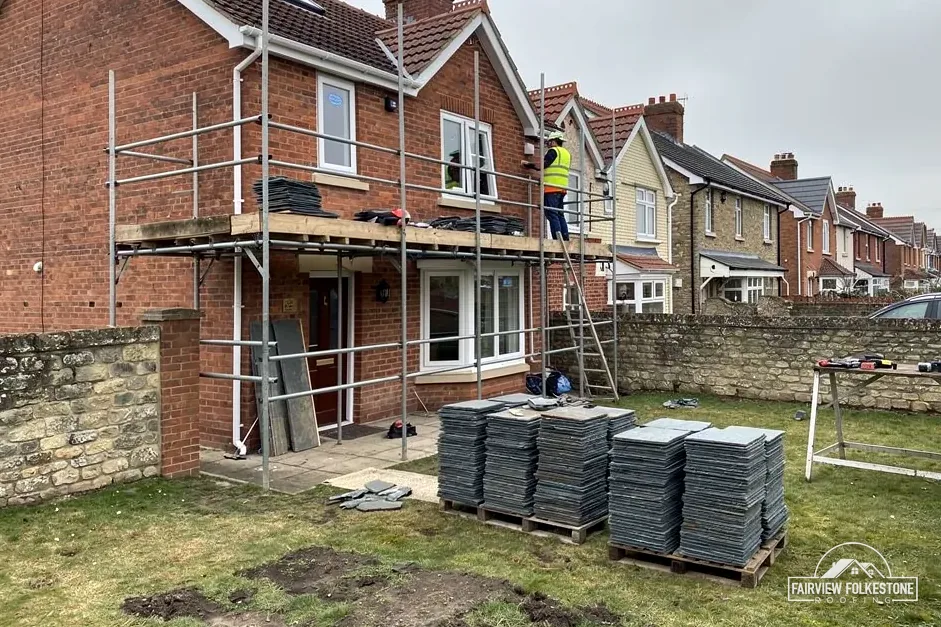
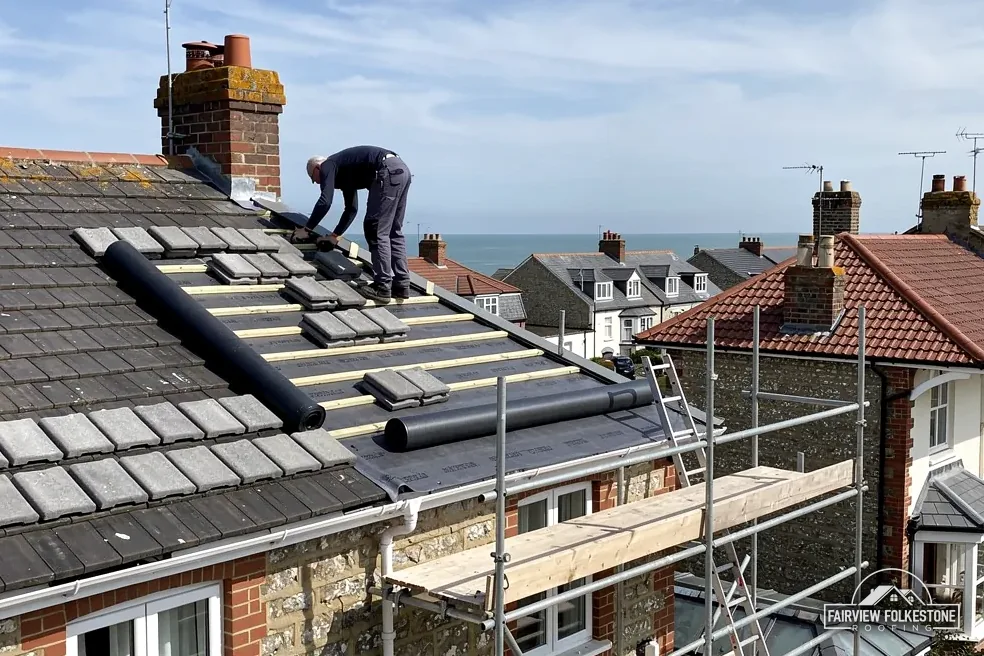
A slate slope should not be walked on, because slates crack under a person's weight. A high or steep slope is reached by ladder, a roof ladder or scaffold. Scaffold placed on the highway needs a licence: Kent County Council licenses it at £52 per week for 2026 to 2027, and its page says the scaffolding company should submit the application, while East Sussex Highways' fee table shows £127 for 28 days. We arrange the licence with our scaffolder.
For a sense of scale, Checkatrade's June 2026 repair rates give natural slate at £150 to £220 per m², a rate based on a maximum of 3 m², excluding VAT and access equipment. That is a guide to the unit, not a quote for your roof. The price you receive is in writing, covers the whole job and states what it includes, and it follows the survey visit.
A single slate is far smaller than that unit, so a one-slate refix does not map onto those figures at all. What it does show is that a repair priced by area is meant for a patch, not a whole slope. Our slate roofing page covers the larger jobs a slipped slate can lead to.
More questions
Can I refix a slipped slate myself?
We would not advise it. Slates crack under a person's weight, and working at height on a slate slope is risky for you and for the roof. A refix is a short job for a roofer with the right access, and the survey also checks why the slate slipped before it is put back.
Will the repaired slate match the rest of the roof?
It can. Where the original slate is broken, a reclaimed or new slate is used, sorted for size, thickness and colour, and on a front slope the closest match is sought. A slate that is whole is simply put back and fixed in the same place, so nothing about the courses changes.
Tell us what's wrong with the roof.
You'll get one written total price.