
Slate roof access
Can you walk on a slate roof without breaking it?
Slate looks tough, but it breaks under a footstep. Here is why we keep off it where we can, and how to look at your own roof safely.
The short answer
No, a slate roof should not be walked on if it can be avoided, because slates can crack under a person's weight and a cracked slate can look whole from above. Roofers reach slate from ladders, roof ladders and scaffold that spread the load, and the survey is often done from the ground, the loft and the eaves. If you want to check your own roof, do it from the ground with binoculars or a phone camera.
5 min read · Part of Slate roofing

Why slate breaks underfoot
Slate is a thin, brittle sheet. Each slate is held at its head or its tail, with its lower part resting on the slates beneath, so a footstep lands on a slate that is partly unsupported. Weight placed there can crack it across, and the crack can lie hidden under the slate above until the next heavy rain finds it.
Older slates are at more risk, because a slate that is already flaking or soft has less strength to give. MyJobQuote counts flaking, layered or soft-feeling slates among the warning signs on a slate roof, and a slate that far gone may not survive a footstep.
The damage does not need to be dramatic to matter. A hairline crack can let water in beside a batten and stay out of sight for a long time. That is why a roof that has been walked on can leak weeks later, with nothing obviously wrong on the surface. A person who has stepped across a roof to reach a gutter or a chimney may never learn that they cracked three slates on the way, and the owner pays for it at the next storm.
How a roofer gets on a slate roof
The aim is always to spread the load or to avoid standing on the slates at all.
- A ladder to the eaves, for a look at the lowest courses and the gutter.
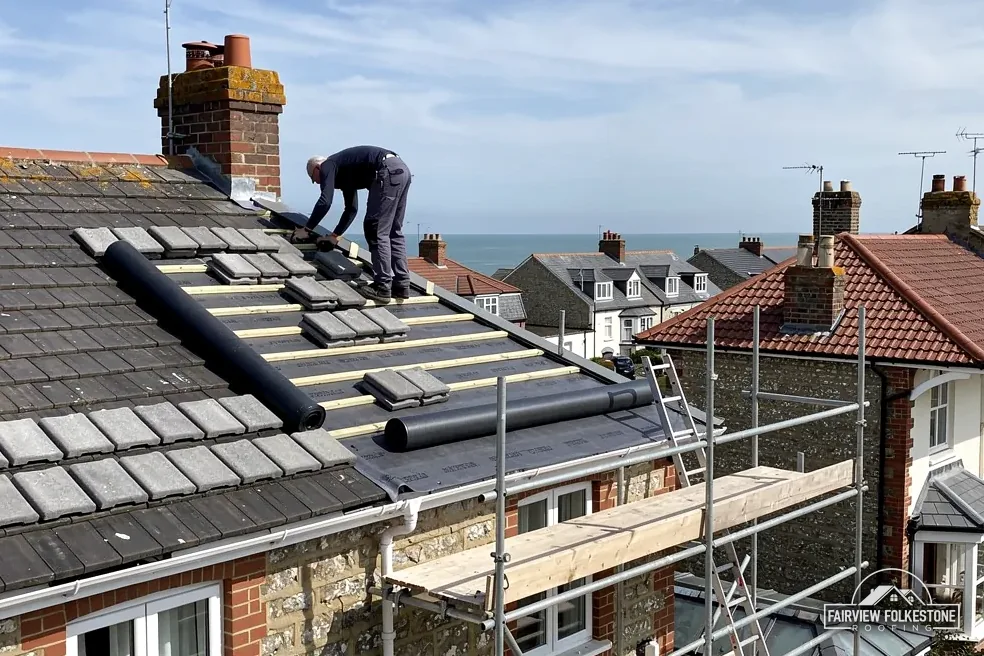
- A roof ladder, laid on the slope and hooked over the ridge, so weight bears on the ladder and not the slates.
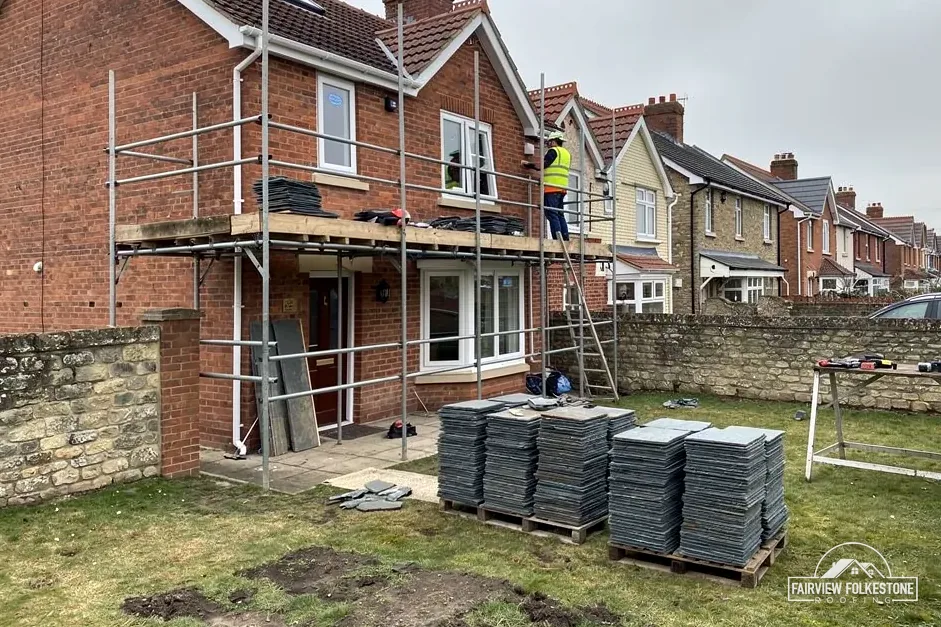
- Scaffold, with a working platform at the eaves, where a slope is high, steep or needs more than a quick look.
- The loft, where daylight through a slate, damp battens and rusted nails can be seen from beneath.
On a slate roof, the work is kept to the fewest footsteps the job allows. Slates that have to be lifted are lifted with care, set aside and counted, so none are lost and none broken in the process.
If a slate does crack during a job, it is replaced on the spot with a sound slate of the same size, not left. Our slipped slate repair answer shows the small jobs that follow from a survey. A roof ladder in particular is quick to set up, which is why a small repair may need no more than that and a ladder to reach it.
Checking from the ground instead
You can learn a good deal without leaving the ground, and without putting a foot on a slate.
- Walk round the house with binoculars, or use the zoom on a phone camera, and look along each slope.
- Look for slates that sit lower than their neighbours, gaps in the courses, and ragged or lifting tails.
- Check the gutters, the path and the flower beds for slate fragments.
- Look at the ceilings and the loft for stains and daylight.
Take photographs as you go. If you ever make an insurance claim, the Financial Ombudsman Service says it will usually look at expert reports and photos of a property's condition, so a dated record from the ground does no harm.
Resist the urge to climb up for a closer look. What you find from the ground is a reason to book a survey, and our guide to the signs a slate roof is failing shows what each sign points to. Note where on the roof you saw each sign, such as the third course up on the left of the porch, so the survey can go straight to it.
Scaffold, cleaning and keeping off
Some jobs need scaffold to be done properly, and a scaffold that stands on the highway has to be licensed. Kent County Council licenses scaffolding at £52 per week for 2026 to 2027, and its page says the scaffolding company should submit the application. In East Sussex, East Sussex Highways' fee table shows £127 for 28 days. We arrange the licence with our scaffolder, and the cost sits in the one written total price.
Cleaning is another reason people climb. Marley warns that a jet wash can damage the face of a slate or tile and cut the covering's expected life, so it is a cleaning method to leave alone. Do not jet wash a slate roof, and do not stand on it to do so.
If you need someone to look at the roof, our slate roofing page shows how a survey runs, from the ground up. Keeping off the slates yourself costs nothing and protects the roof, and whoever you call in should be willing to explain how they will reach it.
More questions
Can I clean moss off a slate roof myself?
We would advise against it. Marley says high powered jet washes can damage the surface of slate and reduce its expected life considerably, and standing on the slope risks cracking slates. Ask for a survey instead, so the roof is looked at from safe access first.
How is a slate roof surveyed if nobody walks on it?
From the ground, the loft and the eaves by ladder, with scaffold or a roof ladder for a closer look where the slope needs it. Each of these spreads the load or keeps off the slates altogether, so the survey does not add damage to the roof it is checking.
Tell us what's wrong with the roof.
You'll get one written total price.