
Slate roofing guide
Welsh or Spanish slate: what the difference means for your roof
Welsh and Spanish natural slate carry different published lifespan ranges, but origin is only one of several things that decide the right slate. Here is what the figures say and what to ask for.
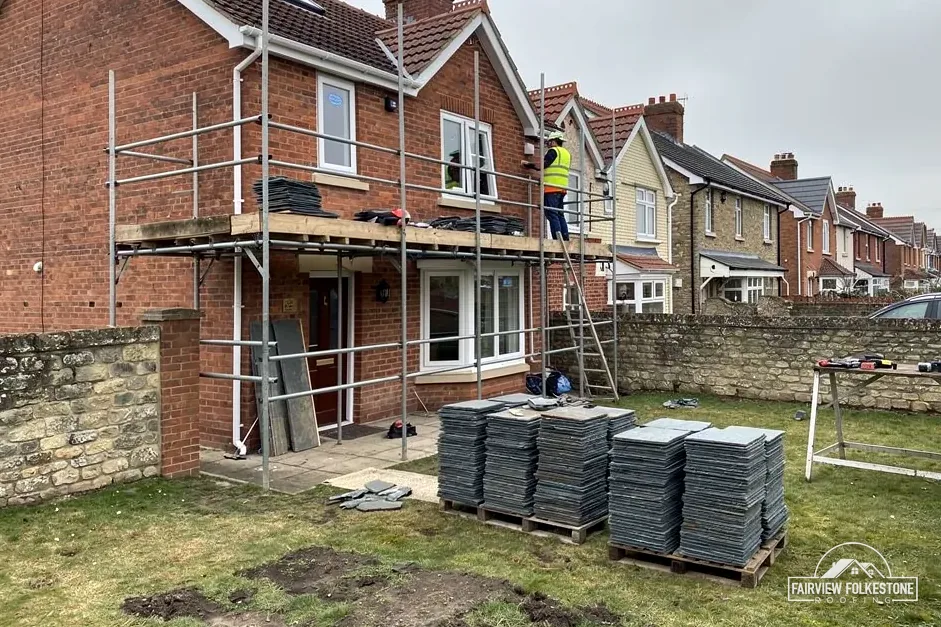
When a slate roof is re-slated or built new, one material question that comes up early is where the slate comes from. Welsh and Spanish natural slate are both in everyday use on British roofs, and the choice between them is real. It is also easy to overstate, because the answer depends less on the country than on the particular slate: its size, its thickness, how it is rated and how well it matches the roof it joins.
This guide sets out what is actually published on the two, which is a pair of lifespan ranges and one headline price for a Welsh slate roof. It then covers what to ask a supplier or a roofer so you can compare like with like, how to match an existing roof, and why the fixings and pitch are decided by your site and not by the slate's origin.
We do not push one origin. The right slate is the one that suits the house, the roof and the budget, and we say which we would choose for yours and why. Where a roof is being repaired, the decision is often already made by the slates that are on it.
01Key points
What the choice is really about
Calling a slate Welsh or Spanish tells you where it was quarried, and not much else. It does not tell you its size, its thickness, how evenly it splits or how it will weather. Those details sit on the supplier's data sheet and in a sample you can hold, and they decide whether the slate is right for your roof. A good roofer will put both in front of you before the order is placed, not after the slates arrive.
The questions that actually separate one slate from another:
- How long a life the supplier and the published sources give it
- What size and thickness it comes in, and whether that suits the battens and the pitch
- Whether it matches the slates on the existing roof, where part of a roof is being repaired
- Whether it can be supplied in the quantity and the timescale the job needs, with spares for breakage
- What it costs on your roof, once the survey has fixed the area and the details
The origin comes in through the first and last of these, and through supply. Published lifespans differ between the two, and so can price. It is only a partial guide, though, because two slates from the same country can differ more than two from different ones.
Our advice on this part of the question is to choose on evidence for your roof, not on the country. That is easier to do with a data sheet in front of you than with a quarry name.
02Slate
Slate life, Welsh against Spanish
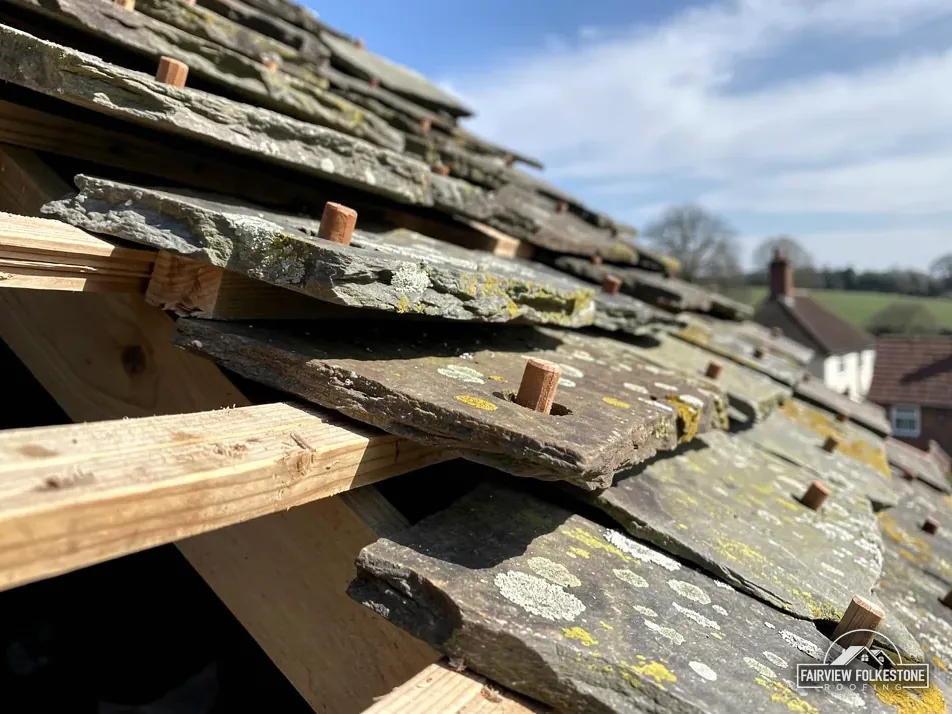
HomeBuilding gives an approximate lifespan for each kind of natural slate and for reclaimed Welsh slate alongside it.
| Slate | Lifespan (approx) |
|---|---|
| Welsh slate | 100+ years |
| Spanish natural slate | 75 to 100 years |
| Reclaimed Welsh slate | 50 to 80 years |
Three cautions go with that table. These are approximate ranges for the material and not promises for your roof. The slate is only one of the parts of the roof, because the fixings, battens and lining under it age on their own timetable and can fall short of the slate. And a range is a range: a 75-year slate and a 100-year slate overlap, so the difference between them is smaller than two single numbers suggest.
HomeBuilding words the Welsh figure as 100+, with no upper limit, while the Spanish range closes at 100, so the two ranges meet at the edge and do not sit far apart. What the table does tell you is that natural slate of either origin is expected to last for generations, well beyond the lifespan HomeBuilding gives for plain concrete tiles at 40 to 50 years. The question is therefore less whether the slate will last and more which of the parts around it will need attention first, including flashings, ridge details and the nails themselves, a point we take further when we walk you through what we find in the loft and under the slates.
Welsh and Spanish slate questions
Can Welsh and Spanish slates be mixed on one roof?
We would not mix them on one slope, because slates from different sources can differ in size, thickness and finish, and the courses may not sit together cleanly. For a repair we match the slates already there. Where a roof needs a mix because supply is short, we tell you before we start.
03Price
Price, and what the figures can and cannot tell you
HomeBuilding puts a Welsh slate roof on a standard three-bedroom semi with a 65 m² roof at a figure that "might reach £18,000", against between £10,000 and £15,000 for plain concrete tiles on the same house. Those numbers include labour, scaffolding and insulation, and HomeBuilding says labour rates are higher in London and the South East.
When you do that, check that the prices cover the same things:
- The same slate size and thickness, or the quotes are not for the same roof
- The same battens and lining, renewed or kept
- The same ridge and lead details
- The same allowance for spare slates and breakage
That is a figure for Welsh slate and a comparison with concrete tile. A matching price for Spanish slate on the same house is not part of what is quoted here. The fair way to compare the two on your roof is to price both in writing, from the same survey, to the same specification.
Pricing both also shows whether a difference sits in the slate or in the labour, since fixing time follows the slate size, not its origin. Spanish and Welsh slate can come out closer on cost than the headline suggests, or further apart. We cannot say which for your house until the survey has set the area and the details. For the wider picture of what a slate roof costs and what moves the figure, see our guide to slate roof cost.
04In order
Sourcing: what to ask for before you agree
A slate is a product with a name, a source and a specification, and you are entitled to see all three before it goes on your house. A roofer who orders slate by the pallet should be able to tell you what is on it.
Does the slate's origin change how it is fixed?
Not as such. The fixing is set by the exposure of the site, the pitch of the roof and the size of the slate. A Welsh slate and a Spanish slate of the same size on the same roof are held in the same way, and we work it out for your house from BS 5534.
- The name and the origin of the slate, written into the quote.
- The supplier's data sheet, which gives the sizes, the thickness and any standard the maker declares for the slate.
- A sample or a photograph of the slate in daylight, ideally laid wet and dry.
- Whether the slates in the order all come from the same batch, since colour and finish can vary between batches.
- The size the slate is supplied in, and how it fits the batten spacing on your roof.
- The allowance for spares and for slates that arrive broken.
Ask the supplier which standard, if any, the maker declares for the product you are buying, and ask for it in writing on the sheet, instead of relying on a general claim that a slate is high quality.
A reclaimed slate has no new data sheet, and its published range in the table is the shortest of the three. It is judged by sorting, since each slate is inspected on the day for flaking, thinning and cracks, and only the sound ones go back on a roof. Whatever you choose, hold the sample against the existing roof in daylight at more than one time of day, because colour shifts with the light and a slate that matches at noon may not at dusk. We say how many reclaimed slates we expect to use, and what we will buy to cover the shortfall.
05In brief
Matching an existing slate roof
A repair is different from a new roof, because new slates have to sit beside old ones. Slate weathers with the years, so a new slate looks different from one that has been on a roof for decades, and a patch can show for a while before the new slates catch up with their neighbours. Size and thickness matter more than colour, since a slate that is too thick or too short will not sit properly in the course.
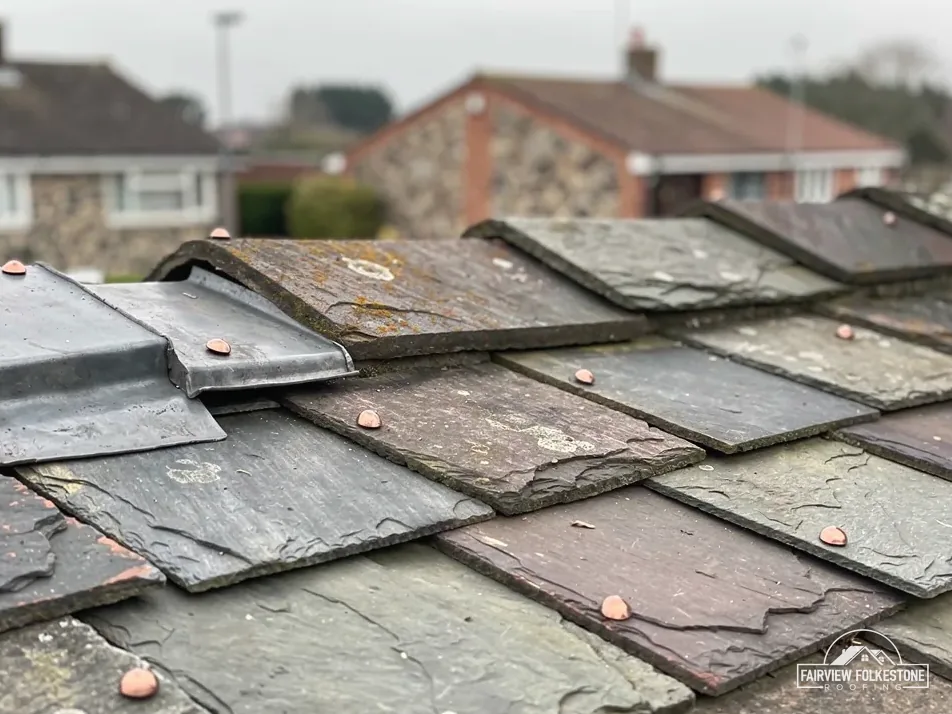
The options, in the order we look at them:
- Slates taken from a less visible part of the same roof, such as a rear slope, and replaced with new ones there
- Reclaimed slates sorted to match the size and thickness of the originals
- New slates chosen to match, with the difference accepted
On a listed house, the Class C permitted development right for roof alterations is kept, but listed building consent is still needed for any work that would affect its character. In a conservation area, an Article 4 direction can take that right away, so we check with the council before a roof is changed. Our short answer on a slate roof in a conservation area goes into that in more detail.
If you want to change the origin of the slate across a whole roof, a survey can show whether the new product suits the existing battens, or whether they need renewing to suit its size.
06Fixings · Pitch
Fixings and pitch do not depend on the quarry
Whichever slate you choose, the way it is held on is decided by the site, the pitch and the slate size, not by where the slate came from, and the same check is made on every roof we survey. A distinguished quarry name does not carry a different specification with it.
Should I ask to see a sample before choosing?
Yes, and ask for the supplier's data sheet too. A sample shows the colour and the finish in daylight, and the sheet gives sizes, thickness and any declared standard. Together they let you compare two slates directly, not rely on a name, and we are glad to talk you through both.
- Exposure. Cupa says "buildings positioned on slopes, hills or coastal areas as well as tall buildings will be graded with higher exposure", and the fixings follow from that grade.
- Pitch. Cupa says BS 5534 indicates a minimum for natural slate of 20° in moderate exposure with a 500 mm slate and a 115 mm overlap, and that hooks should not be used below 25°. A shallower roof needs a different answer, whatever the slate.
- Standard. BS 5534:2014+A2:2018, the code for slating and tiling, is current. Marley notes that working to it is not a legal requirement, and we use it anyway.
On a coastal roof the specification is calculated for that exact site, as BS 5534 allows, and the same logic holds on a hillside or an open site inland. We confirm it from the slate you have chosen, once the survey has the pitch and the exposure.
That is the reason our natural against man-made slate guide is a better place to look if the real question is about a different material altogether. Between Welsh and Spanish natural slate, the work on the roof is the same, and the careful part is matching, fixing and detailing, with a written specification so you can see exactly what is going on your roof. Our slate roofing page sets out the service as a whole.

Tell us what's wrong with the roof.
You'll get one written total price.