
Charing · 20.8 road miles north-west
Roofers in Charing
A larger village with a scheduled archbishop's palace site, three Grade I listings among its neighbours and a designated conservation area, close to the Kent Downs. Many different rules can reach a Charing address, so the lists are read first, the roof is photographed slope by slope, and a single total price comes last, with the reasons beside each stamp.
- Palace farmhouse
- Palace Farmhouse, Grade I (list entry 1070756)
- Scheduled site
- The Archbishop's Palace (list entry 1011028)
- Church
- St Peter and St Paul, Grade I, in use for Church of England worship
- Highway licence for poles
- Kent County Council, £52 per week for 2026 to 2027
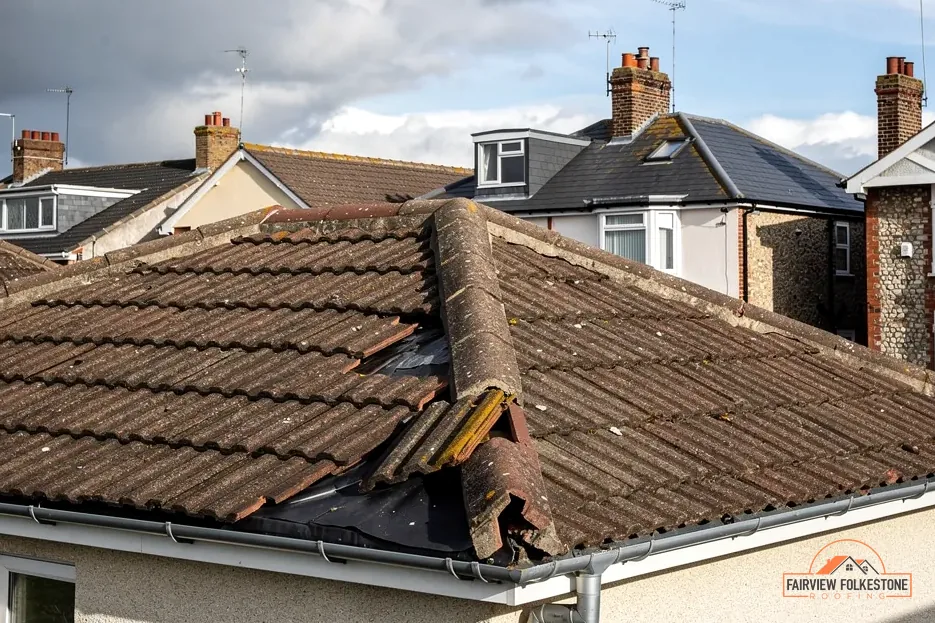
Ridge, cottage by the church, worn slope: Charing roofs weighed
What we found
Ridge bed crumbling, slopes below sound
What it fairly needs
Re-bed the ridge and fix it.
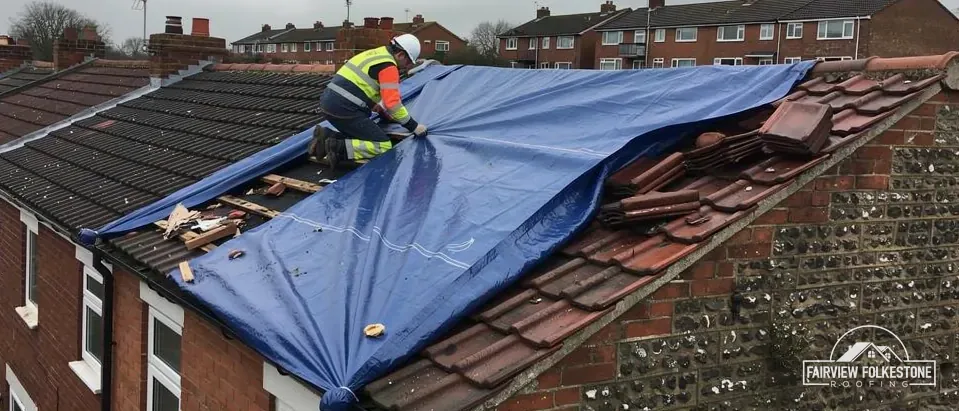
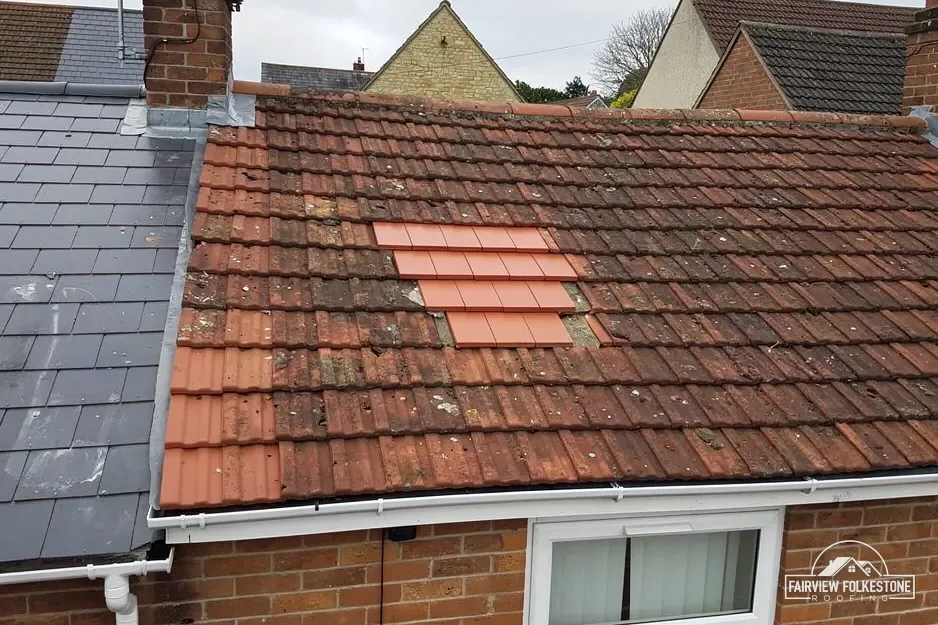
What we found
Cottage by the church, tiles slipping
What it fairly needs
Look up its entry, then repair.
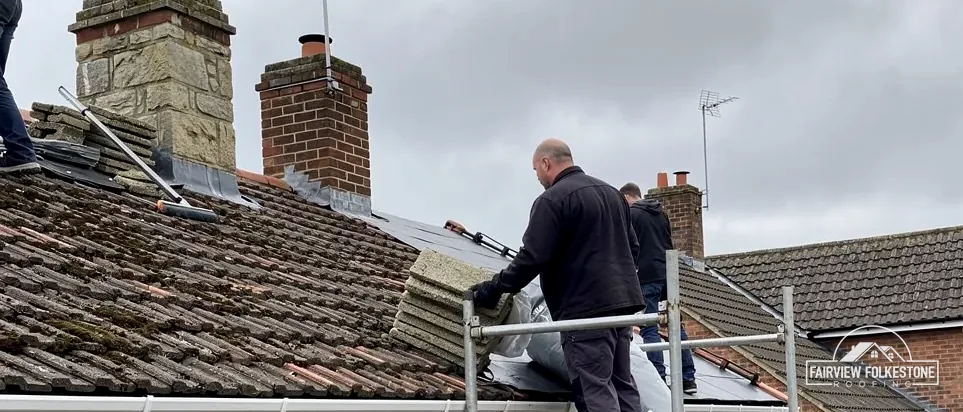
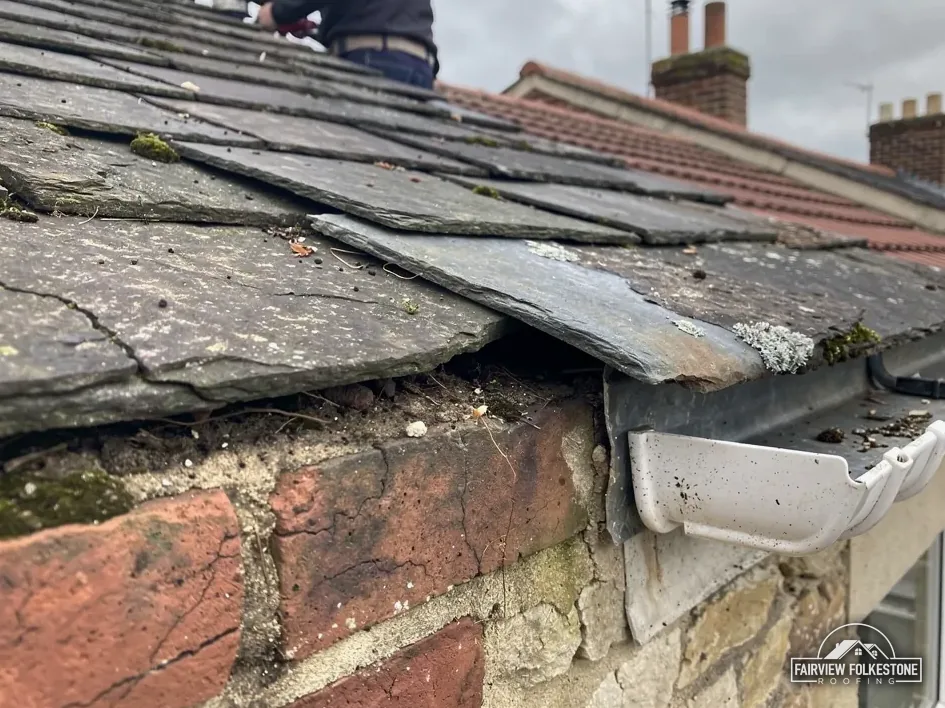
What we found
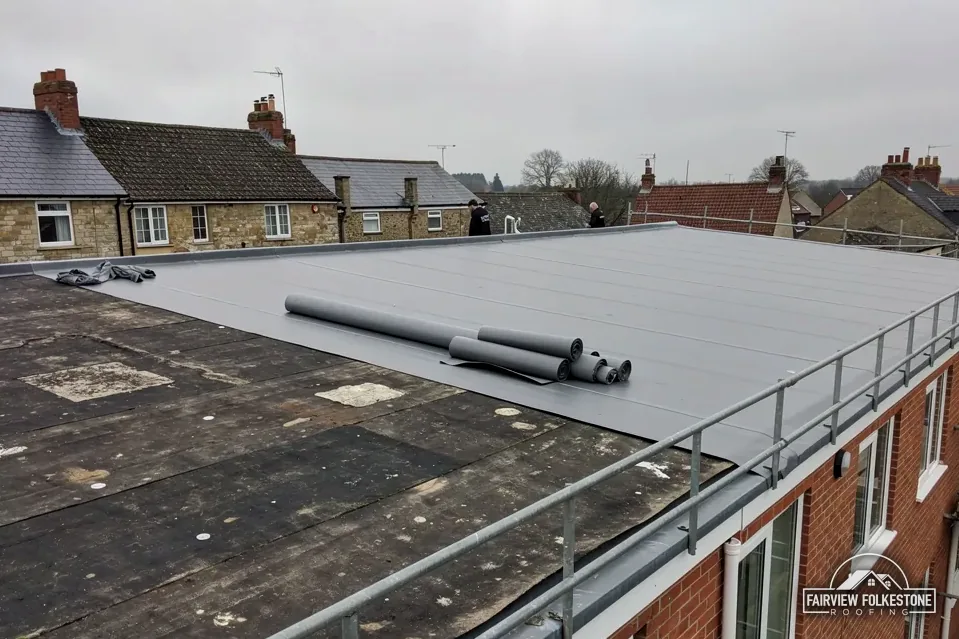
Whole slope worn, battens soft
What it fairly needs
Strip it and lay a new covering.
The fair ledger
Palace site, Grade I church, heavier covering: Charing roof questions
Three entries: how a scheduled palace and a Grade I farmhouse sit alongside ordinary roofs, what the church and the conservation area mean for a house, and how the weight of a new covering decides whether approval is needed.
Entry 01Palace site
The Archbishop's Palace, Palace Farmhouse and two consent systems
A scheduled palace site and two Grade I listings stand side by side. They are handled differently, and neither touches a house that lacks an entry of its own.
Scheduling against listing
The Archbishop's Palace is a scheduled monument (list entry 1011028). Historic England also lists Palace Farmhouse at Grade I (list entry 1070756) and the outhouse to its west at Grade I (list entry 1186008), both first listed on 14 February 1967. Two systems apply. Scheduled monument consent governs works at the palace itself, because under the 1979 Act unauthorised works are an offence. Listed building consent, under section 7 of the 1990 Act, governs the farmhouse and its outhouse where work would affect their character.
A house elsewhere in the village is caught by neither unless it appears on the list in its own right. The list is searched for your address first, which takes a few minutes and can settle the question outright. If an entry does exist, the survey photographs the roof as found, and the repair is drafted around those photographs, so an application describes work a case officer can picture.
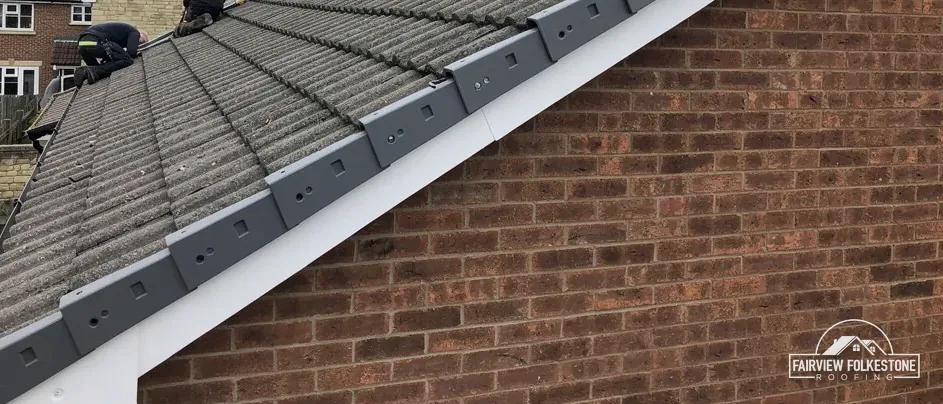
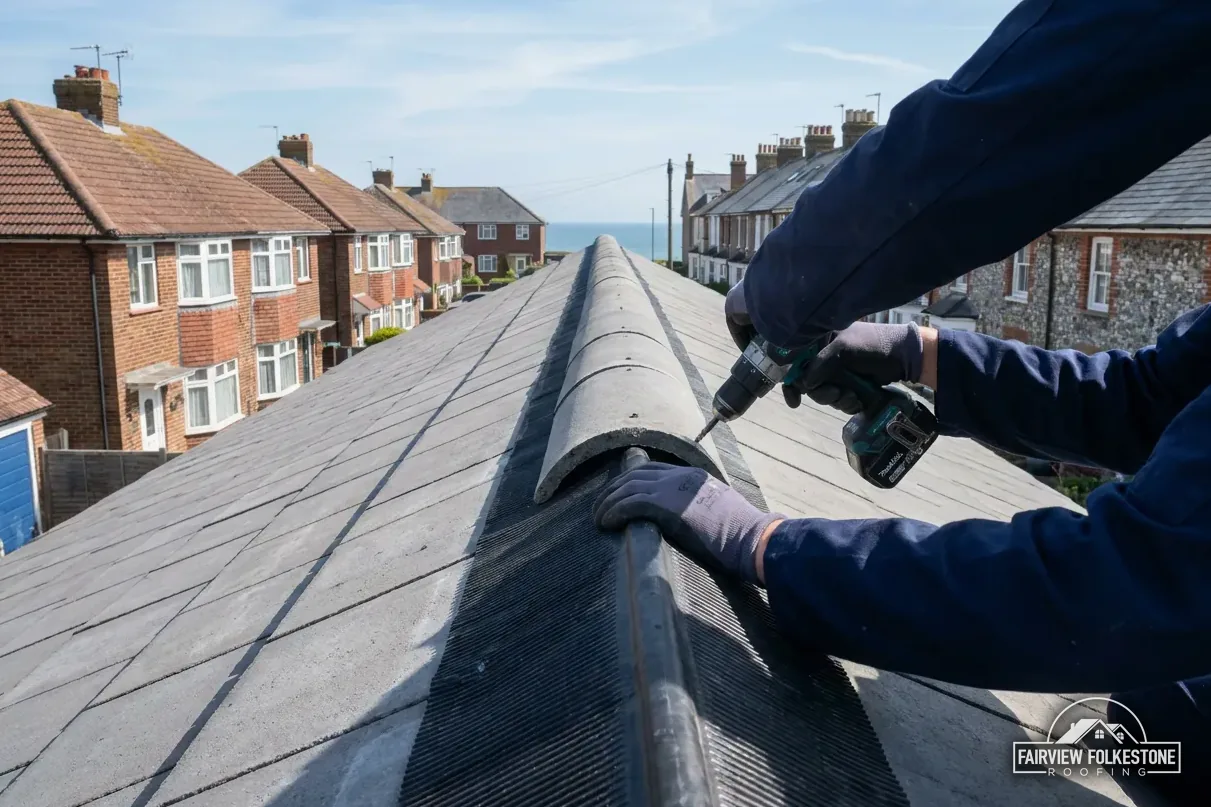
On an older roof the ridge deserves its own look. BS 8612 is the specification BSI lists as current for ridges, hips and verges that are fixed dry. A ridge that has lost its bed is re-bedded and fixed mechanically as well, so it no longer rests on mortar alone. Our pitched roofing page describes how repairs like that are carried out.
Along the ridge
- Ridge tile on the apex
- Mortar bed beneath it
- Dry-fix fixing holding it down
The three points a survey reads along a ridge before it is called sound.
BS 8612
BSI lists this ridge, hip and verge specification as current
a specification, not law
Entry 02Church and area
St Peter and St Paul, the conservation area and the Downs edge
A church in use, a designated conservation area and a nearby landscape boundary each ask a different question about the same Charing address.
Three questions, three places to look
The parish church, dedicated to St Peter and St Paul, carries a Grade I listing from Historic England (list entry 1362985, first listed on 14 February 1967). It remains a place of Church of England worship, so the church's own roof is a faculty matter rather than a case for listed building consent. A house beside the churchyard is not part of that route, and nothing about the church slows a plain repair next door.
Charing has a designated conservation area, and its boundary belongs to Ashford Borough Council, which holds a list of 43 conservation areas across the borough. In a conservation area a plain re-cover is normally still permitted development; dormers are another matter, and our planning permission guide covers anything that changes a roof's shape. For your own road, Ashford Borough Council is the body to ask, because an Article 4 direction can remove further permitted development rights.
The Kent Downs National Landscape lies close to Charing, though the village itself is not drawn inside it. A house at the edge can only be placed by the Kent Downs map, which is read at the survey, so the answer rests on a map and not on how close the roof feels to the hills. Our roof inspections page describes that visit, and the answers are written next to the quote.
What the lists change
Slipped tiles, address on no list
Plain repair
House beside the churchyard
Look up the entry
Slope past mending, no listing
Re-cover the slope
Myth: A Grade I church means every house round it is protected.
Fact: Only buildings with a list entry of their own are. A house beside the churchyard answers to its own record, which the survey looks up before anything is priced.
Percentages first, then weight on the rafters
The Planning Portal's test for re-roofing has two limbs: work affecting less than 25 per cent of the building envelope, and less than 50 per cent of the roof. Inside both, an application is not normally needed, so a ridge repair or a few slipped tiles sits well inside them. Outside either, or where the new covering weighs 15 per cent or more over the old, approval is required. The Portal advises a check with a structural engineer or surveyor before starting work on a heavier covering.
Who checks the work? Either Ashford Borough Council's own Building Control team, on 01233 330282, or a registered building control approver of your choosing. At the survey we note what covers the roof now, what you want laid, and whether the two differ enough to matter. A roof that is being re-covered at the same weight is a simpler conversation than one changing to a heavier material.
A full re-cover is the verdict only if the survey finds the covering past mending: battens soft, fixings gone, slipped pieces on every slope. Where a single slope has failed and the rest is sound, only that slope is renewed, and the quote says so. See our roof replacement page for how a new roof is planned from start to finish.
Entry 03New covering
Re-covering a Charing roof: the two tests, then the weight
Two percentage limits and a weight limit are the first tests of whether a Charing re-cover needs Building Regulations approval, and all three are checked before a price is written.
What sets the price
- How many slopes are renewed
- Weight and type of new covering
- Scaffold on the road or in the garden
One written total price
If only one Charing slope has failed, must I re-roof the whole house?
No. Where the other slopes are sound, only the failed one is stripped and re-covered. A whole-roof replacement is put forward only when the survey shows every slope is past mending, and the photographs behind each stamp let you weigh the reasoning for yourself.
Palace, church or new covering: which Charing question is yours?
Send a photograph and the road name, and every fault comes back with a stamp and the reason for it, followed by one written total price.
North-west out of Folkestone to Charing
Charing is 20.8 road miles from Folkestone, to its north-west, a drive of about 26 minutes. At the 2021 Census the parish had 3,184 usual residents. Send the road and a photograph, and the list entries, the conservation boundary and the landscape map are read ahead of the visit, so the survey begins with the rules already in front of us. A scaffold, if one is needed, is talked through with you at that point. Skips and materials are placed with the lane in mind.
Charing roofs: palace, church and weight questions
Short replies on the palace site, the church, the Downs edge and the weight of a covering, each with its reason attached.
What is checked first on an old Charing roof near the palace site?
Work starts at the top: the ridge, then the hips, then each slope in sequence, with flashings, valleys and the eaves picked up as they come. If the loft hatch is safe to use, daylight and damp patches are noted from inside. Findings get a photograph and a stamp, one of repair, replace or check; a single written total covers the roof. Anything beyond a repair is explained before it is priced. Photographs from the ridge and the eaves go into the report you receive.
Does the scheduled palace site affect a roof elsewhere in Charing?
No. Scheduled monument consent applies to the monument itself. A house elsewhere in the village follows the rules for its own listing, or for having none. If your house has a list entry, listed building consent covers work affecting its character, and Ashford Borough Council makes that call. We look up the entry before pricing and keep the answer with the quote, so it is on file. A neighbour's listing never changes your own. That keeps the file complete for a later owner, too.
Charing sits close to the Kent Downs: does that touch my roof?
Possibly, at the village edge. The National Landscape comes near Charing, and a house just outside the line is not treated as inside it. The Kent Downs map settles each address, and we read it at the survey. Applications are decided by the district council, with advice from the Kent Downs team. A plain re-cover follows the everyday rules, and a dormer idea starts with our planning permission guide. Nothing is assumed from the postcode. Edge cases get a written answer from the map.
Can a new covering go on in Charing without approval?
Under both of the Planning Portal's limits, less than 25 per cent of the building envelope and less than 50 per cent of the roof, an application is not normally required. Approval is also needed where the new covering is 15 per cent or more heavier, whatever the percentages say. Ashford Borough Council's Building Control team, on 01233 330282, can answer for your address, and a structural check is advised before a heavier covering is laid. Listed roofs have a separate consent track.
How do I check for a conservation area or Article 4 direction in Charing?
Ashford Borough Council holds both, and its list of 43 conservation areas includes a map; the Charing area is designated. Article 4 directions are published by the same council. Check with Ashford Borough Council before anything beyond a repair, because an Article 4 direction can remove further permitted development rights. We ask at the survey and clip the council's reply to the written quote, ready before you book. Nothing larger than a repair is booked until the reply is in, so nothing is booked blind.
Does a Charing scaffold need a licence from the road authority?
Only where poles stand on the highway. Kent County Council licenses those, at £52 per week for 2026 to 2027. We arrange it with our scaffolder, which fits Kent County Council's page: the skip or scaffolding company should submit the application for you. Whether any pole will land on the road or pavement is settled at the survey, and neighbours are warned in good time before work begins. A permit that has to be extended is applied for before it runs out. Neighbours hear about it first.
A Charing roof giving you trouble? Send photos.
A few photographs and your road start the process, and a written total follows once we have surveyed and read the lists.