
Egerton · 23.2 road miles west
Roofers in Egerton
A parish of 1,054 residents at the 2021 Census, with a Grade I church, two listed Grade II buildings and a scheduled bowl barrow south-east of the church. A survey here starts with what the roof is doing and who needs to be asked first.
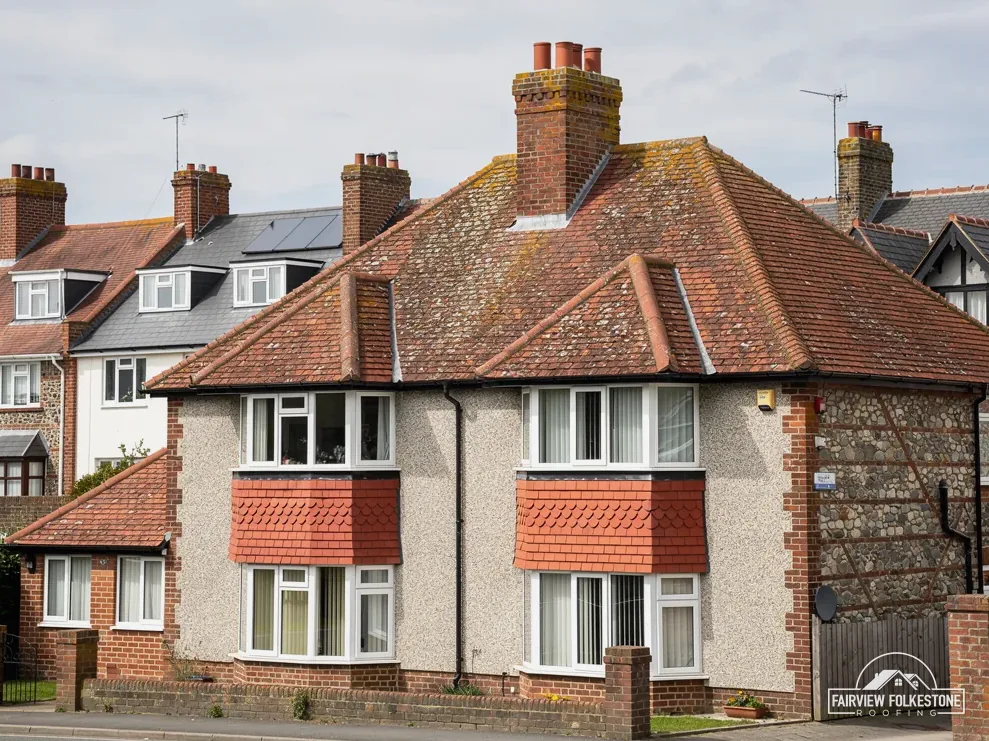
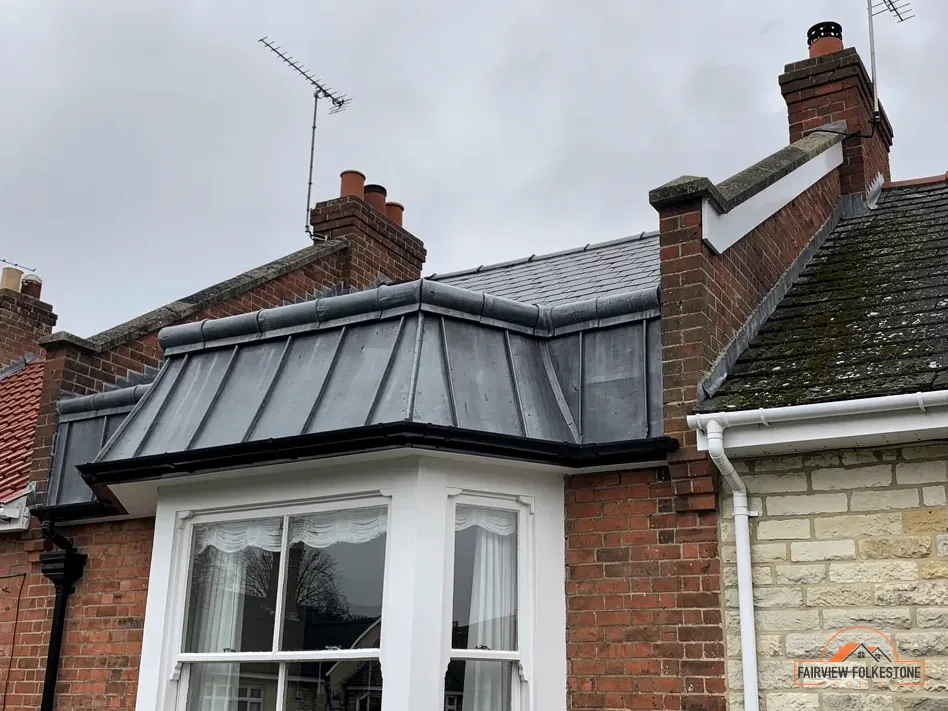
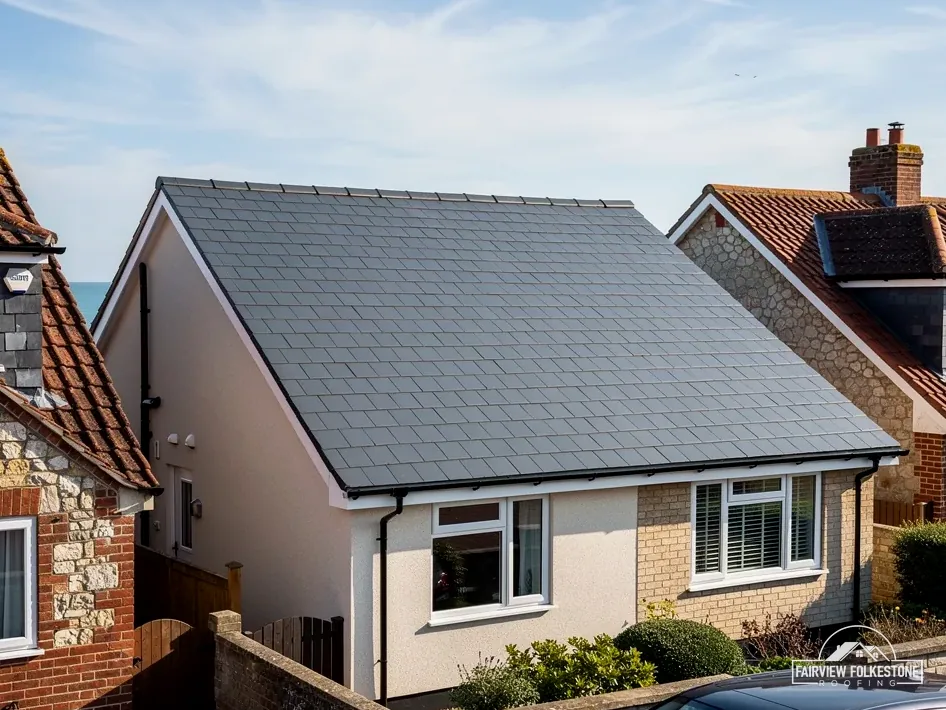
- Church of St James
- Listed Grade I and still in worship use for the Church of England
- Scheduled barrow
- Bowl Barrow 350m South-East of Egerton Church is a scheduled monument
- Boundary map
- Egerton's conservation area is designated; Ashford Borough Council holds the map
- Scaffold on an Egerton lane
- Kent County Council issues the permit, £52 a week for 2026 to 2027
A cottage ridge, a worn valley and a rear gutter: three Egerton verdicts
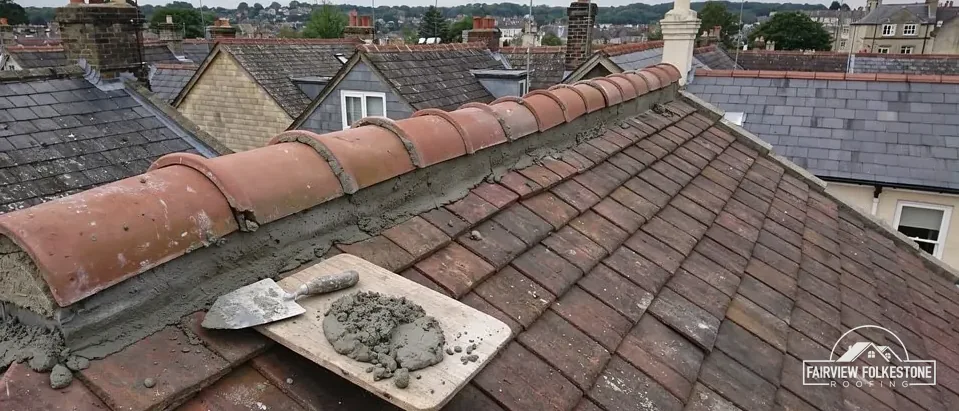
What we found
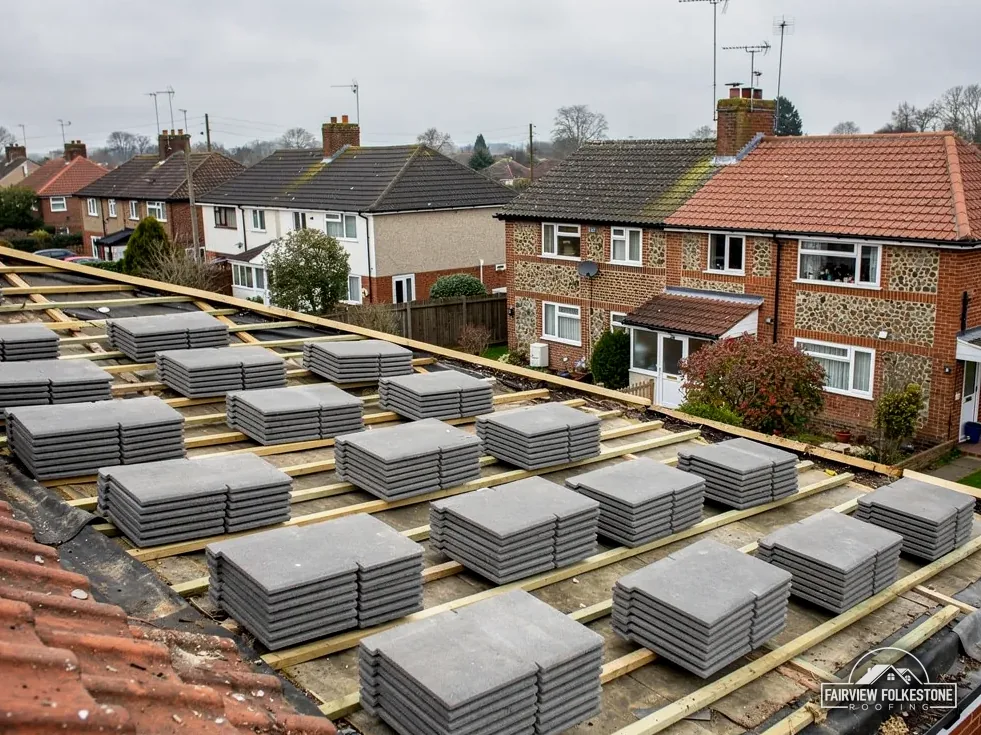
Listed cottage with loose ridge tiles
What it fairly needs
Council first, then a price.
What we found
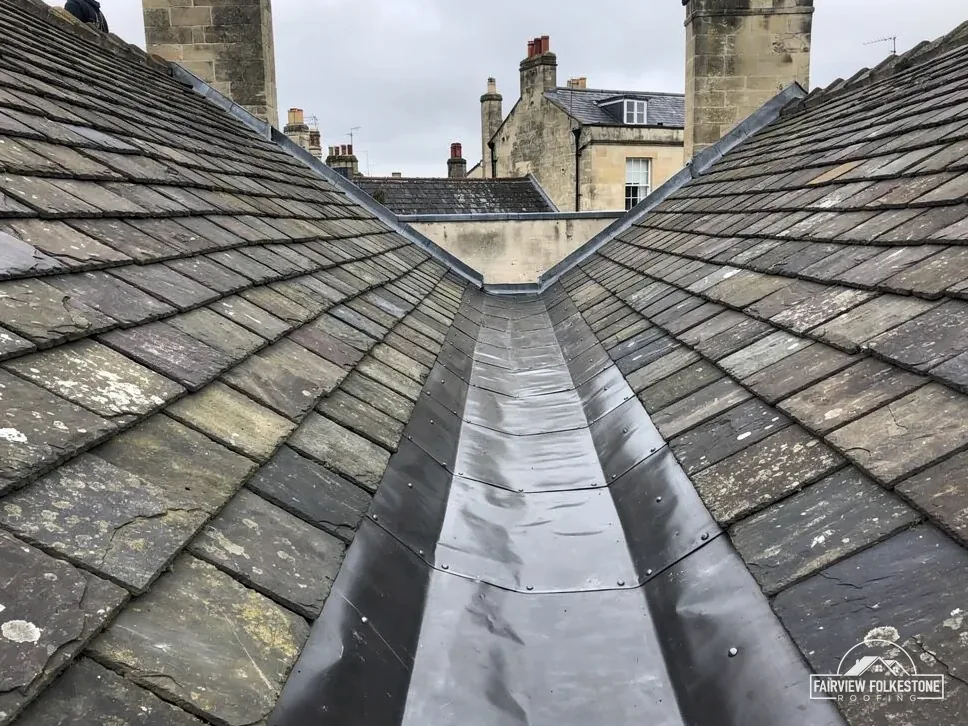
Valley lining worn through at one lap
What it fairly needs
Relay the lining, keep the slates.
What we found
Gutter bolted to soft fascia boards
What it fairly needs
New boards, then a fresh gutter.
The fair ledger
A Grade I church, two Grade II buildings and a scheduled barrow
Egerton's list entries range from a Grade I church to a scheduled bowl barrow, and each is controlled in its own way. The three entries below say who must agree first and what verdict a survey would give, with the reasoning set out beside it.
Entry 01Parish church
St James and its faculty: a roof report written for the application
The Church of St James is listed Grade I and still in worship use, so its roof is decided through the Church of England and not through the district council.
What a useful roof report contains
Historic England lists St James at Grade I, list entry 1071496, first listed on 14 February 1967. It stays a Church of England church in worship use, which makes it an exempt denomination. Listed building consent from Ashford Borough Council is therefore not the route. Works to the church go through the Church of England's faculty system, a permission granted within the church's own jurisdiction.
A roofer cannot shortcut that process, but a good report makes it easier. Before any scaffold goes up, the roof can be read from the ground, from the tower stair where there is safe access, and from a ladder at the eaves. We write up what we see so that the application rests on evidence and not on a general sense that the roof is tired. A report for a church roof sets out:
- the condition of each slope, with cracked, slipped or missing coverings marked on a sketch;
- the state of the lead at every wall, valley and gutter, and what could be dressed back instead of renewed;
- the rainwater goods, including fixings, falls and any joint that has dropped;
- what could wait and what could not, set out in that order.
That last point matters to a church with a limited budget. A fair report separates the patch that holds for now from the job that cannot be put off, and gives the reason. Our lead work service explains how stepped flashings and valleys are dressed, which is where much of that detail sits.
Can you quote for the roof of a Church of England church?
We can survey it and write the findings up, which is what the faculty application needs. The permission itself comes through the Church of England's faculty system, so the quote follows once the route is clear. Until then the report and its photographs are the useful thing to hand over.
Grade I
the listing of the Church of St James, Historic England entry 1071496
first listed in 1967
Entry 02Listed cottages
Glebe Cottage and The Bakery: two Grade II roofs, one map
Glebe Cottage and The Bakery are both listed Grade II, and Egerton also has a designated conservation area that a roof nearby may fall inside.
Listing and conservation are separate questions
Glebe Cottage is list entry 1071495 and The Bakery is list entry 1319972, both first listed on 10 October 1980. Permitted development still applies to roof work on a listed home, though listed building consent is also required if the new work alters the character that earned the listing, and Ashford Borough Council grants it. The practical test is whether anyone looking at the roof afterwards would see a different building.
The conservation area is a different layer. Ashford's borough-wide total is 43 conservation areas, all shown on the council's interactive map, and your address is inside Egerton's boundary or outside it, which only that map can tell you. Article 4 directions take extra rights away in some places, so put your address to Ashford Borough Council before assuming either way. Our planning guide for roof work covers the wider rules, and it is worth reading before you ring anyone.
At a listed house we survey slowly, and in this order: the covering slope by slope, the ridge and its bedding, the lead round the chimney, then the gutters and the boards behind them. Photographs go beside each note, and the proposal goes to the council in writing before any figure is agreed. If the covering is sound and a few pieces have slipped, the verdict is a repair, and nobody is nudged towards a re-roof the roof does not need. Where a slope has failed across its width, we say that too, and the report shows the evidence for it: the broken battens, the wet underlay, the line of tiles that will not hold a fixing. A replacement is only proposed when those findings are on the page.
Ridge tiles loose, covering sound
Rebed and refix
Listed roof needs lifting to inspect
Council route first
Battens rotten across a slope
Strip the slope and renew the battens
Myth: A conservation area bans a new roof covering.
Fact: Re-covering a house is judged under the usual rules; the map shows whether extra limits apply to your address.
Where a scheduled monument stops and a house begins
The barrow carries list entry 1012266. Under section 2 of the 1979 Act on ancient monuments and archaeological areas, carrying out works to a scheduled monument is an offence unless the works are authorised, so any digging, footings or storage on the scheduled ground needs that consent first. A house in the parish is not part of the monument. The map on the list entry draws the line, and for any job where a scaffold footing or a skip might stray toward the field, we read it before the first delivery.
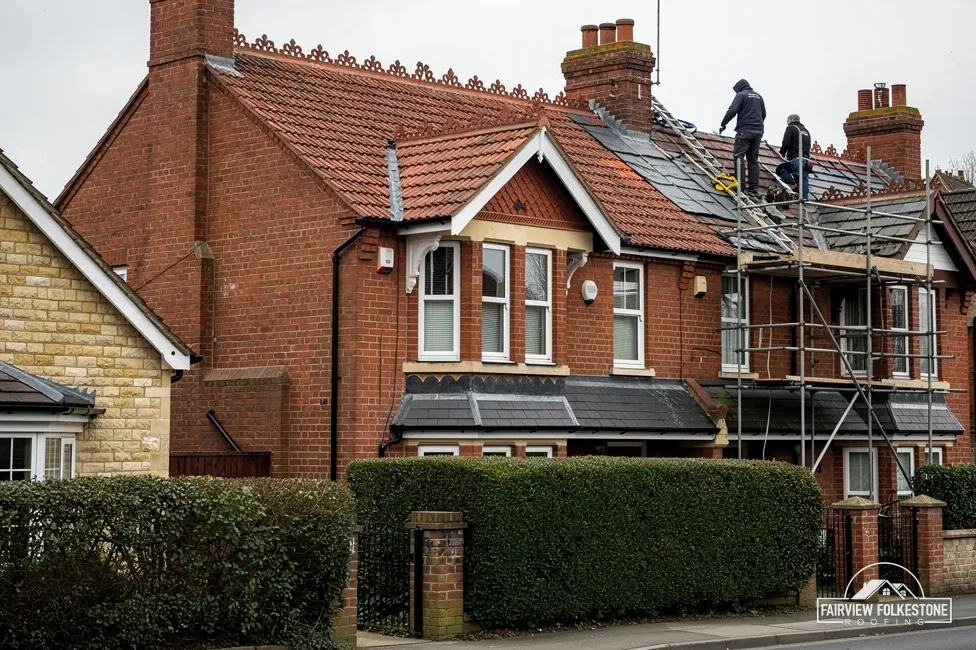
Scaffold is the other practical question on a village lane. Where poles or boards stand on the public road, Kent County Council sets a weekly fee for the permit, and its rule is that the skip or scaffolding company should submit the application for you. In practice we arrange it with our scaffolder, allowing the lead time the council asks for ahead of the start. A walk-around scaffold on the road must leave a minimum distance of 1.2 metre between the scaffold and carriageway for pedestrian access.
All of this goes into the quote's one total: the survey sets out whether scaffold is needed, how long it stands, and whether it touches the road. Our roof replacement service describes how a larger job is planned around that access, from the first delivery to the last tile. Roof access, how long the roof stays open and where materials sit all change what the job involves, which is why the survey records them before a figure is written. A neighbour's drive, a narrow gateway or an overhanging tree each add time, and each is noted on the report so the total reflects the site as it is.
Entry 03Barrow and lane
A scheduled barrow, a village lane and the scaffold permit
Bowl Barrow 350m South-East of Egerton Church is a scheduled monument. It is nobody's roof, but it sits in the same parish and has a consent system of its own.
What sets the price
- Whether scaffold stands on the road
- How many weeks it stays up
- Height of the eaves and ridge
- Distance deliveries must be carried
One written total price
Does the barrow affect a roof job on my Egerton house?
Only if the work would reach the scheduled ground, for example through digging, footings or storage there. The roof of an ordinary house is separate from the monument, and the list entry's map shows where the boundary falls. If you are unsure, tell us the road and the map gets checked before the survey.
West out of Folkestone to Egerton
Egerton is 23.2 road miles west of Folkestone, roughly 30 minutes by car. Photographs through the form below start things off. We then fix the survey with you, and only afterwards does the single written total price arrive. WhatsApp is there for a quick picture too: a slipped tile, a stained ceiling or the run of a gutter is enough to begin with, as long as the road name comes with it.
Roof queries from Egerton households
Can loose ridge tiles on an Egerton listed cottage be rebedded without consent?
It turns on what the work changes. Listed building consent applies if the new work alters the character that earned the listing, so putting back a few ridge tiles in the same material is a different thing from swapping the ridge for another product. Glebe Cottage and The Bakery are both listed Grade II, and Ashford Borough Council decides. The ridge is photographed, the repair set out in writing, and the council sees both ahead of any price.
Who approves work to the roof of the Church of St James?
The Church of England's faculty system, not the district council. St James is in worship use, which makes it an exempt denomination, so listed building consent does not apply. The church's advisers guide the application, and a roofer's survey supplies the facts it needs. We can write up the roof while the faculty route is being settled, with photographs of each slope, and hand the report over as soon as it is done.
Who licenses a scaffold on a lane in Egerton?
A permit is needed only where scaffold stands on the public road. Kent County Council issues it at £52 per week for 2026 to 2027, and its rule is that the skip or scaffolding company should submit the application for you. In practice we arrange it with our scaffolder, and the 5 working days the council asks for are built into the booking. Scaffold kept entirely on your own land needs no road permit, and the survey shows which applies.
Does re-covering an Egerton roof need a Building Regulations application?
Check the Planning Portal's two limits. Where under 25 per cent of the building envelope and under 50 per cent of the roof is touched, an application is normally unnecessary. A replacement covering weighing 15 per cent or more above the existing one needs approval too. Ashford Borough Council's own Building Control team, on 01233 330282, will give you a straight reply for your address, and we can help you word the question.
Does a conservation area change how an Egerton roof is surveyed?
The survey reads the covering, battens, lead and gutters in the same way, but the paperwork can change. Egerton's conservation area is designated, and Ashford Borough Council holds the map that shows whether your address is inside it. An Article 4 direction can matter too, so ask the council about your address. Our planning guide covers the wider rules, and we put anything you need to the council in writing.
An Egerton roof needing a look? Tell us.
You'll get one written total price.