
Smarden · 25.7 road miles west
Roofers in Smarden
A parish of 1,455 residents at the 2021 Census, with a Grade I church, two houses listed Grade II* and a designated conservation area. A survey comes first here, and the roof gets its verdict in plain words before any figure is named, with the reasons set out beside it.
- Church of St Michael
- Grade I, and the Church of England still holds worship there
- Grade II* houses
- Hartnup House and Dragon Cottage Dragon House carry that listing
- Wet-map land
- Flood Zone 3 land lies near the middle of Smarden on the Environment Agency map
- Conservation boundary
- Designated; Ashford Borough Council holds the map for each address
- Scaffold over a Smarden road
- Kent County Council permit, £52 a week for 2026 to 2027
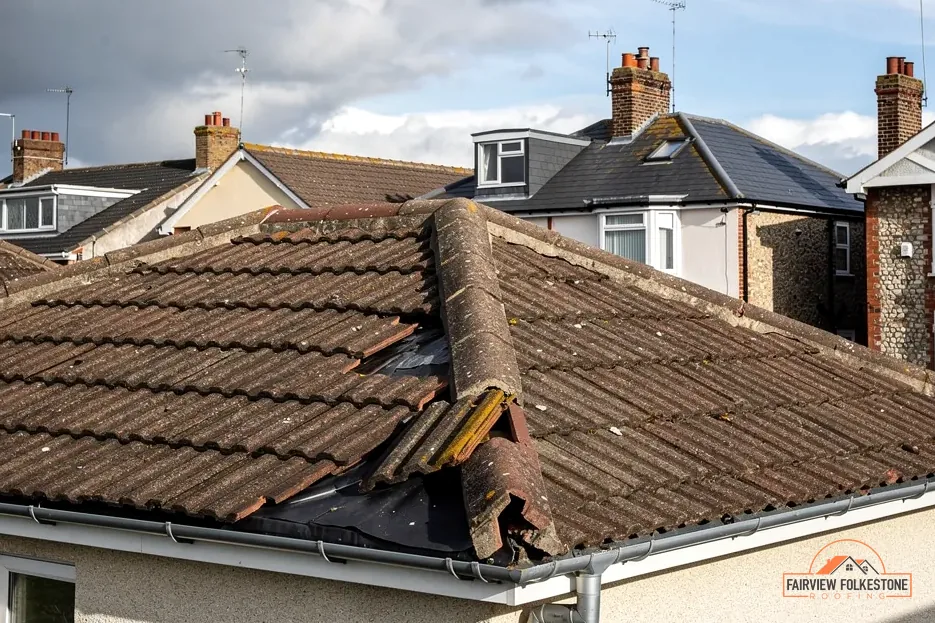
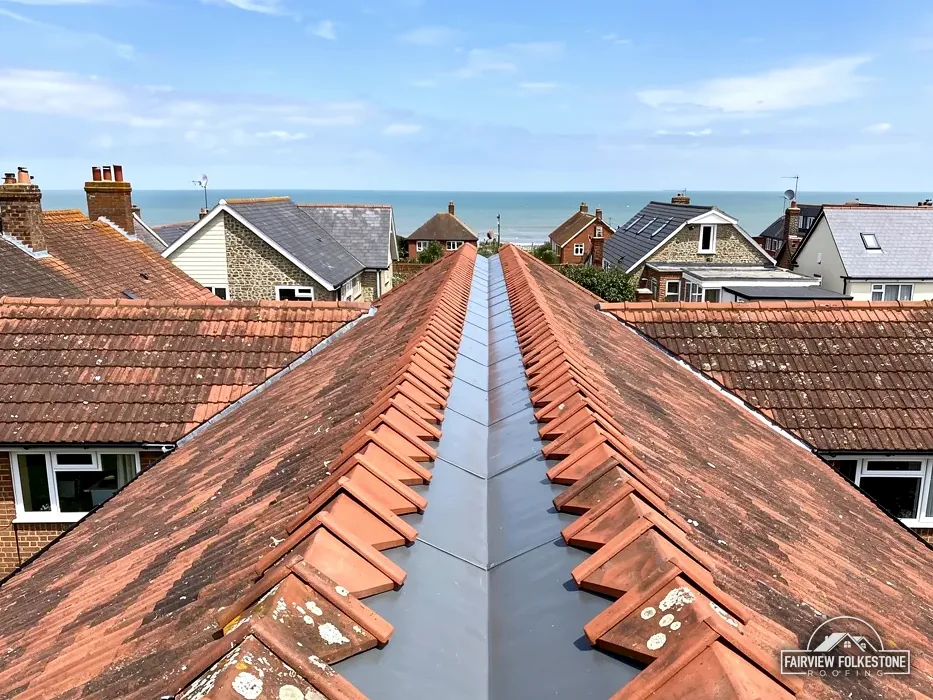
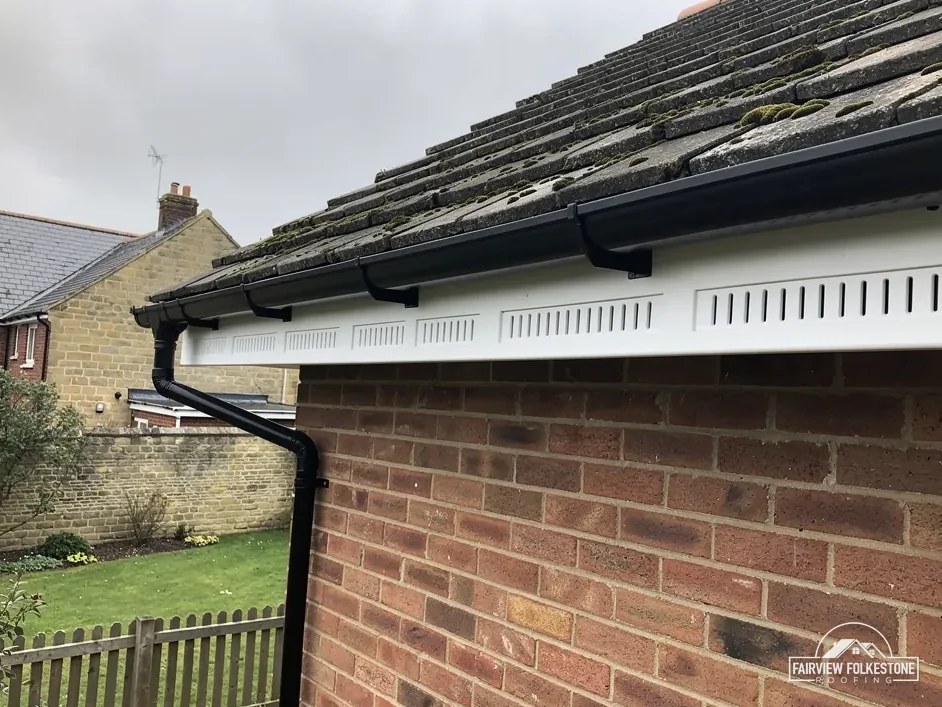
Three Smarden roofs: a Grade II* house, a valley and a fascia
What we found
Grade II* house, tiles slipping at eaves
What it fairly needs
Ask the council before any price.
What we found
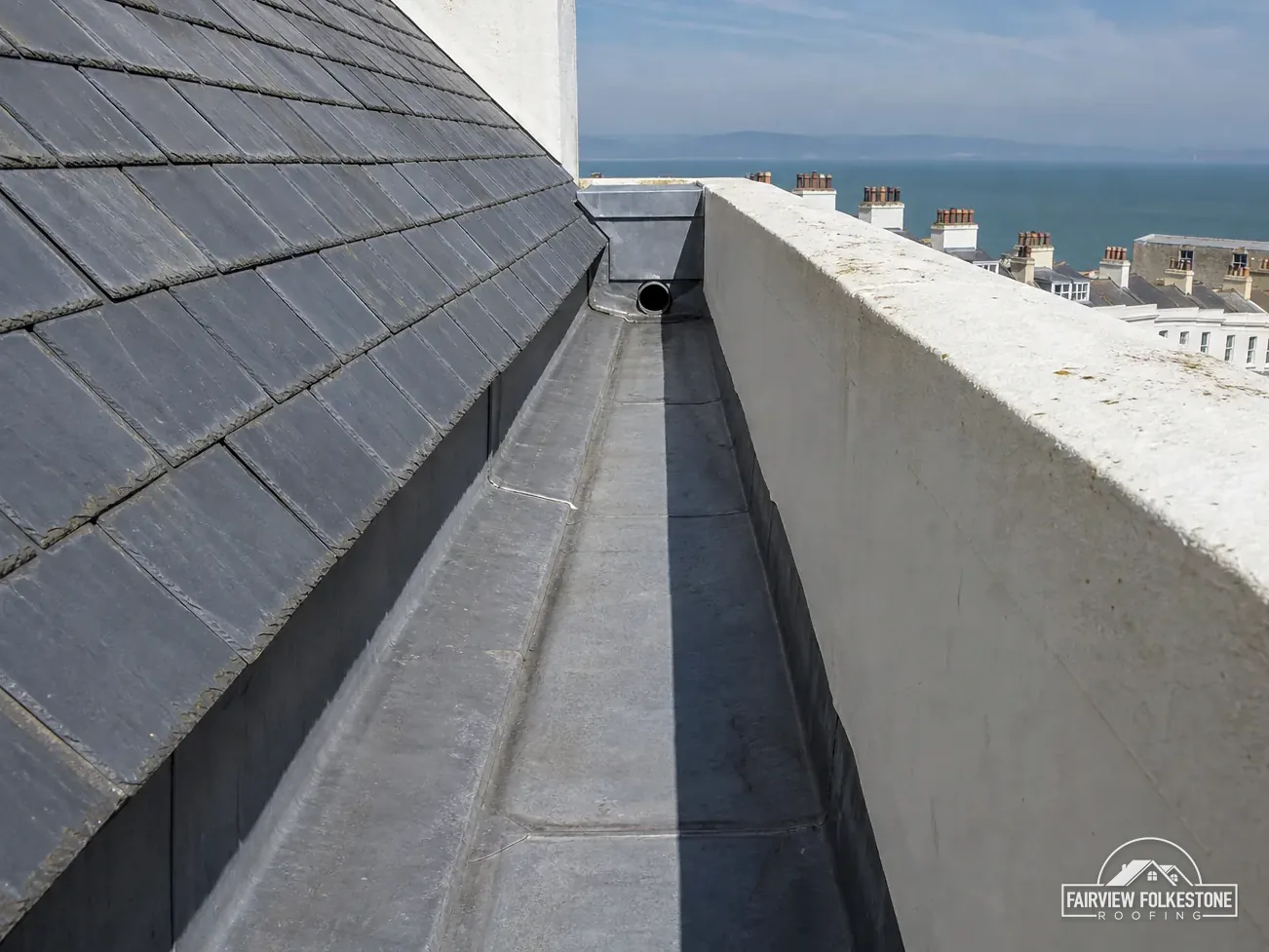
Valley lining split at the lap
What it fairly needs
Replace the lining, bed the slates back.
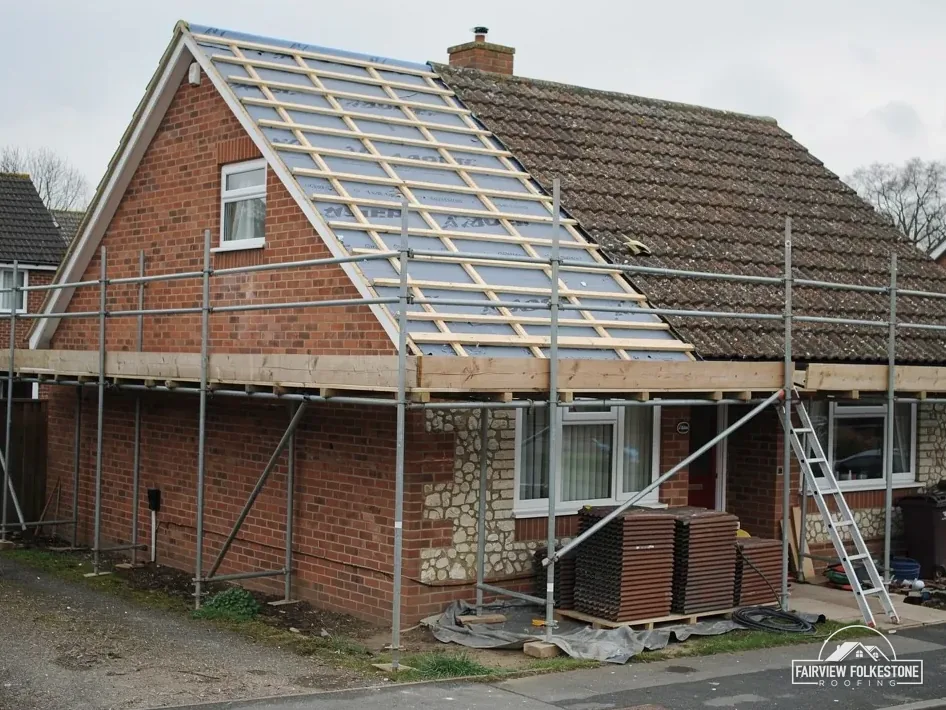
What we found
Fascia spongy behind the gutter
What it fairly needs
New board, then a gutter refit.
The fair ledger
Two Grade II* houses, a Grade I church and a flood-mapped village
Smarden's list entries include two Grade II* houses and a Grade I church, and its map shows Flood Zone 3 land too. Three entries explain who has to agree before work and what each roof is likely to need.
Entry 01Starred houses
Hartnup House and Dragon Cottage: two Grade II* roofs, one routine
Hartnup House and Dragon Cottage Dragon House are both listed Grade II*, so a roof job on either house starts by asking the council.
Asking first, with the evidence in hand
Hartnup House is list entry 1366291 and Dragon Cottage Dragon House is list entry 1071360, both first listed on 17 September 1952. Under section 7 of the Planning (Listed Buildings and Conservation Areas) Act 1990, work that changes what the listing protects needs listed building consent, and Ashford Borough Council is where that consent comes from. Permitted development for roof work stays available to a listed home, so the consent is an extra layer and does not replace anything.
First we photograph each slope, note what has failed and what has not, and describe the repair we would make. The council receives that account before any figure is agreed with you. If the covering is sound and some tiles have slipped, the proposal is to refix them in matching material, which is a far smaller question than a new covering. Our pitched roofing service explains how the layers beneath a covering are read before that proposal is made.
Smarden's conservation area is designated too. Ashford borough has 43 conservation areas, shown on the council's online map, so a house is either inside the boundary or outside it. Ask the council as well whether an Article 4 direction reaches the house. Our planning guide for roof work lays out the wider position, and the survey notes record whatever the council tells you, word for word.
Photographs from the lane matter at houses like these. They show the roof as the council will see it, with the covering, the ridge line and the chimney stacks in view, and they let an officer judge a small change without visiting. We take them before any work begins and again once it is finished.
Tiles slipping at a listed eaves
Council route first
Ridge mortar cracked, tiles still sound
Rebed the ridge
Battens soft through on a side slope
Strip back, re-batten
Myth: Grade II* means nothing can be done to the roof.
Fact: Repair and re-covering go ahead, and listed building consent is added wherever a change would touch what the listing protects.
Entry 02St Michael
The Church of St Michael: two routes in one village
Smarden's Grade I church follows the Church of England's faculty system while its neighbouring houses follow listed building consent, so the same village runs on two sets of rules, and each building needs its own check.
Why the church and the houses part company
Historic England lists the Church of St Michael at Grade I, list entry 1071358, first listed on 14 February 1967. The Church of England still holds worship there, and that settles the route. It is an exempt church, so listed building consent does not apply, and works need a faculty instead, granted through the Church of England's own jurisdiction. Listed building consent from the district council is not the route for the church, though the council still rules on the houses beside it.
For a church roof the most useful thing a roofer can hand over is a clear, dated report. It names each slope and what it shows, marks the lead at the walls and valleys, and records the condition of the gutters and downpipes. It also separates urgent findings from those that could wait, so a limited budget is spent on the right things in the right order. Lead that has lifted at a wall, a gutter that has dropped at a joint and a slipped slate near the ridge are each listed with a photograph and a plain note on what putting it right would involve.
Access is the practical limit. A tall roof needs scaffold, and any scaffold on the lane needs a highway permit. We arrange that with our scaffolder, and the survey says whether the road outside the church is likely to be involved. Our roof inspections service describes how a roof is read when the goal is a written finding and not a quote. A report can be ready well before a faculty application is, which means nobody is waiting on the roofer. If you look after the church, ask for the report early: it gives the church's advisers a dated record to compare with next year's, which is how a slow fault is caught while it is still small.
Does the faculty system cover the houses around the church?
No. The faculty system applies to church buildings still used for worship within the Church of England. The listed houses nearby follow listed building consent, decided by Ashford Borough Council, so each building has to be checked on its own entry. A survey records which route applies before anything is priced.
Grade I
St Michael's grade, from Historic England entry 1071358
first listed in 1967
The valley, the gutter and the drain
A zone on a map says something about ground and adds no rule for the roof. It is still a good prompt to follow the rain from the slope downward. The place where two slopes meet is a valley, and it carries the water from both into one channel, a lining of lead or a sheet product beneath the slates or tiles on either side. If the lining splits at a lap, water gets behind the covering and the damage shows later, indoors.
From the valley the water reaches a gutter, then a downpipe, then a drain or a soakaway. The survey takes those in order. We check the lining and the cut slates beside it, the brackets for movement, each joint for a drop and the outlet for a blockage. A dropped joint wets the wall below, and a full outlet sends the water over the front of the gutter instead of down the pipe.
Where a valley has worn out, the job is a relay of the lining, and the surrounding slates go back where they were. That is a repair, not a re-roof. Our slate roofing service covers how slates are cut and bedded at a valley, and the report says whether yours needs that or something smaller. Valleys collect whatever washes down both slopes, so we clear them before judging the lining, since nobody can assess it under a layer of leaves, and we record what was there. After the lining is relaid, the same photographs are retaken from the same spots, so you can compare the two sets and see the difference for yourself. Photographs of the lining, taken before and after, stay with the survey notes.
Entry 03Valleys and water
Flood Zone 3 land, and where two slopes send their rain
The map puts Flood Zone 3 land near Smarden's middle. The roof itself is read for what it shows, and the survey traces the rainwater it collects.
What sets the price
- Length of the valley to relay
- Number of slates to cut and replace
- How the roof is reached
- Whether scaffold is needed
One written total price
- Lining along the valley
- Board beneath the lining
- Slates cut to meet it
From Folkestone to Smarden, 34 minutes west
Smarden is 25.7 road miles west of Folkestone, around 34 minutes away by road. Use the form below to send pictures and a survey day follows. Once the survey has been done, one written total price reaches you. WhatsApp also takes a picture, with the name of your road, if that is quicker for you, and a clear shot of the fault saves a trip to look at it first, so we arrive knowing what to bring.
Smarden roof matters, taken one at a time
Can tiles slipping at the eaves of a Smarden Grade II* house be refixed freely?
Not without a check first. Refixing matching tiles is a smaller step than changing the covering, yet listed building consent can still come into it if the character of the house is touched. Hartnup House and Dragon Cottage Dragon House are both listed Grade II*, and Ashford Borough Council decides. We describe the repair in writing, with photographs, and put it to the council before a figure is given, so the answer comes from the right place.
Who signs off roof work at St Michael's church?
The Church of England, through its faculty system. St Michael's is still a place of worship, which places it outside listed building consent, so the district council does not authorise the work. The church's advisers guide the application. Our part is a written, photographed account of each slope and its faults, ready for whoever applies, and it can be finished while the faculty question is still open.
Is scaffold on a Smarden lane covered by a county permit?
Where it stands on the road, yes. Kent County Council charges £52 per week for 2026 to 2027, and the skip or scaffolding company should submit the application for you, as its page puts it. Our own jobs rely on our scaffolder, who arranges it. A scaffold kept inside your own boundary needs no permit. Which case applies to your house is something the survey settles, and the answer goes on the written report.
Does re-covering a Smarden roof need Building Regulations approval?
The Planning Portal puts it as a two-part test: under 25 per cent of the building envelope, and under 50 per cent of the roof. Work that stays inside both limits is normally exempt from an application. A replacement covering 15 per cent or more heavier than the present one needs approval first. Ashford Borough Council's own Building Control team, on 01233 330282, can rule on your house.
Does Flood Zone 3 near Smarden change how a valley is repaired?
No. The Environment Agency's map describes land and not roofs, so it sets no roofing rule. A worn valley is repaired the same way anywhere, by relaying the lining and bedding the slates back, and the survey checks the gutters and downpipes beyond it. Any blockage or dropped joint is photographed and noted, so the report shows exactly where the water goes, and what each fix would involve, in the order the work would be done.
Planning work on a Smarden roof? Start here.
You'll get one written total price.