
High Halden · 24 road miles west
Roofers in High Halden
A parish of 2,092 residents at the 2021 Census, with a Grade I church, two listed Grade II buildings and a designated conservation area. Tell us where the roof is letting you down and a survey tells the urgent jobs apart from the ones that can be left.
- Parish Church of St Mary
- Listed Grade I and in use as a Church of England place of worship
- Two listed houses
- Dragon House Larasset and Hathewolden Grange, both Grade II
- Conservation boundary
- A designated area; Ashford Borough Council's map checks any address
- Scaffold standing on the road
- Kent County Council permit, £52 a week for 2026 to 2027
Grange tiles, a porch slope and a chimney stack: three High Halden stamps
What we found
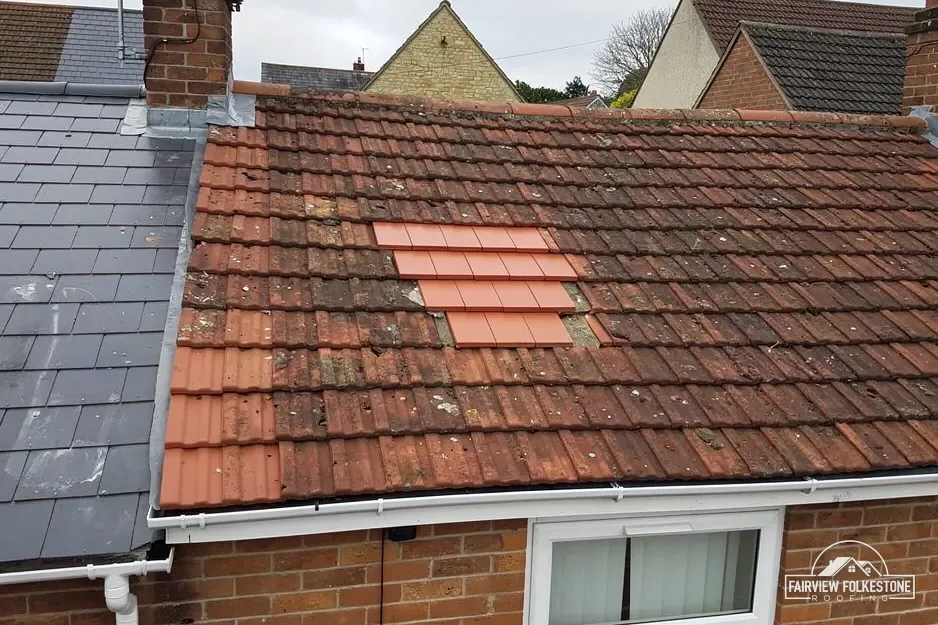
Listed house with a cracked tile run
What it fairly needs
Council route, then a price.
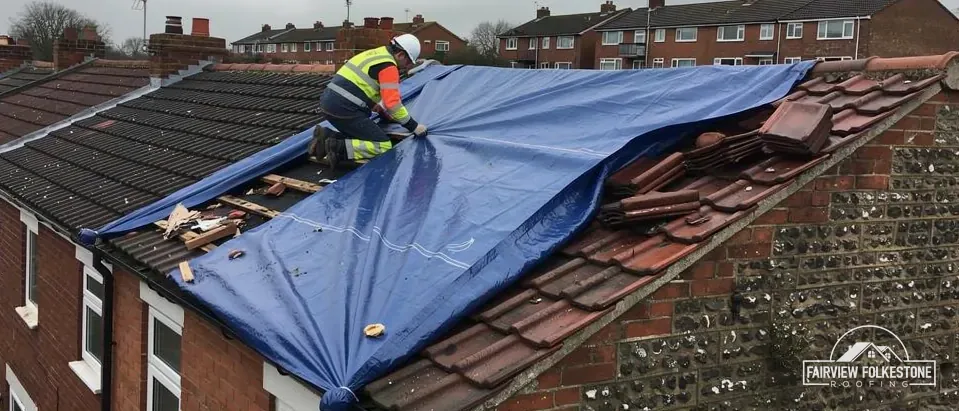
What we found
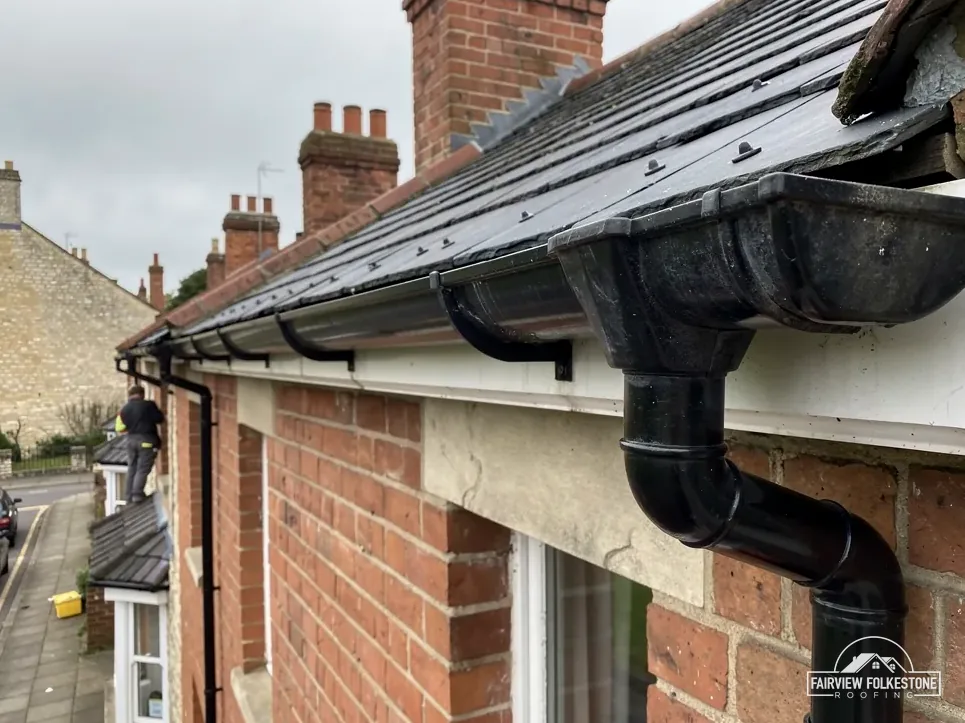
Porch slope with a few slipped tiles
What it fairly needs
Refix and re-bed where loose.
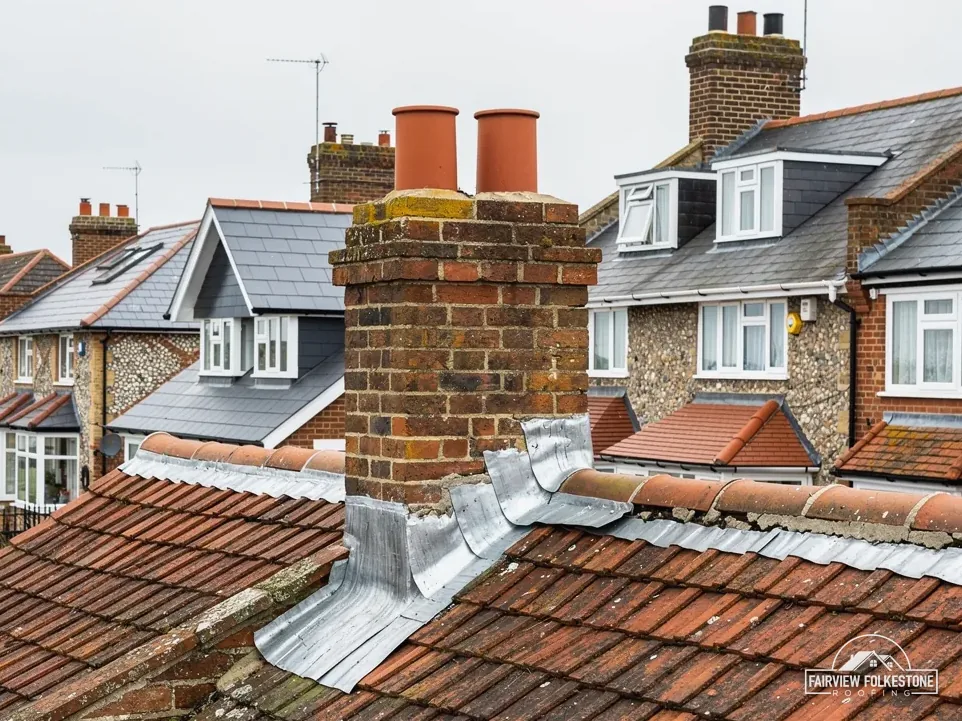
What we found
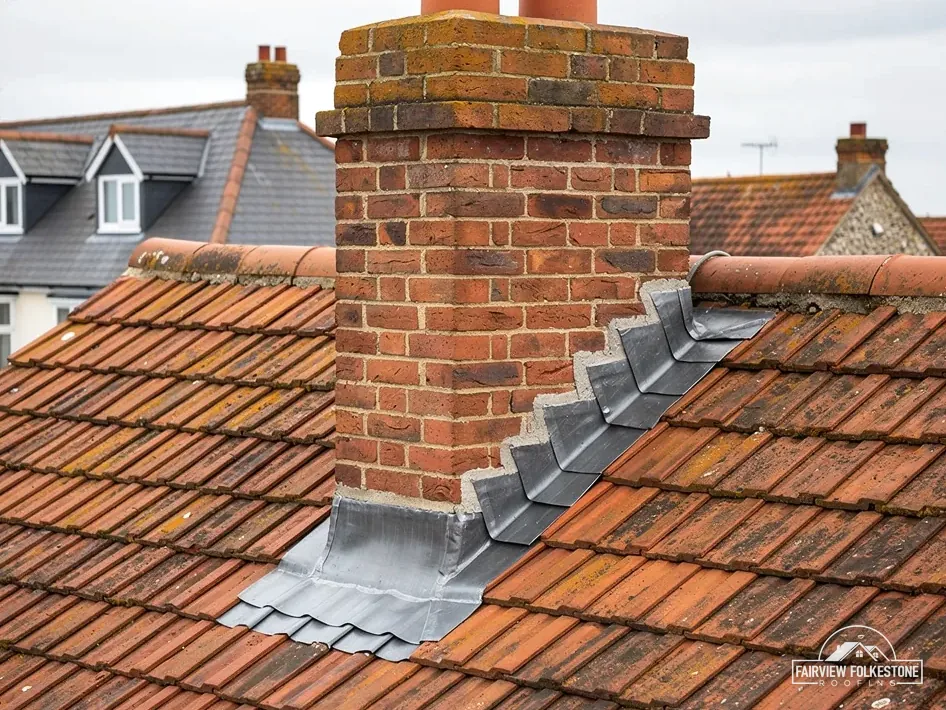
Mortar fillet crumbled round the stack
What it fairly needs
Strip it and fit lead flashing.
The fair ledger
A parish church, two listed houses and the conservation boundary
High Halden has a Grade I church, two Grade II houses and a designated conservation area, each with its own consent route. The three entries below show who must be asked and what the survey would conclude.
Entry 01Parish church
The Parish Church of St Mary: why the council is not asked
St Mary is listed Grade I and still used as a Church of England place of worship, which sends its roof work down a different road from a house.
Faculty, not listed building consent
Historic England lists the Parish Church of St Mary at Grade I, list entry 1185888, first listed on 16 August 1962. For most listed buildings, work that alters the character of the building needs listed building consent under section 7 of the 1990 Act, granted by the district council. A church still used for Church of England worship sits outside that system. Its works need a faculty, which is the Church of England's own permission and is decided within the church, not by Ashford Borough Council.
For anyone who looks after a church, the place to begin is the evidence. A survey that walks each slope, notes what has moved and photographs it gives the church's advisers something solid to read. It also stops a small repair from being described as a large one, or the other way round. Our roof inspections service is built around exactly that kind of written finding.
A church roof also has to be read from more than one position. The ridge and hips are checked from the ground with binoculars, the valleys and gutters from wherever access is safe, and the lead at each wall from the nearest point a ladder can reach. Anything that cannot be seen is listed as unseen, so the report never implies a check that was not made.
If scaffold is needed, the lane outside decides how it is set up. Where it stands on the road, a permit is part of the job, and we deal with it through our scaffolder. Neither step depends on the faculty, so the survey and the permit enquiry can run while the church settles its own route, and the report is ready when the application is. If the roof is leaking in the meantime, the survey can also say which areas can be held with a temporary measure and which need work now.
Myth: Any listed building needs the council's consent for roof work.
Fact: An exempt church in use goes through its own system, which for the Church of England is the faculty.
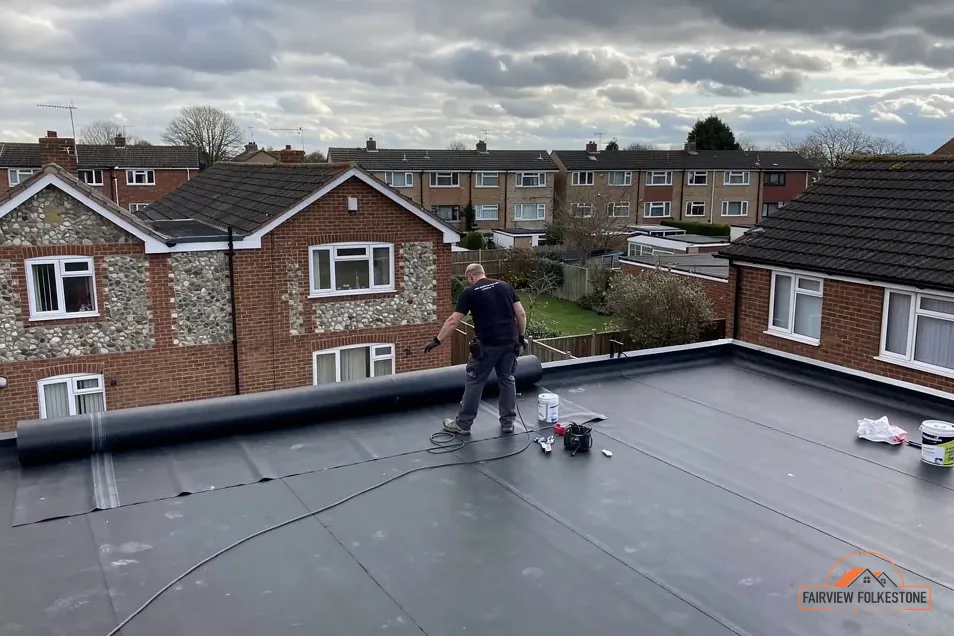
Grade I
the listing of the Parish Church of St Mary, Historic England entry 1185888
first listed in 1962
Entry 02Listed houses
Dragon House Larasset and Hathewolden Grange: asking before pricing
Both houses are listed Grade II, so a re-roof or a patch on either has a consent question attached before any tile is lifted.
Two entries, one routine
Dragon House Larasset is list entry 1070932, first listed on 9 August 1979. Hathewolden Grange is list entry 1070964, first listed on 16 August 1962. Neither entry changes the survey itself, but each changes what happens afterwards. Roof work on a listed home is still covered by permitted development, but the work also needs listed building consent wherever it would change the character that earned the listing. Ashford Borough Council makes that call, and the entry number is the first thing to give it.
The routine is the same for either house. We photograph every slope and note the covering, the ridge, the hips and the lead at the stack. Gutters and the fascia boards behind them come next. Then we write up what is sound and what is not, with a proposal beside each finding, and send the lot to the council before anything is priced. A valley, where two slopes meet and shed their water into a lined channel, gets the same attention as the ridge, because a worn lining there lets water behind the covering. Where a covering is basically sound, the proposal is to refix and match it, because a listed roof rewards patience more than haste.
Chimneys are where that patience shows. Lead at a stack may be dressed back and sealed, whereas a crumbled mortar fillet needs replacing with lead. Our chimney repairs service sets out which is which, and the written report says which one your stack needs.
Cracked tiles, battens still sound
Swap and match
Listed roof, covering to be lifted
Council route first
Mortar fillet crumbled at stack
Lead flashing, dressed in
Do I quote the list entry number when I contact the council?
Yes. The number takes the officer to the right building at once, and it is printed on the Historic England list entry for the house. Send it with photographs of the roof taken from the lane and a note of the fault, and the reply you get will be about your roof, not about a general query.
What the boundary does and does not change
Ashford Borough Council counts 43 conservation areas, High Halden's among them, and publishes an interactive map. Whether your house stands inside the boundary is a question for that map and not for anyone's memory of the lane. Replacing a worn covering is handled under the usual rules, but other things can change inside a boundary, and our planning guide for roof work sets out which.
Where an Article 4 direction is in force, some permitted rights are withdrawn for the properties it names. Only the council can say whether a given house is named, and we would put that question to it for you if it were ever in doubt. It is the right step before any change to the look of a roof from the road, such as a different tile colour or a rooflight on the front slope. Ask early, because a reply from the council can take time and the roof should not be left open while you wait for it.
Underneath the covering, the survey cares about different things. Underlay is the sheet that sits beneath the tiles, and it should lap properly over the battens and run into the gutter at the eaves. Battens are the timber laths the tiles hang on, and a rotten one will not hold a fixing however good the tile above it is. Both are checked from the loft where there is safe access, and both are written up with a photograph. When you contact the council, pictures taken from the road are the most useful, because the question is how the roof looks from public view. A neighbour's roof is not evidence for your own, since each address has its own status. Our pitched roofing service explains how a roof is rebuilt from those layers upward.
Entry 03Conservation map
High Halden's conservation area, Article 4 and an ordinary re-cover
The village has a designated conservation area, and Ashford Borough Council's map decides whether your own roof sits inside it.
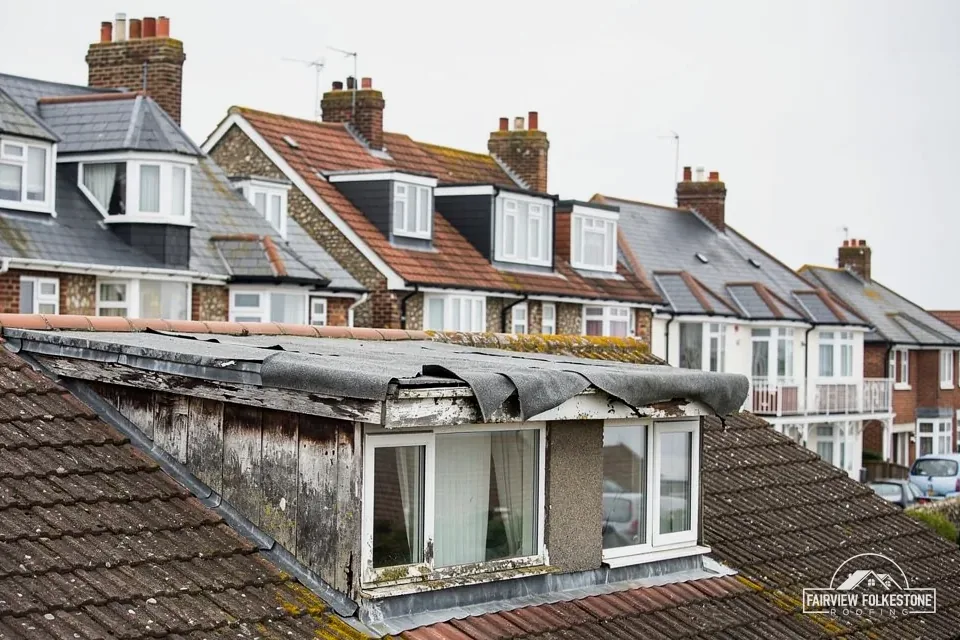
What sets the price
- Area of slope that has failed
- Whether battens need renewing
- Access to the roof edge
- Whether scaffold is needed
One written total price
- Tile or slate on top
- Batten it hangs from
- Underlay beneath the battens
- Rafter carrying the lot
Folkestone to High Halden, 24 road miles
High Halden lies west of Folkestone, 24 road miles by road, which is about 32 minutes at the wheel. Send photographs with the form below and the survey is fixed with you. Only then does the one written total price appear, and WhatsApp suits a quick look at a stain or a slipped tile. A road name and one clear picture of the fault are enough for us to know what to bring to the survey, and what to leave behind.
What High Halden roofs raise with the council
Does a cracked tile run on a listed High Halden house need consent to mend?
That depends on how far the repair alters the roof. Swapping a few cracked tiles for matching ones keeps the roof as it was; changing the material is another question. Dragon House Larasset and Hathewolden Grange are listed Grade II, and Ashford Borough Council decides. The repair is described on paper and put to the council first, so the position is clear before any figure is named.
Who decides on repairs to the roof of St Mary's church?
Within the Church of England, a faculty decides. The Parish Church of St Mary is in use as a place of worship, so it is outside listed building consent, and the district council is not the route. Whoever applies does so through the church's own process. A roofer helps by writing up each slope with photographs, and we can produce that report while the faculty question is being settled. It is also the report a churchwarden can hand to an architect, so nobody has to explain the roof twice.
Is a scaffold on a High Halden road licensed by the district council?
No. Highway scaffold licences come from the county council, not the district. Kent County Council charges £52 per week for 2026 to 2027. Applying is the contractor's task, as Kent County Council puts it: the skip or scaffolding company should submit the application for you. On our jobs, we arrange it with our scaffolder. Scaffold kept wholly inside your garden involves no road permit at all, and the survey shows which kind your house would need.
When does re-roofing in High Halden need Building Regulations approval?
The Planning Portal gives two limits. Affecting less than 25 per cent of the building envelope and less than 50 per cent of the roof, the Planning Portal says, normally needs no application, but a covering that adds 15 per cent or more to the roof's load needs approval first. Ashford Borough Council's own Building Control team is on 01233 330282 for a ruling on your house, and we can help you put the query.
Does the conservation area stop a High Halden roof being re-covered?
No. A conservation area does not forbid a new covering, and the usual rules apply to it, just as they would a street away. What the boundary can change is other work, and an Article 4 direction can withdraw some rights, so check your address on Ashford Borough Council's map. Where the answer is unclear, we put the question to the council in writing before the price is set and keep the reply with the survey notes.
Slipped tiles or a sagging gutter in High Halden?
You'll get one written total price.