
Woodchurch · 21.7 road miles west
Roofers in Woodchurch
A windmill and a house listed Grade II*, an All Saints church listed Grade I and a designated conservation area give Woodchurch a long checklist for any roof job. We work out which of them reach your address, read the lead and the slopes together, and then put one total price in writing, with photographs behind each verdict.
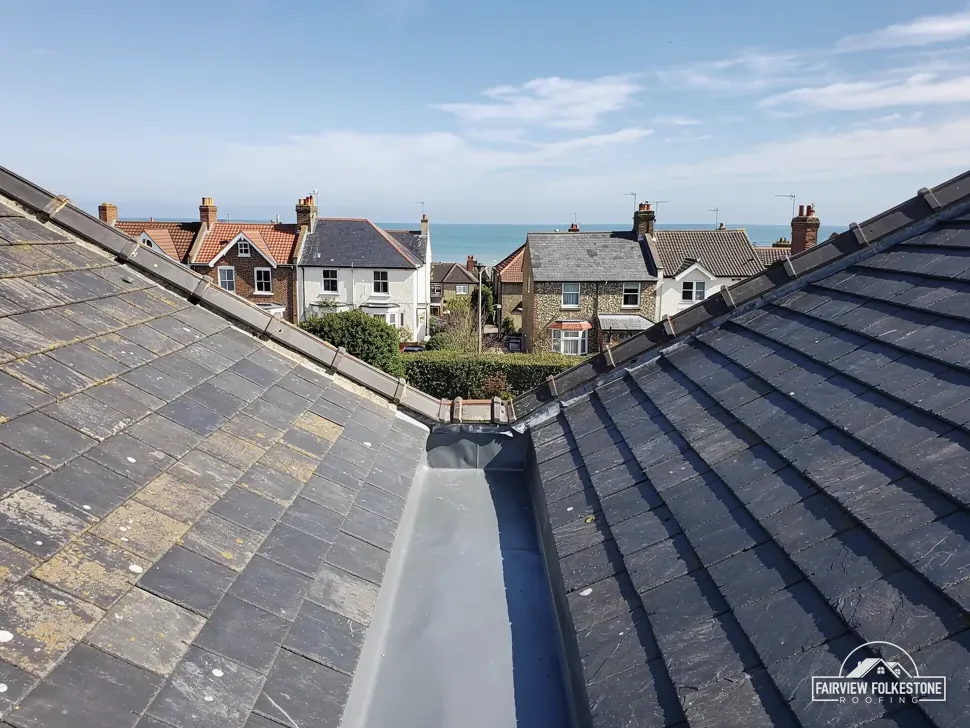
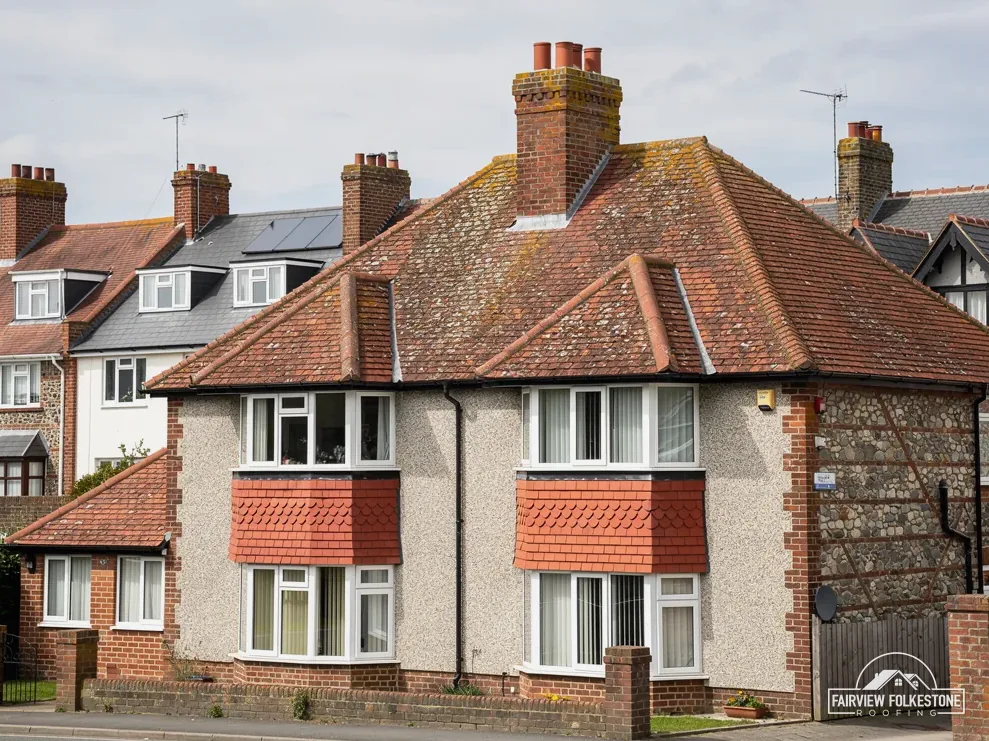
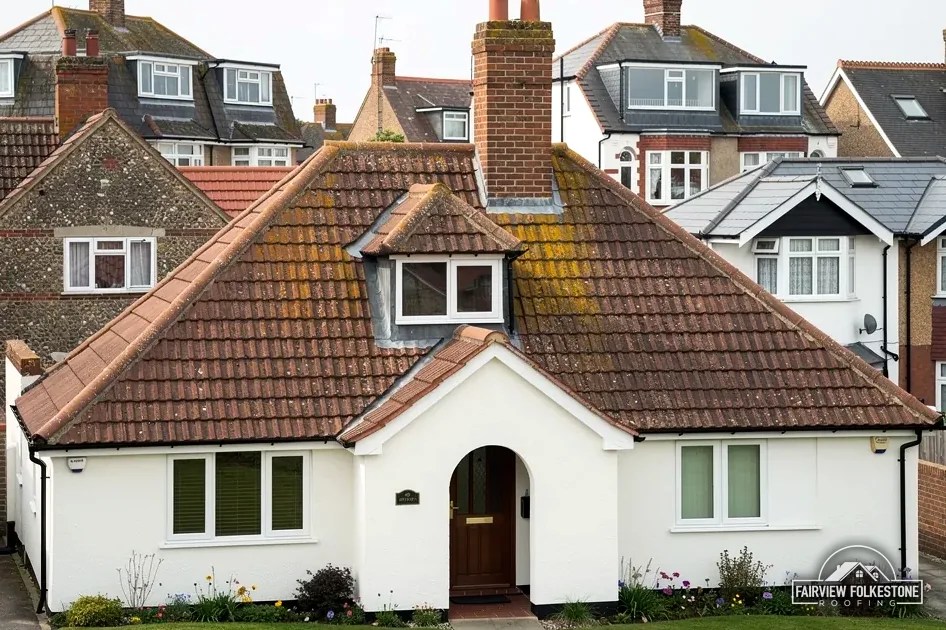
- Windmill
- Woodchurch Windmill, Grade II* (list entry 1121143)
- Listed house
- Henden Place, Grade II* (list entry 1121861)
- All Saints
- Parish Church of All Saints, Grade I, in use for Church of England worship
- Licence for poles on the road
- Kent County Council, £52 per week for 2026 to 2027
Valley lead, listed neighbour, extension: Woodchurch roofs read
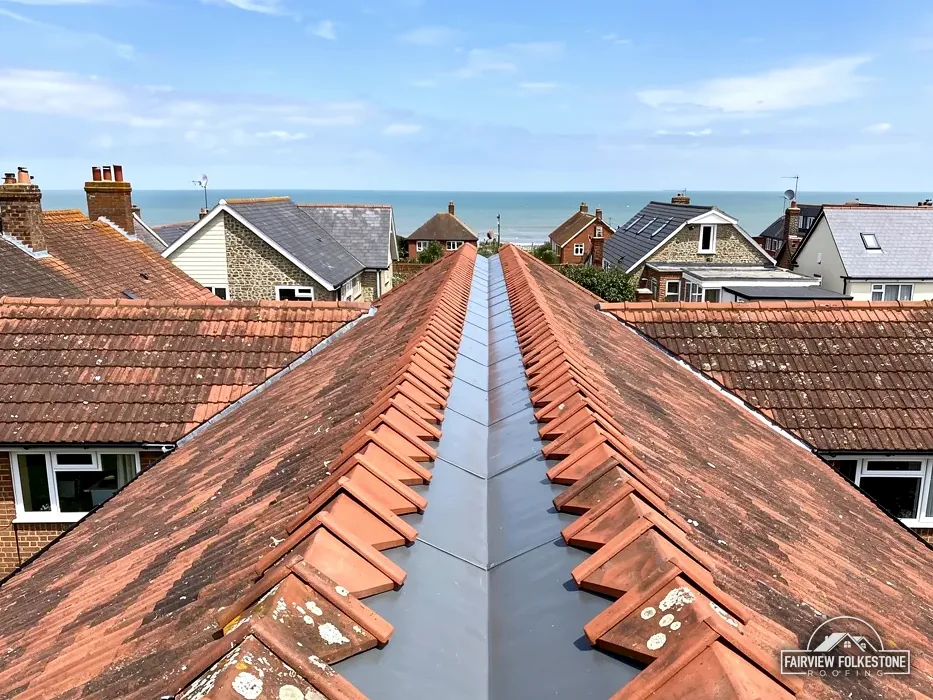
What we found
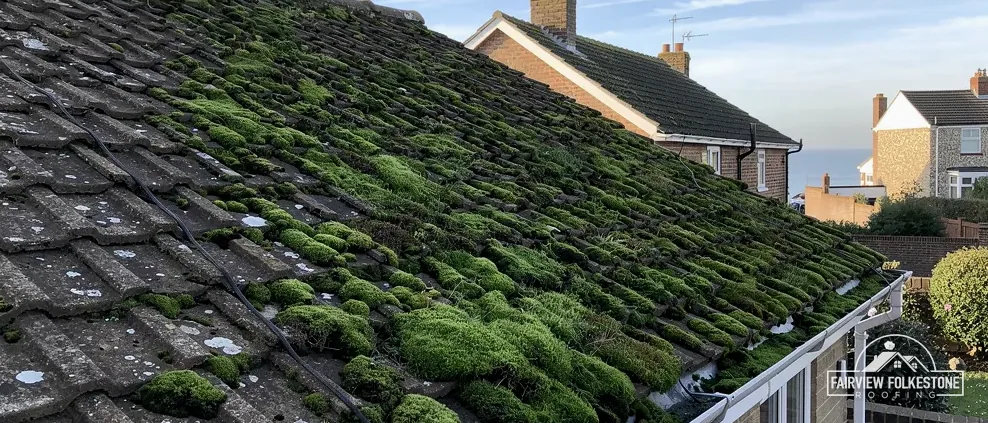
Valley lining cracked at one joint
What it fairly needs
Renew that length of lining.
What we found
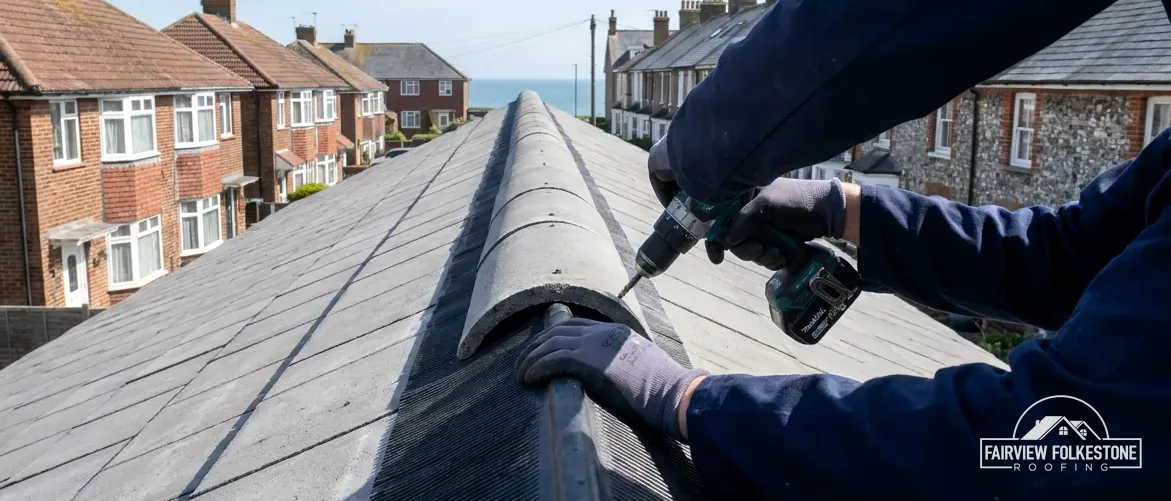
Cottage near a listed building, tiles slipping
What it fairly needs
Check its entry, then price.
What we found
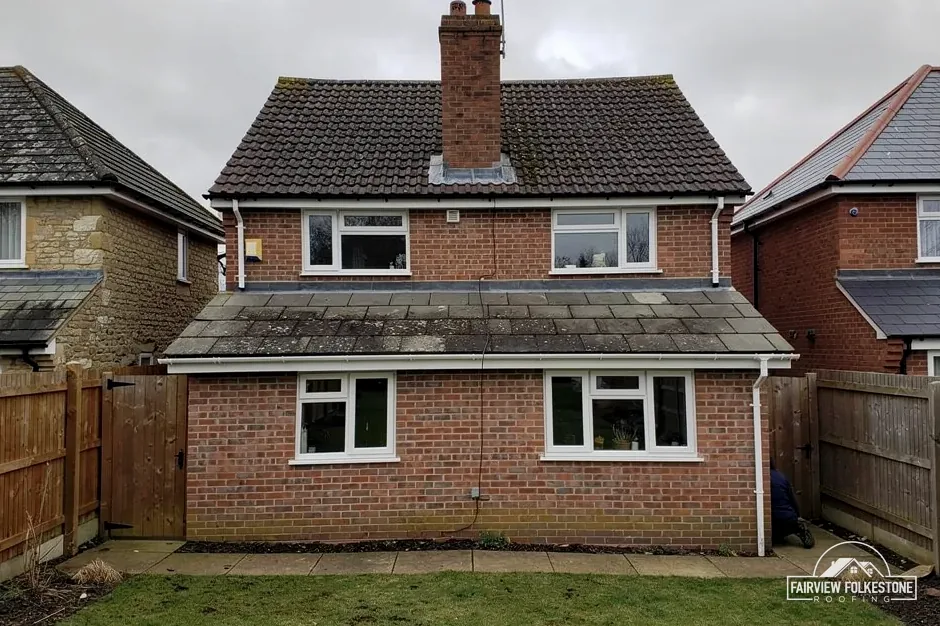
Rear extension roof past patching
What it fairly needs
Lay a new covering over it.
The fair ledger
A windmill, a church and old lead: three Woodchurch roof questions
Three entries: what a Grade II* windmill and house show about listed roofs of every shape, how the Grade I church and the conservation area change an ordinary house, and what old lead in valleys and flashings needs before anyone replaces it.
Entry 01Windmill
Woodchurch Windmill, Henden Place and All Saints: three routes
A windmill, a house and a church are all listed, but they are not all handled the same way. Where your own roof stands among them is the first question.
Listing covers the oddest roofs too
Historic England lists Woodchurch Windmill at Grade II* (list entry 1121143, first listed on 16 August 1962) and Henden Place at Grade II* (list entry 1121861, first listed on 4 June 1952). A listing follows the building, whatever shape it takes, so a windmill and a house meet the same rule: listed building consent, under section 7 of the 1990 Act, where work would change the way it reads as a historic building. Ashford Borough Council decides what that means in a given case, and a repair that matches the old roof is the easiest to explain to it.
All Saints, the parish church, holds a Grade I listing (list entry 1362956, first listed on 16 August 1962) and is in use for Church of England worship. For All Saints, repairs go before the Church of England's faculty system, which stands in for listed building consent while the church is in use.
A cottage absent from the list sits outside all three, and a plain repair there goes ahead on everyday terms. Before any figure is written, your address is searched on the list and the finding is kept on the job file. Our roof inspections page describes the visit, which takes in ridge, slopes, flashings, valleys and eaves in turn, with every finding photographed for the report you receive.
Myth: Only houses are listed, so an outbuilding roof can be changed freely.
Fact: A list entry covers whatever building it names, whether that is a house, a mill or a barn. The entry decides, not the building's size or use.
How is a listed roof surveyed differently from any other?
The visit is the same, but the record is fuller. Every covering, fixing and junction is photographed as it was found, with the repair worked out afterwards from those pictures, so a consent officer sees plainly what will change and what will stay.
Entry 02Village map
The Woodchurch conservation area and the Article 4 question
Being inside a conservation area changes a few things for a house, and Ashford Borough Council holds the boundary and the answers, not the roof or its owner.
Looking at the map before the ladder
Woodchurch has a designated conservation area, and the village centre lies inside it. Ashford Borough Council publishes 43 conservation areas across the borough on one interactive map, and a house is either on the inside of a line there or it is not. How old the cottage looks tells you nothing, and neither does the lane it stands on. Inside a conservation area, a plain re-cover normally remains permitted development, but dormers are a different case, and our planning permission guide deals with any change to a roof's outline.
Check with Ashford Borough Council about your lane before planning more than a repair; an Article 4 direction can remove further permitted development rights, and only the council can say whether one reaches you. When a job is larger than a repair, that question goes in alongside the survey details, with the council's answer kept alongside the estimate.
On a house inside the boundary, a repair is drafted to follow the existing roof as closely as the work allows. A handful of slipped tiles is quoted as a handful of slipped tiles, with nothing added for show. Our pitched roofing page describes how repairs and full re-covers differ, and the survey says which one your slope has earned, and the quote gives the reason.
What the Woodchurch map decides
Ridge bed failing, slopes sound
Re-bed and fix it
Dormer idea inside the boundary
Read the guide, then ask
Covering gone on every slope
Full re-cover
What sets the price
- How much of the roof is renewed
- Where the scaffold has to stand
- Matching the covering already there
One written total price
Reading the metal before replacing it
MyJobQuote says correctly installed lead flashing can last for over 80 years. That is a source's hedge, not a promise, and it is why a flashing that looks tired is looked at closely before it is condemned. The survey checks for cracks at folds, lifted edges, gaps where the lead meets masonry and splits along a valley, and each one points to a different repair.
In Royston Lead's cast-lead brochure, Code 4 (1.80 mm) is listed against dormers, pitched valley gutters, flashings and soakers, while Code 5 (2.24 mm) is listed for flashings, valley gutters and other details. For each detail the specification names the right code, so a replacement is chosen to suit its position and is not simply copied from the old piece.
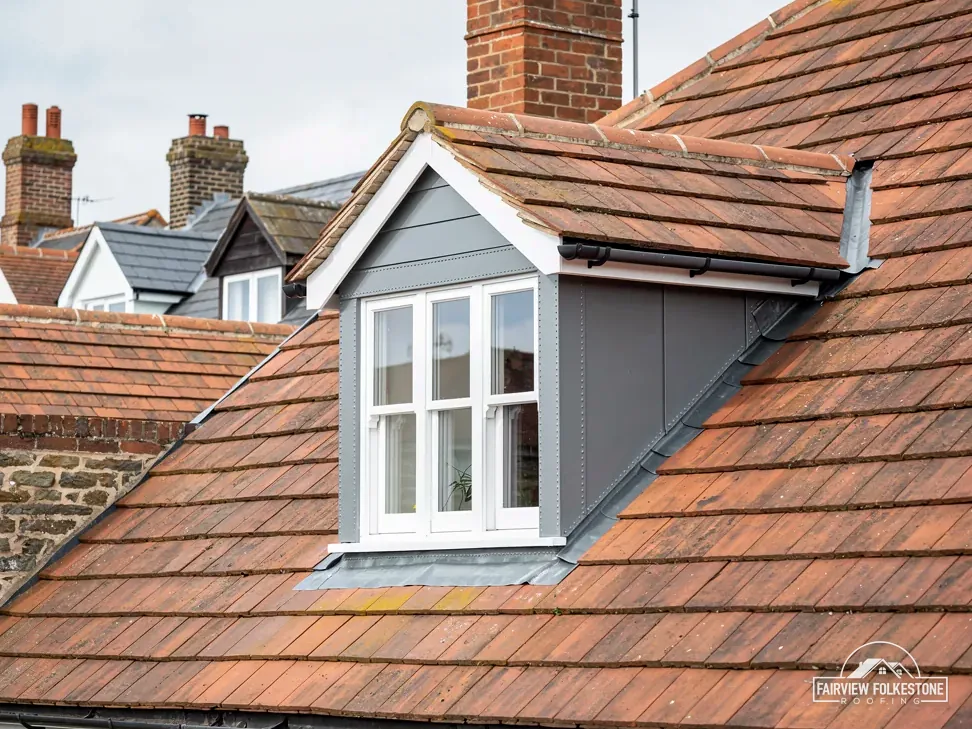
A cracked length in a valley is a repair: that length is renewed and the slopes either side stay. If the lead has failed along most of its run, or the boards beneath it have rotted, a larger job is written up, with photographs. Our lead work page sets out what each repair involves, and the quote names the verdict for each piece, so you can see which lead is staying and which is going. Old lead is kept where it is sound; renewing metal that still works would only add cost.
Entry 03Old lead
Lead in valleys and flashings: what an old roof's metal needs
Old lead can outlast the covering around it, so the real question is whether it is sound, and its age comes second to its condition.
Code 4
Royston Lead lists it for dormers, pitched valley gutters, flashings and soakers
1.80 mm cast lead
Down the valley
- Lead lining along the valley
- Board beneath the lining
- Cut pieces meeting it
The three layers checked when a valley is suspected of leaking.
Windmill, church or old lead: which Woodchurch question is yours?
Give us the lane and a photograph. Each fault comes back stamped, with the reason beside it, then one written total price you can compare.
West out of Folkestone to Woodchurch
Woodchurch is 21.7 road miles from Folkestone, lying west of Folkestone, and takes about 30 minutes to reach. The 2021 Census counted 2,061 usual residents in the parish. Once we have the lane and a photograph, the survey is prepared in advance, with the list entries and the village boundary looked up first. When a scaffold looks likely, the position of its poles is gone over with you on the day, along with where skips and materials can sit. A call comes beforehand.
Woodchurch roofs: listings, village map and lead
Short replies on the windmill, the church and the lead, with the thinking behind each answer set out for you to judge.
What is looked at first on a Woodchurch roof with lead valleys?
The valley itself comes first: cracks at folds, splits along its length and the board underneath it. Then the flashings where the roof meets walls, the ridge and hips, each slope, and the eaves with their gutters. A look in the loft, if it is safe, shows daylight and damp from inside. Each finding is photographed, tagged repair, replace or check, and priced as one written total. Photographs of the valley are kept in your report. If anything is past a repair, you are told so plainly.
Does the windmill or Henden Place listing change my roof's rules?
Not for your house, unless it is itself on the list. A listing covers the one building it names. If yours is listed, listed building consent is the route when work could change its character, and Ashford Borough Council decides what counts. We check the list before pricing and record the answer on the job file, so it stays with the house for whoever owns it next. A neighbour's listing never changes it. Where nothing is listed, the work proceeds without delay.
Do I need approval to put a new covering on in Woodchurch?
A new covering across less than 25 per cent of the building envelope and less than 50 per cent of the roof normally avoids an application, according to the Planning Portal. Inside those limits, approval is still needed for any covering 15 per cent or more heavier. Ashford Borough Council's Building Control team, on 01233 330282, is the place to ask about a specific house, and our survey records the present covering and the one you have in mind. A structural check is advised before anything heavier goes up.
Where do I check whether a Woodchurch house sits in the conservation area?
Use Ashford Borough Council's interactive map, or ask the council to confirm your address. Woodchurch has a designated conservation area. Check with Ashford Borough Council about your lane before planning more than a repair, because an Article 4 direction can remove further permitted development rights. For a larger job we send the question ahead of the survey and file the council's reply with your estimate. You see the reply before booking. Nothing larger than a repair is fixed until it is back.
How long should old lead flashing last on a Woodchurch roof?
MyJobQuote says correctly installed lead flashing can last for over 80 years, and that is a hedge rather than a promise. Age alone does not condemn a flashing. The survey looks for cracks, lifted edges and gaps at the masonry. A short failed length is renewed and the roof around it is left alone, so the repair stays small and the quote says exactly what was found. Photographs show the metal as found. A flashing that is merely old stays in service.
Do poles on a Woodchurch road need a licence, and who applies?
Poles on the highway call for a Kent County Council licence, priced at £52 per week for 2026 to 2027. Under Kent County Council's rules as published, the skip or scaffolding company should submit the application for you, so we arrange it with our scaffolder. Whether yours needs one depends on where the poles stand, which the survey settles early, so neighbours get fair warning and any renewal is applied for ahead. Permits last seven days. Poles on private ground need no highway permit at all.
Woodchurch roof or lead valley causing worry? Send photos.
A photograph or two with your lane name will do, and we reply with one total in writing after surveying the roof.