
Great Chart · 17.6 road miles west
Roofers in Great Chart
Its own conservation area, a Grade I church, a Grade II* court lodge and a Grade II house all sit close together at the heart of Great Chart. A roof here is read for what it is built to do and for what the paperwork around it allows, and the verdict on each fault is written down, with its photograph, before any total appears.
- St Mary's church
- Grade I, in use for Church of England worship, so any works go through a faculty
- Court Lodge and Chart House
- Grade II* and Grade II, each on the national list
- Great Chart conservation area
- Designated; the boundary map is held by Ashford Borough Council
- Roadside scaffold
- Kent County Council, £52 per week for 2026 to 2027
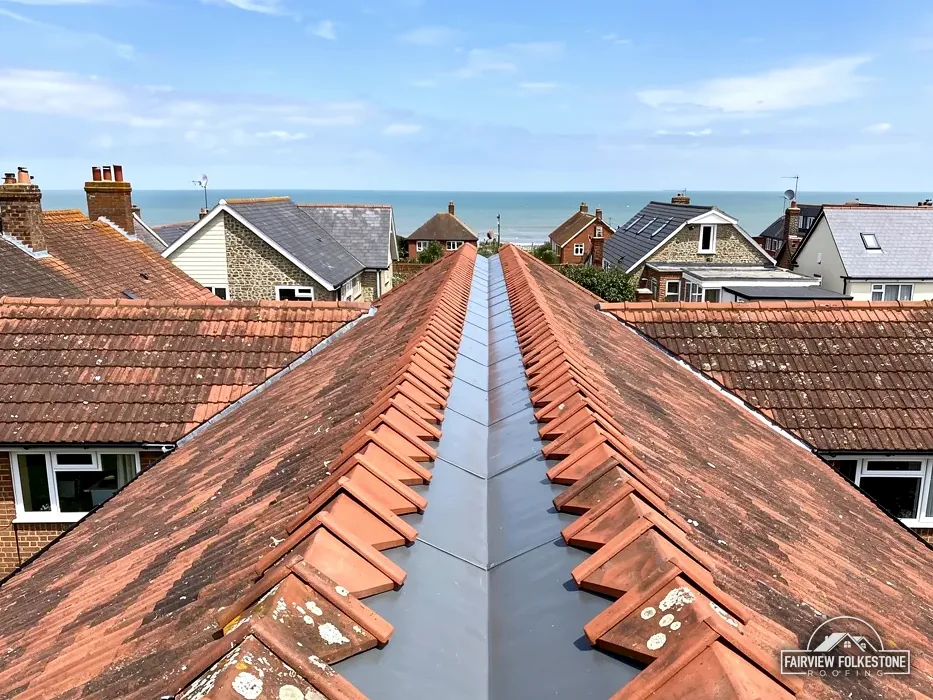
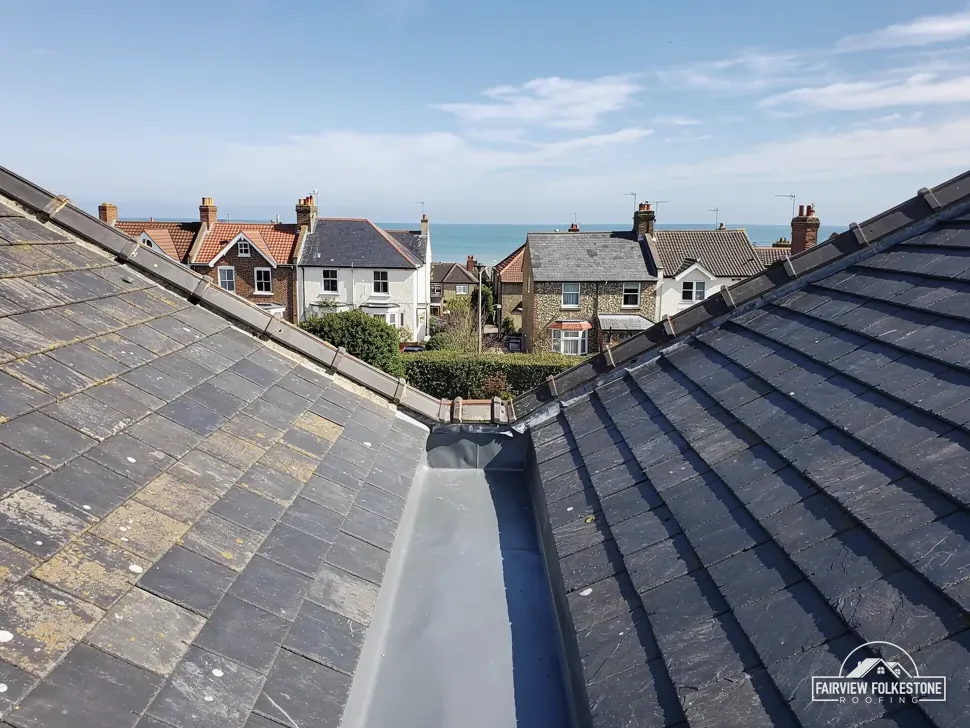
Valley lining, lodge roof, gutter outlet: three Great Chart faults and their stamps
What we found
Valley lining cracked, tiles either side sound
What it fairly needs
Cut out the lining and fit a new one.
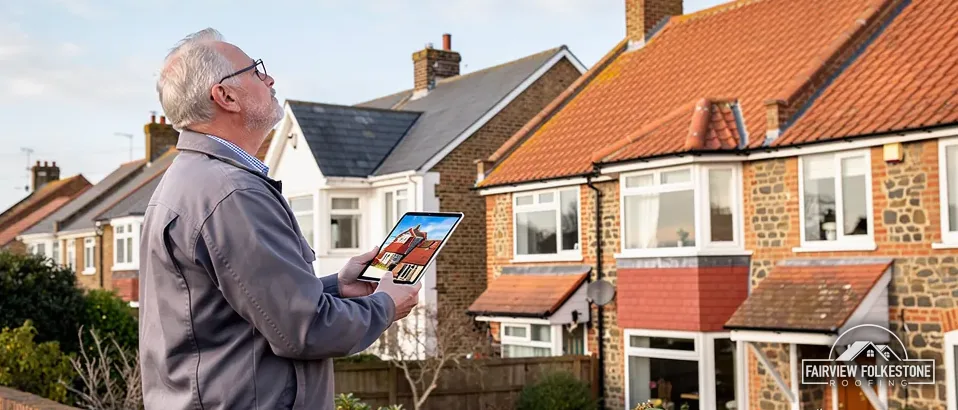
What we found
Listed house, ridge tiles lifting
What it fairly needs
Read the entry and ask the council.
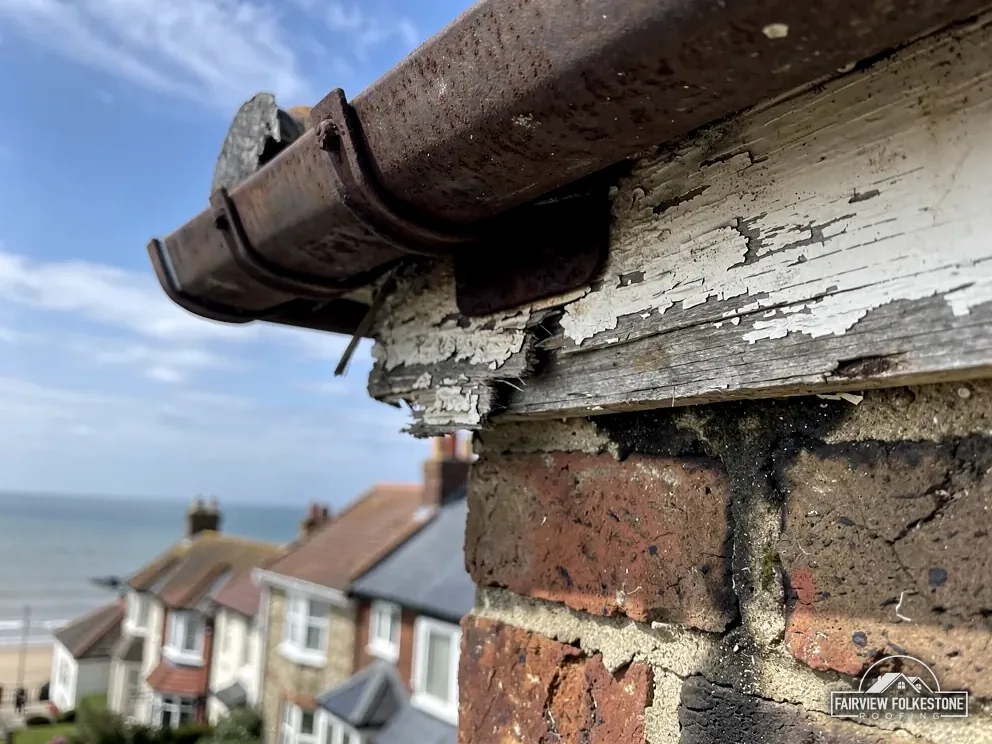
What we found
Gutter outlet cracked, run bowed
What it fairly needs
Fit a new run with fresh brackets.
Photograph your Great Chart roof and send it with the road it is on
The fair ledger
Church, lodge and conservation boundary: three Great Chart questions in order
Great Chart packs a Grade I church, listed houses and a conservation area into one centre. Each entry says what to ask, who gives the answer, and how the survey then reads the roof.
Entry 01Church and lodge
St Mary's, Court Lodge and Chart House: three entries, three consent routes
A Grade I church, a Grade II* lodge and a Grade II house stand within one small area, and each one reaches its consent by a different road.
One centre, three routes to consent
St Mary's church is Grade I on the National Heritage List (list entry 1115757), Court Lodge is Grade II* (list entry 1362641) and Chart House is Grade II (list entry 1071481). St Mary's is a working Church of England church, so its roof falls under the faculty system, not listed building consent. Court Lodge and Chart House are different: for each, listed building consent is required before work that would alter its character, and the decision belongs to Ashford Borough Council.
Everything else in the village is judged on its own. A roof near these landmarks is not listed because of them, and a roof far from them can be listed in its own right, so the list entry for your address is the first thing we check. If one turns up, we read it, ask the council what it makes of the work you have in mind, and put the reply beside the quote.
On a listed roof, even a small repair is a conversation before it is a job, and photographs taken at the survey show the council exactly what is there, which tends to shorten the exchange. Our slate roofing and pitched roofing pages set out what the work itself involves once the paperwork question has an answer.
Near the church
Listed roof, tiles slipping at the verge
Consent first
Valley lining split, slopes sound
New lining
Covering worn through across a slope
Re-cover the slope
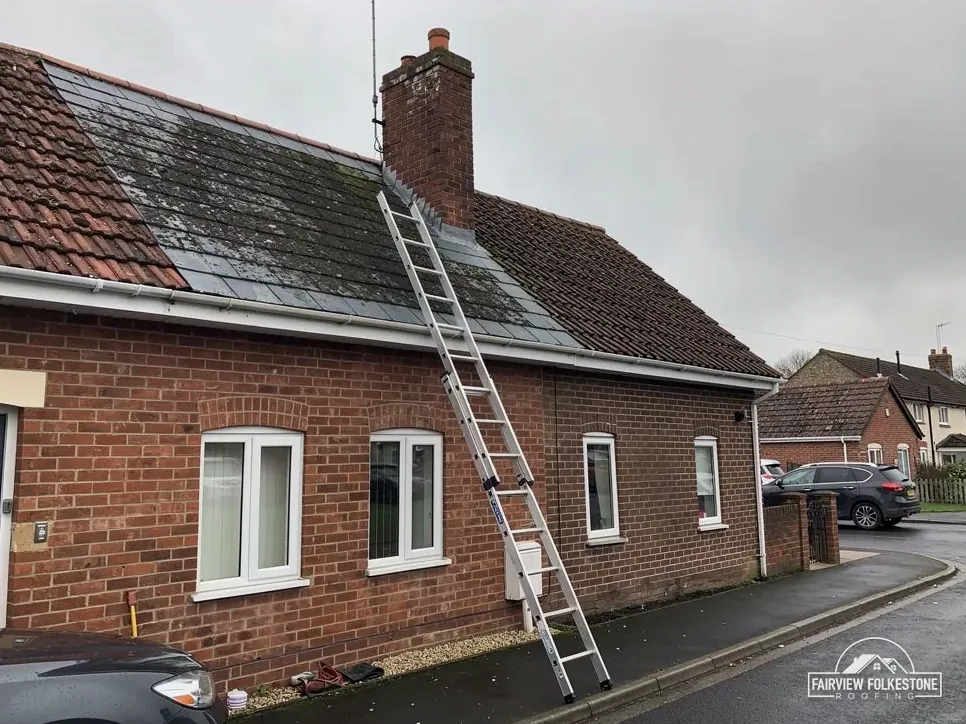
Myth: A Grade I church next door makes every nearby roof listed.
Fact: Each building is listed on its own entry. A house beside the church needs consent only if its own entry says so.
Entry 02Village map
Where the Great Chart conservation line runs, and what Article 4 adds
Great Chart has a designated conservation area, and an address is placed on its boundary by the council's map, never by eye from the road.
A line on a map, an address on a road
The Great Chart conservation area is designated, and Ashford Borough Council holds its boundary. Ashford Borough Council reports 43 conservation areas across the borough, so its map is the reference and memory is not. A boundary can run through the middle of a garden or between two neighbours, which is why a house that looks part of the village centre may sit just outside, and why every address is placed on the map before the survey is booked.
Article 4 is the second question. A direction withdraws named permitted development rights across a defined area, so work that would normally need no application can come to need one. Whether any direction reaches your road is for Ashford Borough Council to say, and a quiet map proves little, so we ask the council and write down its reply in full.
Inside the boundary a plain repair carries on as usual. A bigger change to a roof is explained in our planning permission guide, which is worth reading before anybody draws plans. The order that saves money is ask first, draw second, and keep the reply. If the council answers in writing, the quote carries that wording, so a later owner or a surveyor can see what was checked and when.
If my house is just outside the line, can I skip the checks?
The boundary is only one of the questions. A listed house is covered by its own entry wherever it stands, and an Article 4 direction has its own map. So the survey puts all three questions to every address, and the answers are written on the quote. A house just outside the line can still be listed, and a house inside it can still need nothing beyond a repair.
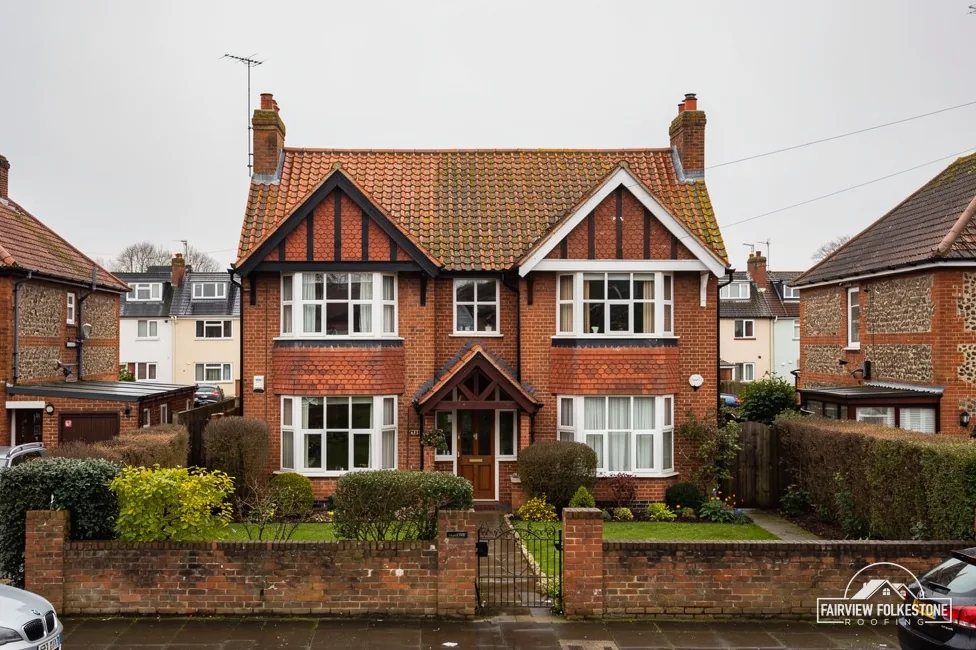
43
Conservation areas that Ashford Borough Council reports across its borough
Planning the scaffold before the repair
Where the work is at the eaves or a valley, the scaffold decides a lot. If its poles or boards stand on the pavement or the carriageway, it is a structure on the highway, and Kent County Council licenses those. In Kent County Council's licence guidance that falls to the skip or scaffolding firm, which should apply on the householder's behalf. We arrange it with our scaffolder. What matters to you is the date: Kent County Council asks for an application five working days or more ahead of the licence start, so the survey fixes where the scaffold will stand and the start date follows from that.
Walk-around scaffolds also carry conditions about the space left for people passing, and the licence terms cover such details as painted standards. On a village road with a footway that can shape how the scaffold is built and how long it stays up. A gutter outlet or a short valley repair may be reached from a tower or a ladder at less cost than a full scaffold, and when that is so the quote says so plainly. Wet weather can move a date. Where a driveway or a private forecourt gives room for the scaffold instead, no highway licence is involved at all.
Our gutters, soffits and fascias page covers the repairs that this kind of access serves.
Entry 03Scaffold access
Gutters and valleys reached from the road: scaffold, licence and timing
A roof near the road can need a scaffold on the highway, and that brings a licence, a permit period and a plan for the pavement.
What sets the price
- Length of run or valley affected
- Whether the scaffold sits on the road
- Condition of the boards behind
- How many days the work takes
One written total price
- Bracket holding the run
- Joint that has dropped
- Outlet to the downpipe
Three gutter parts that decide whether a repair or a new run is the answer.
Does a listing, a boundary or a scaffold licence touch your Great Chart roof?
Send a photograph, the road name and a note of anything you spot from your own side of the fence, and each verdict arrives with its reason before any total.
West out to Great Chart
Great Chart is 17.6 road miles west of Folkestone, about 23 minutes by road. The parish of Great Chart with Singleton had 7,410 usual residents at the 2021 Census, a count covering a wider area than the village itself. A photograph and the road name begin the process; list entries and the council's map are checked before the visit. Tell us on the form if the house stands on a through road, since that shapes where the scaffold can go.
Great Chart roofs: church, lodge, boundary and scaffold
Answers for owners in the village centre, on the roads leading from it, and in the houses nearest the church.
How do I tell where a stain on a Great Chart ceiling is coming from?
Note where the stain sits against the roof above it. A mark below a valley, a chimney or a wall junction suggests a lining or a flashing; a mark beside an outer wall can mean a gutter overflowing down the face. A torch in the loft will show daylight or darkened timber. The survey follows the water back to its source and photographs it, so the quote covers the fault itself and not a guess at the whole roof. A boarded loft is worth mentioning.
Is a new covering on a Great Chart house a Building Regulations matter?
It can be. Below the Planning Portal's limits no application is normally needed: less than 25 per cent of the building envelope and less than 50 per cent of the roof is affected, with approval needed if the new covering is 15 per cent or more heavier. Ashford Borough Council's own Building Control team, on 01233 330282, will confirm the position for your address, and the survey records the existing covering so the answer has facts to work from.
What happens about a scaffold licence at a Great Chart roadside house?
Should the scaffold stand on the highway, Kent County Council issues the licence at £52 per week for 2026 to 2027. Kent County Council's page says the skip or scaffolding company should submit the application for you. Our side of it: we arrange the licence with our scaffolder. Applications go in at least five working days ahead, so the survey settles the scaffold position early. A permit covers 7 calendar days, so a longer job means a renewal in good time rather than a lapse.
My Great Chart house is inside the conservation area: what changes for a repair?
For a plain repair, very little, because ordinary re-roofing stays under the usual rules. What the boundary affects is larger alteration, and an Article 4 direction could remove further rights. We place your address on Ashford Borough Council's map first, ask the council about anything beyond a repair, and record its answer beside the price, so the paperwork never catches up with the work halfway through. Many questions can be settled from a photograph and a postcode before anybody visits.
Does a Grade II* court lodge down the road affect my own roof?
Not by itself. Court Lodge has its own list entry, and your house stands or falls on its own. If your house is listed, listed building consent from Ashford Borough Council is required for work that would affect its character, so the entry is read before pricing. St Mary's, as a Church of England church in use, follows the faculty system instead, a route that does not apply to houses at all.
How will a Great Chart quote be laid out?
As one written total for the whole job, given after the survey. Behind it sit the photographs and the three stamps, each carrying its reason. A sound repair is priced as a repair, and a full re-cover appears only where the covering is past mending. Gutter work noticed on the same visit is included in the figure, so there is no second invoice for it, and the survey notes which gutter lengths were sound and left alone.
Great Chart roof worrying you? Send us a photograph.
One written total, after the survey.