
Kingsnorth · 15.7 road miles west
Roofers in Kingsnorth
A parish of 12,024 residents at the 2021 Census, with its own conservation area, a Grade I church and two Grade II listings at Pound Farmhouse and Pound Green. Whatever the roof is doing, a survey gives each fault a plain verdict and a reason, set down in writing.
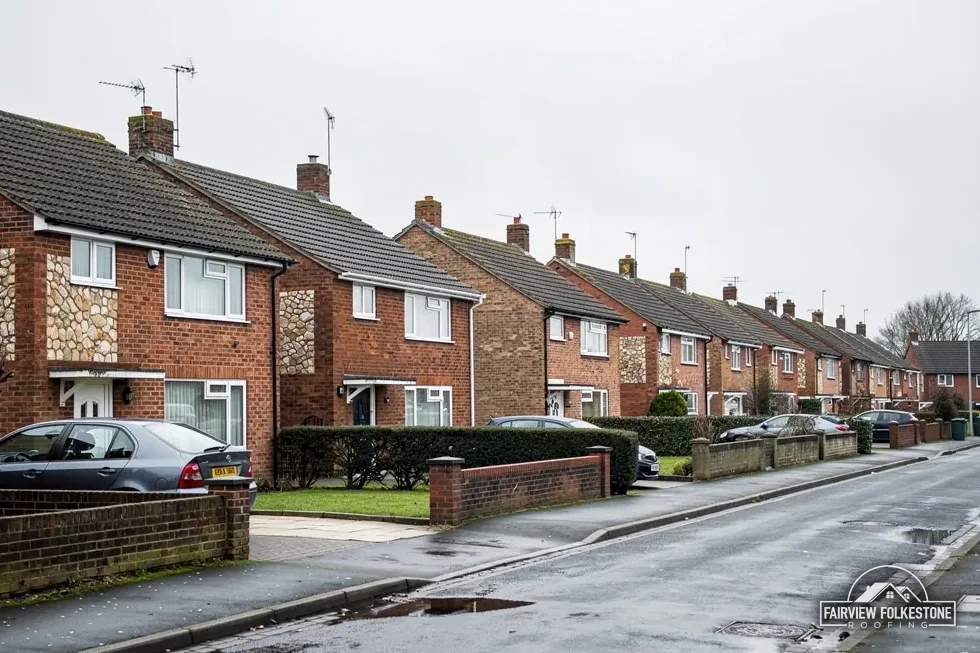
- Local conservation area
- Kingsnorth's conservation area is designated, one of the 43 across Ashford borough
- Listed in the village
- St Michael's church, Grade I; Pound Farmhouse and Pound Green, Grade II
- Article 4 directions
- Ashford Borough Council checks any one address against its own list
- Scaffold on the highway
- A Kent County Council permit, £52 per week for 2026 to 2027
- Low ground
- Land in Flood Zone 3 lies close to the village, per the Environment Agency
Kingsnorth roofs and the verdict each one earns
What we found
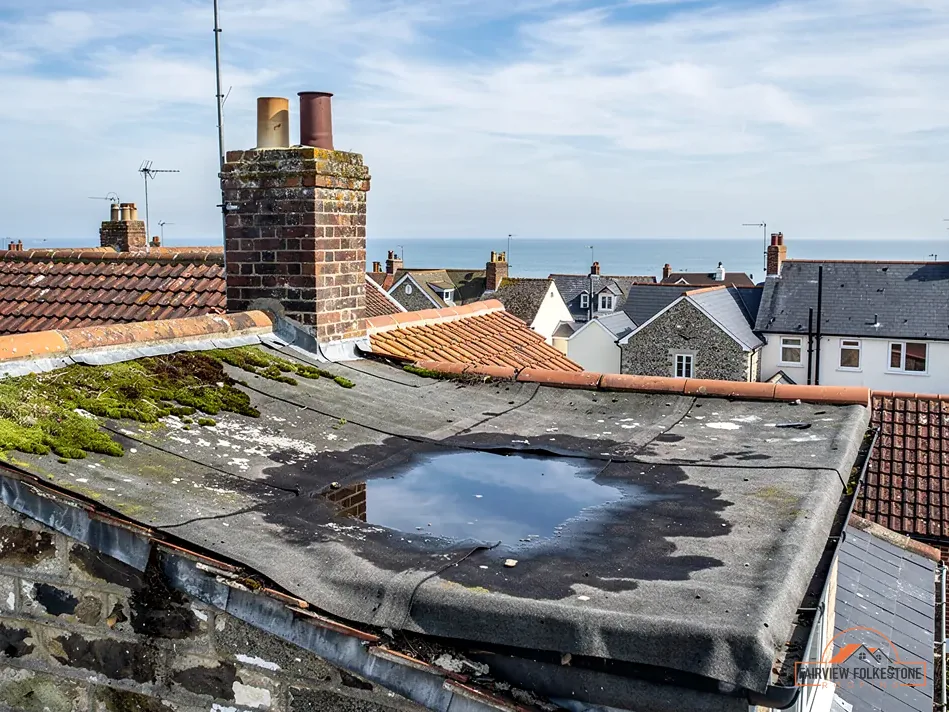
Extension roof ponding beside an upstand
What it fairly needs
Patch the membrane and clear the drain.
What we found
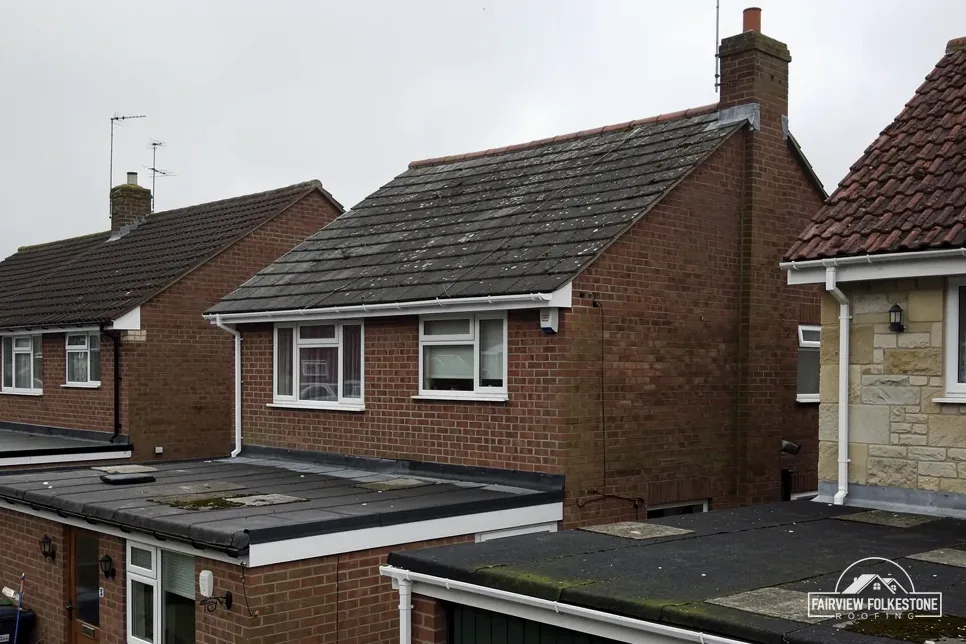
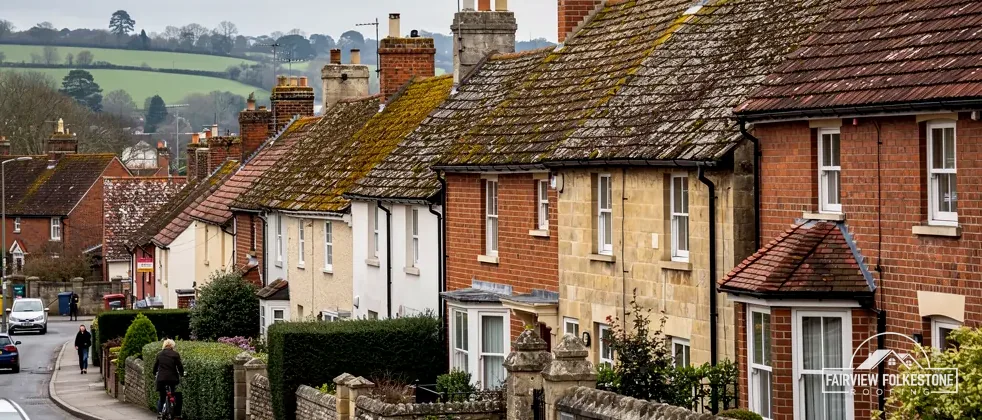
Pitched roof in the conservation area
What it fairly needs
Ask the council about materials.
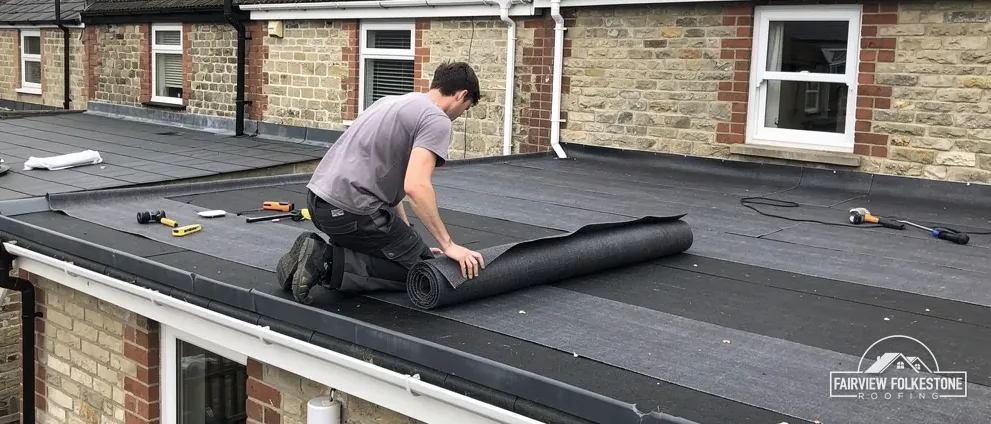
What we found
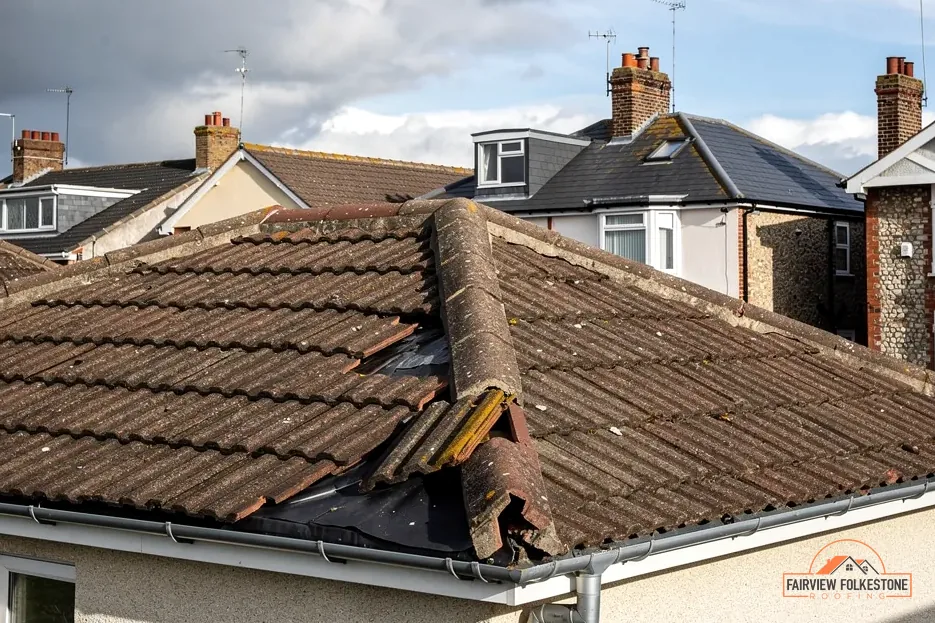
Flat roof deck rotten under old felt
What it fairly needs
Strip to the joists and relay.
The fair ledger
Conservation area, Grade I church and the flat roofs behind houses
Kingsnorth is a big parish with a conservation area, a listed church and two Grade II listings at Pound Farmhouse and Pound Green. Each entry below takes one kind of roof question the place raises and gives it a stamped verdict.
Entry 01Conservation area
Kingsnorth's conservation area, Pound Farmhouse and Pound Green
Kingsnorth has a designated conservation area, and Pound Farmhouse and Pound Green are both listed Grade II. Neither fact stops a roof being mended, but each changes who must be asked first.
Where the council's map comes in
Ashford Borough Council counts 43 conservation areas across the borough, and Kingsnorth's is among them. Designation does not freeze a house. Fresh tiles or slates on an ordinary dwelling are normally permitted development here as elsewhere, while dormers are a planning question that the guide answers for you. What designation does is add a layer of checking, and the council's interactive map is the quickest way to see whether your address lies inside the boundary.
Article 4 directions can take rights away from a house, so put the question about your own address to Ashford Borough Council. Before a quote goes out, we put it to the council ourselves and ask for its list to be read against your house. If a direction turned out to apply, the reply would reach you before you had paid a deposit or ordered a single tile, and the plan would change to suit. The full planning picture is in our planning guide for roof work.
Where do I check whether my Kingsnorth house lies in the conservation area?
Ashford Borough Council keeps an interactive map of its conservation areas, and typing in your address shows the boundary. If the map is unclear, the council's team will tell you directly. We also put the question to the council before quoting, and what it says goes into your written findings.
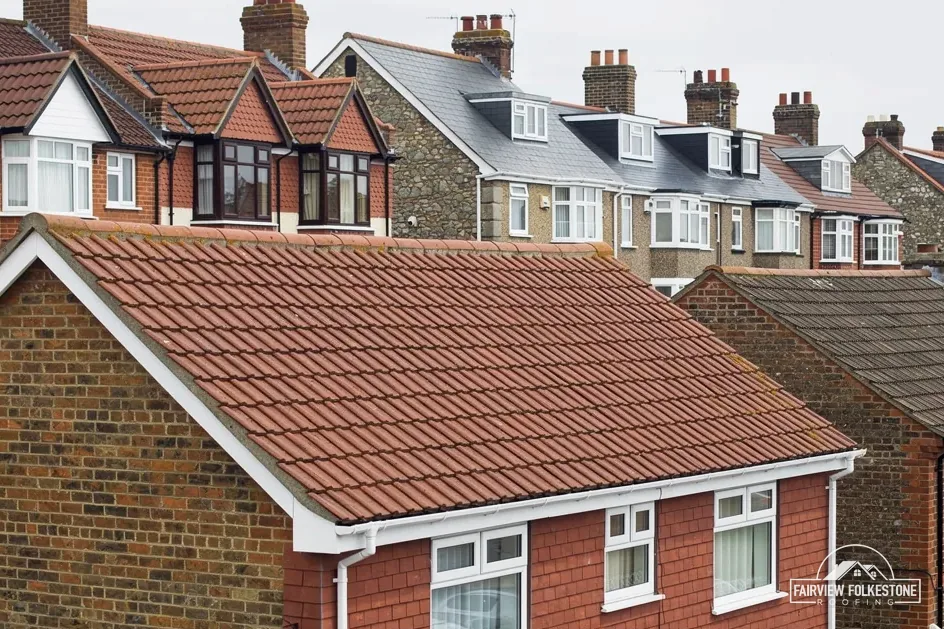
Pound Farmhouse and Pound Green
Pound Farmhouse carries list entry 1320407 and Pound Green list entry 1320408, and both listings date from 10 October 1980. A listed house keeps permitted development rights over its roof, but listed building consent covers anything that touches its character. If you own a listed property, or live next to one, tell us at the start. The survey then yields what the council will want to read: photographs of the covering, a note of each fault, and a plain description of the work proposed. A listed roof is also a good reason to prefer repair over replacement, because lifting and refixing sound material keeps what is already there.
If neither property is yours, the same habit still applies to any older house. Look at the eaves, the ridge and the chimney from the road, and send us what you see.
Slipped tiles, battens still sound
Refix with matching tiles
New material wanted in the area
Council view first
Tiles brittle across the slope
Re-cover the slope
Entry 02Parish church
St Michael's church: faculty route, not the district council's
St Michael's is listed Grade I and still a Church of England place of worship. That decides which body gives permission, and it is not the district council.
Why St Michael's answers to a different system
The Church of St Michael carries list entry 1362667, a listing that dates from 14 February 1967. A church that is in Church of England use sits outside ordinary listed building consent, because the ecclesiastical exemption is kept for churches in the Church of England's faculty jurisdiction. Instead of a planning officer, it is a faculty that authorises repairs.
The faculty route matters for a roof because an application needs a clear account of the fault, and the sooner the roof's condition is described, the sooner the application can be drawn up.
If you are responsible for the building, the useful thing we can do is survey the roof carefully and describe the findings in writing, with pictures of each slope, its flashings and its rainwater goods, so that whoever is applying for the faculty has a clear record to attach. The same survey separates urgent faults, such as a failed gutter dropping water down a wall, from slow ones that can be planned for.
Quote the list entry number, 1362667, on anything you send about the church, to us or with a faculty application, since it points straight to the right building.
Myth: A Grade I church is treated like a listed house.
Fact: A church in Church of England use goes to the faculty system, so the district council gives no listed building consent for it.
Grade I
the listing of St Michael's church, Historic England entry 1362667
first listed in 1967
What the survey writes down
- Each roof slope that can be reached safely, with the condition of its covering.
- Lead at the abutments and valleys, noting any split, lifting or thin patches.
- Gutters and downpipes, with the route water takes from slope to drain.
- Any fault that is urgent, kept separate from those that can wait for the faculty.
A record like that is worth more to a faculty application than a quote is, which is why the findings come first.
What a flat roof survey measures
BS 6229:2025 sets a minimum finished fall of 1:80 for membrane flat roofs, according to the NFRC, so designers aim for something steeper, which absorbs the tolerances of real building work. A fall of 1:80 is a drop of 1 mm for every 80 mm of run. That is gentle enough that your eye will not pick it up, so we measure it with a level instead of guessing.
Once the fall is known, we look over the deck for soft or darkened boards, the membrane for blisters and open laps, the upstands along each wall, and the trim at the edge that throws water clear. Where the deck is sound and the membrane has failed at a single lap, a repair is the fair verdict. Where the deck has rotted, a membrane laid over it will not last, and stripping back to the joists is the fair verdict. Our flat roofing service covers both, and our roof inspections explain how the findings are recorded.
Whatever the roof covers, a kitchen, a garage or a porch, tell us how old it is if you know. If yours has a rooflight or a vent pipe through it, mention that when you send photographs, since each penetration is another place for a membrane to be sealed and checked.
Entry 03Flat roofs
Flat roofs behind the houses: falls decide how long they last
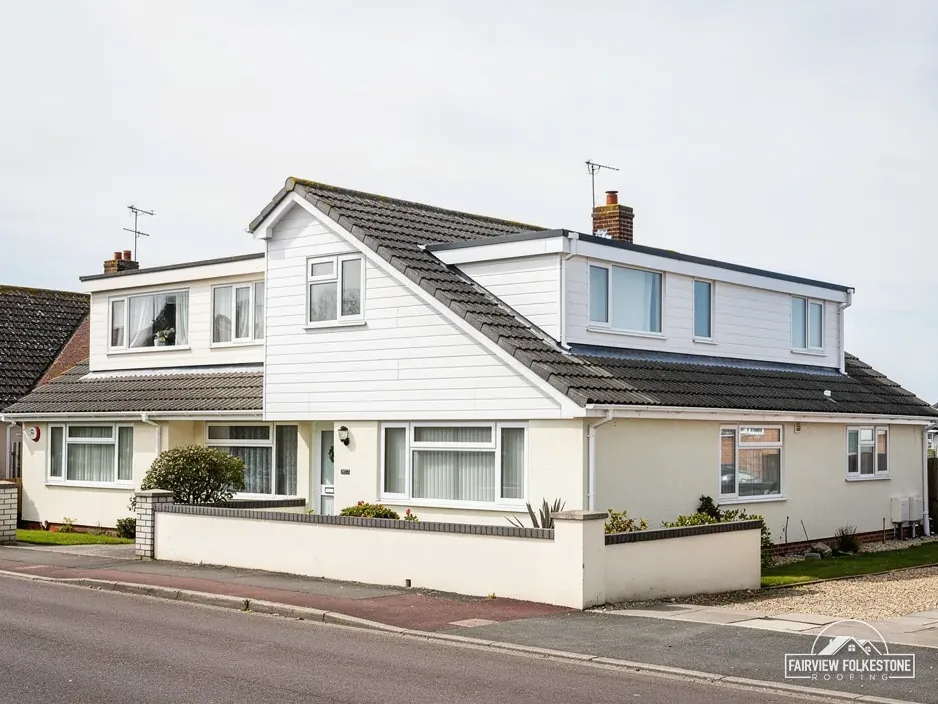
An extension roof that holds a pond is telling you about its fall. A membrane laid on a deck without enough slope will struggle, however good the membrane is.
What sets the price
- Area of the roof
- Condition of the deck
- Number of upstands and outlets
- Access for materials
One written total price
- Deck under the membrane
- Membrane across the roof
- Upstand at the wall
- Drip trim at the edge
Signs a flat roof is near the end
- Water that stands for a day or more after rain stops.
- Blisters in the membrane, or laps that have opened at the edges.
- A brown stain spreading across the ceiling beneath.
- A deck that feels soft or springy when walked on.
- Cracking where the membrane turns up at a wall.
One sign alone can point to a repair that fixes it. Several together, with a soft deck among them, point to a roof that needs replacing, and the survey says which of the two you have.
The road from Folkestone to Kingsnorth
Kingsnorth lies west of Folkestone, 15.7 road miles and about 20 minutes away by road. The parish had 12,024 usual residents at the 2021 Census, and we read each roof for what it is, not for where it stands. Begin with a few photographs through the form below, let a survey be fixed for a day that suits you, and expect the one written total price only once the survey is done.
Kingsnorth roof questions answered
How much fall does a flat roof over a Kingsnorth extension need?
BS 6229:2025 sets a minimum finished fall of 1:80, says the NFRC, and designers aim for something steeper to absorb tolerances. A roof that looks flat but holds standing water may well have lost fall through sagging or settlement. We measure the fall with a level, check the deck beneath the membrane, and give a verdict on whether a repair will cure the problem or the roof needs to come up.
Is my Kingsnorth house inside the conservation area?
Kingsnorth's conservation area is designated, and Ashford Borough Council's interactive map shows its boundary. If your address is close to the line, the council can confirm which side it falls on. Article 4 directions can strip a house of rights it would otherwise hold, so ask Ashford Borough Council as well, or let us put your address to the council and bring you its reply in writing.
What does a heavier roof covering involve in Kingsnorth?
Under the Planning Portal's guidance a covering that makes the roof 15 per cent or more heavier needs approval, and Approved Document A treats a load increase of more than 15% as a significant change. A structural check comes first, before the old covering comes off. Ashford Borough Council's own Building Control team, on 01233 330282, confirms what applies to your house, and we describe the old and new coverings so the question is clear.
Does Flood Zone 3 near Kingsnorth affect a roof?
Land in Flood Zone 3 lies close to Kingsnorth, according to the Environment Agency. This describes the ground and nothing else, and it creates no rule for roofing work. We simply keep the route that rainwater takes in view, from the slope to the gutter, the downpipe and the drain, because a roof does its job only if water can leave the building.
Who looks after the scaffold permit on a Kingsnorth job?
We arrange it with our scaffolder. Kent County Council sets its permit at £52 per week for 2026 to 2027, and its text adds that the skip or scaffolding company should submit the application for you. On private land the scaffold needs no highway permit, and a job that runs on has the permit renewed in time. Which situation applies is decided at the survey, and the quote already carries the scaffold.
A Kingsnorth roof to look at? Send photos.
You'll get one written total price.