
Minster · 25 road miles north
Roofers in Minster
Minster has a Grade I abbey, a Grade I parish church, the scheduled remains of a pre-Conquest nunnery and a conservation area. They sit under three different sets of rules, and none of them covers the house next door by default. A survey here sorts out your address first, and the roof comes after that. One written total price follows the survey.
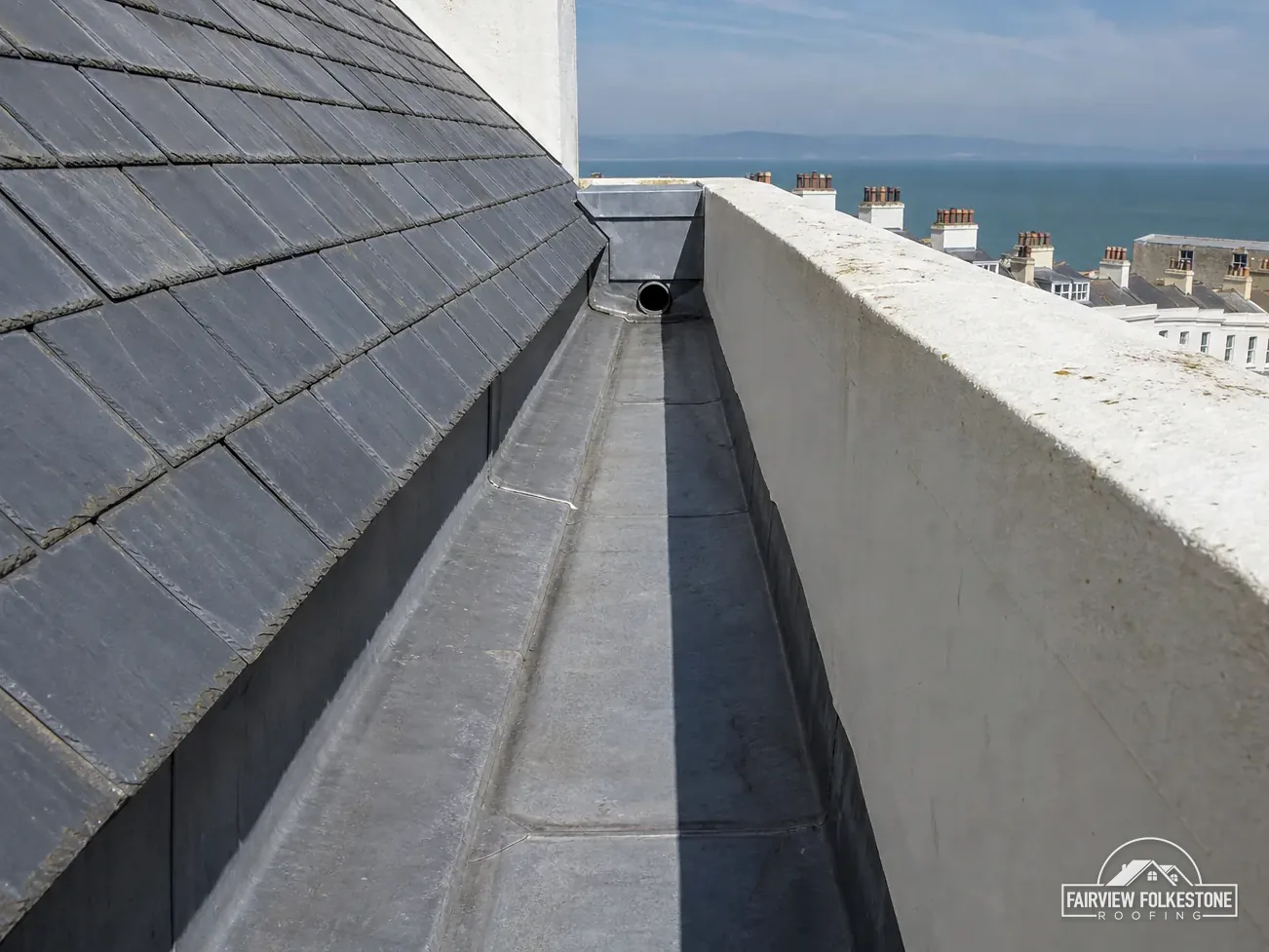

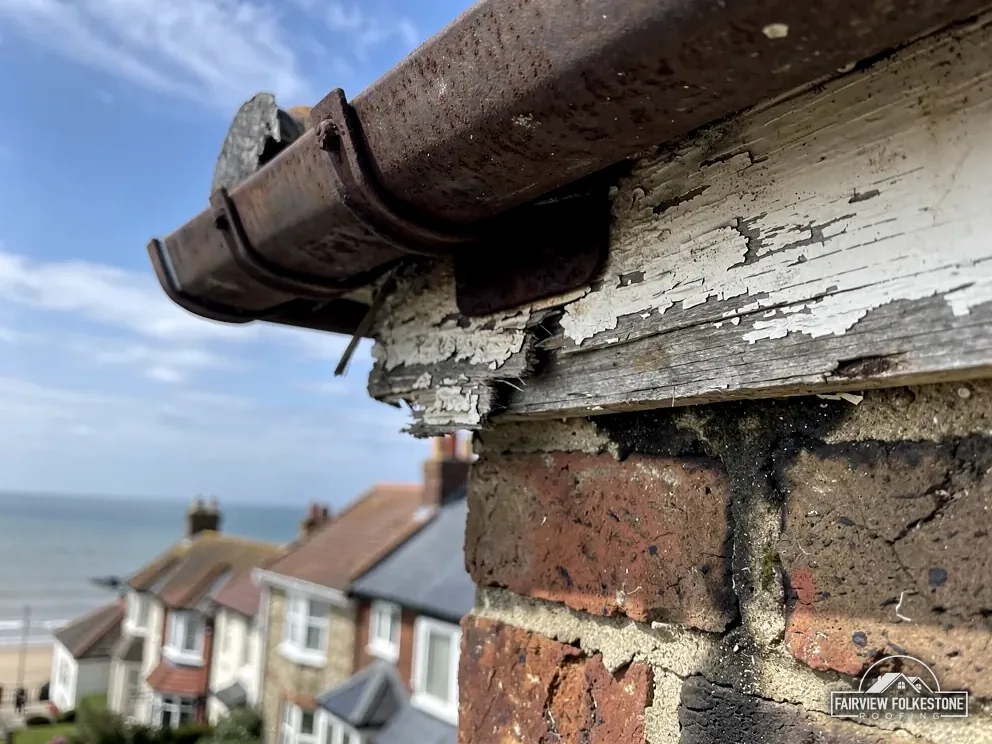
- The abbey
- Minster Abbey is Grade I, with the scheduled site of a pre-Conquest nunnery at the abbey
- St Mary
- Church of Saint Mary, Grade I, follows the Church of England faculty route
- Scaffold fee
- Kent County Council, £52 per week for 2026 to 2027
- Journey time
- 25 road miles, about 38 minutes
Minster roof faults and the road each one takes
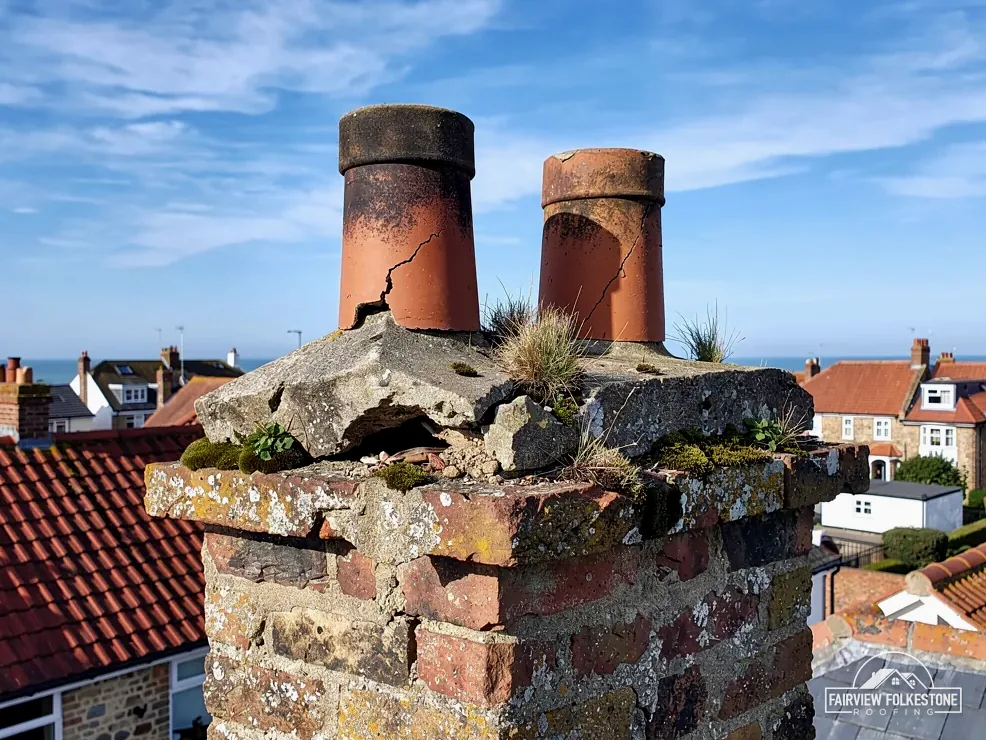
What we found
Stepped flashing pulled away along a chimney side
What it fairly needs
Re-dress it, seal the joint and re-point.
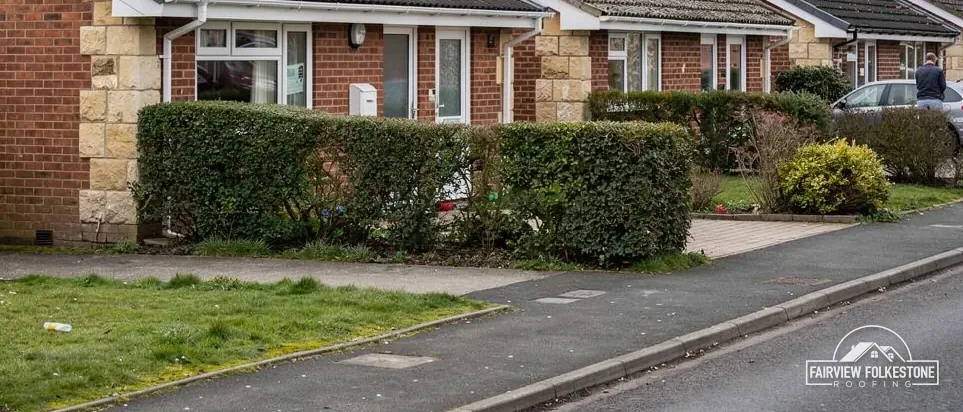
What we found
Slipped covering on a house near the abbey grounds
What it fairly needs
Which rules apply, then a price.
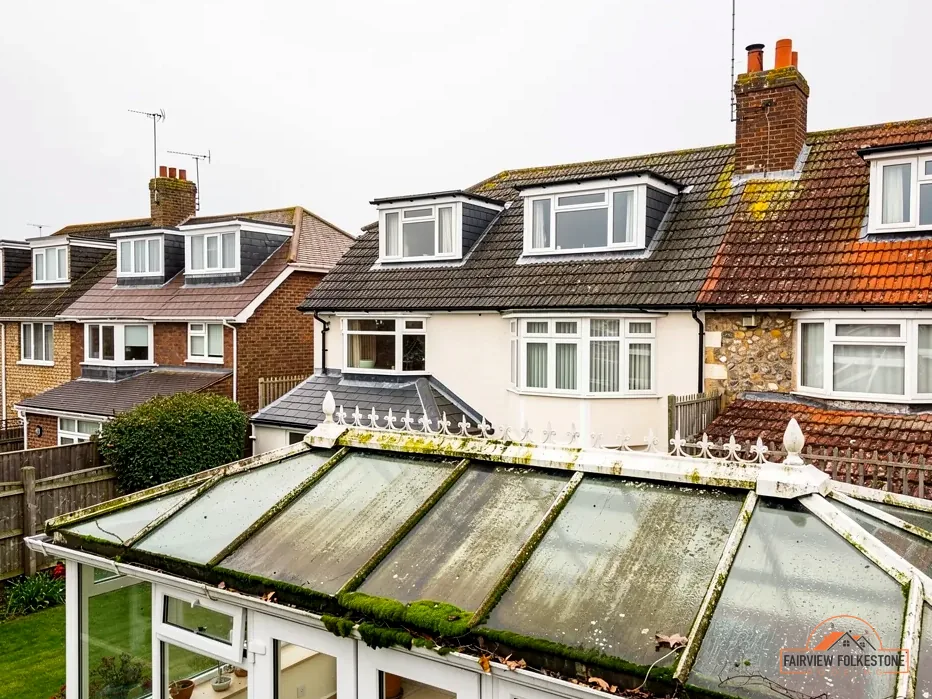
What we found
Fascia boards rotten beneath the gutter run
What it fairly needs
New boards, then a gutter set to fall.
The fair ledger
Abbey, nunnery, parish church and a chimney flashing in Minster
Minster packs two Grade I buildings and a scheduled monument into one village, and each follows its own consent route. A repair, replace or check stamp closes every entry.
Entry 01Abbey grounds
Minster Abbey and the scheduled nunnery: two different protections
Minster Abbey is listed Grade I, and the Monastic Grange and Pre-Conquest Nunnery at Minster Abbey is a scheduled monument. They are protected in two different ways.
Listing is one regime, scheduling another
Historic England holds the abbey as list entry 1223807, first listed on 6 February 1958, and the nunnery site as list entry 1016850. Listing is governed by the Planning (Listed Buildings and Conservation Areas) Act 1990. Scheduling rests on section 2 of the 1979 monuments Act, which makes works to a scheduled site an offence unless they are authorised.
Neither regime reaches a house simply because it stands in the same village. A Minster house answers to whatever list entry it carries, then to the conservation area if it lies within it, and to ordinary planning otherwise. For anything close to the abbey grounds we ask Thanet District Council whether a rule attaches to the address, and its answer is clipped to your quote. Our pitched roofing work begins with that question, not with a ladder.
It is slower than simply quoting, and it is worth the delay. A roof priced on the wrong assumption either costs the owner a second quote or leaves a consent problem for whoever sells the house later.
Myth: Living near a scheduled monument freezes what you can do to your roof.
Fact: Scheduling protects the monument. A house is judged on its own listing, the conservation area and the usual planning rules.
Questions put to the council, in order
- Is the house itself a listed building?
- Does it lie inside the Minster conservation area?
- Does anything about the scheduled ground touch the address?
- If none applies, which Building Regulations route does the re-cover take?
Each answer is written down, and the order of work follows from the answers.
1016850
Historic England's number for the nunnery at Minster Abbey, a scheduled monument
Historic England list entry
Entry 02Parish church
Saint Mary's church and Hawthorne Lodge: two routes
The Church of Saint Mary is listed Grade I and holds Church of England services. Hawthorne Lodge is a Grade II listed house, and its route is different.
A church and a house, two routes
Saint Mary's is list entry 1224116, first listed on 11 October 1963. Since it is a Church of England church in use, its repairs go through the faculty system and not through the council's listed building consent. Hawthorne Lodge, list entry 1224293, is a house. For a house, permitted development for roof work stays in place, and listed building consent is needed in addition if the work would change the building's special character.
That contrast is the reason an address is checked before a price is given. The church and the lodge may stand in the same conservation area, yet the paperwork for one has no bearing on the other. The planning guide covers what changes for larger alterations.
Roofs on listed houses are repaired with the old fabric kept wherever it still does its job. A tile that is cracked is swapped for a matching one, a tile that has merely slipped is refixed, and a ridge that has lost its bedding is rebuilt. Only when a whole slope has run its course does the conversation turn to a new covering, and by then the council has already been asked and the photographs are on file.
On a listed Minster house
One or two slipped pieces
Refix and test
Verge edge working loose
Re-bed and fix
Slope worn out edge to edge
Council first
Does the church's faculty route cover Hawthorne Lodge or the houses around it?
No. A faculty belongs to the church building itself. Hawthorne Lodge is a listed house, so listed building consent comes into play for work that alters its character, and a neighbour with no listing follows the planning rules for its address. Thanet District Council confirms each one, and we keep its answer.
What a Grade II house needs from us
- Photographs of every slope, the ridge, the verges and the chimney.
- The list entry number written on the survey sheet.
- A description of the covering as it stands, with each fault marked.
- A proposal that changes as little as the fault allows.
When the council has answered, the answer is attached to the quote. If it asks for a sample, a drawing or a closer photograph of one detail, we supply it, and nothing is ordered while the question stays open.
Why the flashing gets the first look
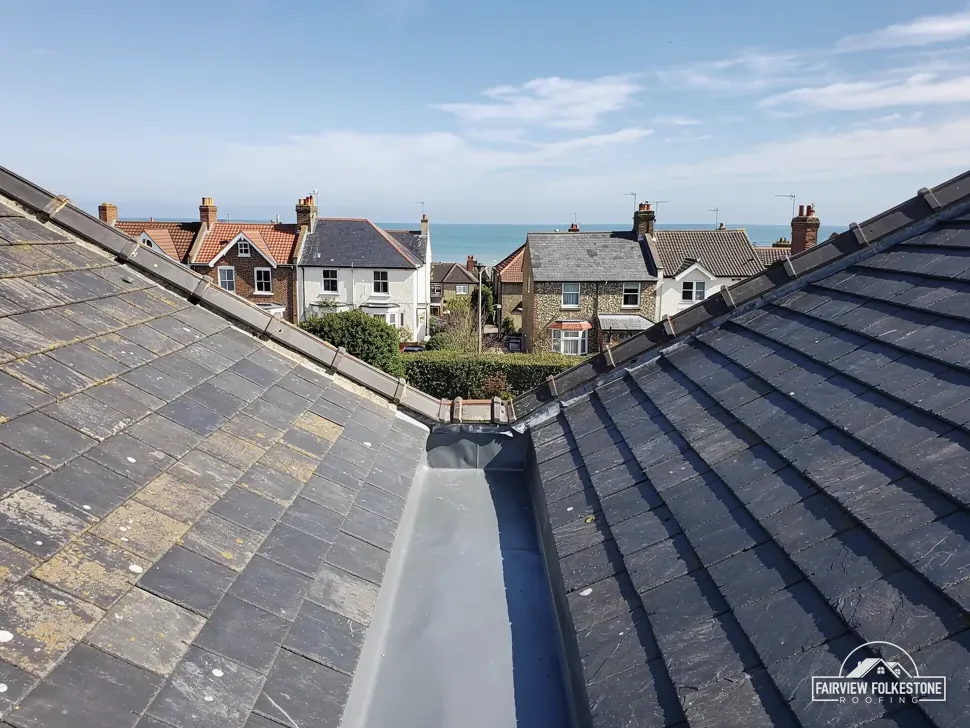
A flashing is a strip of lead, or another sheet metal, worked into the brickwork and over the roof covering to carry water away from the joint. MyJobQuote says correctly installed lead flashing can last for over 80 years, and that hedge matters: the word is "can", and "correctly installed" is doing real work. A stepped flashing with a lifted edge, a cracked mortar joint or a loose soaker has stopped being correctly installed, whatever its age.
Down each side the stepped lead is examined, then the apron beneath. Behind the stack sits a back gutter, and the pots stand in flaunching, which is checked last. For the full range of work, see our chimney repairs service. Sound lead with tired pointing means a repair, and the price reflects that.
Where lead has split or lifted beyond a patch, it is re-dressed or renewed with new soakers, and the wall joint is raked out and re-pointed so the new lead has something solid to sit in.
A flashing job is one of the cleaner ones to price. The scope is visible from the roof, the lead needed is measured in metres of run, and the verdict is either re-dress, renew or leave alone, with the reason set down next to each stack on the survey sheet.
Entry 03Lead and chimneys
Lead flashings at a Minster chimney: lifespan and failure
A chimney is where a roof and a wall meet, and the flashing is the part that keeps that joint tight. That joint is the first place the survey looks.
What shapes a chimney quote
- Height and access to the stack
- Amount of lead to be replaced
- State of the pointing
- Whether the flaunching needs redoing
One written total price
Four points on a chimney flashing
- Stepped flashing up the side
- Joint where lead meets brick
- Soakers beneath the covering
- Flaunching round the pot
These four points are where a chimney leak is traced to its source.
Checks around a chimney stack
- The lead along each side, for lifted edges.
- The pointing where the lead enters the brick.
- The back gutter, for splits and blockage.
- The flaunching round the pots, for cracks.
- The ceiling below, for a stain that lines up with the stack.
A stain below a chimney does not always come from the flashing, and the survey looks for the real source before work is proposed. Sometimes a slipped tile beside the stack is the culprit, and then the repair is small and quick to describe.
Abbey side, church side or a chimney that leaks: which is yours?
Send some photographs, or arrange a visit. You will get a verdict on each fault, plus any consent question that must be answered before work is ordered.
Folkestone to Minster by road
Minster is 25 road miles north of Folkestone, about 38 minutes by road. At the 2021 Census, Minster parish had 3,911 usual residents. The simplest first step is a photograph or two sent from a phone: one broad shot per slope, plus a tight shot of the damage. The survey comes next, and the price is written only after the roof has been seen.
Minster roof questions, from the abbey to the chimney stack
Does the scheduled nunnery at Minster Abbey affect work on a house roof nearby?
Scheduled monument consent covers works to the monument itself, under section 2 of the 1979 Act, and not the roofs of houses around it. A house is judged on its own listing, the conservation area and the planning rules. If yours is close to the abbey grounds, we ask Thanet District Council whether anything attaches to the address and record what it says. You are sent a copy.
How does a faculty for Saint Mary's church differ from consent for Hawthorne Lodge?
Saint Mary's is a Grade I church still holding Church of England worship, so its repairs go through the faculty system. Hawthorne Lodge is a Grade II house, so listed building consent applies on top of permitted development when work would alter its character. The two never overlap, and we check which one belongs to your address before a quote is written.
Who handles a scaffold licence for a Minster roof job?
Roadside scaffolding is licensed by Kent County Council at £52 per week for 2026 to 2027, and the council's rules say the skip or scaffolding company should submit the application. We arrange it with our scaffolder. Where the scaffold stays on your own land, the licence does not come into it; the survey records which of the two your house needs.
Does re-covering a Minster roof need building control?
The Planning Portal sets two limits: less than 25 per cent of the building envelope and less than 50 per cent of the roof touched. Weight matters separately: a new covering 15 per cent or more heavier requires approval. Thanet District Council's own Building Control team, on 01843 577522, can tell you where your house falls, and a registered building control approver is the other route. We ask before any date is set.
Is the Minster conservation area a problem for roof repairs?
Minster has a designated conservation area, and Thanet District Council confirms whether a particular address lies inside it. Ask the council about any Article 4 direction on your street too. Both questions are put at the start of the job and the replies sit beside the quote, so the scaffold never goes up before the rules are known, and nobody is surprised halfway through.
How do you tell a failed chimney flashing from a failed roof covering?
The survey follows the water upward. A stain on the ceiling beneath the stack is traced from the ceiling to the roof: the flashing, its pointing, the back gutter and the flaunching come first, and the covering around them second. A sound flashing with failed pointing is a repair, and a split one is re-dressed or renewed, with the verdict written against each part.
Minster abbey, church or chimney: ask before you scaffold
You'll get one written total price.